The feast commemorates the miracle of the snow in Rome which designated the site of the Basilica of Saint Mary Major, founded by the patrician John. This illustrious sanctuary is the site of numerous miracles, including the cessation of the plague and the protection of Pope Martin I. The Church particularly honors the absolute virginal purity of Mary there.
Guided reading
5 reading sections
DEDICATION OF OUR LADY OF THE SNOWS,
TODAY SAINT MARY MAJOR, IN ROME.
Miracles and Papal Protection
The text recounts several miracles that occurred at Saint Mary Major, notably the cessation of a plague, the deliverance from a serpent under Leo IV, and the supernatural protection of Martin I against an assassination attempt.
CESSATION OF THE PLAGUE THAT WAS DEPOPULATING THIS ENTIRE GREAT CITY. It was also in the same church that Pope Leo IV led another procession to obtain deliverance from a serpent that was causing great devastation in the land. An exempt, having been charged by the Exarch Olympius to attack Pope Saint Martin I in this sa nctuary and to run hi s sword through his body, lost his sight as soon as he prepared to execute this sacrilege, the Blessed Virgin having been unable to suffer such a horrible attack to be committed in a place consecrated to her. Our Lord has performed several other miracles there, and continues every day to perform new ones through the intercession of this great Queen who is its titular and patroness. One must infer that she did much more honor to the patrician John and his wife by making them fou nders of suc h an illustrious temple than if she had given them many children; since, by this means, she has rendered their memory immortal, and has made their wealth profitable for the help and consolation of all the faithful until the end of the world.
Splendor of the Liberian Basilica
Description of the magnificence of the church, its sumptuous chapels built by Sixtus V and Paul V, its distinguished relics, and the tradition of jasmine flowers recalling the miracle of the snow.
It must also be noted that th is church is the most magnificent in Rome, after the i ncomparable Basilica of Saint Peter and that of the Lateran. It has one of the four doors that are opened solemnly in the Holy Year, and which are closed after the great jubilee has passed; it is also one of the five patriarchal churches and one of the seven principal churches of Rome. The Penitentiaries of the Order of Saint Dominic receive confessions there, just as the Jesuits do at Saint Peter's, the Benedictines at Saint Paul's, and the Franciscans at Saint John Lateran. One sees there two sumptuous chapels: one bui lt by S ixtus V, where the cradle of Our Lord is kept, which is only exposed on Christmas Day; the other built by Paul V, called the Pauline Chapel, where the lifelike painting of the Blessed Virgin, worked by the evangelist Saint L uke, is preserved. It is said that the latter cost more than seven hundred thousand Roman crowns, that is to say, more than two million five hundred thousand francs. The entire body of the church is also very rich. The vault is a gilded ceiling of marvelous artifice, and the floor is of white and black marble mixed with a quantity of mosaic figures. A very great solemnity takes place there on this day, and one sees falling all day long by artifice, in memor y of the ancient miracle of the snows of which we have spoken, white jasmine flowers that fill it with a very pleasant odor.
Marian Influence in Rome
An enumeration of the numerous Roman churches dedicated to the Virgin Mary and the religious orders that serve them.
The other churches of Rome, dedicated to Our Lady, are so numerous that we do not claim to give all their names here. We will only say that almost all secular and regular communities have placed themselves, as if in rivalry, under the protection of this august Princess: the secular Chapters have Saint Mary of the Tiber, Saint Mary of the Rotunda, and Saint Mary in Via Lata; the Carthusians, the church of Our Lady of the Angels; the Dominicans, Our Lady of the Minerva; the Franciscans, Our Lady of Ara Coeli; the Penitents, Our Lady of Miracles; the Augustinians, Our Lady del Popolo; the Canons Regular of Saint Augustine, Our Lady of Peace; the Carmelites, Our Lady Transpontina; the Olivetans, Our Lady the New, and the Feuillants, Our Lady of the Way. In all these churches, the praises of this Virgin of virgins are continually celebrated, and one often sees a great gathering of people there to pay her profound homage, and to implore her protection and her help.
Symbolism of the snow and the purity of Mary
Theological analysis of the virginal purity of Mary, compared to the whiteness of snow, drawing upon the writings of Saint Bernard and Saint Thomas Aquinas.
Moreover, although the miracle of the snows, and subsequently the dedication of the temple built on the very place where they had fallen, are the true subject of today's solemnity, one must not, nevertheless, doubt that the intention of the Church is also to honor the virginal purity of our incomparable Queen, figured and represented by these snows. This purity is so great and so admirable that there is none among all creatures, and below that of God, which can be compared to it. Indeed, although Holy Scripture, in speaking of the Angels and the heavens, assures us that they are exposed to the infinite light of God's gaze, the heavenly Bridegroom makes it known to us that it is not so with Mary, and that there is no stain, no defect, and no imperfection in her: Et macula non est in te. Saint Bernard says that the inno cence and purity of the Angels cannot approach hers. Saint Thomas, in Opuscu lum VIII, as serts the same thing, and on the first chapter of the Sentences, he adds that God could produce a creature who was so pure that no other creature could ever rise higher, and that Our Lady was such a one.
Her purity consists, firstly, in that her body was exempt from every kind of defilement and corruption, by the most excellent and most perfect virginity that ever was and that one can conceive after that of Jesus Christ, her only Son; secondly, in that her soul was exempt from every stain of sin, having never contracted, nor committed, nor been able to commit any, not by nature like Our Lord, but by the abundance of her grace, in which she was confirmed, and by the singular protection of God; thirdly, in that her heart was perfectly detached from every creature and attached inseparably to God alone, in which consists the sublime purity of the spirit, since it is the mixture of created things that defiles and corrupts us, and it is, on the contrary, the union with the first principle and our final end that purifies and sanctifies us.
Sources and references
Mention of reference works dealing with the greatness and excellences of the Virgin Mary.
One may consult, on this subject: the Triple Crown, by Poiré; the Greatness of the Virgin, by Gibteuf; and the Excellences of Our Lady, by Prusse.
Iconography
Signs and attributes

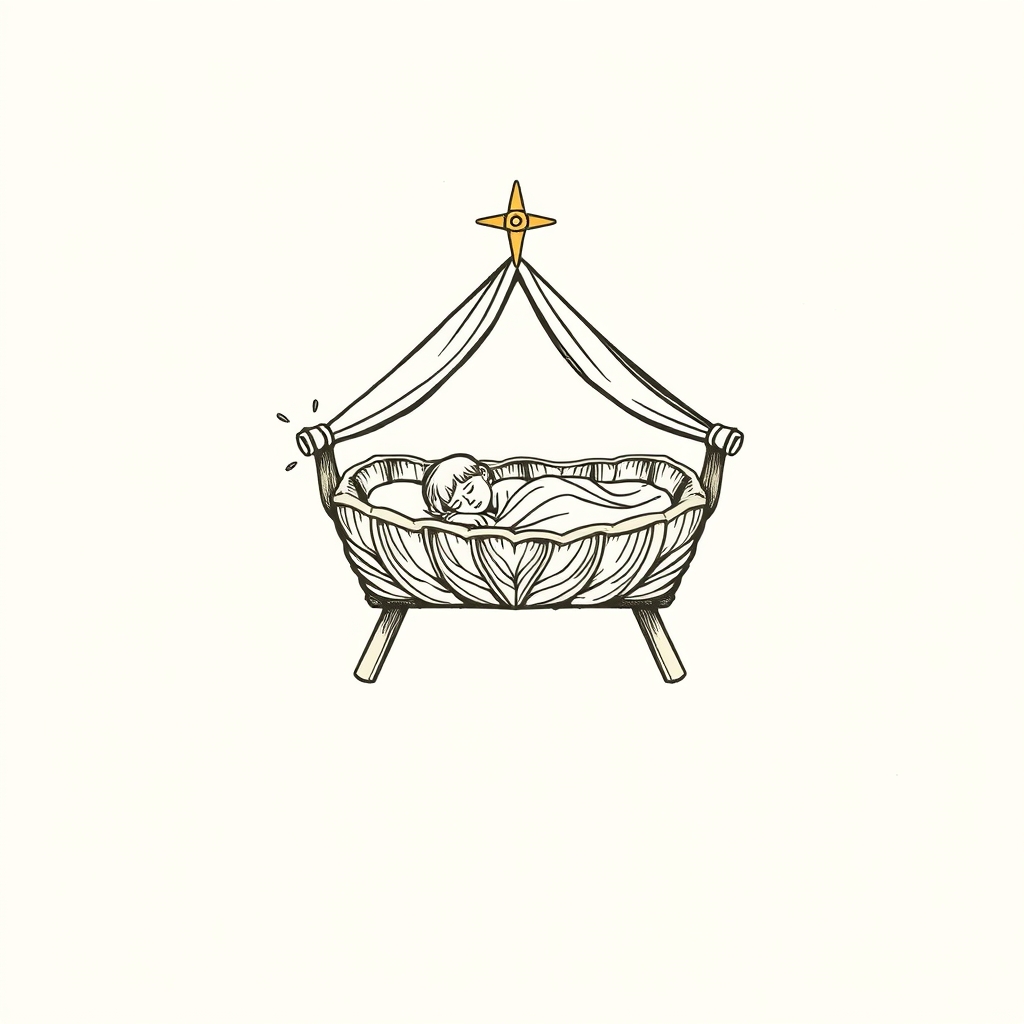
Entities
Narrative network
The names, places, and concepts most present in the entry, weighted by centrality in the text.
The supernatural in their life
The miracles of Our Lady of the Snows (Saint Mary Major)
Frequently asked questions about Our Lady of the Snows (Saint Mary Major)
Who was Our Lady of the Snows (Saint Mary Major)?
The feast commemorates the miracle of the snow in Rome which designated the site of the Basilica of Saint Mary Major, founded by the patrician John. This illustrious sanctuary is the site of numerous miracles, including the cessation of the plague and the protection of Pope Martin I. The Church particularly honors the absolute virginal purity of Mary there.
What is Our Lady of the Snows (Saint Mary Major) the patron saint of?
Patronage of Our Lady of the Snows (Saint Mary Major): Rome and Saint Mary Major.
What is Our Lady of the Snows (Saint Mary Major) invoked for?
Our Lady of the Snows (Saint Mary Major) is invoked for: cessation of the plague, deliverance from plagues (snakes), protection of the faithful and virginal purity.
How is Our Lady of the Snows (Saint Mary Major) depicted in Christian art?
In iconography, Our Lady of the Snows (Saint Mary Major) is recognizable by: snow, white jasmine flowers, painting by Saint Luke and cradle of Our Lord.
What miracles are attributed to Our Lady of the Snows (Saint Mary Major)?
4 miracles are attributed to this saint, notably: Sign / wonder, Healing and Protection / deliverance.
What are the other names of Our Lady of the Snows (Saint Mary Major)?
Other forms of the name: Sainte-Marie-Majeure, Notre-Dame des Neiges and Auguste Princesse.
Who are the relatives of Our Lady of the Snows (Saint Mary Major)?
Relatives of Our Lady of the Snows (Saint Mary Major): Jésus-Christ (son).
Annexes & related entities
Structured data for exploration: events, miracles, quotes, places, attributes, patronages, and important entities cited in the text.
Key Events
- Miracle of the snow indicating the site for the construction of the basilica
- Foundation of the church by the patrician John and his wife
- Cessation of the plague in Rome
- Deliverance from a devastating serpent under Pope Leo IV
- Protection of Pope Saint Martin I against an assassination attempt
Quotes
-
Et macula non est in te.
Holy Scripture