Saint Victor of Campbon
IN THE DIOCESE OF NANTES (6th century). — SAINT AGYLE OR Y OF VOISINAT,
Saint Victor was a 6th-century solitary established in Cambon, in the Diocese of Nantes. Leading an angelic life far from the world, he was buried in his oratory where many miracles were reported, notably the preservation of his relics from fire. His cult is celebrated on August 31 by the Church of Nantes.
Contemporaries

Figures and markers around the normalized period for this entry.
Guided reading
4 reading sections
SAINT VICTOR OF CAMBON, SOLITARY,
IN THE DIOCESE OF NANTES (6th century). — SAINT AGYLE OR Y OF VOISINAT,
Life and solitude
Saint Victor led the life of a hermit in the territory of Cambon, dedicating himself to prayer far from the world, possibly under the influence of the great Nantais saints of the 6th century.
Saint Victor was one of those souls whom God hides in the secret of His face, so that, preserved from the corruption of the century, they might serve Him with a purer heart. He was born in the ter ritory of Cambon, a parish in the dio cese of Nantes, near Pontchâteau, and spent his days there in solitude. Perhaps he should be regarded as one of the di sciples of S aint Friard, Saint Martin of Vertou , or Saint Herm eland, who filled the Nantais country at that time with the radiance of their virtues. What is certain is that the servant of God, far from the tumult of the world, led an angelic life and acquired great merits for eternity. The Lord having called him to Himself, his body was buried in the oratory of his cell, and the reputation of his holiness spread so much that the faithful were soon seen coming in crowds to his tomb to seek his intercession.
Invasions and reconstruction
After the destruction of his oratory by the Normans in the 9th century, the parish church was rebuilt by Count Gueroch while the hermitage remained in ruins.
This competition lasted until the year 878, at which time the Normans, having seized the Nantes region, destroyed the oratory of Saint Victor, which was located at one end of the village of Cambon, and at the same time overturned the parish church. The latter was rebuilt around the year 980, through th e care of Gueroch, Count of Nantes. As for the hermitage, it was left in ruins; but its walls still remained in the 10th century. It is said that at that tim e Geoffr ey, Count of Rennes, who was waging war aga inst Jud icaël, Count of Nantes, having wanted to house his troops' horses in this oratory, they all perished in a single night, to punish him for his irreverence. It is also reported that a young man from Cambon, seeking, out of guilty curiosity, to ascertain whether Victor was truly a saint, seized his relics and threw them twice into the fire, in order to test them; twice also, it is said, they emerged immediately with a great noise and without being damaged. The fool fell backward, remained as if dead, and did not recover his senses until he had been carried by his father to the tomb of Saint Victor. This tomb can still be seen in the church of Cambon; but it was profaned during the Revolution. As for th e relics of the servant of God, it appears that they are lost.
Miracles and profanations
Several miracles punish those who desecrate his oratory and his relics, although his tomb is eventually desecrated during the Revolution.
The Church of Nantes has long honored Saint Victor on August 31.
Liturgical Cult
The Church of Nantes maintains the memory of the saint by celebrating his feast day on August 31.
Taken from the Saints of Brittany , by Dom Lob ineau.
Iconography
Signs and attributes
Entities
Narrative network
The names, places, and concepts most present in the entry, weighted by centrality in the text.
The supernatural in their life
The miracles of Saint Victor of Campbon
Frequently asked questions about Saint Victor of Campbon
Who was Saint Victor of Campbon?
Saint Victor was a 6th-century solitary established in Cambon, in the Diocese of Nantes. Leading an angelic life far from the world, he was buried in his oratory where many miracles were reported, notably the preservation of his relics from fire. His cult is celebrated on August 31 by the Church of Nantes.
What is Saint Victor of Campbon the patron saint of?
Patronage of Saint Victor of Campbon: Campbon.
How is Saint Victor of Campbon depicted in Christian art?
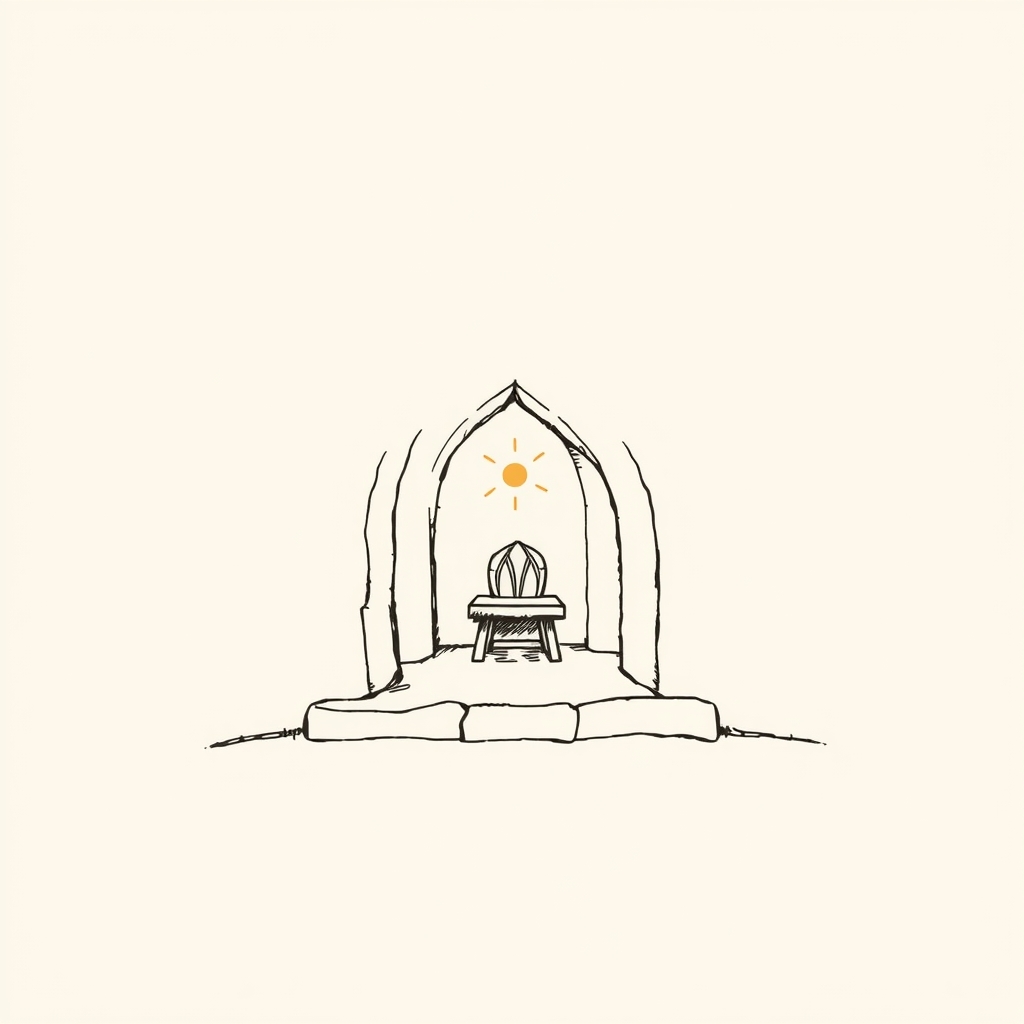
In iconography, Saint Victor of Campbon is recognizable by: hermit's cell and tomb.
What miracles are attributed to Saint Victor of Campbon?
3 miracles are attributed to this saint, notably: Sign / wonder, Incorruptibility and Healing.
Which saints were contemporaries of Saint Victor of Campbon?
Contemporaries include: Saint Remigius (Apostle of the Franks), Saint Antide of Besançon, Saint Eugene of Carthage and Saint Nicaise of Reims.
When did Saint Victor of Campbon die?
Saint Victor of Campbon died around 600.
What are the other names of Saint Victor of Campbon?
Other forms of the name: Victor de Cambon.
Annexes & related entities
Structured data for exploration: events, miracles, quotes, places, attributes, patronages, and important entities cited in the text.
Key Events
- Life of solitude and prayer in Cambon
- Burial in the oratory of his cell
- Destruction of his oratory by the Normans in 878
- Attempted desecration of relics by fire by a young man
- Desecration of the tomb during the French Revolution