Saint Sergius I
Of Syrian origin and born in Palermo, Sergius I became pope in 701 after a contested election. He distinguished himself by his refusal of the fraudulent canons of the Quinisext Council and by his liturgical enrichment, notably the introduction of the Agnus Dei. His thirteen-year pontificate was marked by great piety toward the martyrs and the restoration of Roman basilicas.
Contemporaries

Figures and markers around the normalized period for this entry.
Guided reading
5 reading sections
SAINT SERGIUS I, POPE AND CONFESSOR (701).
Origins and ecclesiastical ascent
Born in Sicily to a Syrian family, Sergius settled in Rome where his musical talents and piety led him from the priesthood to the title of Saint Susanna.
Sergi us, from a Syrian family of the province of Antioch, was born in Pal ermo, Sicily; his father was named Tiberius. Having come to Rome during t he time of Pope Adeodatus (672-676), he was first admitted among the clergy. His aptitude for sacred chant led to his selection as a teacher of the first class of music. Promoted to the rank of acolyte, he successively passed through the various degrees of the hierarchy and wa s ordaine d priest by Pope Leo, who conferred upon him the parochial title of Saint Susanna. During the seven years of his priestly ministry, Sergius, in his piety for the cult of the martyrs, never failed to celebrate Mass at the catacombs on the anniversary of the principal Saints who rest there.
A contested election
After the death of Conon, Sergius is elected pope as a compromise candidate against the rival factions of Theodore and Paschal.
Upon the death of the sovereign pont iff Conon, the people of Rome divided into two factions: one chose the archpriest Theodore, the other the arc hdeaco n Paschal. The struggle continued with cruel obstinacy; finally, the votes turned to the venerable priest Sergius. He was pulled from the midst of the crowd to be led to the oratory of the blessed martyr Caesarius, where he was proclaimed pontiff. The archpriest Theodore humbly made his submission; the archdeacon Paschal resisted: he was deposed and confined to a monastery where he died, five years later (692), in final impenitence.
Resistance to the Emperor
Sergius refused to sign the acts of the Council in Trullo (Quinisext) convened by Justinian II, opposing canons deemed contrary to ecclesiastical rules.
In the time of Sergius, the Em peror Jus tinian gathered a council in Constantinople attended by the apocrisiaries of the Apostolic See; by deceiving their good faith, their signatures were obtained. They then sought the signature of Sergius; but he energetically refused it, because a certain number of canons, contrary to all ecclesiastical rules, had been fraudulently added. This council has been called in Trullo, because it was held under the dome of the emperor's palace; it has also been named Quinisext, in that it was intended to be a supplement to the fifth and sixth general councils.
Liturgical works and the embellishment of Rome
The pontiff enriched the Roman basilicas, transferred the relics of Leo I, and introduced the Agnus Dei as well as processions for the Marian feasts.
On the pontifical throne, Sergius did not remain inactive. A notable portion o f the wood of the True Cross, enclosed in a silver reliquary and relegated until then to the sacristy of Saint Peter's, was placed by him in the Constantinian basilica, where, each year, on the day of the Exaltation of the Holy Cross, it is offered for the adoration and kissing of the faithful people. Sergius donated to the Vatican basilica the large gold statue of the blessed apostle Peter; the silver chair, weighing one hundred and twenty pounds, which is admired in the apse of the church, is also a gift from this pontiff, as are the six lampstands of the same metal that decorate the entrance to the confession. The body of the blessed pontiff Leo I, which had remained until then in its original burial place at the entrance of the Secretarium, was transferred by him to the interior of the basilica, into a beautiful mausole um. He or dered, by a pontifical constitution, that the Agnus Dei should be sung alternately by the clergy and the people before communion; he instituted for the feasts of the Annunciation, the Nativity, the Assumption, and the Purification, a litany that was to depart from the church of Saint Hadrian to proceed to Saint Mary Major.
End of pontificate and legacy
Sergius died after a thirteen-year reign and was buried in the Vatican; his life is documented by the Liber Pontificalis.
After other works still, all undertaken for the greater glory of God, Sergius fell asleep in the Lord, after a pontificate of thirteen years, eight months, and twenty-three days, and was buried in the Vatican.
Excerpt from the Liber Pontific alis. — Cf. Durcas, Histoire générale de l'Église, vol. XVI, p. 411.
SUPPLEMENT
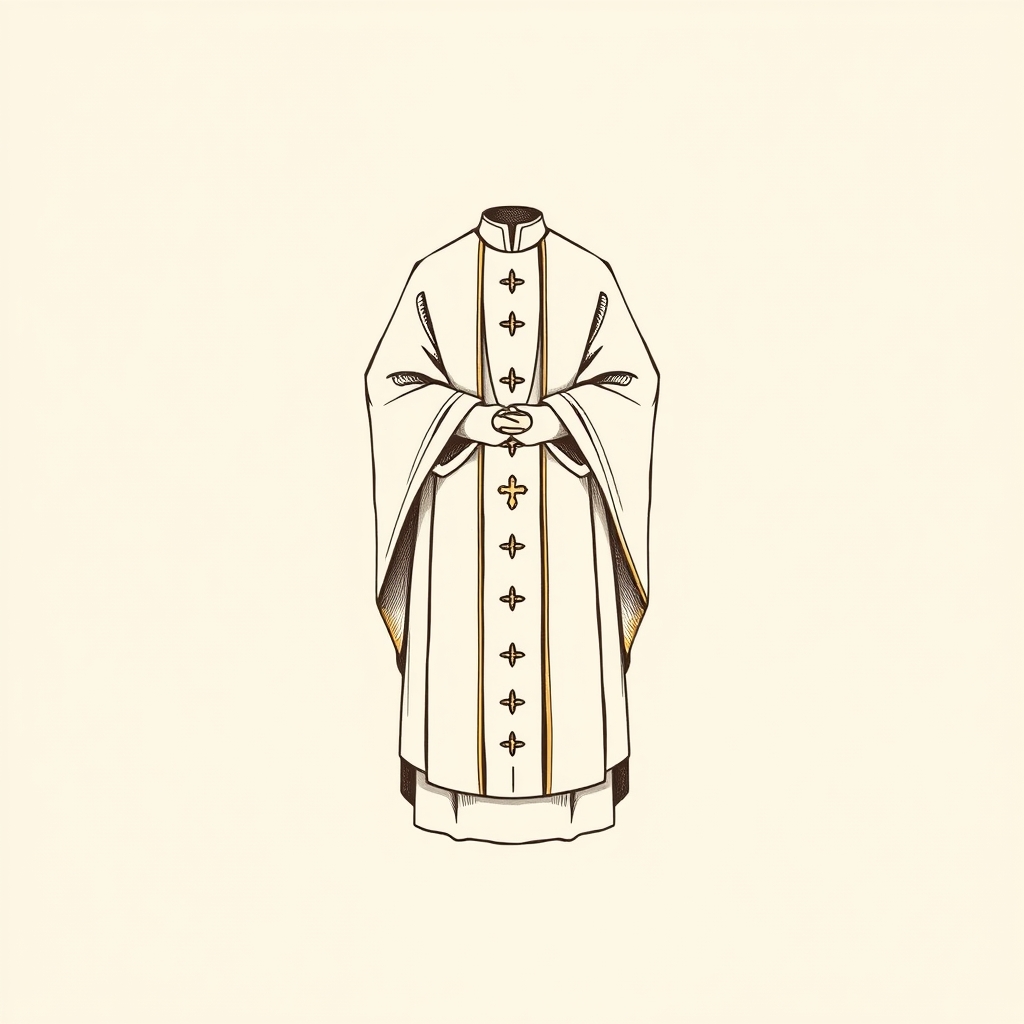
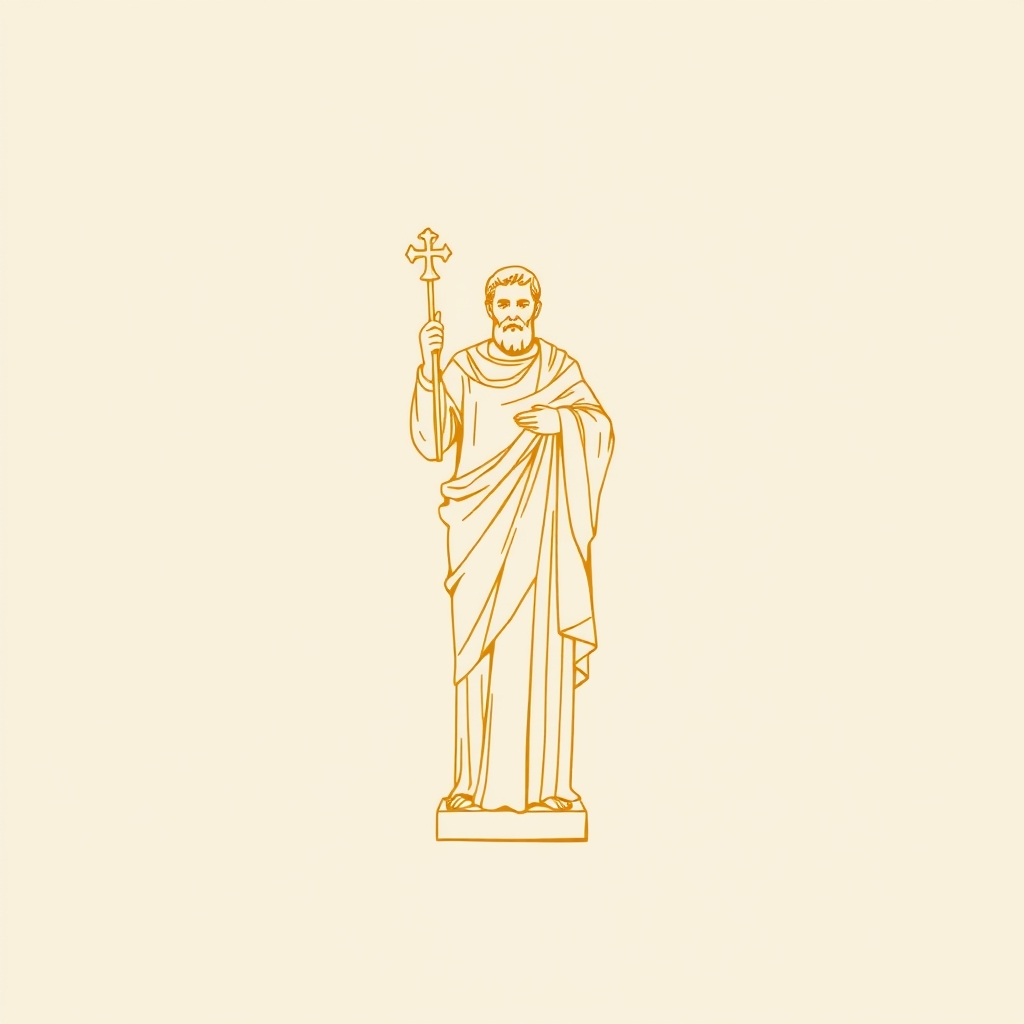
Iconography
Signs and attributes
Entities
Narrative network
The names, places, and concepts most present in the entry, weighted by centrality in the text.
Frequently asked questions about Saint Sergius I
Who was Saint Sergius I?
Of Syrian origin and born in Palermo, Sergius I became pope in 701 after a contested election. He distinguished himself by his refusal of the fraudulent canons of the Quinisext Council and by his liturgical enrichment, notably the introduction of the Agnus Dei. His thirteen-year pontificate was marked by great piety toward the martyrs and the restoration of Roman basilicas.
What is Saint Sergius I the patron saint of?
Patronage of Saint Sergius I: musicians and cantors.
How is Saint Sergius I depicted in Christian art?
In iconography, Saint Sergius I is recognizable by: pontifical vestments, golden statue of Saint Peter and True Cross.
How did Saint Sergius I die?
Saint Sergius I suffered martyrdom for the Christian faith (8th century).
Which saints were contemporaries of Saint Sergius I?
Contemporaries include: Saint Hidulph of Trier, Saint Ghislain (Guillain), Saint Lambert (Landebert) and Saint Amand of Maastricht.
What are the other names of Saint Sergius I?
Other forms of the name: Sergius.
Who are the relatives of Saint Sergius I?
Relatives of Saint Sergius I: Tibère (father).
Annexes & related entities
Structured data for exploration: events, miracles, quotes, places, attributes, patronages, and important entities cited in the text.
Key Events
- Arrived in Rome during the pontificate of Adeodatus
- Ordained priest by Pope Leo for the title of Santa Susanna
- Election to the papacy against Theodore and Paschal
- Refusal to sign the acts of the Council in Trullo (Quinisext)
- Institution of the singing of the Agnus Dei at Mass
- Translation of the body of Saint Leo I