Born in Barcelona in 1230 through the prayers of Saint Peter Nolasco, Mary of Cervellione dedicated her life to God, refusing marriage. She became the foundress and first superior of the female branch of the Order of Mercy. Having died in 1290, her body was found incorrupt ninety years later.
Contemporaries

Figures and markers around the normalized period for this entry.
Guided reading
5 reading sections
SAINT MARY OF CERVELLIONE, VIRGIN,
OF THE ORDER OF MERCY (1290).
Youth and early virtues
Born in Barcelona in 1230 through the intercession of Saint Peter Nolasco, Mary manifested from childhood a deep piety and a taste for asceticism.
Saint Mary of Cervellione w as born in 1230 in Barcelon a. This birth was due to the prayers of S aint Peter Nolasco, f or Don a Maria, h er mother, had been sterile until then. The family's joy was great at the arrival of this little girl whose face shone with a marvelous radiance. From her early years, she showed an extraordinary purity of soul, weeping over the slightest faults as if they had been grave offenses against God. She sought solitude and showed a remarkable taste for reading the Lives of the Saints, whose actions she strove to imitate. She never went out except in the company of her mother and only to go to church or to hospitals. She fled idleness and worked preparing ornaments for the church or making clothes for the poor. She led a hard and crucified life, fasting with courage, wearing a harsh hair shirt, and often practicing self-discipline.
Vocation and resistance to marriage
Despite family pressures and illustrious suitors, she refused marriage to dedicate herself to Christ and eventually took the religious habit.
Asked in marriage several times by wealthy suitors, she constantly refused, for she had chosen Jesus Christ as her Spouse, and to obtain from heaven the fidelity to her resolution, she redoubled her prayers, her austerities, and her works of charity. The jealous demon stirred up for her another suitor of illustrious birth, to whom her parents would have gladly given her. But nothing was capable of overcoming her resistance. Supported by the help of heaven, she remained unshakable. From that day on, she stripped herself of all the ornaments of the world, wore only clothes of coarse wool, and, some time later, with the advice of her director and the consent of her family, she took the habit of Our Lady of Mercy. There were not yet any nuns of this Order, and she became the foundress of the first convent, which was soon filled with holy women from the richest families of Barcelona, eager to d edicate t hemselves to God and to devote themselves to works of piety and mercy. Named superior, she began by doing herself what she recommended to her nuns, thus making obedience easy for them. God showered her with favors: He granted her the gift of prophecy and the gift of miracles. After a life filled with merits and good works, she rendered her soul to God on September 19, 1290, and was buried amidst an immense crowd in the church of Our Lady of Mercy. Ninety years after her death, Peter IV of Aragon had her tomb opened in order to give he r a burial more wo rthy of her. Her body was found incorrupt; one would have said that life had just left it. Miracles did not cease to multiply at her tomb; Innocent III approved the cult that was rendered to her.
Foundation of the Mercedarian Nuns
She founded the first convent of nuns of the Order of Mercy in Barcelona, of which she became the superior.
Death, incorruptibility and cult
Died in 1290, her body was found intact 90 years later. Her cult was officially approved by the Pope.
Asked in marriage several times by wealthy suitors, she constantly refused, for she had chosen Jesus Christ as her Spouse, and to obtain from heaven the fidelity to her resolution, she redoubled her prayers, her austerities, and her works of charity. The jealous demon stirred up for her yet another suitor of illustrious birth, to whom her parents would have gladly given her. But nothing was able to overcome her resistance. Supported by the help of heaven, she remained unshakable. From that day on, she stripped herself of all the ornaments of the world, wore only clothes of coarse wool, and, some time later, with the advice of her director and the consent of her family, she took the habit of Our Lady of Mercy. There were not yet any nuns of this Order, and she became the foundress of the first convent, which was soon filled with holy women from the wealthiest families of Barcelona, jealous to consecrate themselves to God and to devote themselves to works of piety and mercy. Named superior, she began by doing herself what she recommended to her nuns, thus making obedience easy for them. God showered her with favors: He granted her the gift of prophecy and the gift of miracles. After a life filled with merits and good works, she rendered her soul to God on September 19, 1290, and was buried amidst an immense crowd in the church of Our Lady of Mercy. Ninety years after her death, Peter IV of Aragon had her tomb opened in order to give her a burial more worthy of her. Her body was found without corruption; one would have said that life had just left it. Miracles did not cease to multiply at her tomb; Innocent III approved the cult that was rendered to her.
Sources
The account is based on the Acta Sanctorum.
Acta Sanctorum.
Iconography
Signs and attributes
Entities
Narrative network
The names, places, and concepts most present in the entry, weighted by centrality in the text.
The supernatural in their life
The miracles of Saint Mary of Cervellione
Frequently asked questions about Saint Mary of Cervellione
Who was Saint Mary of Cervellione?
Born in Barcelona in 1230 through the prayers of Saint Peter Nolasco, Mary of Cervellione dedicated her life to God, refusing marriage. She became the foundress and first superior of the female branch of the Order of Mercy. Having died in 1290, her body was found incorrupt ninety years later.
What is Saint Mary of Cervellione the patron saint of?
Patronage of Saint Mary of Cervellione: Order of Mercy (women's branch).
How is Saint Mary of Cervellione depicted in Christian art?
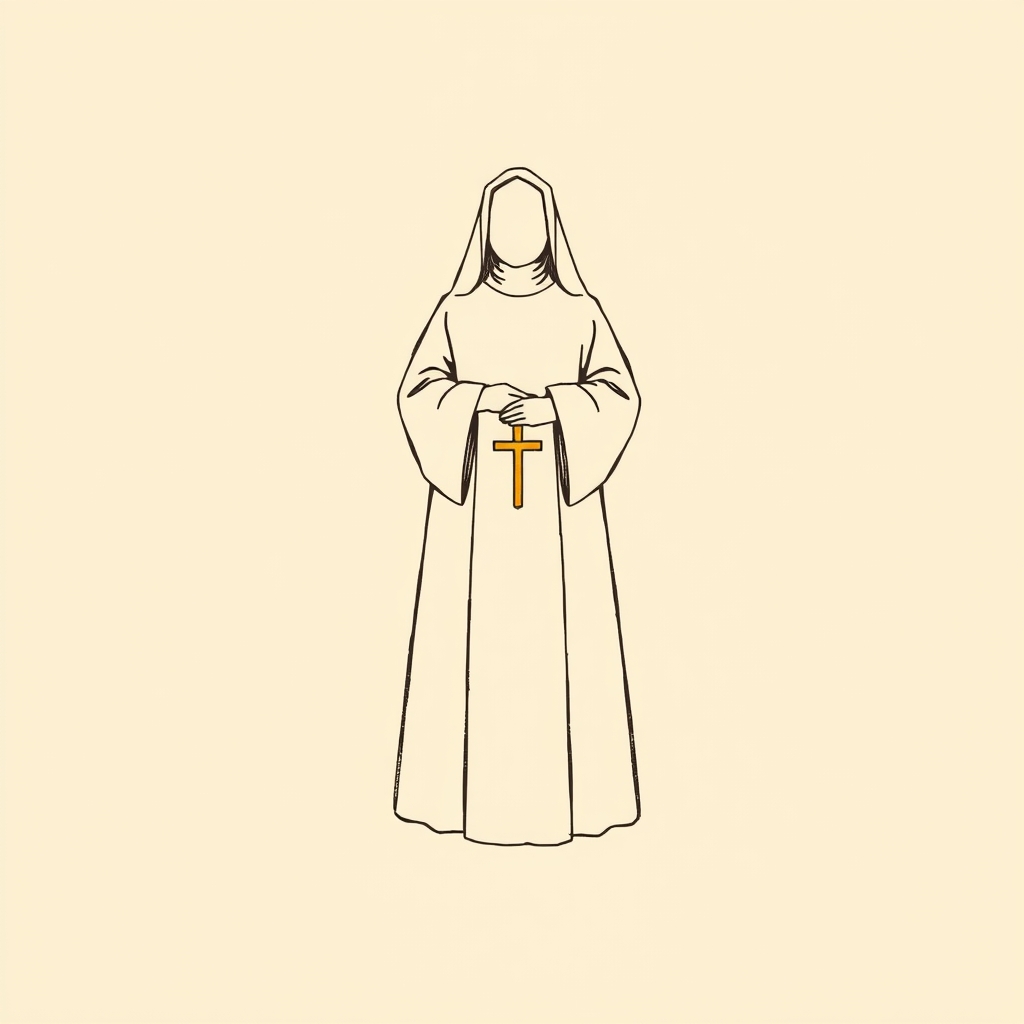
In iconography, Saint Mary of Cervellione is recognizable by: habit of the Order of Mercy, hairshirt and discipline.
What miracles are attributed to Saint Mary of Cervellione?
4 miracles are attributed to this saint, notably: Sign / wonder, Prophecy / infused knowledge and Incorruptibility.
Which saints were contemporaries of Saint Mary of Cervellione?
Contemporaries include: Saint Anthony of Padua (Ferdinand), Saint Arthaud of Belley, Saint Thomas Aquinas and Saint Bernard of Clairvaux.
When did Saint Mary of Cervellione die?
Saint Mary of Cervellione died around 1300.
What are the other names of Saint Mary of Cervellione?
Other forms of the name: Maria de Cervelló.
Who are the relatives of Saint Mary of Cervellione?
Relatives of Saint Mary of Cervellione: Dona Maria (mother).
Annexes & related entities
Structured data for exploration: events, miracles, quotes, places, attributes, patronages, and important entities cited in the text.
Key Events
- Born in Barcelona in 1230
- Refusal of several illustrious marriages
- Taking the habit of the Order of Mercy
- Foundation of the first convent of the Sisters of Mercy
- Election as superior
- Died in 1290
- Exhumation and discovery of the intact body in 1380