Saint Galla of Rome
Daughter of the patrician Symmachus and a widow after only one year of marriage, Galla refused to remarry to dedicate herself to God. She lived as a recluse near the Vatican, distributing her wealth to the poor and enduring cancer with angelic patience. Before her death around 550, she received a vision of Saint Peter assuring her of her eternal salvation.
Contemporaries

Figures and markers around the normalized period for this entry.
Guided reading
6 reading sections
SAINT GALLA OF ROME, WIDOW AND RECLUSE (550).
Origins and renunciation of the world
Daughter of the patrician Symmachus and a widow after only one year of marriage, Galla refused to remarry despite her youth and fortune in order to dedicate herself to God.
Galla , an illustrious Roman matron, was the daughter of the patr ician Symmachus, one of the most famous men of his century and one of the last Romans, who was a victim of the G oth Theodoric; she was the sister of Rusticiana, who had marri ed th e famous Boethius, another victim of the same tyrant. Raised in the highest piety, she married, according to her father's wishes, a man whose name has remained unknown; but she became a widow within the very year of her marriage. Full of youth, vigor, and beauty, she did not lack suitors for a second marriage: her age, her wealth, and the pressing solicitations all seemed to urge her toward a new marriage. But, closing her eyes to the vain splendor of the world, she renounced it without a moment's hesitation. She preferred the heavenly Spouse to those whom the world offered her, preferring, through the austerities of penance, to prepare her soul for the joys of heaven rather than to risk her salvation in the midst of the satisfactions of a worldly life.
Reclusive life at the Vatican
She established herself in a cell near the tomb of the apostles Peter and Paul at the Vatican, living in poverty and dedicating her wealth to the needy.
Galla abandoned secular attire along with the mourning of her husband; imbued with devotion for the glor ious a postles Peter and Paul, she had a cell built for herself near their t omb, on the Vatican, and enclosed herself there to live in simplicity of heart, spending her days and part of her nights in prayer. She only interrupted this holy exercise to spread her charity abroad; for her possessions, which were considerable, became the patrimony of the poor. She had reserved for herself holy poverty and a life full of the austerities of penance. She practiced openly, with heroic courage, all the vows that can lead to perfect holiness.
Recognition by the Fathers of the Church
Her piety attracted the admiration of contemporary bishops, notably Saint Fulgentius of Ruspe, who addressed an exhortation on widowhood to her from his exile.
The bishops who were the ornament of the Western Church, and the Saints of her century, hastened to pay homage to her piety and fervor. She received with docility the instructions given to her by the Fathers, whom she venerated as her fathers in the faith; she regarded the advice and examples of others as one of the principal means of sanctification provided to her by Providence. We still possess the exhortation on widowhood that the great Saint Fulgentius, Bishop of Ruspe, ad dressed to her from the very heart of his exile.
The Trial of Cancer
Galla endures with heroic patience the sufferings of breast cancer, seeing in it a means of spiritual purification.
God, wishing to purify this holy soul more and more, and to raise her to the point of perfection that her manly courage could support, permitted her to be tested by a horrible disease: a cancer came to devour her breast. She suffered the pains of this ulcer with angelic patience and absolute submission to the designs of God. Nothing sanctifies like sufferings accepted at the foot of the cross.
Vision of Saint Peter and passing
Shortly before her death around 550, Saint Peter appeared to her to announce her salvation and the imminent entry into heaven of one of her companions, Benedicta.
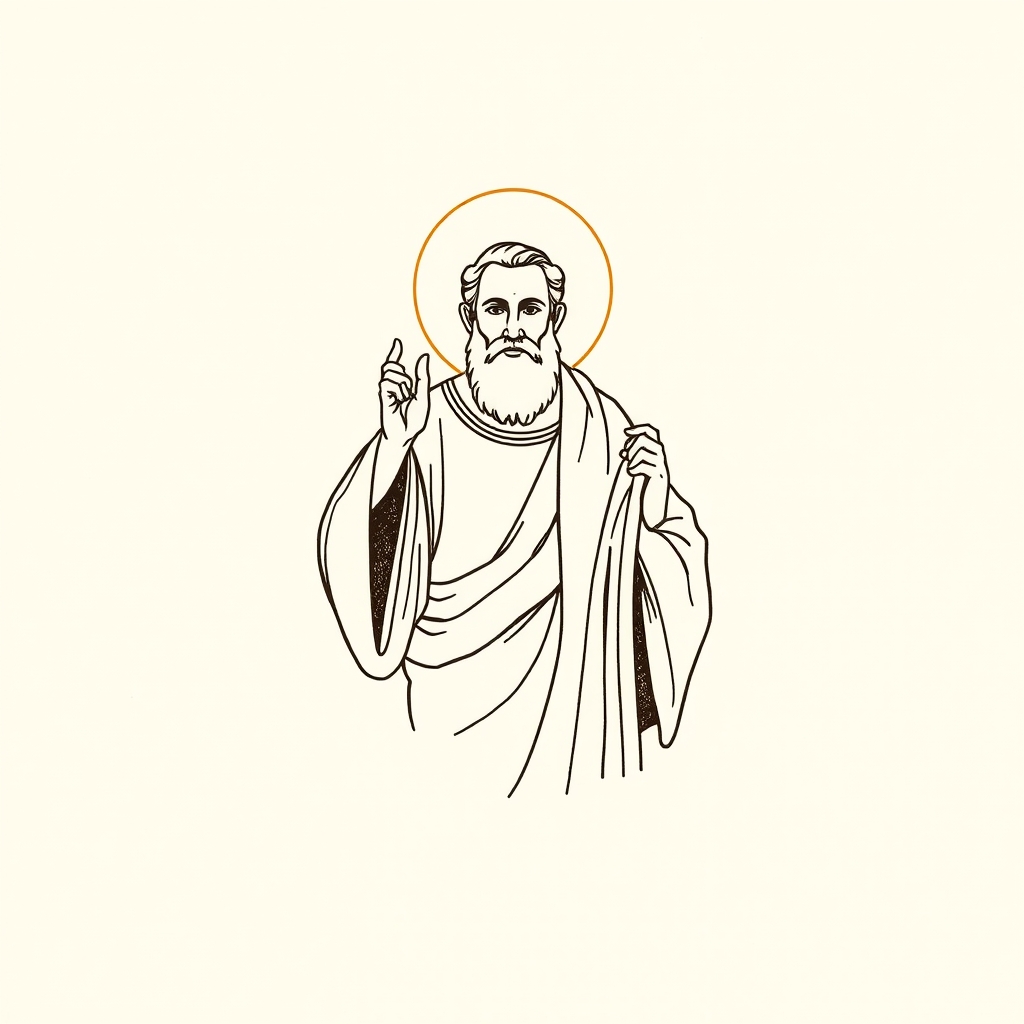
Being near her end, one day when she had been greatly tormented by her illness, Galla saw the apo stle Saint P eter appear to her during the night, between the two lamps she kept lit in her room. Instead of troubling her, this vision filled her with a secret joy. She boldly asked the apostle to tell her if her sins were forgiven. "Yes," Saint Peter replied; "come now to God." She asked that a nun named Benedicta, whom she loved very much, might come wit h her. "She will come," the Saint replied, "but not now; her time is still more than thirty days away; you will have such other companion for your passage into eternity." Three days later Galla died, as did the person designated by the apostle, and Benedicta followed them after two months. This was around 550.
Attributes and representations
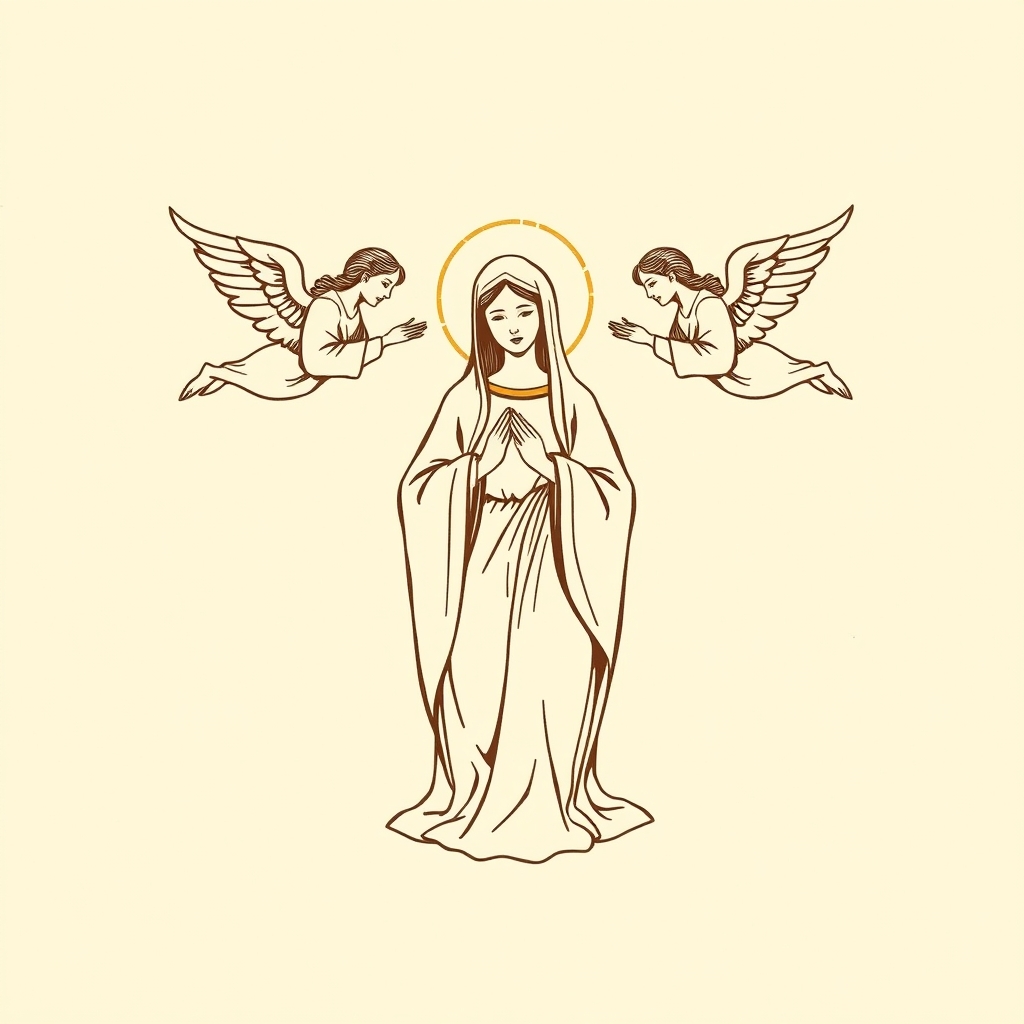
The saint is traditionally depicted giving alms, wearing a miraculous beard, or receiving an image of the Virgin from the hands of angels.
She is represented: 1° giving alms to the poor; 2° wearing a bushy beard. Saint Gre gory reports t hat the doctors had threatened her with the eruption of a beard if she refused to enter into a second marriage; she took no account of it, and the prognosis was verified; 3° receiving from the hand of angels an image of Mary, as a reward for her widowhood; 4° having a vision in which Saint Peter appears to her and assures her of her salvation.
Chapin: La Vie d'une sainte pour chaque jour de l'année; Père Cahier: Caractéristiques des Saints.
Iconography
Signs and attributes


Entities
Narrative network
The names, places, and concepts most present in the entry, weighted by centrality in the text.
The supernatural in their life
The miracles of Saint Galla of Rome
Frequently asked questions about Saint Galla of Rome
Who was Saint Galla of Rome?
Daughter of the patrician Symmachus and a widow after only one year of marriage, Galla refused to remarry to dedicate herself to God. She lived as a recluse near the Vatican, distributing her wealth to the poor and enduring cancer with angelic patience. Before her death around 550, she received a vision of Saint Peter assuring her of her eternal salvation.
How is Saint Galla of Rome depicted in Christian art?
In iconography, Saint Galla of Rome is recognizable by: bushy beard, alms to the poor, image of Mary received from angels and vision of Saint Peter.
What miracles are attributed to Saint Galla of Rome?
3 miracles are attributed to this saint, notably: Sign / wonder and Vision / apparition.
Which saints were contemporaries of Saint Galla of Rome?
Contemporaries include: Saint Remigius (Apostle of the Franks), Saint Antide of Besançon, Saint Eugene of Carthage and Saint Nicaise of Reims.
When did Saint Galla of Rome die?
Saint Galla of Rome died around 600.
What are the other names of Saint Galla of Rome?
Other forms of the name: Galla.
Who are the relatives of Saint Galla of Rome?
Relatives of Saint Galla of Rome: Symmaque (father), Rusticienne (sister) and Boèce (brother-in-law).
Annexes & related entities
Structured data for exploration: events, miracles, quotes, places, attributes, patronages, and important entities cited in the text.
Key Events
- Forced marriage by her father and early widowhood after one year
- Refusal of remarriage despite social and medical pressure
- Retirement to a cell near the tomb of Saint Peter at the Vatican
- Received an exhortation from Saint Fulgentius of Ruspe
- Suffered from breast cancer with patience
- Vision of Saint Peter announcing her death and salvation
Quotes
-
Yes; come now to God
Words of Saint Peter during the vision