An 11th-century Italian religious, Dominic renounced the priesthood out of horror for the simony committed by his parents. He withdrew into solitude, notably at Fonte Avellana under the guidance of Saint Peter Damian, where he practiced extreme penances. Nicknamed Loricatus for the chainmail he wore against his skin, he died in 1066.
Contemporaries

Figures and markers around the normalized period for this entry.
Guided reading
5 reading sections
SAINT DOMINIC LORICATUS, PENITENT,
RELIGIOUS AT FONTE AVELLANA, IN ITALY (1060).
Refusal of simony
Horrified to learn that his parents paid the bishop for his ordination, Dominic renounces all ecclesiastical functions to devote himself to penance.
The severity with which Do minic pun ished himself for a fault that was not his own is well capable of confounding those who, having committed light faults deliberately, imagine they can obtain forgiveness for them without performing true penance. Having shown in his youth a great desire to embrace the ecclesiastical state, he received permission from his parents to follow his vocation; but they gave a gift to the bishop so that he would confer the priesthood upon him. No sooner had he learned what had happened than, seized with horror at the sight of a crime so severely condemned by the laws of the Church, he refused to exercise any ecclesiastical function; he even formed the resolution to devote himself to the exercises of the most rigorous penance.
The Hermitage of Montefeltro
Dominic joins a community of rigorous hermits led by John at Montefeltro, where he quickly surpasses his brothers in austerities.
There was, in the wilderness of Montefeltro (March of Ancona), a holy man named Jo hn, who led a very austere life. Eighteen disciples filled with fervor had come to live under his guidance. They forbade themselves the use of wine, meat, and any kind of dairy product. They fasted on bread and water every day, except for Thursday and Sunday. The time they gave to sleep was very short; they spent the rest in prayer and manual labor. They kept perpetual silence, and only conversed with one another on Sunday evening, between Vespers and Compline. Harsh flagellations were part of their penance. Dominic, after having spent some time in the hermitage of Loréolo, went to find the superior of these holy hermits and begged him with great humility to receive him among his disciples. The grace he requested was granted to him, and he soon surpassed all the brothers in austerities.
Font-Avellana and the Cuirassier
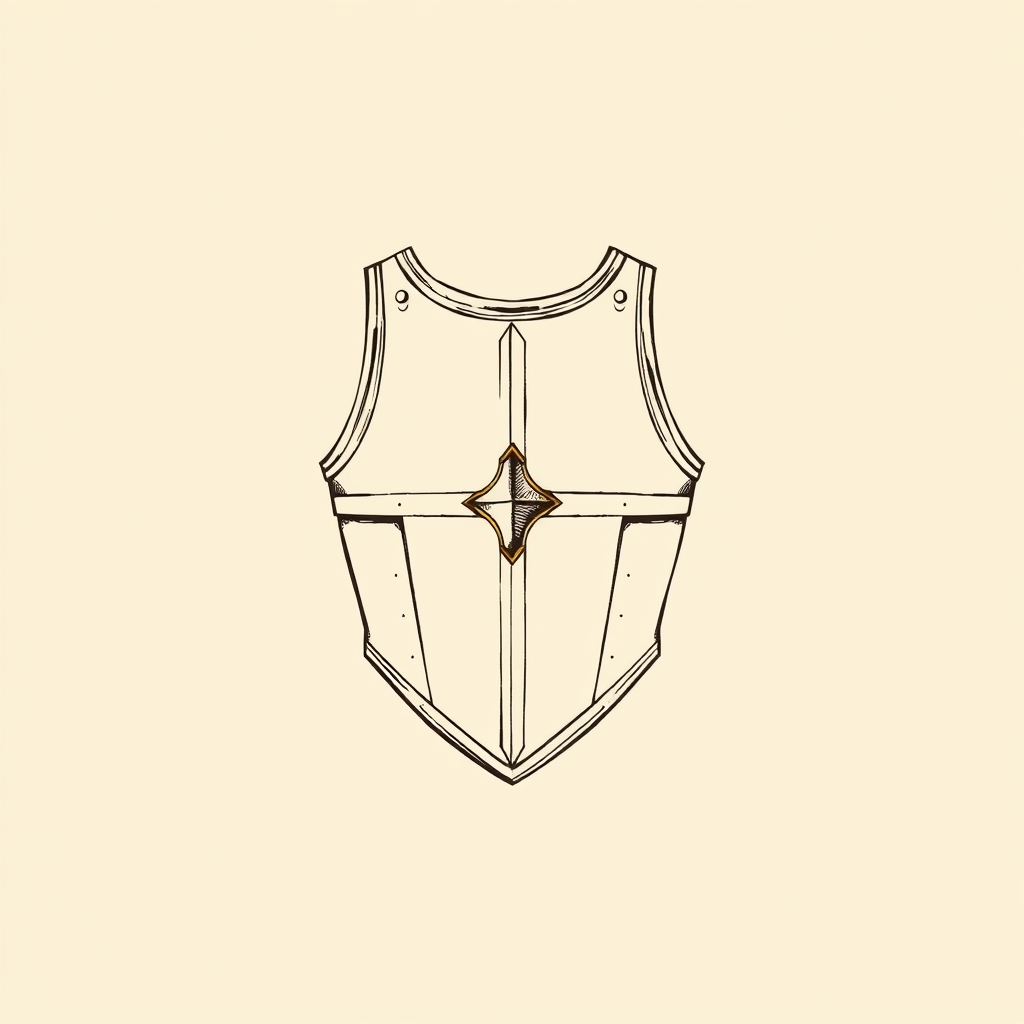
Under the guidance of Saint Peter Damian at Font-Avellana, he adopted the permanent wearing of an iron cuirass against his skin, from which he derived his nickname.
Some years having passed in this manner, he obtained permission from his superior to move to the hermitage of Font-Avellana (province of Spoleto). Saint Peter Damian was in charge of it at that time. Although he was accustomed to seeing great examples of virtue, the fervor of his new disciple caused him admiration. Dominic wore an iron cuirass against his flesh, which has since caused him to be nicknamed the Cuirass ier; he never took it off except to receive the discipline.
Penitential practices and death
Dominic became a model of voluntary flagellation, substituting these mortifications for canonical penances until his death in 1066.
Around that time, the canonical penance prescribed for certain grave sins began to be commuted with relative ease. The granting of indulgences became more frequent; pilgrimages or other good works were substituted for canonical penance. The practice of voluntary flagellation also began to be introduced at that time , and it was believed tha t one year of canonical penance could be compensated for by three thousand blows inflicted upon oneself while reciting ten psalms. Dominic distinguished himself above all others by his fervor in this type of austerity. As he was often ill, his superior sometimes obliged him to drink a little wine; but he would renounce it as soon as he felt better. He always appeared animated by the same spirit of penance, even during his final illness. The night before his death, he still recited Matins and Lauds with his brothers. He expired while Prime was being chanted, on October 14, 1066.
Iconography and Sources
The saint is depicted with his cuirass and a discipline; his life is documented by Saint Peter Damian and the historian Tarchi.
He is represented: 1° wearing a cuirass or a coat of mail; 2° holding a discipline in his hand.
See his life by Saint Peter Damian, and anothe r more extensive life, with several dissertations, by Tarchi. It wa s prin ted in Rome in 1731.
Iconography
Signs and attributes


Entities
Narrative network
The names, places, and concepts most present in the entry, weighted by centrality in the text.
Frequently asked questions about Saint Dominic Loricatus
Who was Saint Dominic Loricatus?
An 11th-century Italian religious, Dominic renounced the priesthood out of horror for the simony committed by his parents. He withdrew into solitude, notably at Fonte Avellana under the guidance of Saint Peter Damian, where he practiced extreme penances. Nicknamed Loricatus for the chainmail he wore against his skin, he died in 1066.
How is Saint Dominic Loricatus depicted in Christian art?
In iconography, Saint Dominic Loricatus is recognizable by: cuirass, chainmail and discipline.
Which saints were contemporaries of Saint Dominic Loricatus?
Contemporaries include: Saint Bernard of Menthon (Apostle of the Alps), Saint Stephen of Hungary, Saint Norbert of Magdeburg and Saint Bernard of Clairvaux.
When did Saint Dominic Loricatus die?
Saint Dominic Loricatus died around 1066.
What are the other names of Saint Dominic Loricatus?
Other forms of the name: Dominicus Loricatus.
Who are the relatives of Saint Dominic Loricatus?
Relatives of Saint Dominic Loricatus: Parents (anonymes) (parents).
Annexes & related entities
Structured data for exploration: events, miracles, quotes, places, attributes, patronages, and important entities cited in the text.
Key Events
- Renunciation of ecclesiastical duties following parental simony
- Entered the Montefeltro desert under the guidance of John
- Stay at the hermitage of Loreolo
- Entered the hermitage of Fonte Avellana under Saint Peter Damian
- Practice of voluntary flagellation and wearing of an iron cuirass