Saint Anstrude
Daughter of Saint Salaberga, Anstrude became abbess of the monastery of Laon at only twenty years old. Recognized for her great austerity and maternal gentleness, she firmly defended the rights of her community against episcopal claims. She died in 688, leaving the image of a superior devoted to the poor and the sick.
Contemporaries

Figures and markers around the normalized period for this entry.
Guided reading
6 reading sections
SAINT ANSTRUDE,
Historical context
The life of Saint Anstrude takes place in the 7th century, under the pontificate of Sergius I and the reign of Theuderic III.
688. — Pope: S ergius I. — King of France: The uderic III.
The humble soul considers itself less worthy as it becomes more so. Gratian.
Youth and vocation
Daughter of Saint Salaberga, Anstrude entered the monastery of Laon at the age of twelve and succeeded her mother as abbess at the age of twenty.
Anstrude was the daughter of Blandin Bason a nd Saint Salaber ga. The good examples of the paternal home made such a happy impression on the mind and heart of Anstrude that she felt from then on strongly urged inwardly to practice virtue. When Saint Salaberga had founded a monastery of virgins in Laon , Anstrude, although already sought in marriage by one of the most noble and richest lords of the country, sighed only for the moment when she would be permitted to join her pious mother and place herself entirely under her direction. She was only twelve years old when she was received into the monastery. But her progress in perfection was so great that, at the age of twenty, the entire community gave its full and free assent for her to be recognized as abbess, as Saint Salaberga had proposed on her deathbed. Anstrude resisted the unanimous wish of her sisters as much as she could; regarding herself as the last of all, she could not explain why they had set their eyes on her.
Accession to the Abbacy
Despite her humility and initial resistance, she accepts the leadership of the community out of obedience to Bishop Peregrinus.
The Bishop of Laon , Peregr inus, finally overcame her resistance, and it was only by virtue of holy obedience that she humbly bowed her head under the burden imposed upon her, quite unlike those ambitious persons who move heaven and earth to arrive at a position of honor, despite the cries of their conscience. As for Anstrude, it was the voice of God that had called her to the head of her sisters; she could be assured that God would support her with His graces and inspirations, and thus supply what she lacked in terms of years and experience. Her government was a mixture of firmness and gentleness: formed in tober 1835. — Continuators of Bollandus; Tresvaux, continuator of the Saints of Brittany by Dom Lobineau.
Ascetic life and governance
She leads a life of extreme austerity, doing without a bed and multiplying fasts, while devoting herself to the sick, the poor, and sinners.
Possessing all the virtues of the cloister, a model of modesty, reserve, mortification, and recollection, she forgave nothing in herself, yet was indulgent toward others, without, however, weakening in any way on the observance of the rule. The younger sisters loved her as one loves a mother, because it was not through harsh and severe words that she attempted to correct their faults and reform their character, but, on the contrary, by opening their hearts to trust, by appealing to their frankness, and by often using words of encouragement. Anstrude drew all her strength from habitual union with God; she never lost sight of His presence, prayed incessantly for her community, and laid before the Lord the particular needs of each one. Persuaded that a superior is responsible for the subjects submitted to her, it was to obtain their advancement and perseverance that she multiplied her fasts, to the point that she took food only after having recited the Psalter, to which she added hymns and spiritual canticles. Her vigils were so prolonged that she eventually did without a bed, contenting herself with a small seat near the door of the church on which she took a little rest after the night office. At daybreak, she would go to pray successively in the seven churches of the monastery, and then devoted herself to the service of the sick. The poor and the orphans were the continuous object of her charity, and widows came to seek from her the counsel that their position required. Even sinners could not help but venerate her; many allowed themselves to be persuaded by her charitable and gentle remonstrances and abandoned their vicious habits forever.
Conflicts and miracles
She firmly defended the independence of her monastery against the claims of Bishop Madalgaire and performed miracles before her death in 688.
So many virtues did not shield Anstrude from persecution. Madalga ire, the t hirteenth bishop of Laon, caused her all sorts of difficulties, wrongly claiming to have rights over this monastery. Anstrude resisted firmly, the bishop's claims were dismissed, and he was forbidden from henceforth disturbing the abbess in the governance of her house. Holiness does not preclude one from striving to obtain justice when iniquitous aggressors undertake to disturb us in our legitimate possessions. Anstrude was favored with the gift of miracles during her life and after her death. The Lord called her to Himself on October 17, 688. Her body, as well as that of her mother, rested until the French Revolution in the abbey church of Saint-Jean.
Posterity and Veneration
The monastery maintained royal prestige until the 12th century before being transformed; its veneration remains alive in the diocese of Soissons and Laon.
The monastery of Saint Salaberga and Saint Anstrude was occupied by nuns until 1128: several queens of France were its abbesses. This house was so respected that on solemn feast days the king would wear his golden crown there, and would never enter except on foot with his entire retinue, without horses or dogs. In 1128, the nuns were relegated to Crandelain, a village t wo and a half leagues from Laon; monks were substituted for them, and the house took the name of Saint-Jean.
The feast of Saint Anstrude is celebrated in the diocese of Soissons and Laon on October 17, which is the anniversary of her death.
Notice by M. Henri Congnat, canon of Soissons. — Cf. Acta Sanct. Ord. S. Benedic ti; and Dom Lelong, Hist. du diocèse de Laon.
Iconography
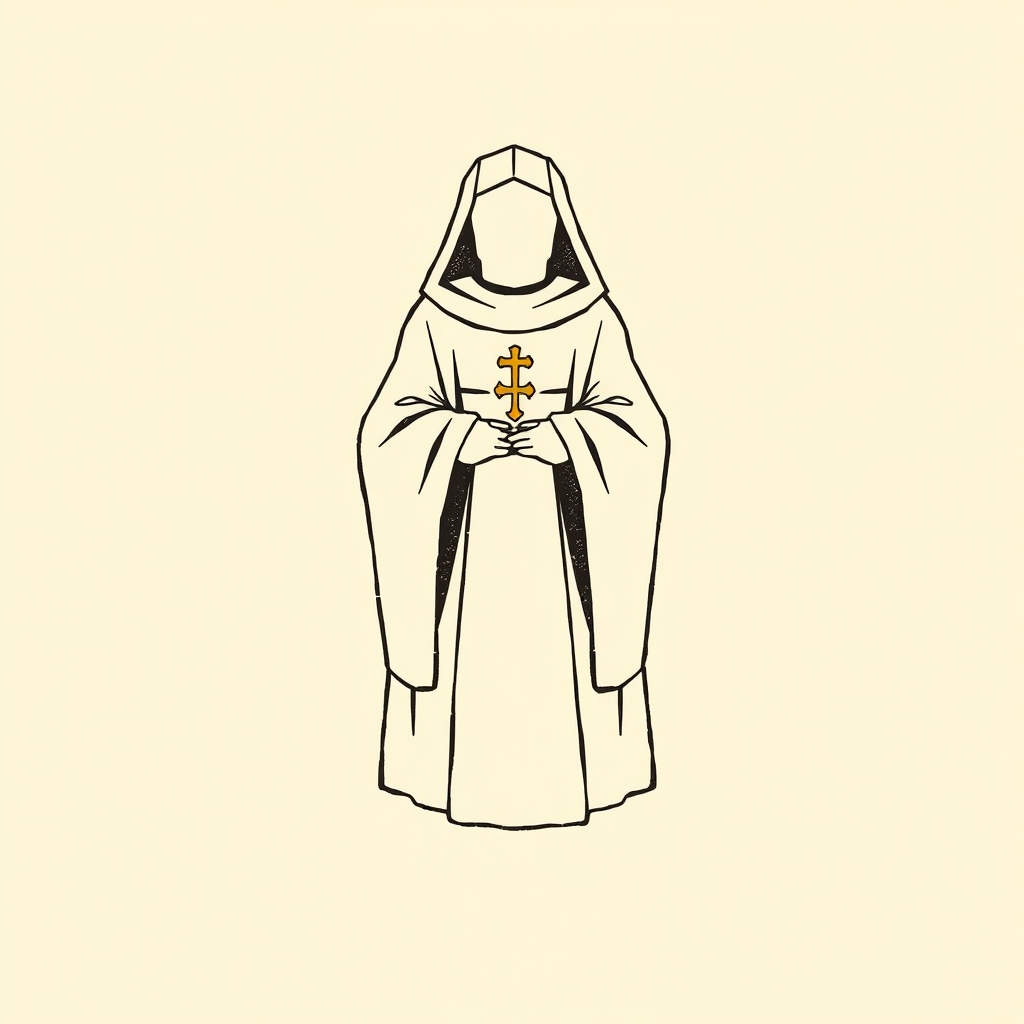
Signs and attributes

Entities
Narrative network
The names, places, and concepts most present in the entry, weighted by centrality in the text.
The supernatural in their life
The miracles of Saint Anstrude
Frequently asked questions about Saint Anstrude
Who was Saint Anstrude?
Daughter of Saint Salaberga, Anstrude became abbess of the monastery of Laon at only twenty years old. Recognized for her great austerity and maternal gentleness, she firmly defended the rights of her community against episcopal claims. She died in 688, leaving the image of a superior devoted to the poor and the sick.
What is Saint Anstrude the patron saint of?
Patronage of Saint Anstrude: Monastery of Saint John the Baptist of Laon.
What is Saint Anstrude invoked for?
Saint Anstrude is invoked for: advice for widows, protection of orphans and conversion of sinners.
How is Saint Anstrude depicted in Christian art?
In iconography, Saint Anstrude is recognizable by: Benedictine habit and abbess's crosier.
What miracles are attributed to Saint Anstrude?
1 miracle are attributed to this saint, notably: Sign / wonder.
Which saints were contemporaries of Saint Anstrude?
Contemporaries include: Saint Priest (Prix), Saint Gregory the Great (Pope and Doctor of the Church), Saint Die (Didier, Deodat) and Saint Augustine of Canterbury.
When did Saint Anstrude die?
Saint Anstrude died around 700.
Who are the relatives of Saint Anstrude?
Relatives of Saint Anstrude: Blandin Bason (father) and Sainte Salaberge (mother).
Annexes & related entities
Structured data for exploration: events, miracles, quotes, places, attributes, patronages, and important entities cited in the text.
Key Events
- Entered the monastery at the age of twelve
- Elected abbess at the age of twenty at the request of her dying mother
- Resistance to the claims of Bishop Madalgaire
- Governance of the Saint-Jean-Baptiste monastery in Laon
- Died on October 17, 688
Quotes
-
The humble soul considers itself less worthy as it becomes more so.
Gratian (as an epigraph)