Saint Sarre of Lambres
Born in Lambres in the 7th century into a powerful family, Sarre renounced worldly goods to become a priest in Cambrai and later a pastor in his native village. His relics were transferred to Le Cateau in 1025, where he became one of the patrons of Saint-André Abbey. He is traditionally depicted either as a hermit with a manual work tool or in priestly vestments.
Contemporaries

Figures and markers around the normalized period for this entry.
Guided reading
5 reading sections
SAINT SARRE OF LAMBRES, PRIEST AND CONFESSOR (7th century).
Origins and priestly vocation
Sarre was born in Lambres into a noble family and renounced material goods to become a priest in Cambrai and later a pastor in Lambres.
Saint Sarre was born i n the village of L ambres, near Douai, to rich and powerful parents: a very ancient privilege, granted by Radulphe, Bishop of Arras, in 1213, assumes and confirms this opinion in what it says "of the lands and properties of Saint Sarre, which the aldermen and inhabitants of Lambres had divided under the faith of an oath..."
It appears that, while still young, he expressed to his parents the desire to dedicate himself to the service of God, and generously trampled underfoot all the goods and pleasures of the century to enter the clergy. Ordained a priest subsequently, he was attached to the church of Notre-D ame in Cambrai, and later, it seems, to the parish of Lambres itself, in the capacity of pastor.
Uncertainties regarding the period of his life
Historians debate the century of his existence (6th, 7th, or 11th), with the author favoring the 7th century based on historical probability.
Authors do not agree on the period in which he lived: some suppose it was in the 6th century, because, they say, the body of Sigebert, King of Austrasia, assassinated at Vitry, near Douai, was transported to the village of Lambres, which perhaps already had Saint Sarre as its patron. It is easy to see how weak and unfounded this reason is. Others suppose that he lived in the 11th century; but their opinion is equally false, since his relics were transported, in 1025, from the church of Notre-Dame de Cambrai to that of Saint-André du Cateau (N ord), and Balderie, author o f the *Chronicle of Cambrai and A rras*, who lived at that time, makes no mention of him. We prefer to follow the sentiment of the learned authors of the *Acta Sanctorum Belgii*, and suppose that Saint Sarre lived in the 7th century, an era so fruitful in Saints in this country. This opinion, while lacking positive proof in its favor, but also lacking any reason that directly contradicts it, appears to be the most probable.
Translation and fate of the relics
His relics were transferred to Le Cateau in 1025, suffered a fire in 1133, before a portion of his head was returned in the 17th century.
From the moment that Gerard of Florine s, Bishop of Cambrai, had transported the relics of Saint Sarre to his monastery of Saint-André at Le Cateau, the monks regarded him as one of their principal patrons: they celebrated his feast solemnly on November 24, and not on the 23rd as in Cambrai, Lambres, Vred, Estrées, and Courchelettes, all parishes of the current diocese of Cambrai. This office was taken entirely from the common of confessors not bishops.
It is highly doubtful whether the relics of Saint Sarre were preserved at Le Cateau: everything suggests that they perished in 1133, when Gérard Maufilastre burned the town. This opinion appears all the more well-founded in that in 1631, Paul Boudot, Bishop of Arras, with the consent of the pastor and the inhabitants of Lambres, gave to Antoine de Montmorency, abbot of the monastery of Saint-A ndré, a portion of his head preserved from time immemorial in that village.
Iconographic representations
The saint is represented either as a hardworking hermit in Lambres, or in priestly vestments at the abbey of Le Cateau.
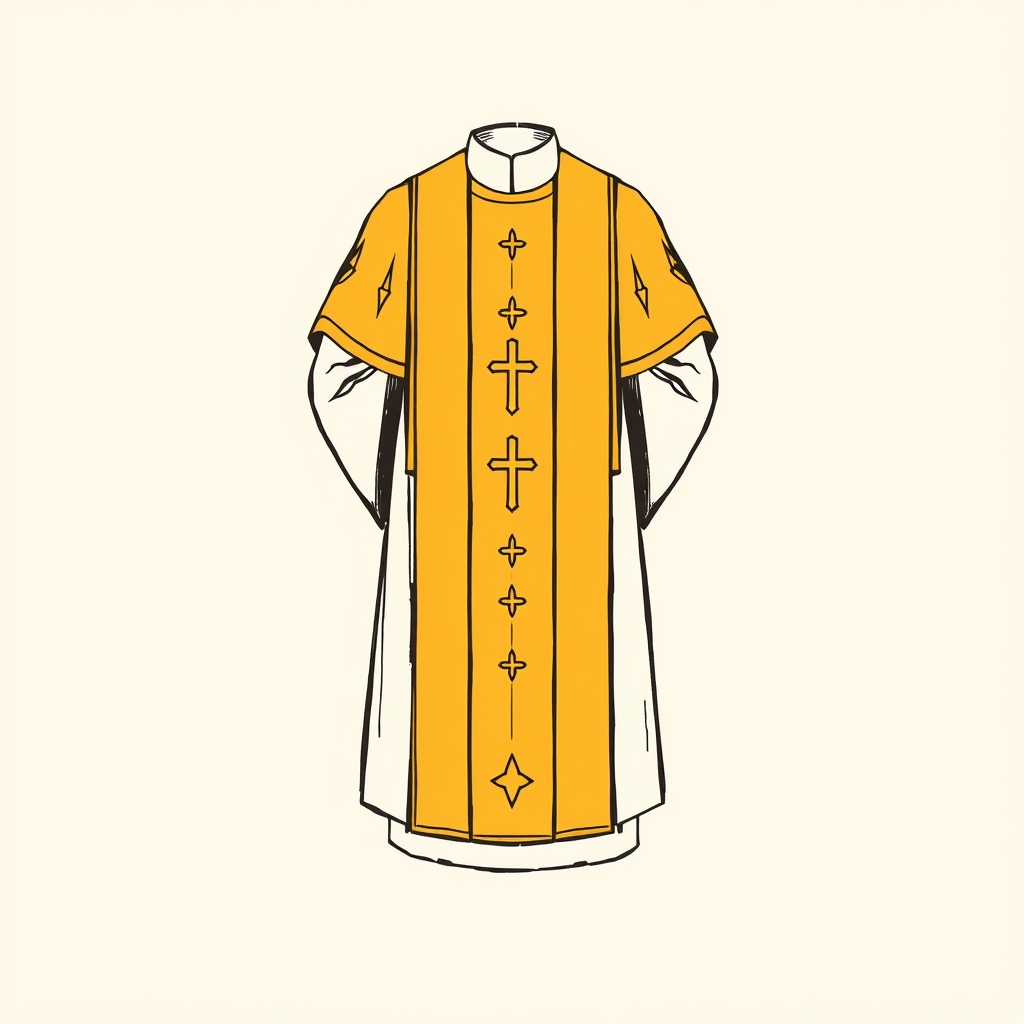
Saint Sarre is represented in different ways in paintings: at Lambres, he is seen in a hermit's habit, with a scapular, and carrying a sharp instrument in his right hand; perhaps it is intended to express in this way that, like the Apostles, he worked with his hands to live and to give alms to the poor. In the abbey of Saint-André, he was represented dressed in priestly vestments and holding a book in his hand.
Hagiographic source
The text is based on the work of Abbé Destombes concerning the saints of Cambrai and Arras.
*Lives of the Saints of Cambrai and Arras*, by Abbé Destombes.
Iconography
Signs and attributes
Entities
Narrative network
The names, places, and concepts most present in the entry, weighted by centrality in the text.
Frequently asked questions about Saint Sarre of Lambres
Who was Saint Sarre of Lambres?
Born in Lambres in the 7th century into a powerful family, Sarre renounced worldly goods to become a priest in Cambrai and later a pastor in his native village. His relics were transferred to Le Cateau in 1025, where he became one of the patrons of Saint-André Abbey. He is traditionally depicted either as a hermit with a manual work tool or in priestly vestments.
What is Saint Sarre of Lambres the patron saint of?
Patronage of Saint Sarre of Lambres: Lambres and Saint-André Abbey of Le Cateau.
How is Saint Sarre of Lambres depicted in Christian art?
In iconography, Saint Sarre of Lambres is recognizable by: hermit's habit, scapular, sharp instrument, priestly vestments and book.
Which saints were contemporaries of Saint Sarre of Lambres?
Contemporaries include: Saint Priest (Prix), Saint Gregory the Great (Pope and Doctor of the Church), Saint Die (Didier, Deodat) and Saint Augustine of Canterbury.
When did Saint Sarre of Lambres die?
Saint Sarre of Lambres died around 700.
What are the other names of Saint Sarre of Lambres?
Other forms of the name: Sarre.
Annexes & related entities
Structured data for exploration: events, miracles, quotes, places, attributes, patronages, and important entities cited in the text.
Key Events
- Born in Lambres to wealthy and powerful parents
- Entry into the clergy
- Priestly ordination at the Notre-Dame church in Cambrai
- Pastoral ministry in Lambres
- Translation of relics to Le Cateau in 1025 by Bishop Gerard of Florines