Saint Eusebius of Vercelli
Bishop of Vercelli in the 4th century, Eusebius was a heroic defender of the Catholic faith against Arianism. Exiled successively to Palestine, Cappadocia, and Egypt by Emperor Constantius, he returned to Italy under Julian the Apostate to continue his doctrinal struggle alongside Saint Hilary of Poitiers.
Contemporaries

Figures and markers around the normalized period for this entry.
Guided reading
6 reading sections
SAINT EUSEBIUS, BISHOP OF VERCELLI (c. 370).
Origins and episcopal election
Originally from Sardinia, Eusebius settled in Vercelli where his excellence within the clergy led to his unanimous election as bishop.
Born i n Sardini a to a noble family, Eusebius, after the death of his father, withdrew to Italy and completed his studies in Vercelli (Intendance of Novara). He distinguished himself so greatly within the clergy of that city that, the episcopal see having become vacant, he was elected unanimously to fill it.
Formation and influence of the clergy
The bishop dedicated himself to the formation of virtuous ministers, making his clergy a nursery of holy prelates for other churches.
The new bishop applied himself with all his power to forming worthy ministers of Jesus Christ. His conduct was justified by its success: several churches wished to be governed by his disciples, and one saw emerge from his clergy a great number of holy prelates as commendable for their virtues as for their learning.
Struggle against Arianism and successive exiles
At the Council of Milan in 355, Eusebius refused to condemn Saint Athanasius, which led to his exile by Emperor Constantius to Palestine, Cappadocia, and the Thebaid.
Eusebius had already acquired a high reputation for holiness: this was to be tested by persecutions. In 355, a council was held in Milan where several Catholics, intimidated by the threats of Emperor Const antius and the fur y of the Arians, signed the sentence pronounced by the heretics against Saint Athanasius of Al exandria. Eusebius openly r esisted the emperor and loudly reproached him for his impurity. Constantius responded with violence: Eusebius was exiled to Scythopolis, in Palestine; later, he was transferred to Cappadocia, and some time after, he was taken to the Upper Thebaid. In these various places, the Arians overwhelmed him with outrages and made him suffer the most cruel treatment.
Liberation, final struggle and death
Liberated under Julian the Apostate, he fought Arianism with Saint Hilary of Poitiers before dying around 370 in Vercelli.
However, the hour of deliverance finally struck. Constantius having died (361), Julian the Apostate permitted the illustrious exile to return to his diocese: he returned, indeed, and Italy cast off its mourning clothes. Eusebius did not remain inactive: in concert with Saint Hilary of Poitiers, he spent all his zeal in combating Arianism in its final strongholds. Finally, full of days and merits, he fell asleep full of hope in the Lord, on August 1st, around the year 370. The reliquary containing h is precious relics is kep t in t he cathedral of Vercelli.
Writings and correspondence
Preservation of two letters from exile, one of which is addressed to Gregory of Elvira to encourage him in doctrinal resistance.
Of the writings of Saint Eusebius, only two letters remain, one addressed to his Church during his exile in Scythopolis; the other to Gr egory, Bishop of Elvira. Eusebius wrote it during his exile in the Upper Thebaid. In it, he exhorts Gregory to courageously oppose Hosiu s, wh o had the misfortune of falling into heresy, as well as all those who had abandoned the faith of the Church, and not to fear the power of princes. These two letters are found in the Annales of Baronius, and in volume XII of the Patrologia of Abbé Migne.
Sources
References to the works of Godescard and Dom Cellier.
Godescard and Dom Cellier.
Iconography
Signs and attributes
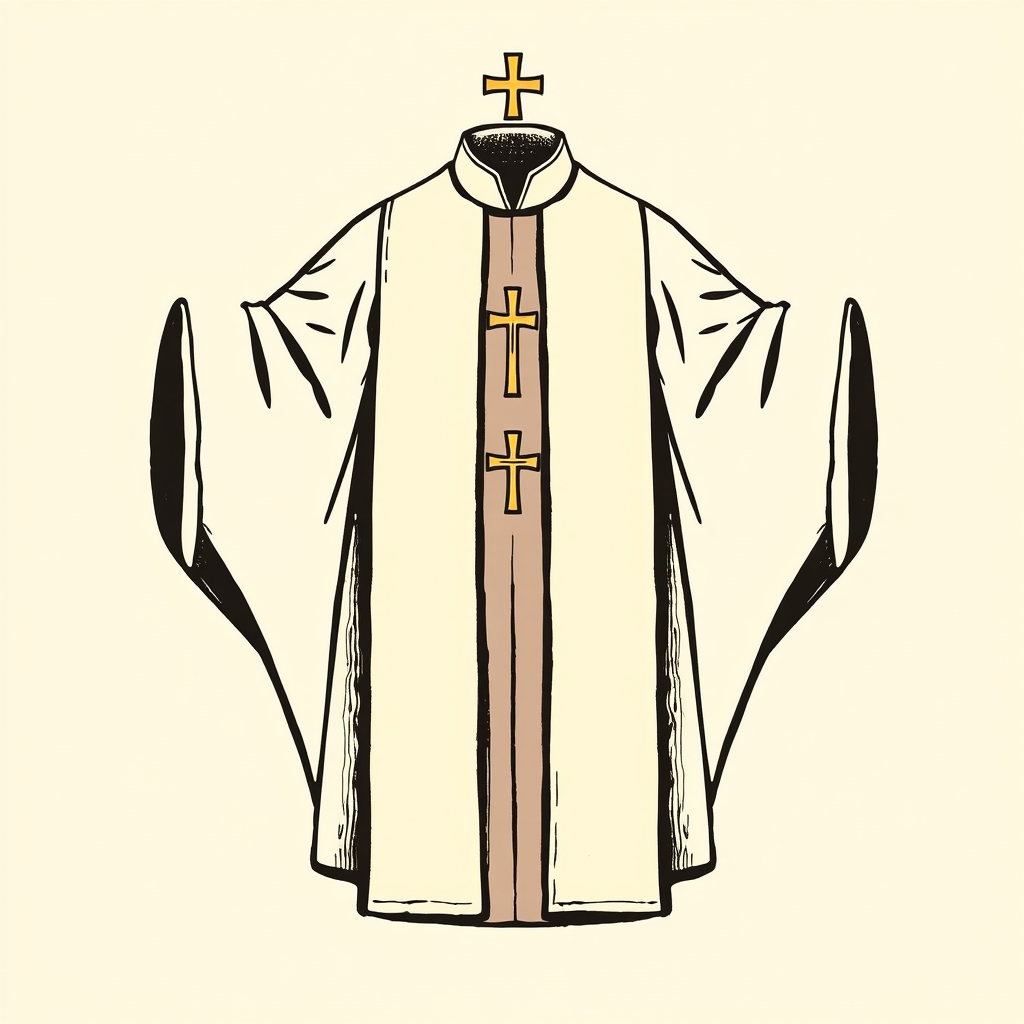
Entities
Narrative network
The names, places, and concepts most present in the entry, weighted by centrality in the text.
Frequently asked questions about Saint Eusebius of Vercelli
Who was Saint Eusebius of Vercelli?
Bishop of Vercelli in the 4th century, Eusebius was a heroic defender of the Catholic faith against Arianism. Exiled successively to Palestine, Cappadocia, and Egypt by Emperor Constantius, he returned to Italy under Julian the Apostate to continue his doctrinal struggle alongside Saint Hilary of Poitiers.
What is Saint Eusebius of Vercelli the patron saint of?
Patronage of Saint Eusebius of Vercelli: Vercelli.
How is Saint Eusebius of Vercelli depicted in Christian art?
In iconography, Saint Eusebius of Vercelli is recognizable by: episcopal vestments and shrine.
Which saints were contemporaries of Saint Eusebius of Vercelli?
Contemporaries include: Saint Blaise, Saint Hilary of Poitiers, Saint Basil the Great (Archbishop of Caesarea) and Saint Baudilus.
When did Saint Eusebius of Vercelli die?
Saint Eusebius of Vercelli died around 400.
What are the other names of Saint Eusebius of Vercelli?
Other forms of the name: Eusebius.
Who are the relatives of Saint Eusebius of Vercelli?
Relatives of Saint Eusebius of Vercelli: Père d'Eusèbe (father).
Annexes & related entities
Structured data for exploration: events, miracles, quotes, places, attributes, patronages, and important entities cited in the text.
Key Events
- Unanimous election to the episcopal see of Vercelli
- Resistance to the Council of Milan in 355 against Emperor Constantius
- Exile to Scythopolis in Palestine
- Transfer to Cappadocia and then to Upper Thebaid
- Return from exile in 361 under Julian the Apostate
- Struggle against Arianism with Saint Hilary of Poitiers
Quotes
-
In it, he exhorts Gregory to courageously oppose Osius... and not to fear the power of princes.
Letter to Gregory of Elvira