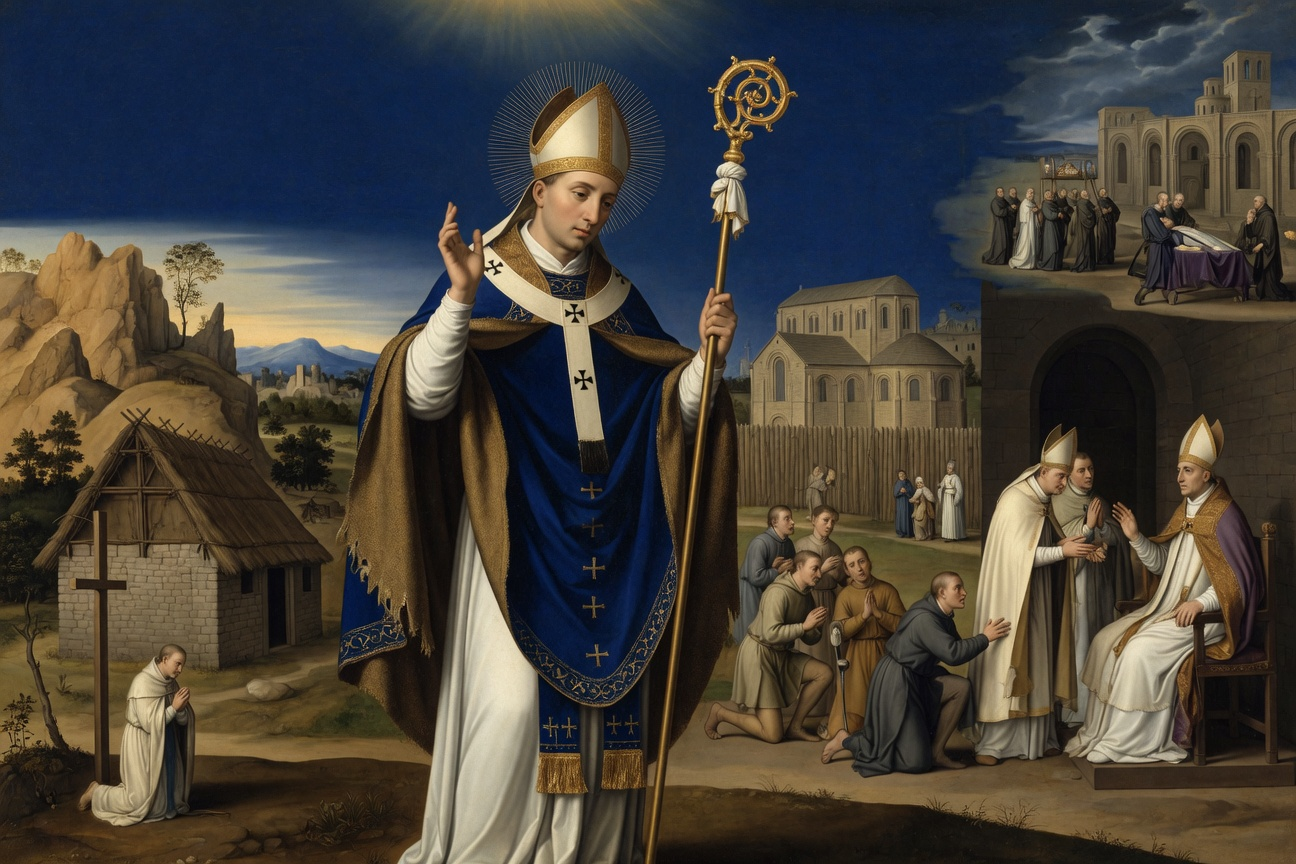
Saint Conteste of Bayeux
Initially a hermit in the desert of Blaye, Saint Conteste became Bishop of Bayeux at the beginning of the 6th century. Known for his austerity and eloquence, he converted many pagans and performed miraculous healings. His relics were transferred to Fécamp in the 12th century in the presence of Duke Henry II.
Contemporaries

Figures and markers around the normalized period for this entry.
Guided reading
6 reading sections
SAINT CONTESTE, BISHOP OF BAYEUX (513).
Retreat to the desert
From his childhood, Conteste withdrew into solitude at Blaye, near Bayeux, to devote himself to prayer and asceticism.
Conteste , devoted to piety from his childhood, fleeing the perverse customs of his countrymen, withdrew to the desert of Blaye, nea r Baye ux, where he embraced the solitary life, desirous of attending only to God alone.
From all sides, the inhabitants of the countryside gathered around him and, moved by the holiness of his life and the austerity of his penance, inquired of the holy hermit how they might acquire eternal life, and converted to God with all their heart.
Accession to the episcopate
Recognized for his virtues, he was called by the people to succeed the deceased bishop of Bayeux.
After a few years spent in solitude, he shone with many virtues, and, called by the wishes of all, he was placed in the seat of the bishop of Bayeux, who had just died.
Episcopate and evangelization
As bishop, he maintained his austerity, converted pagans through his eloquence, and performed miracles, notably the healing of the blind.
In this office, relaxing nothing of the austerity of his former way of life and his accustomed piety, he fulfilled the role of an excellent prelate. Concerned for the salvation of his flock, he caused many pagans to renounce the worship of idols; the sweetness of his eloquence penetrated hearts so powerfully that he brought back the most obstinate from vice to virtue. He restored sight to two blind men through the invocation of the name of Christ.
Passing and early memory
He died at the beginning of the 6th century, leaving behind a reputation for holiness that inspired the consecration of churches in his honor.
Finally, after having won the love of all through his holy life and his fatherly affection, he departed, filled with merits, to the Lord. Churches and altars were consecrated to his memory (around the beginning of the 6th century).
Translation to Fécamp
Under the authority of Henry II and the papal legate, the saint's body is transferred from the diocese of Bayeux to the church of Fécamp.
By the order of Henry II, Duke of Normandy, and in his presence, Henry, cardinal-priest, legate of Pope Alexander III in France, came to Fécamp, accompanied by Philip of Harcourt, Bishop of Bayeux, and Arnulf, Bishop of Lisieux; he transferred to this church the body of Saint Cont este, which had been raised from the ground in the diocese of Bayeux, and placed it with several other bodies of Saints behind the high altar.
Recognition of relics in 1157
The opening of his reliquary in 1157 allowed for the gift of a relic to the local church by the Archbishop of Rouen.
In the year of Our Lord 1157, the marble reliquary in which the precious relics were enclosed was opened, and the Archbishop o f Rouen returned to us a fibula bone , as a token of the mutual affection that has at all times united our church to the metropolis.
*Proper of Bayeux.*
Iconography
Signs and attributes
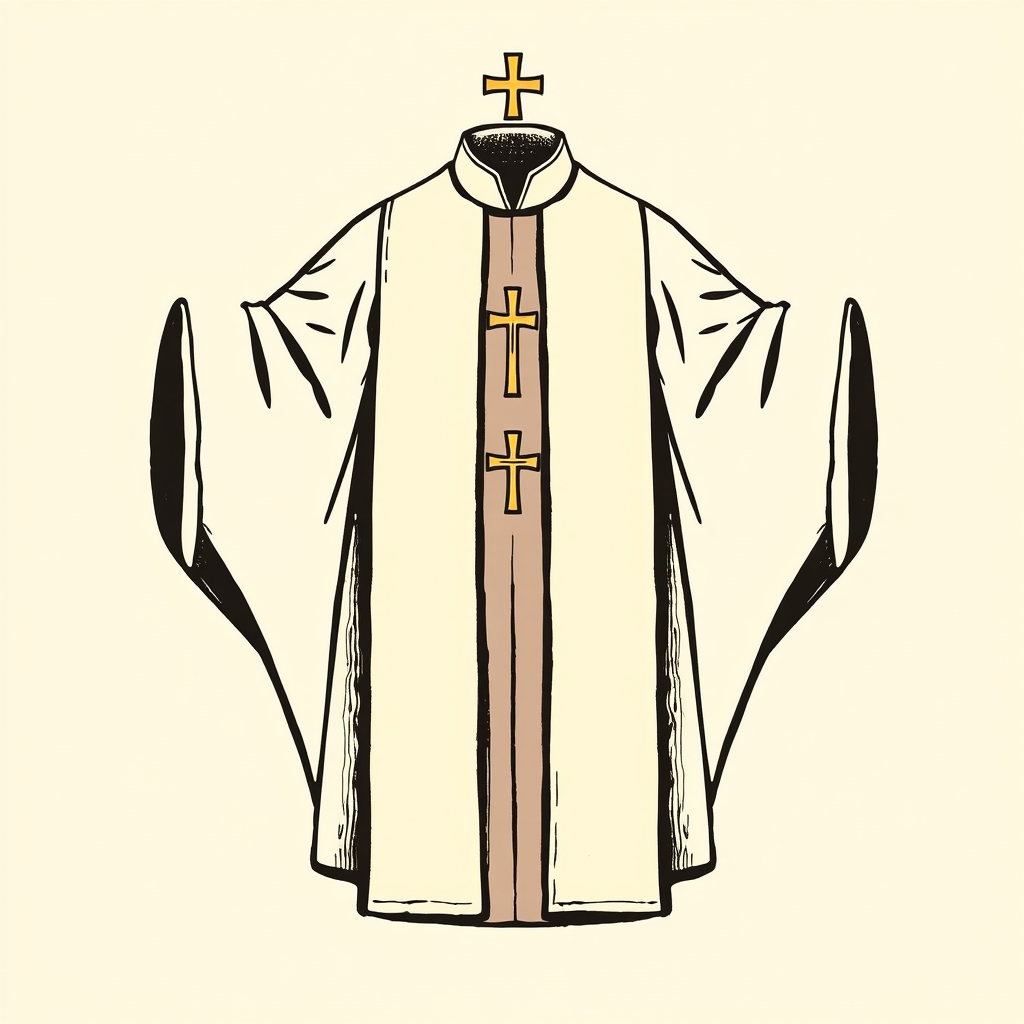
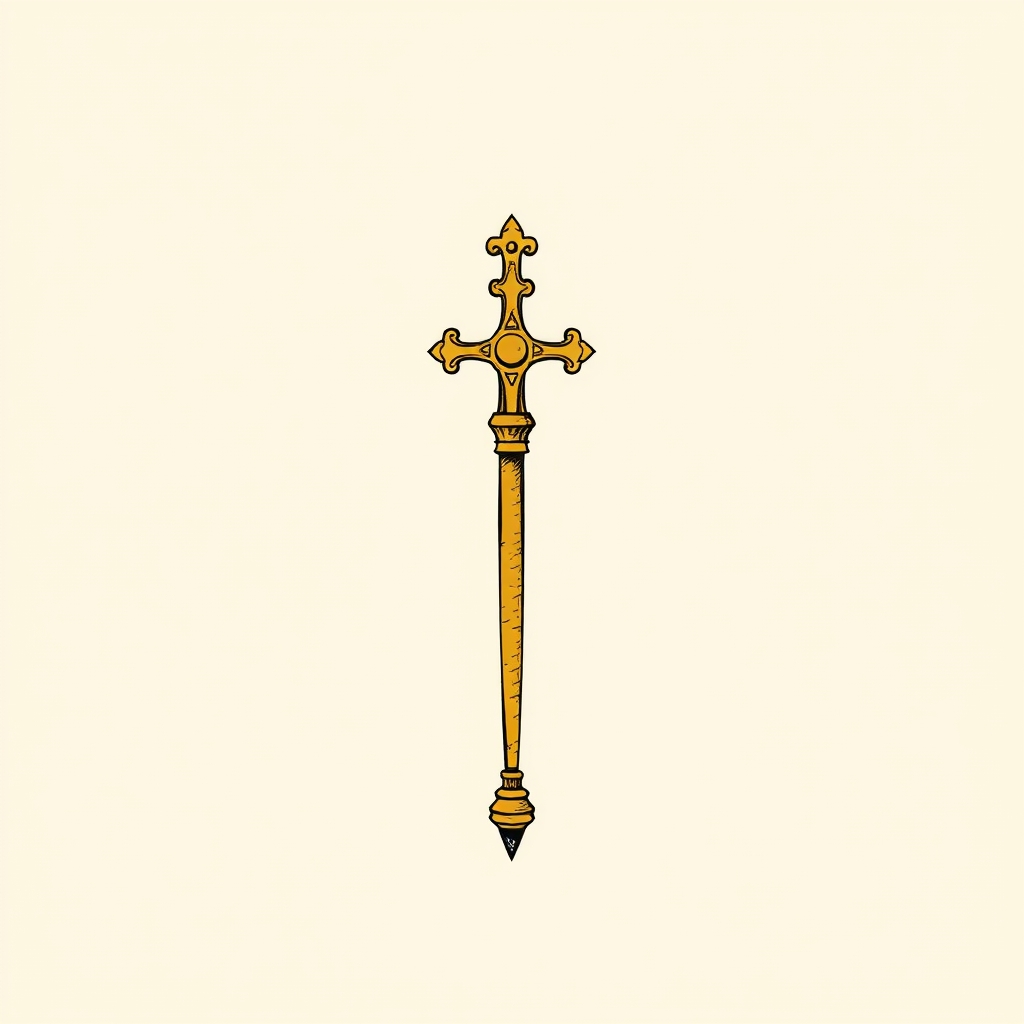
Entities
Narrative network
The names, places, and concepts most present in the entry, weighted by centrality in the text.
The supernatural in their life
The miracles of Saint Conteste of Bayeux
Frequently asked questions about Saint Conteste of Bayeux
Who was Saint Conteste of Bayeux?
Initially a hermit in the desert of Blaye, Saint Conteste became Bishop of Bayeux at the beginning of the 6th century. Known for his austerity and eloquence, he converted many pagans and performed miraculous healings. His relics were transferred to Fécamp in the 12th century in the presence of Duke Henry II.
What is Saint Conteste of Bayeux the patron saint of?
Patronage of Saint Conteste of Bayeux: Bayeux.
How is Saint Conteste of Bayeux depicted in Christian art?
In iconography, Saint Conteste of Bayeux is recognizable by: episcopal vestments and crozier.
What miracles are attributed to Saint Conteste of Bayeux?
1 miracle are attributed to this saint, notably: Healing.
Which saints were contemporaries of Saint Conteste of Bayeux?
Contemporaries include: Saint Remigius (Apostle of the Franks), Saint Antide of Besançon, Saint Eugene of Carthage and Saint Nicaise of Reims.
When did Saint Conteste of Bayeux die?
Saint Conteste of Bayeux died around 600.
Annexes & related entities
Structured data for exploration: events, miracles, quotes, places, attributes, patronages, and important entities cited in the text.
Key Events
- Retreat to the desert of Blaye to lead a solitary life
- Conversion of the rural inhabitants through his holiness
- Election to the bishopric of Bayeux upon the death of his predecessor
- Struggle against paganism and the worship of idols
- Translation of his relics to Fécamp in 1157 in the presence of Henry II