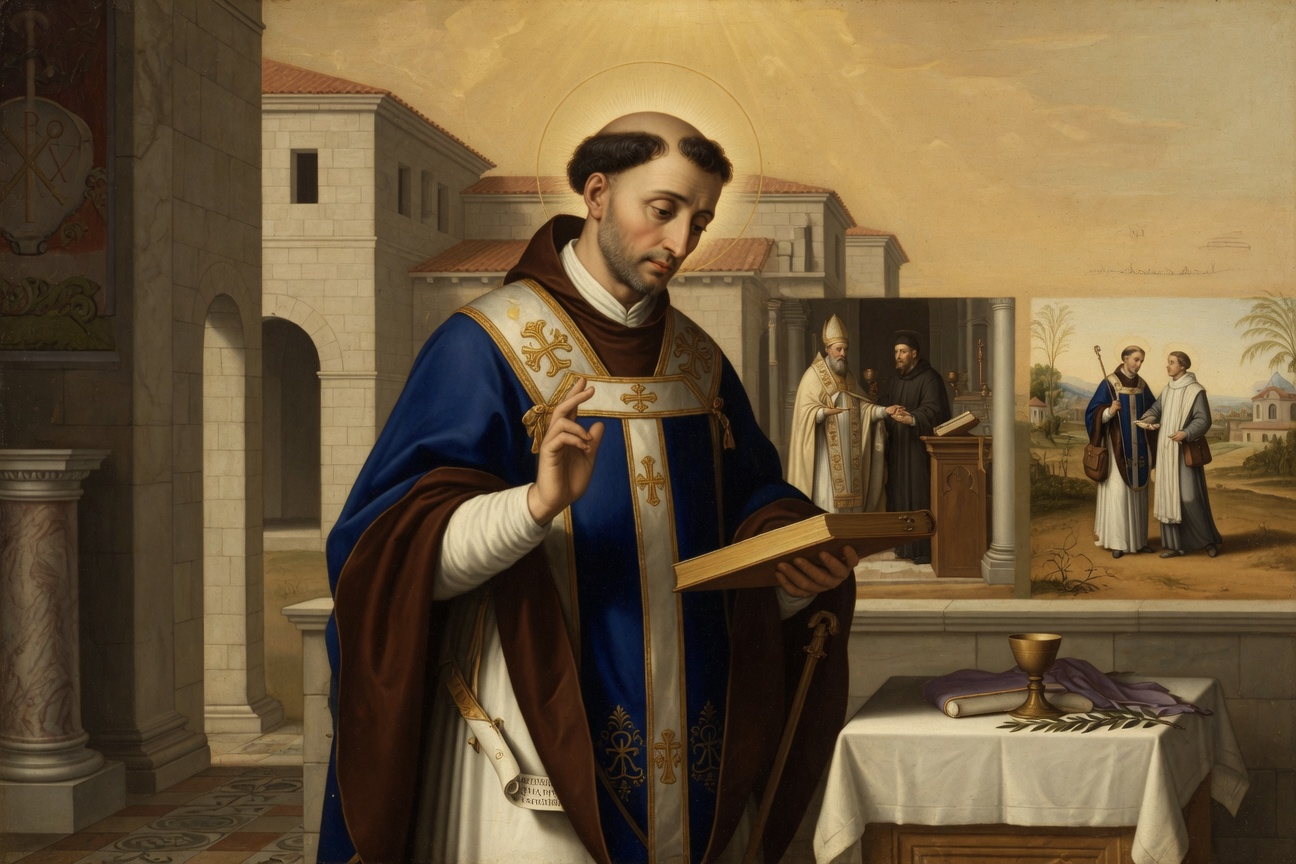
Saint Leon (Lienne) of Poitiers
A priest and close confidant of Saint Hilary of Poitiers in the 4th century, Saint Leon (or Lienne) shared his bishop's exile and helped him combat Arianism in Gaul. After witnessing his master's final moments, he continued his pastoral ministry until his peaceful death at the end of the century. His relics, once venerated in Poitiers and later in La Roche-sur-Yon, likely disappeared during the wars against the English.
Contemporaries

Figures and markers around the normalized period for this entry.
Guided reading
4 reading sections
SAINT LEON OR LIENNE OF POITIERS (late 4th century).
Formation and ordination
Leone, known as Lienne, trained under Saint Hilary of Poitiers, who ordained him a priest due to his piety and knowledge of the Scriptures.
Leone, commonly called Lie nne, made great progress under the discipline of Saint Hila ry and deserved, through the integrity of his morals and his knowledge of the divine Scriptures, to be ordained a priest by this great Saint.
Companion in exile and struggle against Arianism
A confidant of Saint Hilary, he accompanied him into exile and actively participated in the struggle against the Arian heresy in Gaul upon their return.
He fulfilled the duties of this dignity in such a way as to merit the affection of Saint Hilary, who made him the confidant of his most intimate thoughts. He accomp anied his bishop into exile and suffered with him for the faith: upo n ret urning to Gaul, he helped him greatly to deliv er this country from the Arian perfidy. The holy bishop having called him to his side in his final moments, he saw the celestial light that descended to him to receive his soul, and into which this already beatified spirit took flight (368).
Pastoral ministry and passing
After the death of his master, he continued the evangelization of the people and died at the end of the 4th century, on the date predicted by Saint Hilary.
Thus, separated from his father and his master, he applied himself more than ever to nourishing the people with the word of Christ. His life was spent in the fulfillment of these pious duties; being already old, he fell into a peaceful sleep on the day that Saint Hilary had predicted for him, towards the end of the 4th century, and went to enjoy the bliss that shall not end. He was buried in a chapel adjoining the house of Saint Hilary; numerous miracles glorified his relics, which the pe ople of P oitiers surrounded with great veneration.
Cult and translation of relics
His relics, initially honored in Poitiers, were transferred to La Roche-sur-Yon in 994 before disappearing during the wars against the English.
In the year 994, the b ody of Saint Lienne was trans ferred to La Roc he-sur-Yon; it was long preserved there in a church dedicated to him, where lamps burned ceaselessly in his honor.
The house that Saint Hilary had inhabited and near which Saint Lienne was buried later became the Abbey of Saint-Hilaire-de-la-Celle and is to day the Carmelite conve nt. As for the tomb at La Roche-sur-Yon, it is to be believed that it perished with the holy body enclosed within its marble walls during the calamitous wars that marked the presence of the English in Poitou. In 1476, the chu rch of Saint-Lienne no longer existed at La Roche-sur-Yon, and had been replaced by that of Saint-Michel.
Proper of Poitiers.
Iconography
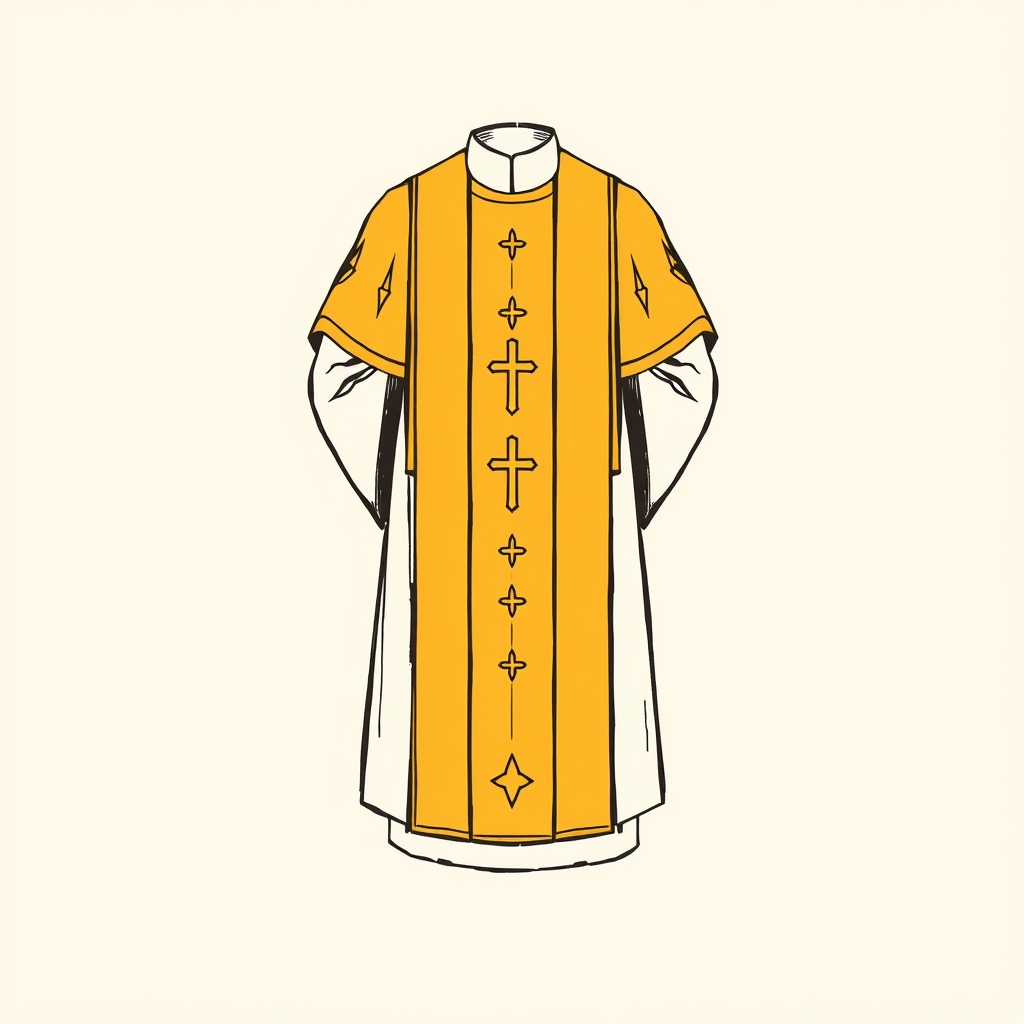
Signs and attributes
Entities
Narrative network
The names, places, and concepts most present in the entry, weighted by centrality in the text.
The supernatural in their life
The miracles of Saint Leon (Lienne) of Poitiers
Frequently asked questions about Saint Leon (Lienne) of Poitiers
Who was Saint Leon (Lienne) of Poitiers?
A priest and close confidant of Saint Hilary of Poitiers in the 4th century, Saint Leon (or Lienne) shared his bishop's exile and helped him combat Arianism in Gaul. After witnessing his master's final moments, he continued his pastoral ministry until his peaceful death at the end of the century. His relics, once venerated in Poitiers and later in La Roche-sur-Yon, likely disappeared during the wars against the English.
What is Saint Leon (Lienne) of Poitiers the patron saint of?
Patronage of Saint Leon (Lienne) of Poitiers: La Roche-sur-Yon (historically).
How is Saint Leon (Lienne) of Poitiers depicted in Christian art?
In iconography, Saint Leon (Lienne) of Poitiers is recognizable by: priestly vestments.
What miracles are attributed to Saint Leon (Lienne) of Poitiers?
3 miracles are attributed to this saint, notably: Vision / apparition and Sign / wonder.
Which saints were contemporaries of Saint Leon (Lienne) of Poitiers?
Contemporaries include: Saint Blaise, Saint Hilary of Poitiers, Saint Basil the Great (Archbishop of Caesarea) and Saint Baudilus.
When did Saint Leon (Lienne) of Poitiers die?
Saint Leon (Lienne) of Poitiers died around 400.
What are the other names of Saint Leon (Lienne) of Poitiers?
Other forms of the name: Léone and Lienne.
Annexes & related entities
Structured data for exploration: events, miracles, quotes, places, attributes, patronages, and important entities cited in the text.
Key Events
- Formation under the discipline of Saint Hilary
- Priestly ordination by Saint Hilary
- Exile with Saint Hilary for the defense of the faith
- Struggle against Arianism in Gaul
- Witness to the death of Saint Hilary in 368
- Peaceful death at an advanced age on the date predicted by Saint Hilary
- Translation of his relics to La Roche-sur-Yon in 994