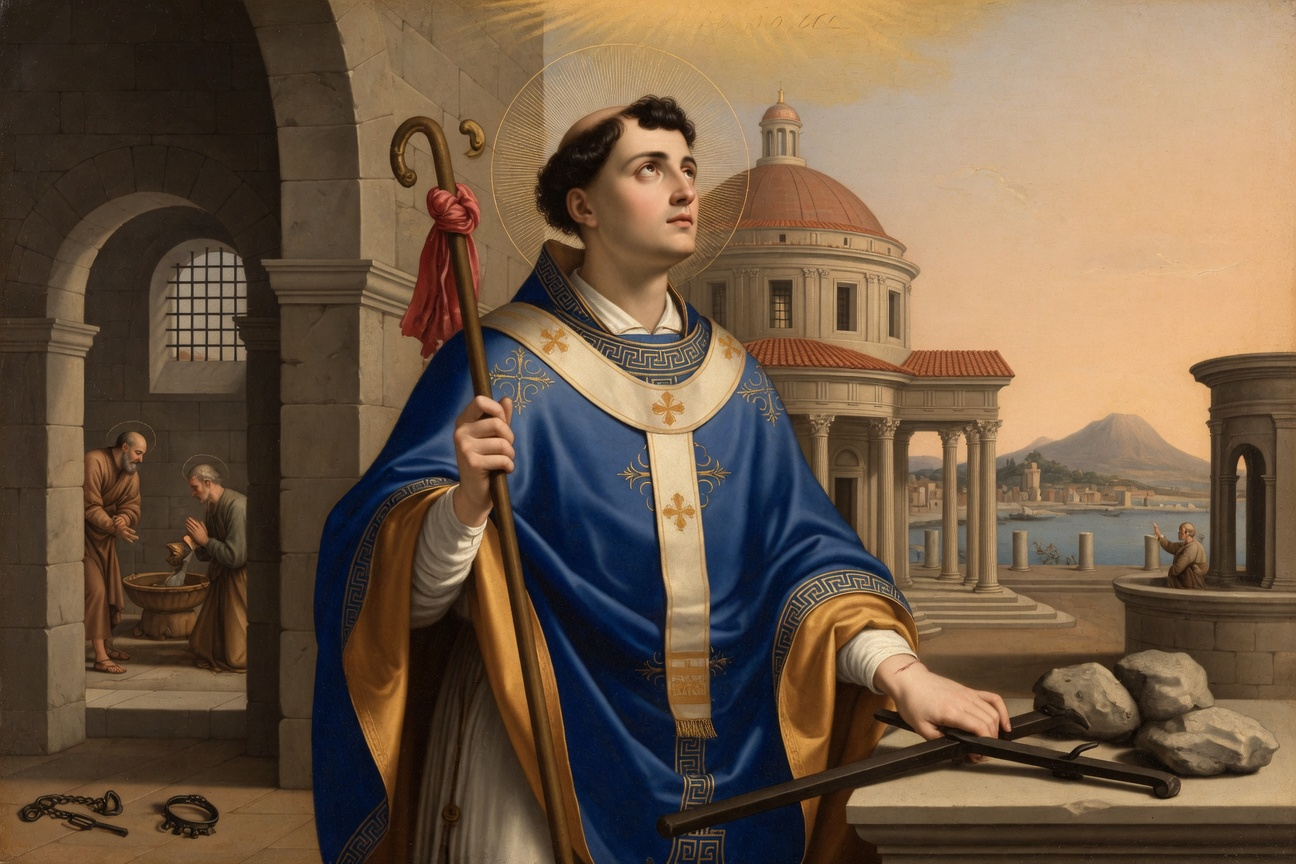
Saint Onesimus
A former servant of Philemon converted by Saint Paul, Onesimus became Bishop of Ephesus after Timothy. A zealous preacher, he was persecuted by the governor Tertullus in Rome and Puteoli. He died a martyr, his limbs broken by levers before being stoned.
Contemporaries

Figures and markers around the normalized period for this entry.
Guided reading
4 reading sections
SAINT ONESIMUS, DISCIPLE OF SAINT PAUL (4th century).
Conversion and service to Saint Paul
Initially a servant of Philemon, Onesimus attached himself to Saint Paul, who baptized him and made him his companion in captivity before sending him back to his master as a free brother.
Onesimu s first served a man of holy life named Philemon. After hearing a sermon by Saint Paul, he foll owed in hi s footsteps and left Philemon; Saint Paul baptized him after instructing him and kept him as a servant in his prison.
The captive apostle did not, however, delay in sending Onesimus back to Philemon, recommending him to him; the latter received him as his brother and granted him his freedom.
Episcopacy in Ephesus and early persecutions
Having become Bishop of Ephesus after Timothy, Onesimus is arrested by the proconsul and then sent to Rome before the governor Tertullus for having preached the Gospel and virginity.
Having become Bi shop o f Ephesus, he succeeded Timothy and survived Saint Ignatius. As he preached the Gospel everywhere with zeal, the proconsul had him arrested and tortured; unable to overcome him, he sent him to Tertullus, governor of the city of Rome; this governor was animated against him with a particular hatred, because he had converted the wife of one of his friends and had persuaded her to ke ep her virginity.
Preaching in exile and final torment
After an initial exile in Poussoies, he was brought back to Rome where he suffered a cruel martyrdom: he was whipped, had his limbs broken by levers, and was finally stoned.
After putting him to the test, he threw him into prison, and for eighteen days subjected him to all kinds of tortures, then drove him out of Rome with his companions. Upon arriving in Poussoies , Saint Onesi mus began preaching the Gospel again and obtained many conversions. Tertullus, learning of this, had him arrested and brought back to Rome.
After having him cruelly whipped, he threatened to cut off his limbs if he would not sacrifice. As he refused, he was stretched out on his back, his legs and thighs were broken with levers, and he was stoned.
Cult and attributes
Saint Onesimus is honored as the patron of servants; his iconographic attributes recall his martyrdom by iron bars or stoning.
He is the patron of servants and domestics. His attribute is the staff or bar with which his legs were broken, or alternatively, stoning.
Iconography
Signs and attributes



Entities
Narrative network
The names, places, and concepts most present in the entry, weighted by centrality in the text.
Frequently asked questions about Saint Onesimus
Who was Saint Onesimus?
A former servant of Philemon converted by Saint Paul, Onesimus became Bishop of Ephesus after Timothy. A zealous preacher, he was persecuted by the governor Tertullus in Rome and Puteoli. He died a martyr, his limbs broken by levers before being stoned.
What is Saint Onesimus the patron saint of?
Patronage of Saint Onesimus: servants and domestic servants.
How is Saint Onesimus depicted in Christian art?
In iconography, Saint Onesimus is recognizable by: staff, staff and stones (stoning).
How did Saint Onesimus die?
Saint Onesimus suffered martyrdom for the Christian faith (4th century).
Which saints were contemporaries of Saint Onesimus?
Contemporaries include: Saint Blaise, Saint Hilary of Poitiers, Saint Basil the Great (Archbishop of Caesarea) and Saint Baudilus.
Annexes & related entities
Structured data for exploration: events, miracles, quotes, places, attributes, patronages, and important entities cited in the text.
Key Events
- Servant of Philemon
- Conversion and baptism by Saint Paul in prison
- Manumission by Philemon
- Bishop of Ephesus, successor to Timothy
- Arrest by the proconsul and transfer to Rome
- Preaching in Poussoies
- Martyrdom by breaking of limbs and stoning