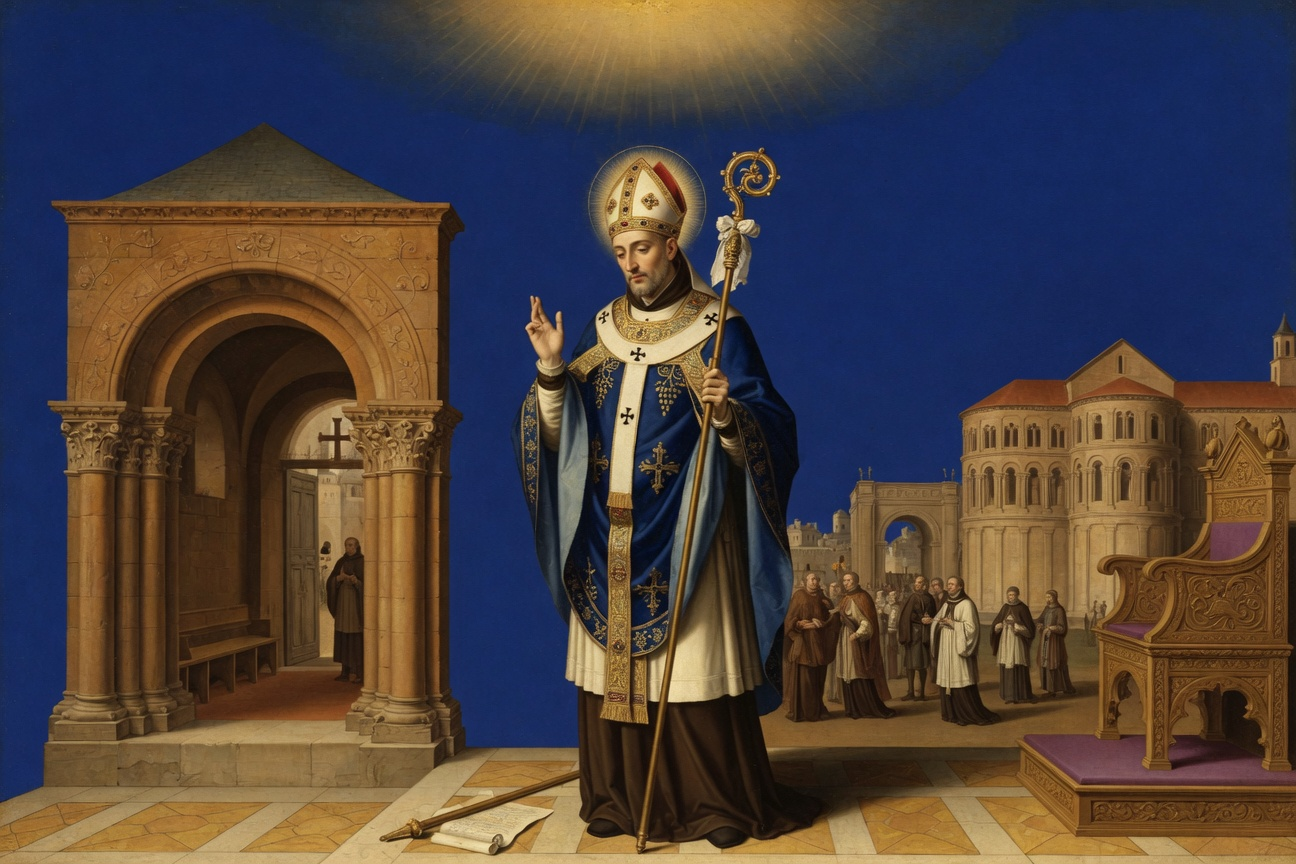
Saint Basin, Bishop of Trier
Coming from the illustrious family of the dukes of Austrasia, Basin was abbot and then archbishop of Trier during the reign of Childebert II. A friend of Saint Willibrord, he was recognized for the holiness of his life and the quality of his episcopal governance. His body rests in the Basilica of Saint-Maximin in Trier.
Contemporaries

Figures and markers around the normalized period for this entry.
Guided reading
4 reading sections
SAINT BASIN, BISHOP OF TRIER (700).
Origins and monastic life
Coming from the nobility of Austrasia, Basin entered the monastery of Saint-Maximin where he became abbot due to his piety.
Basin, of the illustrious family of the dukes of Austrasia, was first r eceived at the monastery o f Saint-Maximin as a simple monk; he was later raised to the dignity of abbot, because of the holiness of his life.
Episcopacy in Trier
Compelled to succeed Saint Numerian as Archbishop of Trier during the reign of Childebert II, he distinguished himself through his exemplary administration.
Later, Saint Numerian, Archbishop of Trie r, hav ing died, he was compelled to don the mitre in his place. He held this see during the reign of Ch ildebert II, King of Austrasia.
He was a friend of Saint Willibr ord, whose studies and progress he fostered. He governed his church so well and discharged the duties of the episcopacy so perfectly that he was considered a Saint even during his lifetime, and after his death, he was honored as such.
Succession
Upon his death, his nephew Lutwin succeeded him on the episcopal see.
He was succeeded by his nephew Lu twin, who proved himself worthy of replacing him.
Cult and relics
His remains, preserved at the Abbey of Saint-Maximin, were the subject of a solemn translation in 1621.
His body, initially deposited in t he Basilica of Saint-Maxim in, on the right side of the crypt, under the high altar, was, in 1621, placed in a more suitable location. It formerly received many honors.
Iconography
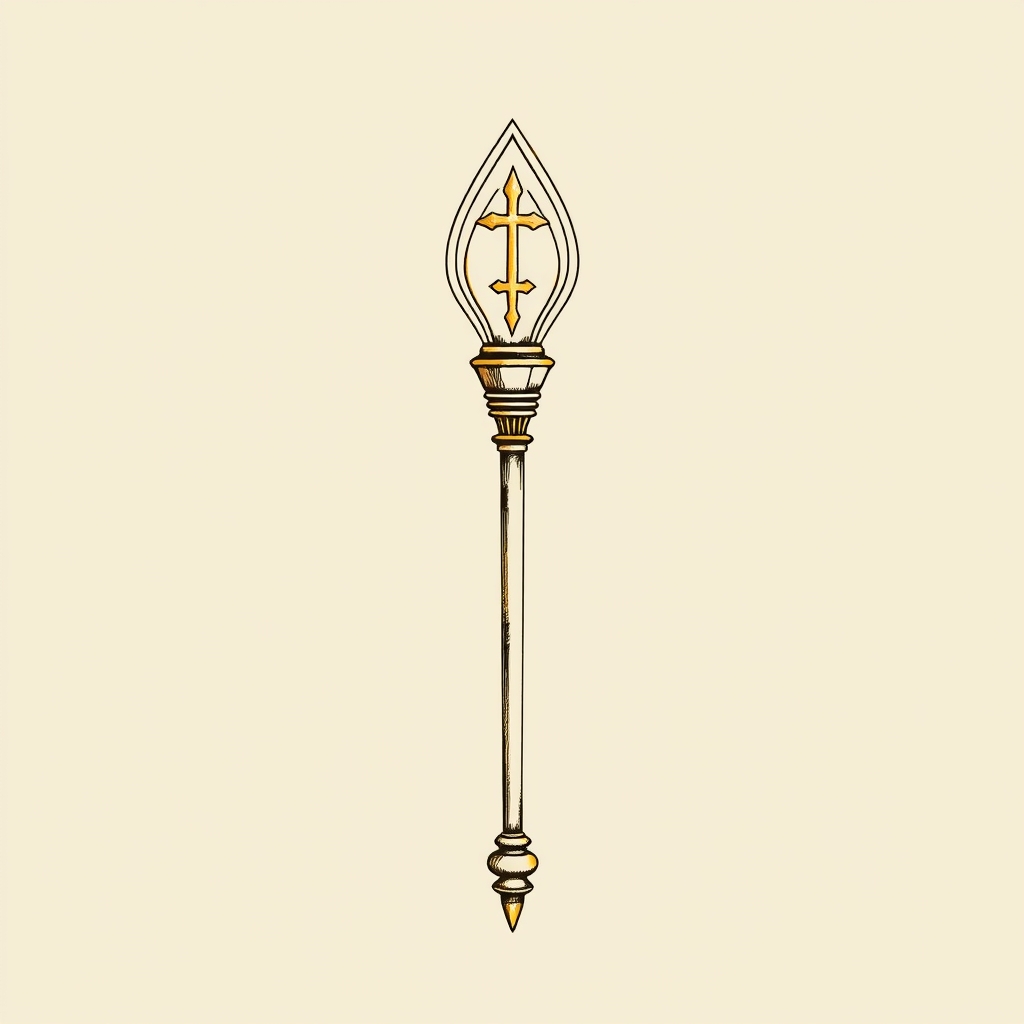
Signs and attributes

Entities
Narrative network
The names, places, and concepts most present in the entry, weighted by centrality in the text.
Frequently asked questions about Saint Basin, Bishop of Trier
Who was Saint Basin, Bishop of Trier?
Coming from the illustrious family of the dukes of Austrasia, Basin was abbot and then archbishop of Trier during the reign of Childebert II. A friend of Saint Willibrord, he was recognized for the holiness of his life and the quality of his episcopal governance. His body rests in the Basilica of Saint-Maximin in Trier.
What is Saint Basin, Bishop of Trier the patron saint of?
Patronage of Saint Basin, Bishop of Trier: Trier.
How is Saint Basin, Bishop of Trier depicted in Christian art?
In iconography, Saint Basin, Bishop of Trier is recognizable by: mitre and episcopal crosier.
Which saints were contemporaries of Saint Basin, Bishop of Trier?
Contemporaries include: Saint Priest (Prix), Saint Gregory the Great (Pope and Doctor of the Church), Saint Die (Didier, Deodat) and Saint Augustine of Canterbury.
When did Saint Basin, Bishop of Trier die?
Saint Basin, Bishop of Trier died around 700.
What are the other names of Saint Basin, Bishop of Trier?
Other forms of the name: Basinus.
Who are the relatives of Saint Basin, Bishop of Trier?
Relatives of Saint Basin, Bishop of Trier: Ducs d'Austrasie (family of origin) and Lutwin (nephew).
Annexes & related entities
Structured data for exploration: events, miracles, quotes, places, attributes, patronages, and important entities cited in the text.
Key Events
- Entered the monastery of Saint-Maximin as a monk
- Elevation to the dignity of abbot
- Election to the archiepiscopal see of Trier after the death of Saint Numerian
- Governance during the reign of Childebert II
- Translation of relics in 1621