Our Lady of the Thorn
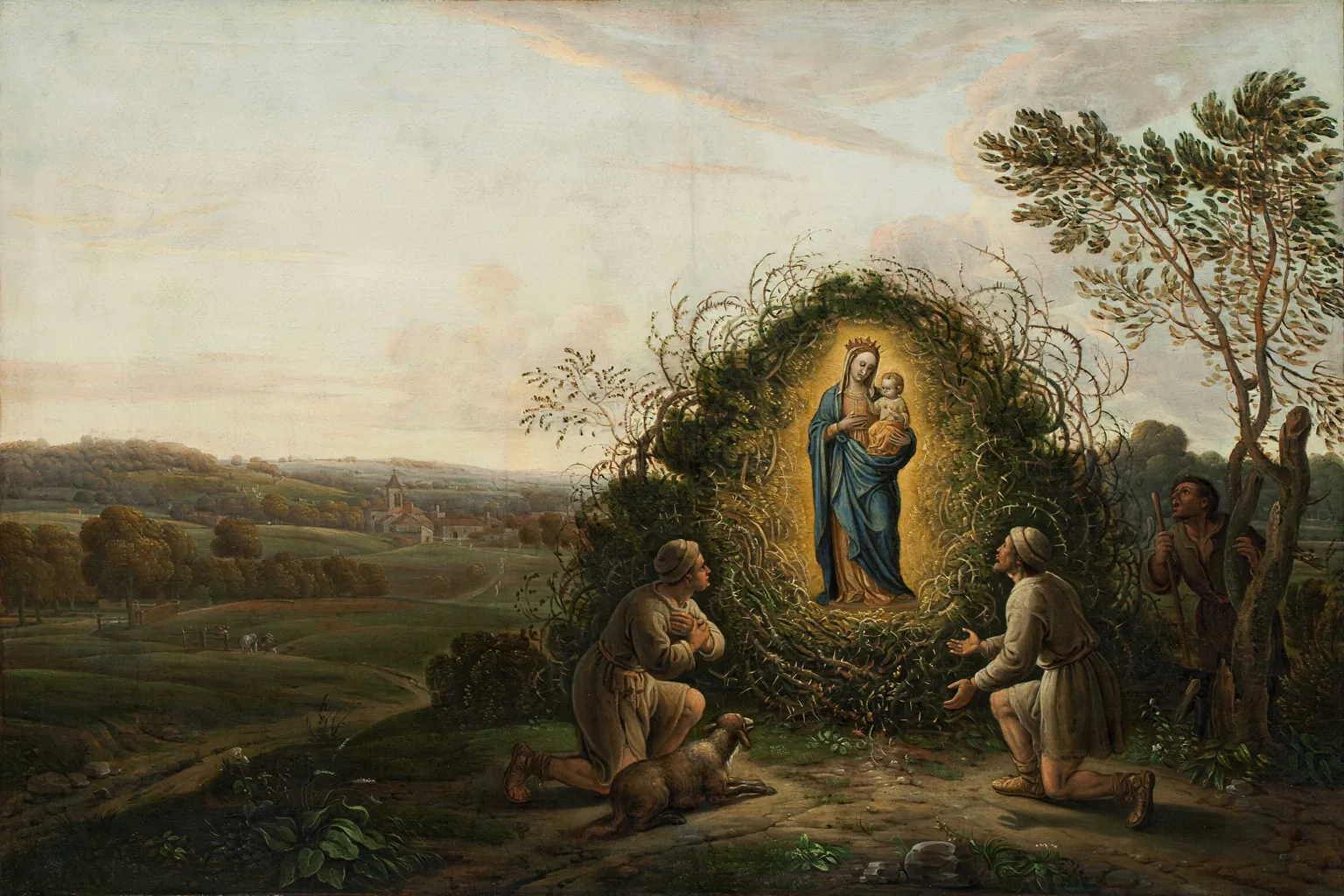
On March 24, 1400, two shepherds discovered a statue of the Virgin Mary in a thorn bush radiating a miraculous light near Châlons. This event led to the construction of a magnificent cathedral-style church in the small village of L'Épine. The site became a famous pilgrimage, particularly frequented for the protection of children.
Contemporaries

Figures and markers around the normalized period for this entry.
Guided reading
4 reading sections
NOTRE-DAME DE L'ÉPINE, IN THE DIOCESE OF CHALONS.
Geographical and historical context
The village of L'Épine, near Châlons, developed around its monumental church, succeeding an ancient seigneurial estate and a modest oratory.
The beautiful and magnificent chu rch of L'Épine has always excited the surprise and admiration of those who visit it; and many strangers, seeing it for the first time, are astonished that such an insignificant village possesses a monument surely worthy, by its architecture and proportions, of being compared with the noble and ancient cathedrals of the Christian world. Many even ask every day if it might not have once been a more important town, reduced to its current state by time, by internal or foreign wars, and by the proximity of the city of Châlons. They do not know that it is to its church alone that L'Épine owes its existence.
This village, located about nine kilometers from Châlons-sur-Marne, on the main road from that city to Metz , and composed to day of four hundred and sixty-one inhabitants, was, at the end of the 13th century, only a hamlet, or rather a seigneurial house with a farm, bearing the name of Sainte-Marie. This estate, as well as the land of Meletie, belonged to the monastery of Toussaints, near Châlons, and to the Benedictine mo nks of Saint-Jean de La on; it was only sold later , in 1550, to the noble family of Clément, from then on surnamed de l'Épine.
Independently of this seigneurial house, there was, at the place where the chapel of Saint-Jean-Baptiste is now, in the church of L'Épine, a small oratory dedicated to the Blessed Virgin and to the holy Precursor of Jesus Christ. It was a succursal chapel and a dependency of the church of the parish of Melette, which, today a simple hamlet of L'Épine, was, at that time, a fairly important village on the road from Châlons to Sainte-Ménehould, extending along the Vesle river, up to near the territory of Saint-Étienne-au-Temple, and forming the seventh canton of Courtisol.
The Miracle of the Thorn
In 1400, two shepherds discover a statue of the Virgin in a burning thorn bush, sparking popular fervor and episcopal recognition.
Two hundred years later, during one of the most deplorable periods of our history, when the English and the Burgundians were tearing France apart, on the site of this modest oratory, a vast church rose from its foundations as if by enchantment. When one contemplates the architecture of this monument, when one admires the riches that unfold on the flanks of its naves, that group together on its portals, that shelter under its arches, or spring forth on its pillars, the mind naturally turns toward the causes that could have brought about this foundation in times when Champagne, like the rest of France, was prey to the horrors of war. If we consult the chronicles and traditions, this is what they teach us.
In the year 1400, on March 24, the eve of the Feast of the Annunciation, a shepherd from the farm of Sainte-Marie and another from Courtisol, in the canton of Les Apeuls, near Châlons-sur-Marne, finding themselves in the evening in the vicinity of the chapel of Saint John the Baptist tending their flocks, suddenly perceived at some distance and in the middle of a large thorn bush a brilliant light. At this sight, the sheep and the ewes fled in terror toward the plain; only the lambs dared to approach the bush. Curious to know what could be the cause of this extraordinary light, the two shepherds came toward it, but they were so dazzled by its brilliance that they fell into a faint and remained for some time unconscious. Having finally recovered from this weakness caused by fear, they discovered in the middle of the bush a small statue of the Blessed Virgin holding her Son in her arms.
The light increasing as ni ght approached, people ran to it from all the places where it could be seen, particularly from the villages of Courtisol, Melette, and La Croisette, and, by an astonishing prodigy, it lasted all night as well as the following day. As the place is very high and overlooks a vast plain on all sides, it was seen from more than ten leagues around, the chronicles say.
The brightness having dissipated and the news of this event having soon spread, the Bishop of Châlons, at the head of his chapter, the parish priests of the surrounding villages along with that of Melette, and a considerable crowd went in procession to the site to venerate the image of the Virgin; and although it was still only the month of March, all remarked with astonishment that the bush, which at first had appeared all in flames, was covered with foliage and as beautiful a greenery as it could have been in the middle of summer. Having removed the statue, the bishop transported it with respect to the chapel of Saint John the Baptist.
The statue and the pilgrimage
The miraculous statue became the object of an important pilgrimage, attracting crowds during Marian feasts despite the potential destructions of war.
Placed later in the church of L'Épine, this statu e of the Blessed Virgin, a bout fifty centimeters high, made of a slightly yellow stone with a very fine grain, moderately sculpted and painted in all its parts, has always been and still is in great veneration there, not only among the inhabitants of the region, but also among the foreigners it attracts in great numbers; this is what has made this church a very frequented place of pilgrimage, especially in the month of May, and at the time of the four great feasts of the Annunciation, the Assumption, the Nativity, and the Immaculate Conception.
At the time of the French Revolu tion, entruste d by Mr. Bertin, parish priest of L'Épine, to a local inhabitant whose loyalty and discretion he knew, this statue remained hidden during the Terror, until, with brighter days having begun to shine upon France, the same Mr. Bertin believed he could take charge of keeping it himself.
The bush where the statue was discovered no longer exists. It disappeared when the ground was prepared and the foundations of the Church were laid.
The place it occupied at the time of the event is unknown; it is probable that it must have been located where the high altar is erected, the most important object of a Christian Church.
Survival and local traditions
Saved during the French Revolution, the statue continues to animate a confraternity and a pilgrimage particularly dedicated to children.
There exists at L'Épine a confraternity of the Blesse d Virgin which, in 1839, counted twelve hundred members.
The church of Notre-Dame de l'Épine has this particularity among all the places of pilgrimage dedicated to Mary, that its two main feasts, the Assumption and the Nativity, are almost exclusively reserved for young children there. Since its foundation, every year, at the time of these two great solemnities, a very large number of them are brought from all parts to the altar of Mary; some led solely by the piety of their parents, others because they have been placed for a certain time under the protection of the Blessed Virgin.
Excerpt from a notice on Notre-Dame de l'Épine, by the parish priest of the place.
Iconography
Signs and attributes


Entities
Narrative network
The names, places, and concepts most present in the entry, weighted by centrality in the text.
The supernatural in their life
The miracles of Our Lady of the Thorn
Frequently asked questions about Our Lady of the Thorn
Who was Our Lady of the Thorn?
On March 24, 1400, two shepherds discovered a statue of the Virgin Mary in a thorn bush radiating a miraculous light near Châlons. This event led to the construction of a magnificent cathedral-style church in the small village of L'Épine. The site became a famous pilgrimage, particularly frequented for the protection of children.
What is Our Lady of the Thorn the patron saint of?
Patronage of Our Lady of the Thorn: L'Épine and children placed under her protection.
What is Our Lady of the Thorn invoked for?
Our Lady of the Thorn is invoked for: protection of young children.
How is Our Lady of the Thorn depicted in Christian art?
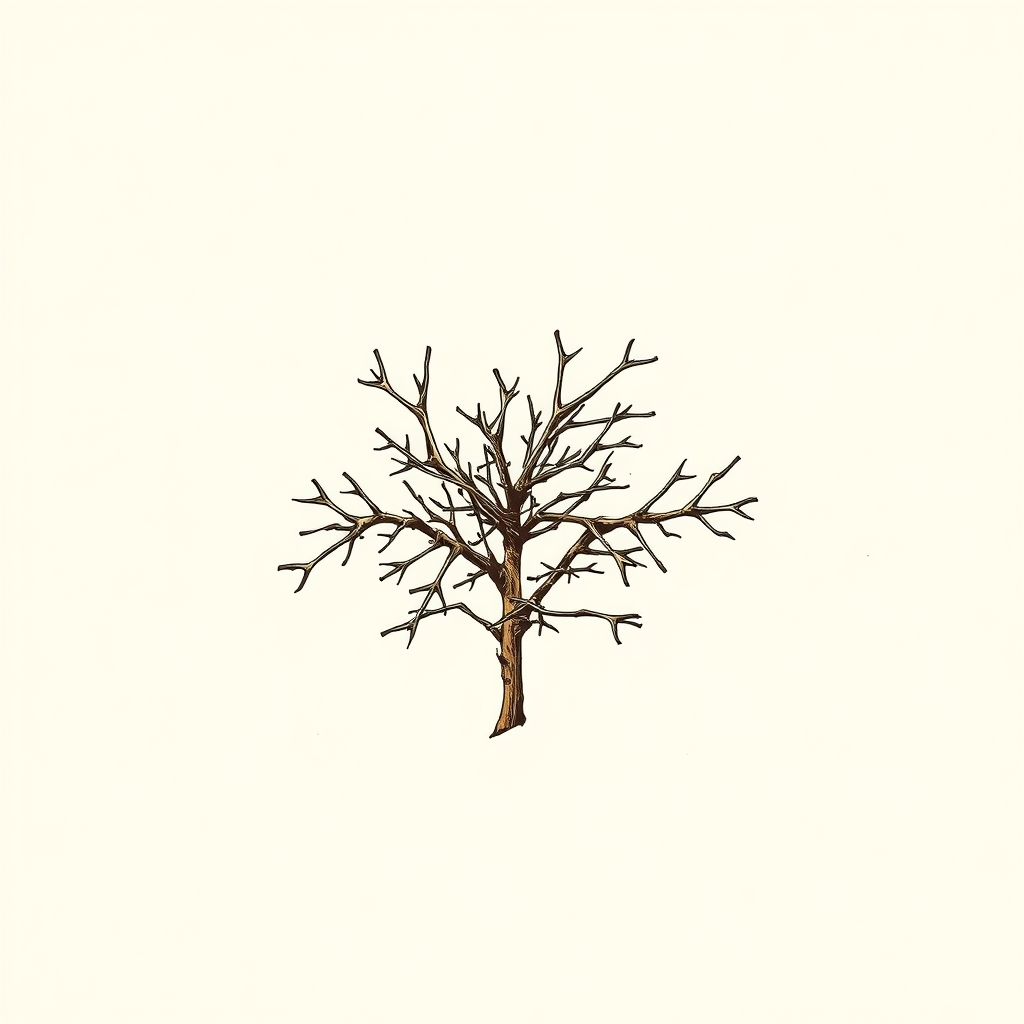
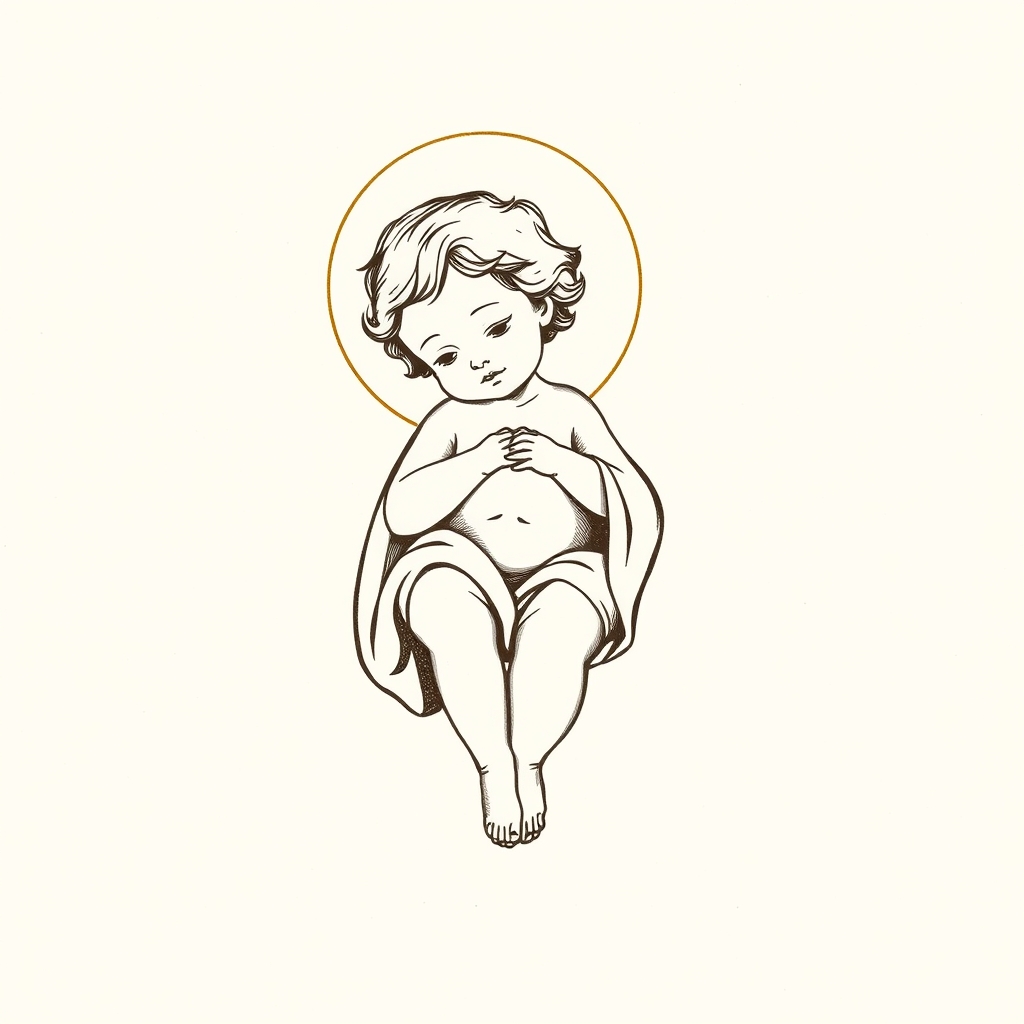
In iconography, Our Lady of the Thorn is recognizable by: thorn bush, dazzling light, yellow stone statue (50cm) and Child Jesus in her arms.
What miracles are attributed to Our Lady of the Thorn?
3 miracles are attributed to this saint, notably: Vision / apparition, Sign / wonder and Protection / deliverance.
Which saints were contemporaries of Our Lady of the Thorn?
Contemporaries include: Saint Peregrinus of Auxerre, Saint Philip Neri, Saint Ignatius of Loyola and Saint Colette (Nicole).
When did Our Lady of the Thorn die?
Our Lady of the Thorn died around 1500.
What are the other names of Our Lady of the Thorn?
Other forms of the name: Sainte-Marie.
Who are the relatives of Our Lady of the Thorn?
Relatives of Our Lady of the Thorn: Jésus-Christ (son).
Annexes & related entities
Structured data for exploration: events, miracles, quotes, places, attributes, patronages, and important entities cited in the text.
Key Events
- March 24, 1400: Discovery of the statue by two shepherds in a luminous thorn bush
- 1400: Translation of the statue to the Saint-Jean-Baptiste chapel by the Bishop of Châlons
- 15th century: Construction of the current basilica
- 1550: Sale of the estate to the Clément family
- French Revolution: Concealment of the statue by Mr. Bertin to protect it
- 1839: Census of 1,200 members in the confraternity