Saint Quiriacus (Cyriacus) of Trier
A servant to Bishop Saint Maximinus in Trier during the 4th century, Quiriacus practiced nocturnal piety to avoid vainglory. Slandered by jealous clerics, his innocence was divinely revealed to the bishop through the apparition of an angel. His cult is attested by ancient paintings and a dedicated crypt in Trier.
Contemporaries

Figures and markers around the normalized period for this entry.
Guided reading
2 reading sections
SAINT QUIRIACUS OR CYRIACUS OF TRIER (4th century).
Nocturnal Piety and Calumny
Quiriace, a servant of Saint Maximin, practiced his devotion at night to remain humble, but jealous clerics falsely accused him of shameful conduct.
Saint Quiriace fulfilled the duties o f an altar se rver for Saint Maximin. Among other pious practices, he was accustomed to frequently visiting all the monasteries and oratories. This holy man, wishing to avoid all vainglory, deemed it good to choose the nighttime for these exercises. Some clerics, jealous of his virtues, did not delay in incriminating his conduct; they went so far as to accuse him of a shameful act to Saint Maximin. The holy bishop, who had heard these accusations with pain, suspended his judgment and asked God to enlighten him on a matter so uncertain in his eyes. One day, at the moment when the bishop was preparing to celebrate the holy mysteries, and when Quiriace was standing humbly behind the church door, an angel appeared to the Pontiff and warned him that his servant was innocent. "These things," says Sigehard, author of the book of the miracle s of Saint Maximin, "these things s pread by the powerful voice of fame among all ancient peoples, and transmitted to us, deserve to find a place here; they are true; the paintings in the churches attest to it, and we have seen, in the old church of Saint-Quiriace, in the crypt raised over his tomb, one of the se paintings dating back to the highest antiquity and already almost erased by time."
Divine revelation and historical evidence
An angel reveals the innocence of Quiriacus to Bishop Maximin, a fact later confirmed by the historian Sigehard and ancient paintings.
Saint Quiriacus served as an altar server for Saint Maximin. Among other pious practices, he was accustomed to frequently visiting all the monasteries and oratories. This holy man, wishing to avoid all vainglory, deemed it best to choose the nighttime for these exercises. Some clerics, jealous of his virtues, did not delay in incriminating his conduct; they went so far as to accuse him of a shameful act before Saint Maximin. The holy bishop, who had heard these accusations with sorrow, suspended his judgment and asked God to enlighten him on a matter so uncertain in his eyes. One day, at the moment when the bishop was preparing to celebrate the holy mysteries, and when Quiriacus was standing humbly behind the church door, an angel appeared to the Pontiff and warned him that his servant was innocent. "These things," says Sigehard, author of the book of the miracles of Saint Maximin, "these things spread by the powerful voice of fame among all ancient peoples, and transmitted to us, deserve to find a place here; they are true; the paintings in the churches attest to it, and we have seen, in the old church of Saint-Quiriacus, in the crypt raised over his tomb, one of these paintings dating back to the highest antiquity and already almost erased by time."
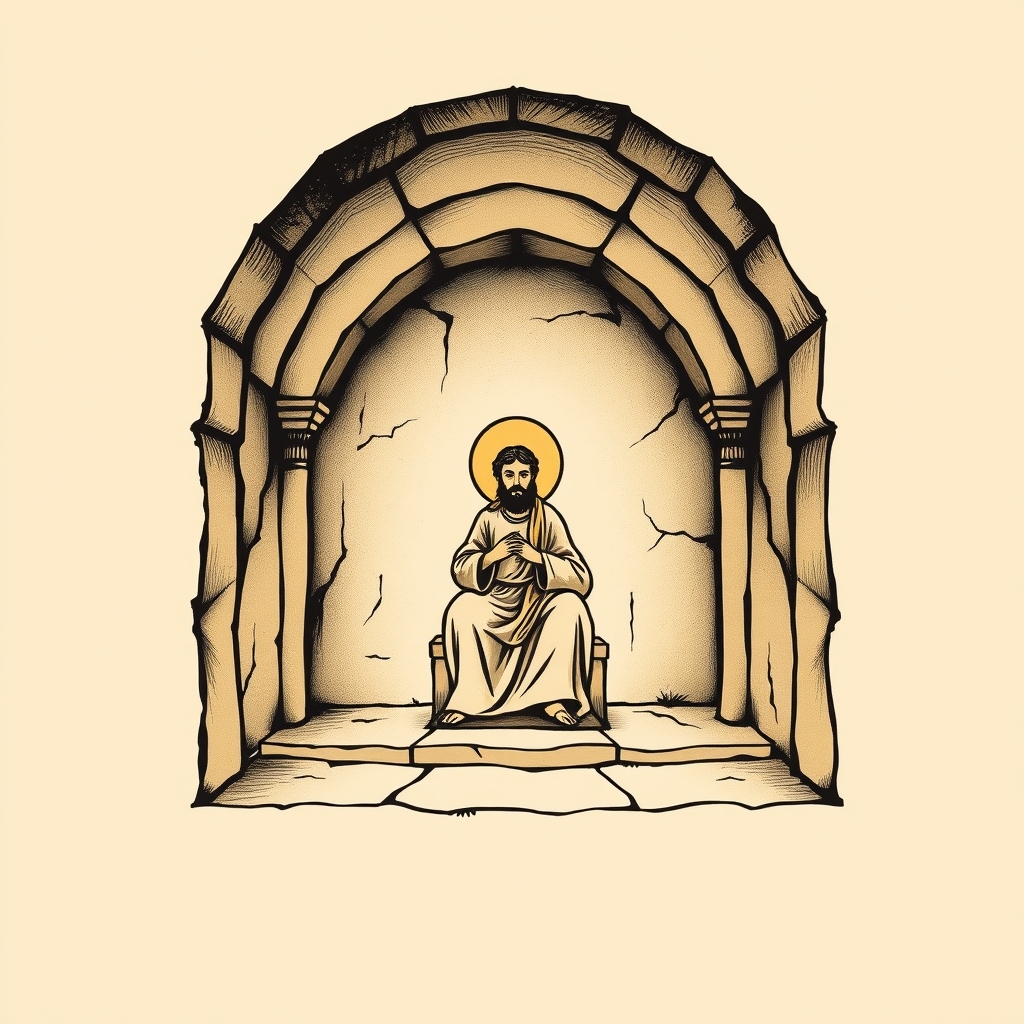
Iconography
Signs and attributes
Entities
Narrative network
The names, places, and concepts most present in the entry, weighted by centrality in the text.
The supernatural in their life
The miracles of Saint Quiriacus (Cyriacus) of Trier
Frequently asked questions about Saint Quiriacus (Cyriacus) of Trier
Who was Saint Quiriacus (Cyriacus) of Trier?
A servant to Bishop Saint Maximinus in Trier during the 4th century, Quiriacus practiced nocturnal piety to avoid vainglory. Slandered by jealous clerics, his innocence was divinely revealed to the bishop through the apparition of an angel. His cult is attested by ancient paintings and a dedicated crypt in Trier.
How is Saint Quiriacus (Cyriacus) of Trier depicted in Christian art?
In iconography, Saint Quiriacus (Cyriacus) of Trier is recognizable by: ancient paintings in his crypt.
What miracles are attributed to Saint Quiriacus (Cyriacus) of Trier?
1 miracle are attributed to this saint, notably: Vision / apparition and Sign / wonder.
Which saints were contemporaries of Saint Quiriacus (Cyriacus) of Trier?
Contemporaries include: Saint Blaise, Saint Hilary of Poitiers, Saint Basil the Great (Archbishop of Caesarea) and Saint Baudilus.
When did Saint Quiriacus (Cyriacus) of Trier die?
Saint Quiriacus (Cyriacus) of Trier died around 400.
What are the other names of Saint Quiriacus (Cyriacus) of Trier?
Other forms of the name: Cyriaque.
Annexes & related entities
Structured data for exploration: events, miracles, quotes, places, attributes, patronages, and important entities cited in the text.
Key Events
- Service under Saint Maximin
- Nightly visits to monasteries and oratories out of piety
- Slanderous accusation by jealous clerics
- Innocence revealed to the bishop by an angel
Quotes
-
These things spread by the powerful voice of fame among all ancient peoples, and transmitted to us, deserve to find a place here; they are true
Sigehard, Book of the Miracles of Saint Maximin