Saint Mamertinus of Auxerre
A former pagan healed of physical and spiritual infirmities by Saint Germain of Auxerre after a vision at the chapel of Saint-Carcodème, Mamertin became a monk and then an abbot. He is the author of the account of his own conversion, later integrated into the life of Saint Germain by the priest Constantius.
Contemporaries

Figures and markers around the normalized period for this entry.
Guided reading
6 reading sections
SAINT MAMERTIN, RELIGIOUS IN AUXERRE (462).
Conversion and healing
Initially a pagan and suffering from physical infirmities, Mamertinus converted after a vision at the chapel of Saint Carcodemus and received baptism from Saint Germanus.
Saint Mamertin us was born into paganism in a land not far from Auxerre, as he himself tells us. He was so attached to idolatry that it had been impossible to make him abandon it. However, the assiduous worship he rendered to Jupiter, Mercury, Apollo, and other false deities did not prevent him from losing an eye and becoming crippled in one hand.
A day when he was going, sadder than usual, to visit their temple, he met on his way a cleric of the church of Auxerre named Savinus. The latter, having learned the subject of his sadness and his errand, began to disabuse him of his error and persuaded him to go find Germanus, his bishop, who would heal him if he would renounce idolatry. The cleric's discourse restored hope to Mamertinus, who immediately took the road to Auxerre. He spent the following night in the chapel of Saint Carcodemus, where he had a miraculous vision that brought about his complete conversion.
The next day, he presented himself to the holy Bishop who, knowing by the light of God what had happened, gave him holy baptism and restored the use of his limbs.
Monastic Commitment
Mamertin entered the monastery founded by Saint Germain under the direction of Abbot Aloge, whom he eventually succeeded.
In gratitude for so many graces received, Mamertin dedicated himself to God under the guidan ce of Abbot Aloge, in the monastery that Saint Germain had built outside the city. Our Saint was so attached to his state that he never left the monastery except to follow Saint Germain or to carry out the missions with which he entrusted him. He made such progress in science and spiritual virtue that, after the death of the pious Aloge, he was named his successor. Saint Mamertin died on Good Friday, March 30, in 462. The day of his death is nevertheless marked on April 29 in the oldest martyrologies, which give him the title of priest.
The account of the conversion
The saint himself recorded the story of his conversion, a text later integrated into the biography of Saint Germanus by the priest Constantius.
Mamertinus himself wrote the history of his conversion, perhaps by the order of Saint Germanus, who had listened to the account several times with respect and who had wished for the priests to know it in order to praise God.
It is found in the life of Saint Germanus by the priest C onstantius: it is titled therein: The revolution of Saint Corcodemus and in what manner Mamertinus arrives at grace.
The disciple Marien
Marien, fleeing the Goths, becomes the disciple of Mamertin and leads a humble life as a shepherd marked by animal miracles.
The memory of Saint Marien or Marcien, his disciple, is readi ly associate d with that of Saint Mamertin. Marien had left the land of the Bitur iges, then occupied by the Arian Goths, whose domination was cruel to Catholics. Welcomed at the monastery of Auxerre by Mamertin, he fulfilled the humble duties of shepherd and cowherd in the stables and farmyards of the religious, in the midst of which he sanctified himself. His legend is filled with graceful wonders. Thus, he would call the small birds of the fields to him and feed them, and he would dismiss with authority the bears and other animals hostile to men and herds.
But what is more precious, he used the gift of miracles with which God had favored him to bring back to the good path the thieves and pillagers—not rare in those centuries—who lived by depredations.
Posterity of the abbey and the relics
The history of the Saint-Marien abbey spans the centuries, from the spoliations of Charles Martel to its takeover by the Premonstratensians in the 12th century.
One of these thieves even became an excellent preacher of the commandments of God. It is believed that the farm where Saint Marien sanctified himself was located at the place called today Merry, and that he died in the year 466 or 477. There was formerly, at the gates of Auxerre, beyond the Yonne, an abbey by the n ame of Saint-Marien whose history is divided into two distinct periods: before an d after th e Premonstratensians. (From the end of the 5th century to 1138, and from 1138 to 1789.) Founded by Saint Germain, sanctified by him and his fervent imitators, Saint Mamertin and Saint Marien, it fe ll into the ha nds of laymen und er Charles Martel.
Restored by Charlemagne to the 33rd bishop of Auxerre, Saint Aaron, it was deserted at the time of the Norman invasion by the religious who took with them the relics of Saint Mamertin and Saint Marien: the former were deposited at the cathedral and the others at the abbey of Saint-Germain.
In the 13th century, this place, sanctified by the retreat of so many pious figures, was marked only by an oratory or altar under the title of Saint-Germain. Rimer, a cleric of the cathedral of Auxerre, resolved to revive these ruins. The monument completed, it was entrusted to the religious of Prémontré who took possession of it by placing themselves under the aegis of the relics of Saint Marien. At the moment the Revolution broke out, this abbey counted forty-two abbots.
Documentary sources
The life of the saint is documented by the Legendary of Autun and the Golden Legend.
Legendary of Autun, and Golden Legen d.
Iconography
Signs and attributes

Entities
Narrative network
The names, places, and concepts most present in the entry, weighted by centrality in the text.
The supernatural in their life
The miracles of Saint Mamertinus of Auxerre
Frequently asked questions about Saint Mamertinus of Auxerre
Who was Saint Mamertinus of Auxerre?
A former pagan healed of physical and spiritual infirmities by Saint Germain of Auxerre after a vision at the chapel of Saint-Carcodème, Mamertin became a monk and then an abbot. He is the author of the account of his own conversion, later integrated into the life of Saint Germain by the priest Constantius.
What is Saint Mamertinus of Auxerre the patron saint of?
Patronage of Saint Mamertinus of Auxerre: Saint-Marien Abbey of Auxerre.
How is Saint Mamertinus of Auxerre depicted in Christian art?
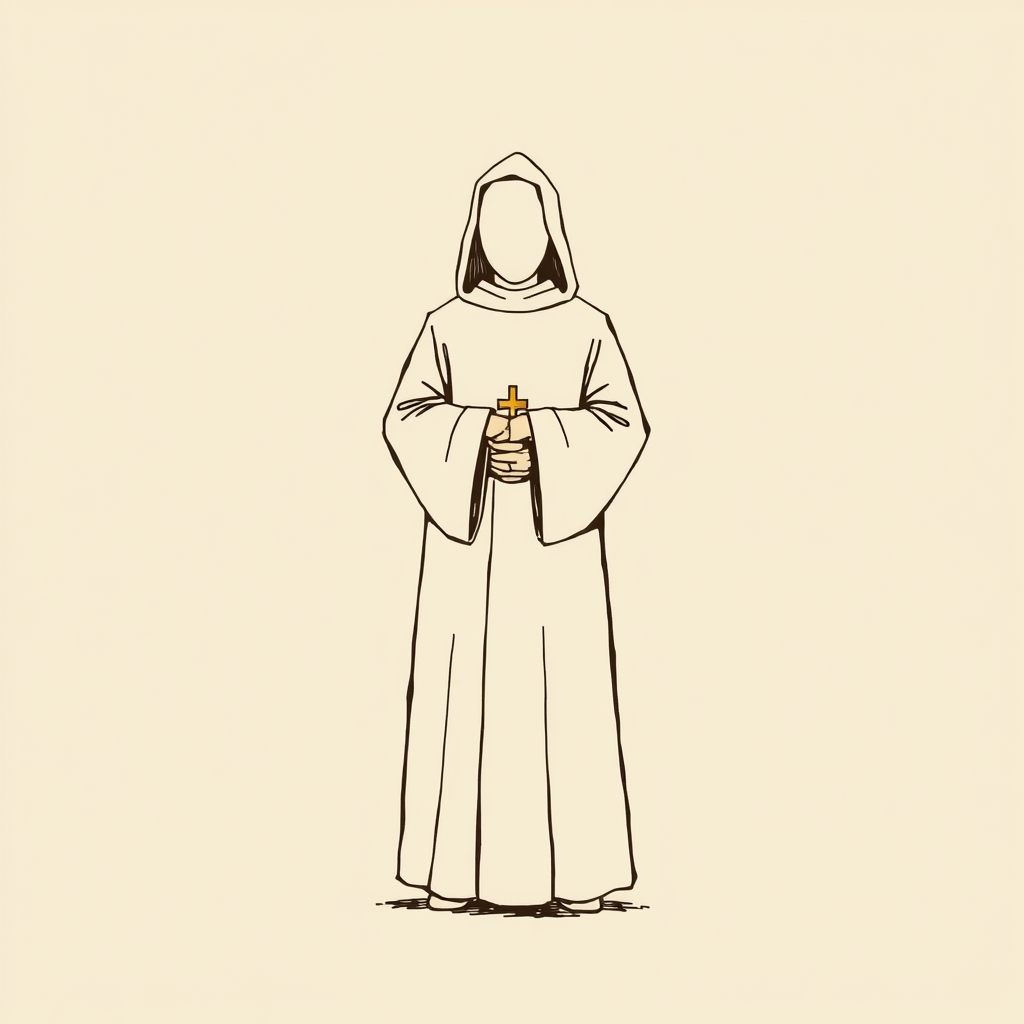
In iconography, Saint Mamertinus of Auxerre is recognizable by: monk's habit and book (account of his conversion).
What miracles are attributed to Saint Mamertinus of Auxerre?
2 miracles are attributed to this saint, notably: Healing, Conversion and Vision / apparition.
Which saints were contemporaries of Saint Mamertinus of Auxerre?
Contemporaries include: Saint Augustine of Hippo, Saint Honoratus of Arles, Saint James of Tarentaise and Saint Jerome of Stridon.
When did Saint Mamertinus of Auxerre die?
Saint Mamertinus of Auxerre died around 500.
Annexes & related entities
Structured data for exploration: events, miracles, quotes, places, attributes, patronages, and important entities cited in the text.
Key Events
- Born into paganism near Auxerre
- Meeting with the cleric Savin
- Miraculous vision in the chapel of Saint-Carcodème
- Baptism and healing by Saint Germanus of Auxerre
- Entered the monastery under Abbot Aloge
- Election as abbot after the death of Aloge
- Writing of the account of his conversion
Quotes
-
The conversion of Saint Corcodemus and how Mamertinus arrives at grace
Title of his account in the life of Saint Germanus by Constantius