King of Salem and priest of the Most High in the 19th century BC, Melchizedek welcomed Abraham with bread and wine after his victory. A prophetic figure of Christ and the eternal priesthood, he is mentioned in the Canon of the Mass as a model of pure sacrifice. His name means 'King of righteousness' and his dwelling prefigures the future Jerusalem.
Contemporaries

Figures and markers around the normalized period for this entry.
Guided reading
4 reading sections
SAINT MELCHIZEDEK, KING OF SALEM (19th century BC).
The meeting with Abraham
Melchizedek, King of Salem and priest, welcomes the patriarch Abraham after his military victory by offering him bread and wine and blessing him.
Saint Melchizedek, King of Salem, was a contemporary of Abraham. He came to meet this Patriarch upon his return from the expedition where he had delivered his nephew Lot from the hands of the neighboring kings. Melchizedek offered him the consecrated bread and wine, for he was a priest of the Most High. "May the Lord, God Almighty," he exclaimed, "Creator of heaven and earth, bless Abraham; blessed be God whose protection has delivered our enemies into your hands." Abraham offered the King-Ponti ff a tithe of all the spoils. Melchizedek is a beautiful figure, the King-Pontiff, the priest of the Most High, the first to whom the Bible gives this title, whose name means King of righteousness, whose dwelling is Salem, the city of peace, the future Jerusalem where the King of righteousness, Jes us Christ, w ill come to reign!
Symbolism and Priesthood
The offering of Melchizedek prefigures the Eucharist and his priesthood announces the eternal priesthood of Jesus Christ.
The offering of Melchizedek is also symbolic: the bread and wine that he presents to the victorious Patriarch are the figure of the Eucharistic bread and wine with which Jesus Christ will nourish souls victorious over the passions. The priesthood of Melchizedek is the image of the immortal priesthood established by Jesus Christ in the Church. — Tu es sacerdos in aeternum secundum ordinem Melchisedech. Ps. cix, 5; Gen., xv, 1. — According to a pious tradition, Salem is the same city as Jerusalem; Melchizedek would therefore have offered his figurative s acrifice in the same p lace where the true High Priest Jesus Christ was to institute the sacrifice of the new covenant under the species of bread and
wine. The Holy Fathers are also convinced that it was Jesus Christ whom Abraham envisioned in the person of Melchizedek when he paid him the tithe and received his blessing.
Cult and liturgical mention
Although he has no universal feast day, he is honored in the Canon of the Mass and mentioned in the Latin and Ethiopian martyrologies.
The Chur ch has not assigned a particular feast to Saint Melchizedek; but what honor has she not bestowed upon him by inserting him into the Canon of the Mass, where she qualifies him as a Sovereign Pontiff and speaks of the oblation of bread and wine that he made before Abraham as a holy sacrifice and a spotless host, as pleasing to God as the sacrifice of Abel and that of Abraham? — The Latin martyrologies mark Saint Melchizedek on March 25; the Ethiopians honor him on April 12.
Source
The text is based on the works of the hagiographer Adrien Baillet.
Accordin g to Ba illet.
Iconography
Signs and attributes




Entities
Narrative network
The names, places, and concepts most present in the entry, weighted by centrality in the text.
Frequently asked questions about Saint Melchizedek (King of Salem)
Who was Saint Melchizedek (King of Salem)?
King of Salem and priest of the Most High in the 19th century BC, Melchizedek welcomed Abraham with bread and wine after his victory. A prophetic figure of Christ and the eternal priesthood, he is mentioned in the Canon of the Mass as a model of pure sacrifice. His name means 'King of righteousness' and his dwelling prefigures the future Jerusalem.
How is Saint Melchizedek (King of Salem) depicted in Christian art?
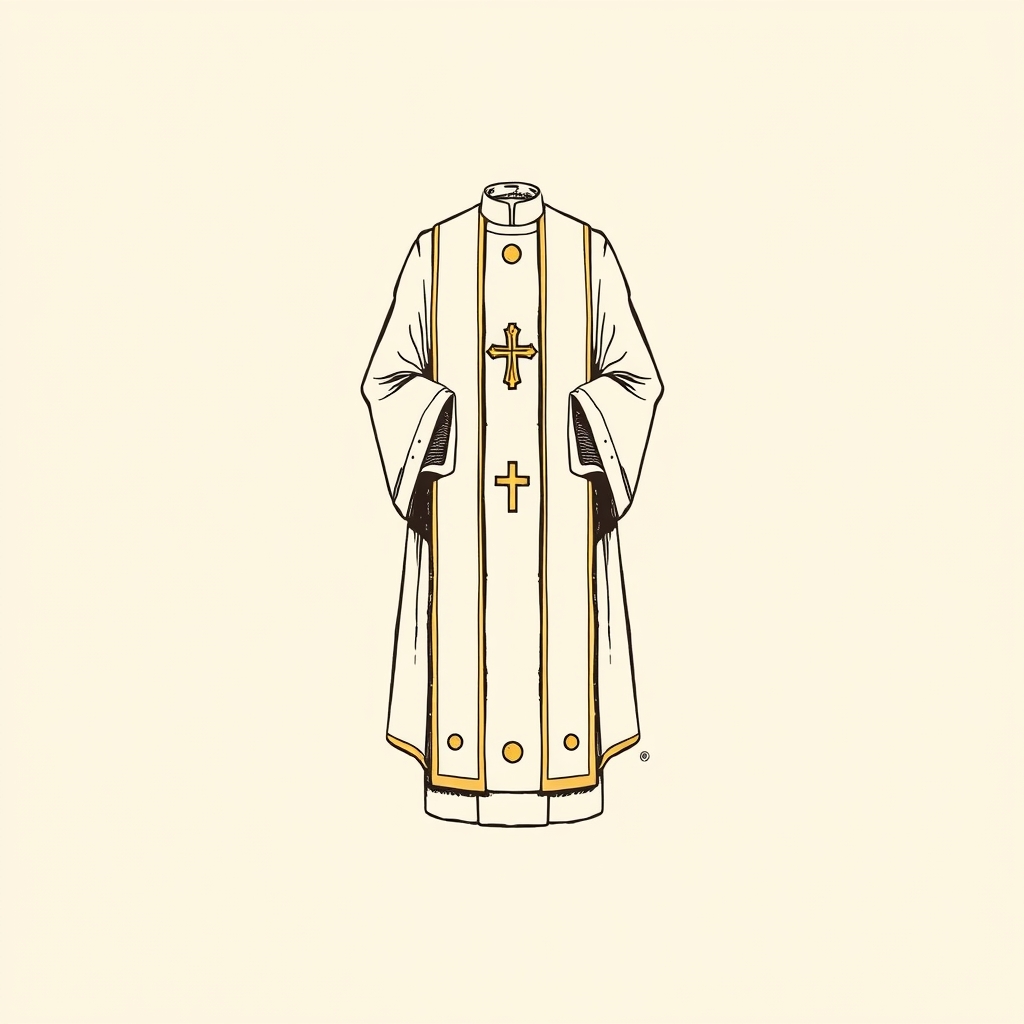
In iconography, Saint Melchizedek (King of Salem) is recognizable by: bread, wine, chalice, royal crown and priestly vestments.
When did Saint Melchizedek (King of Salem) die?
Saint Melchizedek (King of Salem) died around -1801.
What are the other names of Saint Melchizedek (King of Salem)?
Other forms of the name: Melchisedech and Roi de justice.
Annexes & related entities
Structured data for exploration: events, miracles, quotes, places, attributes, patronages, and important entities cited in the text.
Key Events
- Meeting with Abraham upon his return from his expedition
- Offering of bread and wine to Abraham
- Blessing of Abraham
- Reception of the tithe from Abraham's spoils
Quotes
-
Tu es sacerdos in aeternum secundum ordinem Melchisedech.
Ps. 109:5; Gen. 14:18 -
May the Lord, God Almighty, Creator of heaven and earth, bless Abram; and blessed be God, who has delivered your enemies into your hand.
Source text (Genesis)