A disciple of Saint Avitus from Auvergne, Saint Almire first lived at Micy before retiring as a hermit in the forests of Maine in the 6th century. There, he founded a monastery on the banks of the Bruye that welcomed more than forty monks. Renowned for his holiness and miracles, he died around 560 after announcing his passing.
Contemporaries

Figures and markers around the normalized period for this entry.
Guided reading
4 reading sections
SAINT ALMIRE OR ALMER,
Origins and monastic formation
A native of Auvergne, Almire became a disciple of Saint Avit and followed him from the abbey of Ménat to that of Micy near Orléans.
One of the most illustrious disciples of Saint Avit, third abbot of Saint-Mermin, near Orléans, was Saint Almire. Bor n in the land of the Arverni, he followed, at a still tender age, Saint Avit an d Saint Cala is when they left the ab bey of Ménat to come and inhabit the cloisters built by Saint Maximin in the territory of Orléans.
Retreat and foundation in Maine
Almire established himself as a hermit in the forests of Maine, on the banks of the Bruye, where he founded an oratory and a monastery welcoming forty monks.
Almire lived for a few years in the m onastery of Micy, at Saint-Mermin, and when Avitus and Calais came to hide in the forests of Maine and Perche, he followed them as well. He chose for himself a cell on the banks of the Bruye river, at the foot of a hill surrounded by woods, in the place where one sees today the vi llage of Grèce ( Sarthe, arrondissement of Mamers, canton of Montmirail). He built there an oratory in honor of the Blessed Virgin, and very close by he constructed a small cell for himself. He hoped to live there alone, in communion with God and the angels, and in the forgetfulness of men; but Providence had other views for him, and he submitted to them. His cell soon became the refuge of fervent Christians, who desired to serve God perfectly under his guidance, so that in a short time one saw more than forty monks gathered in his monastery.
Governance and the miracle of the rain
The abbot leads his community according to the rules of the Fathers and manifests his holiness through a miracle in which he remains dry under a downpour while working.
Almire devoted himself, above all, to the care of his religious and his disciples; he taught them to live according to the rules of the first Fathers of monastic life, and his examples always confirmed his teachings. To give even more authority to his words and his virtues, heaven deigned at times to perform miracles. One day, while he was occupied with field work with the brothers, a rather abundant rain occurred; everyone fled immediately and went to take refuge in a nearby hut. Almire remained alone to finish his task. But the rain continued to redouble, so that in the end the cottage was powerless to protect the monks who had come there to seek shelter from the flood. The abbot nonetheless continued his work, and he remained until everything was entirely finished. He then came to join the brothers, and all admired how fidelity to the observances had completely protected him, to the point that not a single drop of rain had reached him.
Passing and historical references
Saint Almire died around the year 560 after announcing his end to his brothers. The account is taken from the works of Dom Piolin on the Church of Le Mans.
The blessed abbot, seeing the time of his death approaching, announced to his brothers the day and the hour at which he would leave the earth, and when this moment arrived, he fell asleep gently in the Lord. It was the third day of the ides of September (the 11th of that month), around the year 560.
Excerpt from the History of the Church o f Le Mans, by the R. P. Dom Piolin.
Iconography
Signs and attributes

Entities
Narrative network
The names, places, and concepts most present in the entry, weighted by centrality in the text.
The supernatural in their life
The miracles of Saint Almer (Almire)
Frequently asked questions about Saint Almer (Almire)
Who was Saint Almer (Almire)?
A disciple of Saint Avitus from Auvergne, Saint Almire first lived at Micy before retiring as a hermit in the forests of Maine in the 6th century. There, he founded a monastery on the banks of the Bruye that welcomed more than forty monks. Renowned for his holiness and miracles, he died around 560 after announcing his passing.
What is Saint Almer (Almire) the patron saint of?
Patronage of Saint Almer (Almire): Gréez-sur-Roc.
How is Saint Almer (Almire) depicted in Christian art?
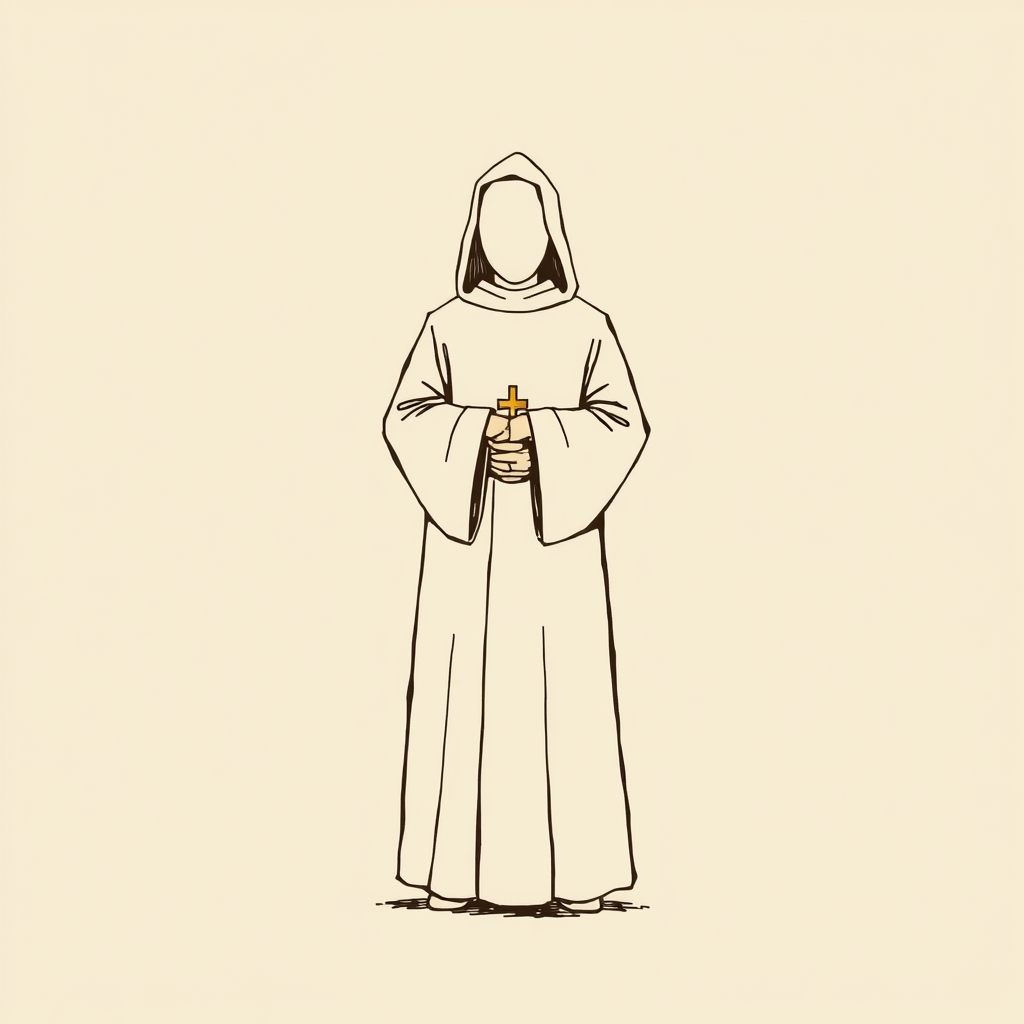
In iconography, Saint Almer (Almire) is recognizable by: monk's habit and abbot's crosier.
What miracles are attributed to Saint Almer (Almire)?
1 miracle are attributed to this saint, notably: Mastery of the elements and Sign / wonder.
Which saints were contemporaries of Saint Almer (Almire)?
Contemporaries include: Saint Remigius (Apostle of the Franks), Saint Antide of Besançon, Saint Eugene of Carthage and Saint Nicaise of Reims.
When did Saint Almer (Almire) die?
Saint Almer (Almire) died around 600.
What are the other names of Saint Almer (Almire)?
Other forms of the name: Almer.
Annexes & related entities
Structured data for exploration: events, miracles, quotes, places, attributes, patronages, and important entities cited in the text.
Key Events
- Disciple of Saint Avitus at the Abbey of Ménat
- Stay at the monastery of Micy (Saint-Mermin)
- Retreat in the forests of Maine and Perche
- Establishment of a cell on the banks of the Bruye
- Foundation of a monastery gathering more than forty monks
- Prophetic announcement of his own death