Blessed Alexander Sauli
SUPERIOR GENERAL OF THE BARNABITES, THEN BISHOP OF ALÉRIA AND PAVIA
A member of the Barnabite order and a close associate of Saint Charles Borromeo, Alessandro Sauli was appointed bishop of Aléria in 1570 to reform a devastated Corsica. Nicknamed the Angel of Peace, he rebuilt the Church on the island before becoming bishop of Pavia. He died in 1592, leaving behind a theological body of work esteemed by Saint Francis de Sales.
Contemporaries

Figures and markers around the normalized period for this entry.
Guided reading
8 reading sections
BLESSED ALESSANDRO SAULI,
SUPERIOR GENERAL OF THE BARNABITES, THEN BISHOP OF ALÉRIA AND PAVIA
Beginnings and teaching in Pavia
Alessandro Sauli distinguished himself by his talent as a preacher and taught philosophy and theology at the University of Pavia before being noticed by Saint Charles Borromeo.
reconciliation. He had a singular talent for touching and converting sinners. He continued to perform the same duties, even when he had been tasked with teaching philosophy and theology at the University of Pavia. Entire communities were seen placing themselves under his guidance, in order to learn from him the means to attain the perfection of their state. Having been invited to preach in the Cathedral of Milan, he produced marvelous fruits through his sermons. Saint Charl es Borromeo congratula ted the Church for having such a minister and shed tears of joy at the sight of the successes of his apostolic zeal.
Superior General and call to Corsica
Elected Superior General of his order at thirty-two, he was appointed Bishop of Aléria in Corsica by Pope Pius V in 1570.
Alexander was only thirty-two years old when he was elected Superior General of his Order. He filled this position with a capacity that gave new luster to his Congregation; but God had not destined him to live enclosed in retirement: the island of Corsica was the theater where his eminent virtues were to shine.
This island had been anciently converted to the faith by missionaries who came from Rome. The church of Aléria appears to be one of the oldest of those that were founded there. One of its bishops, named Peter, is particularly known. He lived in the time of Saint Gregory the Great, who wrote letters to him. But this church had long been reduced to the most deplorable state: there was no longer any piety or discipline when Alexander Sauli was appoin ted its bishop in 1570 by the holy Pope Pius V.
The reform of the diocese of Aléria
Arriving in a diocese in ruins and ignorance, he undertook a profound reform, traveled through the mountains, and founded churches, colleges, and seminaries.
The new bishop, having been consecrate d by Saint Charles Bor romeo, departed without delay with three priests of his Order. He embarked full of confidence in God, and the voyage was fortunate. He felt a sharp pain in seeing that God was unknown everywhere. Aléria was no more than the title of a church. Scarcely was there in the entire extent of the diocese a place where one could decently perform the divine office. The villages, with the exception of three or four, were uninhabited. The people were scattered in the woods and on the mountains. Plunged into gross ignorance, they did not know the first elements of religion. The clergy were in no less need of instruction than the people. The holy bishop, without a church, and even without a house, first fixed his residence at Tallone. It was a kind of village situated four leagues from the ruins of Aléria. He held a synod there on the model of those held in Milan under Saint Charles Borromeo, and made wise regulations there to begin to remedy the abuses; he then undertook the visitation of his entire diocese. He went into the most remote hamlets, and penetrated to places deemed inaccessible. The sight of such a charitable pastor softened the most savage: they all came to throw themselves at his feet, well resolved to obey him even before having heard him. His words carried the light of faith into minds, and the fire of charity into hearts. Everywhere he had to reform ancient abuses, abolish scandalous customs, found churches or rebuild those that were ruined, and provide for the decency of the worship of the Lord. He established colleges and seminaries where youth could be formed.
The Angel of Peace and the trials
Despite the loss of his collaborators and the attacks of corsairs, he stabilized his diocese in Cervione and earned the nickname Angel of Peace.
The co-workers he had brought with him having died of exhaustion before his eyes, he found himself in a very great predicament: he did not, however, lose heart; he redoubled his labors without fearing to exhaust his health. The continuity of his occupations did not prevent him either from subjecting himself to continual fasts and rigorous abstinence. Although he had very little income, he did not fail to give abundant alms. The depredations of the corsairs often forced him to change his residence. He was seen transporting his seminary and his clergy from Tallone, located on the eastern coast of the island, to Algajola which was on the western coast, and from that city to Corte, in the center of the island, th en to Ce rvione. It was in this last city that he built his cathedral and founded a chapter of canons. He had a rare talent for uniting divided minds and hearts; thus, he was given the nickname Angel of Peace throughout Corsica.
Writings and spiritual influence
Author of doctrinal works esteemed by Saint Francis de Sales, he exerted a major influence during his travels to Rome, Genoa, and Milan.
Blessed Alexander Sauli addressed wise Warnings to his clergy. In them, he proposed to instruct the ministers both on the conduct they ought to maintain and on the manner in which they should direct the souls entrusted to their care; he also composed Conversations, in which he explained the doctrine of the Church with great precision and clarity. Saint Francis de Sales singularly esteemed this work, and said that the subject matter was exhausted therein. The holy Prelate went from time to time to Rome, as did the other bishops of Italy; but he went there as to the center of the apostolate, and with such devotion that he experienced within himself what Saint Chrysostom says, that the apostolic spirit lives there always, and that from the tombs of the Apostles, and from their ashes, inanimate though they be, there still issue sparks of the sacred fire with which they set the earth ablaze. All his travels were like so many missions, by the great fruits that his preaching, his counsel, and his examples produced everywhere. This is something for which the cities of Genoa, Milan, and Rome have several times provided testimonies that were confirmed by four sovere igns. Gregory XIII, one of them, was extremely struck when he heard him preach. Saint Philip Neri also honored him greatly because of his talents and his eminent holiness. The enemies of religion themselves could not resist the strength and the unction of his discourses. Having had a conference with a Calvinist from Geneva who had come to dogmatize in Corsica, he made him open his eyes to the truth and brought him back into the bosom of the Church. In Rome, a single one of his sermons took from the synagogue of the Jews four of its firmest supporters.
Final years in Pavia and death
Transferred to the bishopric of Pavia in 1591 in obedience to the Pope, he died in 1592 during a pastoral visit to Calozzo.
The veneration in which the holy Apostle of Corsica was held led the cities of Tortona and Genoa to request him as their pastor; but he would not leave his first spouse, to whom he was tenderly attached. It was only through obedience to the orders of Pope Gre gory XIV tha t he accepted the bishopric of Pa via in 1591. No sooner had he arrived in his new diocese than he undertook to visit it. On all solemn feast days, he would return to Pavia. While at Calozzo, in t he coun ty of Asti, he was struck by the illness that took him from this world. He died on October 11, 1592. His holiness was attested by several miracles. He was beatified on April 23, 1741, by Benedict XIV.
Iconography and miracles
His piety is illustrated by the episode of the cross in Milan and the miracle of the storm that repelled the Barbary galleys.
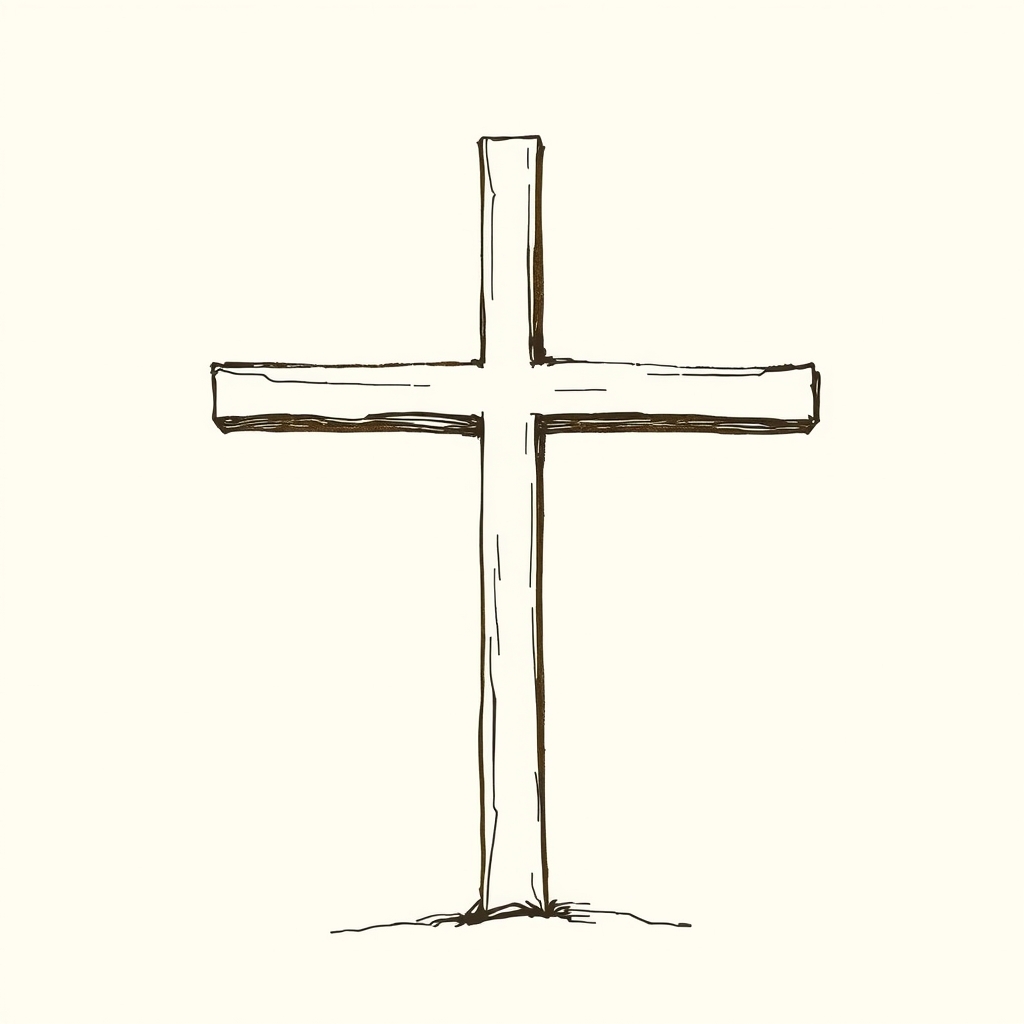
He is represented: 1° Supporting a large cross. This recalls that while still a novice, he went out into the street s of Milan carrying a heavy cross, at the risk of being taken for a madman. By this, he wished to signify to all those who had known him that he was resolutely renouncing the world; 2° extending his hand toward one or more ships that appear to be sinking into the waves. It is said that twenty Barbary galleys were approaching Corsica to plunder it. Terror was everywhere. A horse had already been offered to the holy bishop so that he might flee. He, without being intimidated, went to pray for a moment in a chapel, then returned to the beach and urged everyone to have confidence in God. Indeed, a squall arose that caused all the ships to perish.
Sources for the life of the saint
The life of the blessed is documented by the works of Gubotio, Brenda, and Abbé Clément in the 18th century.
See his Life, written in Latin by Gubotio, and the excellent notes by Brenda on this work: the abridgment of the same Life in French; Paris, 1742, in-12, and the panegyric delivered in honor of the blessed Alexandre Sauli, by M. l'abbé Clément, in 1743.
Iconography
Signs and attributes

Entities
Narrative network
The names, places, and concepts most present in the entry, weighted by centrality in the text.
The supernatural in their life
The miracles of Blessed Alexander Sauli
Frequently asked questions about Blessed Alexander Sauli
Who was Blessed Alexander Sauli?
A member of the Barnabite order and a close associate of Saint Charles Borromeo, Alessandro Sauli was appointed bishop of Aléria in 1570 to reform a devastated Corsica. Nicknamed the Angel of Peace, he rebuilt the Church on the island before becoming bishop of Pavia. He died in 1592, leaving behind a theological body of work esteemed by Saint Francis de Sales.
What is Blessed Alexander Sauli the patron saint of?
Patronage of Blessed Alexander Sauli: Aléria, Corsica and Pavia.
What is Blessed Alexander Sauli invoked for?
Blessed Alexander Sauli is invoked for: peace between enemies and protection against pirates and shipwrecks.
How is Blessed Alexander Sauli depicted in Christian art?
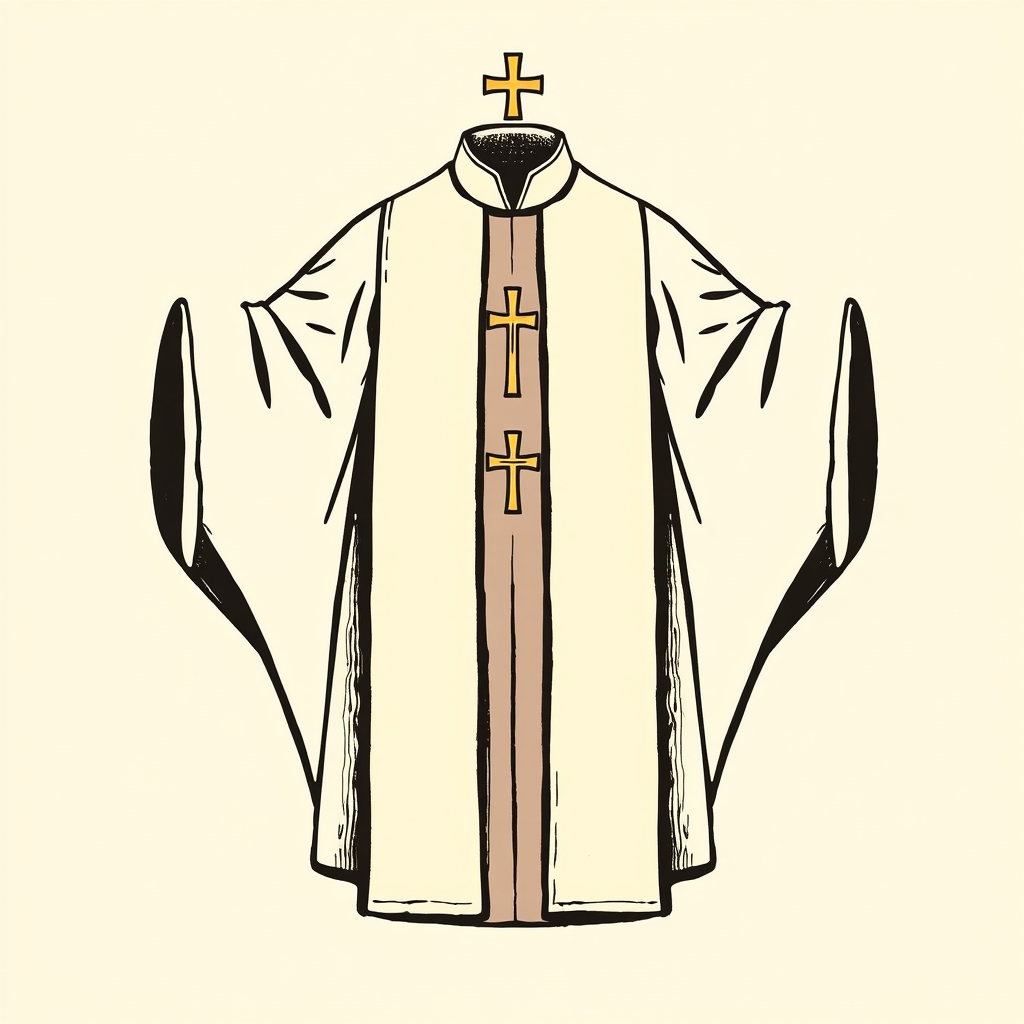
In iconography, Blessed Alexander Sauli is recognizable by: large cross carried on the shoulder, hand extended towards ships/galleys and episcopal vestments.
What miracles are attributed to Blessed Alexander Sauli?
3 miracles are attributed to this saint, notably: Mastery of the elements, Protection / deliverance and Conversion.
Which saints were contemporaries of Blessed Alexander Sauli?
Contemporaries include: Blessed John of Jesus-Mary, Ana de Jesús, Venerable Anne of Jesus and Saint Francis de Sales (Bishop and Prince of Geneva).
When did Blessed Alexander Sauli die?
Blessed Alexander Sauli died around 1592.
What are the other names of Blessed Alexander Sauli?
Other forms of the name: Alessandro Sauli, Ange de paix and Apôtre de la Corse.
Annexes & related entities
Structured data for exploration: events, miracles, quotes, places, attributes, patronages, and important entities cited in the text.
Key Events
- Teaching philosophy and theology in Pavia
- Elected Superior General of his Order at age 32
- Appointed Bishop of Aléria in 1570 by Pius V
- Consecrated by Saint Charles Borromeo
- Mission and reform of the Church in Corsica
- Appointed Bishop of Pavia in 1591
- Beatification on April 23, 1741 by Benedict XIV
Quotes
-
Angel of peace
Popular nickname in Corsica