Jan Bula
Diocesan priest of Brno and martyr of the Czechoslovak communist regime, sentenced to death following the Babice affair and executed in 1952.
Contemporaries

Figures and markers around the normalized period for this entry.
Guided reading
5 reading sections
Biography
Youth, formation, and priestly ordination of Jan Bula in Moravia.
Jan Bula was born on June 24, 1920, in Lukov, a village in Moravia located near Moravské Budějovice (Třebíč district, today in the Czech Republic). Coming from a very modest family, he was the son of Antonín Bula, a railway employee, and Marie Bula (née Růžičková). From his childhood, he distinguished himself by his piety and his diligent service as an altar boy at the local church of Saint John the Baptist, under the spiritual influence of the parish priest Cyril Bojanovský.
After completing his secondary studies at the gymnasium of Moravské Budějovice from 1931 to 1939, where he revealed artistic talents by illustrating a student newspaper, he entered the diocesan seminary of Brno in 1939. However, the Second World War disrupted his path: in 1943, he was requisitioned for forced labor (totálně nasazený) by the German occupation authorities and sent to a ceramic factory in Vranovská Ves. He worked there as a laborer while continuing to paint during his rare moments of leisure. Returning to the seminary in 1944, he put his artistic talent at the service of the community by painting cartoons representing the Crucifixion to replace the chapel's stained glass windows destroyed by a bombing.
At the end of the war, he completed his theological studies and was ordained a priest on July 29, 1945, in the Brno Cathedral by auxiliary bishop Stanislav Zela. He celebrated his first solemn mass (his primice) in his native village of Lukov on August 5, 1945.
Life and Work
Pastoral ministry of Jan Bula in Rokytnice nad Rokytnou and his initial engagements against the regime.
In August 1945, the young priest was appointed vicar in Rokytnice nad Rokytnou, a parish in the Vysočina region, to assist the ailing parish priest Stanislav Lakomý. After the latter's death in July 1949, Father Jan Bula was appointed administrator of the parish.
With a cheerful, dynamic, and deeply benevolent temperament, he quickly won the affection and respect of his parishioners. He dedicated himself with remarkable pastoral zeal to the religious education of children and young people, teaching catechism in several local schools. He was actively involved in local community life, particularly within the Catholic sports organization Orel (the Eagle), where he led the boys' section (Orlíci). He also organized amateur plays and did not hesitate to paint frescoes of angels on the church walls himself for the children.
Alongside his pastoral activities, he undertook significant restoration work on the parish church of Rokytnice. However, his ministry took place in an increasingly hostile political climate following the communist coup d'état of February 1948. In June 1949, defying the ban by state authorities, he read from the pulpit and commented on a pastoral letter from the Czechoslovak bishops denouncing the regime's interference in Church affairs. This act of courage earned him a fine of 4,500 crowns and prosecution for incitement to rebellion, which was subsequently suspended thanks to a presidential amnesty in October 1949.
Path to Holiness
Arrest, the rigged Babice trial, and the execution of Father Jan Bula by the communist regime.
Father Jan Bula's dedication to the youth and his fidelity to the Church made him a prime target for the communist political police (StB). At the beginning of 1951, the StB set a trap using an agent provocateur, Ladislav Malý, a former classmate of Bula. The latter visited him in February 1951 and told him a completely fabricated story, claiming that he was part of a clandestine network aiming to free the Archbishop of Prague, Mgr Josef Beran, who was then detained by the regime, and that he was looking for a trusted priest to hear his confession.
Having not reported this suspicious contact to the authorities, Father Jan Bula was arrested by the StB on April 30, 1951. A few months later, on the night of July 2 to 3, 1951, the "Babice affair" occurred: an armed group burst into the Babice school and murdered three local communist officials. Although Father Bula had already been imprisoned for two months at the time of the events, the communist regime opportunistically used this tragedy to stage a massive rigged political trial (the Babice trial) intended to terrorize the clergy and the peasants who opposed the collectivization of land.
Incarcerated and subjected to violent interrogations accompanied by physical and psychological torture, the young priest was forced to sign false confessions accusing him of high treason and complicity in the Babice terrorist attack. During the show trial held in Třebíč from November 13 to 15, 1951, he was sentenced to death. Despite an appeal for review rejected in February 1952 and the rejection of a request for clemency, the sentence was upheld.
On May 20, 1952, at the age of 31, Father Jan Bula was executed by hanging in the courtyard of the Jihlava prison. The day before his execution, he was allowed to write farewell letters to his family, in which he expressed total forgiveness toward his executioners and an unwavering trust in God.
After the fall of the communist regime during the Velvet Revolution, the Czechoslovak justice system officially rehabilitated him posthumously in 1990, annulling his unjust conviction.
Beatification and canonization
The beatification process of Jan Bula, recognized as a martyr and beatified in 2026.
The cause for the beatification of Jan Bula was officially opened by the Diocese of Brno in 2004, under the impetus of Bishop Mgr Vojtěch Cikrle. In 2011, his cause was unified with that of Father Václav Drbola, another priest of the diocese also executed in connection with the Babice case (on August 3, 1951). The diocesan inquiry was solemnly closed on December 19, 2015.
On October 24, 2025, Pope Leo XIV approved the decree recognizing the martyrdom in odium fidei (in hatred of the faith) of Jan Bula and his companion Václav Drbola.
The solemn beatification ceremony took place on June 6, 2026, at the Brno Exhibition Centre (Brněnské výstaviště). The Mass was presided over by Cardinal Michael Czerny, Prefect of the Dicastery for Promoting Integral Human Development, acting as the representative of Pope Leo XIV, in the presence of more than 13,000 faithful and hundreds of priests.
Their common liturgical memorial is set for June 17. This date was chosen because the anniversary dates of their deaths were already occupied in the liturgical calendar, and June 17 corresponds both to the day of Father Drbola's arrest in 1951 and falls between the dates of the historical pastoral letters read by both priests in June 1949.
Spirituality and legacy
The spiritual legacy of Jan Bula through his farewell letters and his testimony of forgiveness.
The figure of Blessed Jan Bula remains a powerful symbol of priestly fidelity, courage in the face of totalitarian oppression, and evangelical reconciliation. During his beatification, the postulator of the cause, Father Karel Orlita, emphasized that his testimony reminds us that "truth, love, and fidelity have a strength that survives history itself."
His spirituality is deeply marked by the offering of his life and by forgiveness. In his letters written from his death row cell, he writes in particular: "We, human beings, do not love God enough. This is the only thing for which we must ask for forgiveness." He also expresses his inner peace: "Pán Bůh mi vyměřil krátký život. Ale věřím, že nebyl nadarmo" ("The Lord God measured out a short life for me. But I believe it was not in vain").
During the beatification mass in 2026, Father Jan Bula's personal chalice was used for the consecration, becoming a touching relic of his sacrifice. He is, along with Václav Drbola, the first martyr of the totalitarian regimes of the 20th century to be beatified on the territory of
Iconography
Signs and attributes
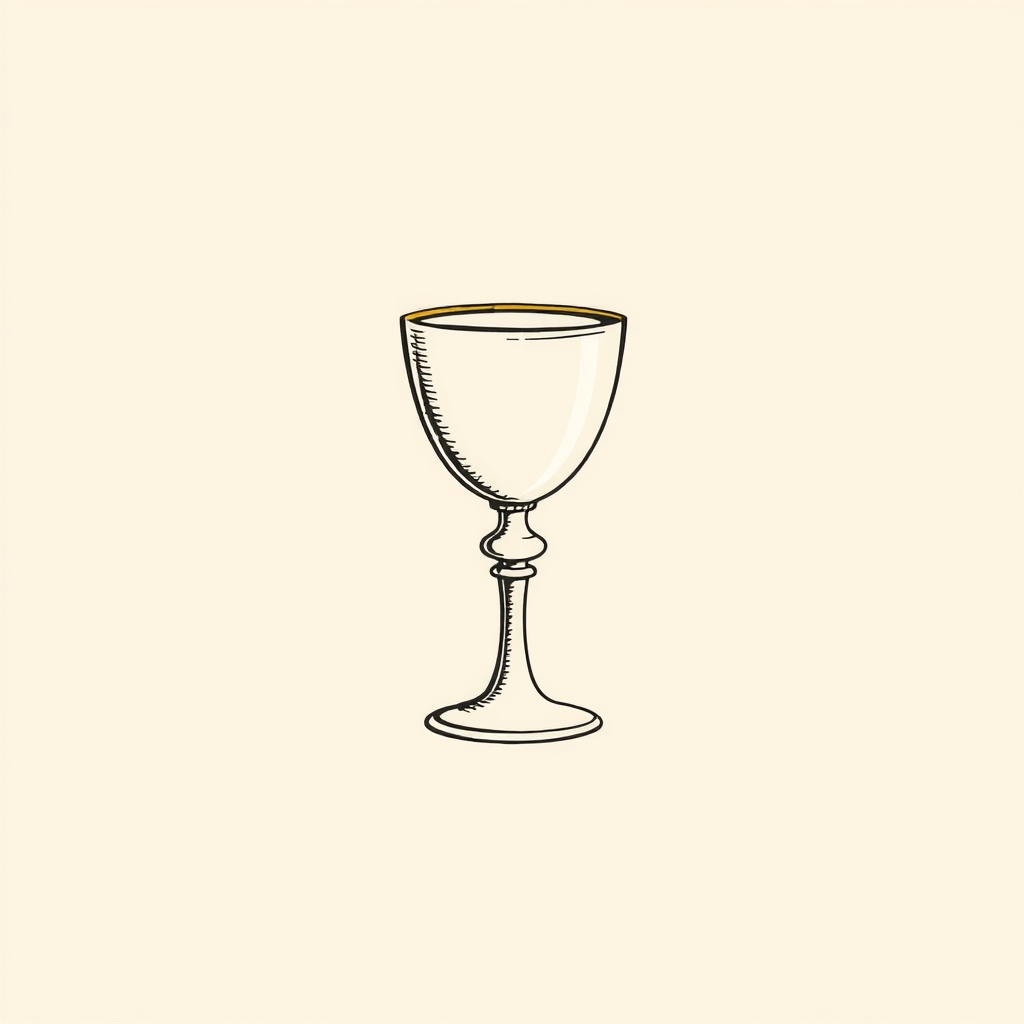
Frequently asked questions about Jan Bula
Who was Jan Bula?
Diocesan priest of Brno and martyr of the Czechoslovak communist regime, sentenced to death following the Babice affair and executed in 1952.
How is Jan Bula depicted in Christian art?
In iconography, Jan Bula is recognizable by: chalice.
How did Jan Bula die?
Jan Bula suffered martyrdom for the Christian faith (20th century).
Which saints were contemporaries of Jan Bula?
Contemporaries include: Pauline of the Agonizing Heart of Jesus, Felipe de Jesús Munárriz and 50 companions, Mariano de Jesús Euse Hoyos and Teresa of Jesus of the Andes.
Who are the relatives of Jan Bula?
Relatives of Jan Bula: Antonín Bula (father) and Marie Bula (mother).
Annexes & related entities
Structured data for exploration: events, miracles, quotes, places, attributes, patronages, and important entities cited in the text.
Key Events
- Era / death: 1920-1952
- Beatification in 2026 by Leo XIV
Quotes
-
We, human beings, do not love God enough. This is the only thing for which we must ask for forgiveness.
https://vertexaisearch.cloud.google.com/grounding-api-redirect/AUZIYQHjSH4AGBHrPc3KEHCNC54igLWkbEkUZAs6eqCNPkyl89NY7_xpdWsP7-N7cj45YcE_3ynXfYt0SmsJCKnNSFFT4ix84IeaOoMY_nUWpRYk-b-O -
The Lord God has measured out a short life for me. But I believe it was not in vain.
https://vertexaisearch.cloud.google.com/grounding-api-redirect/AUZIYQHjSH4AGBHrPc3KEHCNC54igLWkbEkUZAs6eqCNPkyl89NY7_xpdWsP7-N7cj45YcE_3ynXfYt0SmsJCKnNSFFT4ix84IeaOoMY_nUWpRYk-b-O