Diana degli Andalò
Diana degli Andalò (c. 1200-1236) was an Italian Dominican nun, founder of the monastery of Saint Agnes in Bologna, known for her spiritual correspondence with Blessed Jordan of Saxony.
Contemporaries

Figures and markers around the normalized period for this entry.
Guided reading
5 reading sections
Biography
The youth of Diana degli Andalò in Bologna, her noble family, and her spiritual conversion under the influence of Reginald of Orleans.
Blessed Diana degli Andalò (sometimes Anglicized as Diana of Andalo) was born in Bologna, Italy, around 1200 or 1201. She came from a noble, powerful, and politically influential family of the city. Her father, Andrea Lovello, bore the nickname Andalò (which became the surname of his lineage) and belonged to the Carbonesi consorteria. Her mother was named Ota. Diana grew up surrounded by her brothers, among whom were Castellano, Brancaleone (who became a senator of Rome), and Loderingo (future co-founder of the Frati Gaudenti). In her youth, Diana is described as a young girl of great beauty, intelligent, cultured, but also worldly and accustomed to the privileges of her rank. Her life changed in 1218 when she heard Blessed Reginald of Orleans, a close collaborator of Saint Dominic, preaching in Bologna. Deeply touched by his sermons, she decided to renounce the vanities of the world to dedicate herself to prayer. Under the spiritual direction of Reginald, she began to lead a life of discreet asceticism within her own home, secretly wearing a hair shirt and an iron chain under her finery.
Life and Work
Diana's commitment to the establishment of the Dominicans in Bologna, the violent opposition of her family, and the founding of the monastery of Saint Agnes.
In March 1219, Diana played a decisive role in the establishment of the Dominicans in Bologna by helping them acquire the land of "Vigne," adjacent to the church of San Nicolò delle Vigne, the site upon which the famous Basilica of Saint Dominic would later be built. In August of the same year, Saint Dominic arrived in Bologna. Diana met him and made a vow of perpetual virginity in his hands, expressing her ardent desire to enter the Order of Preachers as soon as a female monastery was founded in the city. However, her family fiercely opposed this project, preferring to marry her off to consolidate their political and financial alliances. Faced with this resistance, Diana decided to take action. On July 22, 1221, she fled the family home to take refuge with the Augustinian canonesses at the hermitage of Ronzano, located on the hills near Bologna. Furious, her relatives pursued her and kidnapped her with extreme violence. During the confrontation, Diana was injured and suffered a broken rib. She was forcibly brought back to her parents' home and kept under close surveillance. Saint Dominic then sent her letters of consolation (now lost) before passing away on August 6, 1221. As soon as she recovered her health, Diana escaped again and returned to Ronzano, where she remained until June 1223. In the meantime, Blessed Jordan of Saxony succeeded Saint Dominic as head of the Order. Understanding the young woman's determination, Jordan met with Diana's family and managed to convince them that the only way to keep their daughter near them was to found a monastery nearby. In 1223, thanks to the support of her family and Jordan of Saxony, Diana founded the monastery of Saint Agnes (Sant'Agnese) in Bologna on land donated by her father. She received the Dominican habit there in June 1223 and became its first prioress. She led the community with wisdom and fervor until her death on June 10, 1236.
Journey toward holiness
Diana's perseverance in her contemplative vocation and her profound spiritual friendship with Blessed Jordan of Saxony.
Diana's journey toward holiness is marked by her heroic perseverance in the face of violent opposition from her family and by her absolute fidelity to her contemplative vocation. Her spiritual life flourished in the silence of the cloister, but also through a spiritual friendship of rare intensity with Blessed Jordan of Saxony. Their regular correspondence, of which 37 letters from Jordan to Diana have been preserved, bears witness to a deep mutual affection, constant spiritual support, and a shared pursuit of evangelical perfection. Jordan constantly encouraged her to be a model of holiness for her sisters, for he knew that the fervor of the prioress would guide the entire community. Diana lived her final years in the offering of herself, uniting her physical and moral sufferings with those of Christ. She passed away peacefully of natural causes on June 10, 1236.
Beatification and canonization
The burial of Diana, the discovery of her relics alongside Cecilia and Amata, and her beatification by Pope Leo XIII.
After her death, Diana was buried at the monastery of Sant'Agnese in Bologna. In 1510, during a translation and canonical recognition of her relics, three bodies were discovered in the same tomb. Two of them were identified as those of Diana and her companion, Blessed Cecilia Cesarini. The third body was later attributed to Blessed Amata of Bologna. In 2013, following the closure of the monastery of Sant'Agnese, the relics of the three blessed women were transferred to the Basilica of San Domenico in Bologna, where they now rest together. Diana degli Andalò was beatified individually on August 8, 1888, by Pope Leo XIII. A few years later, on December 24, 1891, Pope Leo XIII officially approved and confirmed the joint cult of the three blessed women (Diana, Cecilia, and Amata), establishing their common liturgical feast. Her feast is celebrated on June 10 (sometimes June 8 or 9 with her companions).
Spirituality and legacy
Diana's grounding in the Dominican charism, her famous epistolary correspondence, and her iconographic representations.
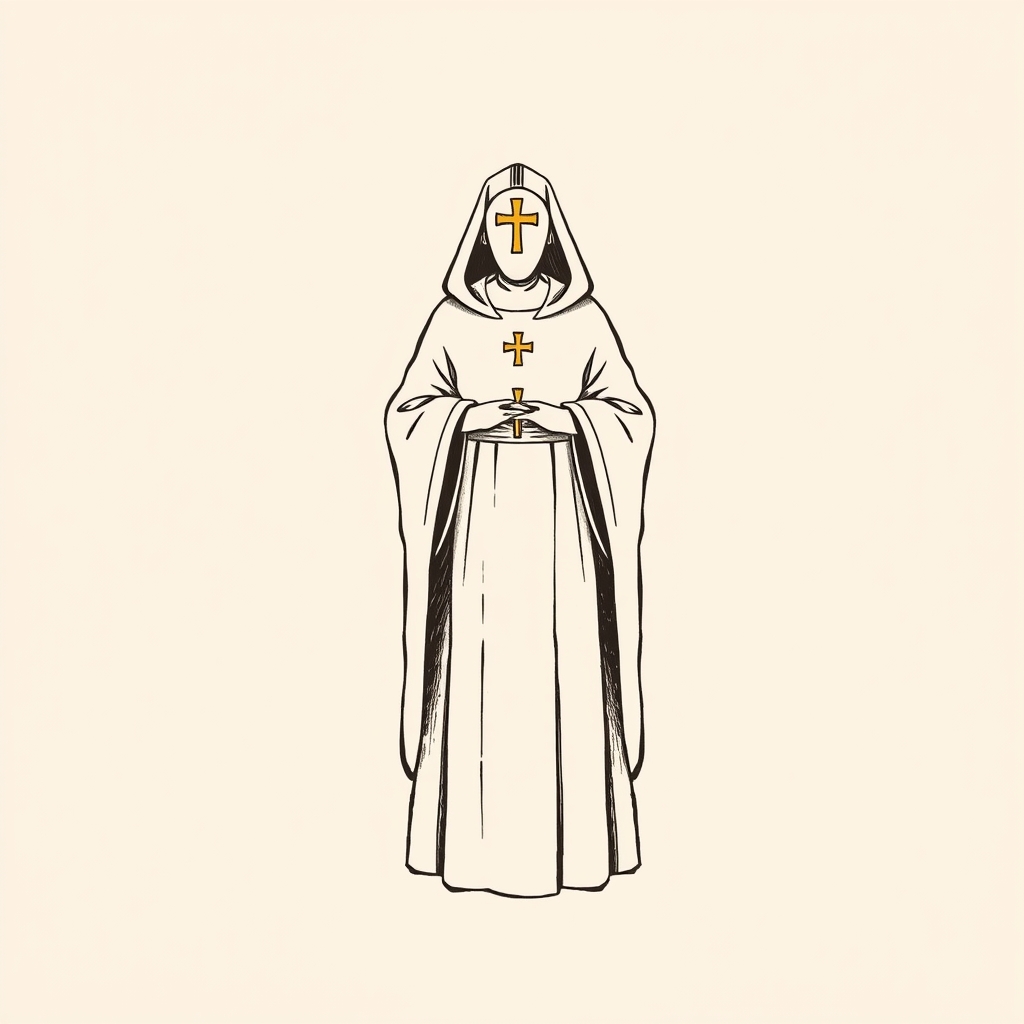
The spirituality of Blessed Diana is deeply rooted in the Dominican charism, combining rigorous contemplation with a love for the Order and spiritual support for the Friars Preachers. Within the triptych of the blessed women of Bologna, she embodies the grace of perfect love, while Cecilia represents wise authority and Amata deep humility. Her most precious legacy lies in her correspondence with Blessed Jordan of Saxony, published under the title "To Heaven with Diana!". These letters constitute a masterpiece of medieval spiritual literature, illustrating how a human and spiritual friendship can be transfigured by the love of God and placed at the service of holiness. In Christian iconography, she is depicted wearing the Dominican habit, holding white lilies (symbols of purity) and carrying a model of her monastery.
Iconography
Signs and attributes
Frequently asked questions about Diana degli Andalò
Who was Diana degli Andalò?
Diana degli Andalò (c. 1200-1236) was an Italian Dominican nun, founder of the monastery of Saint Agnes in Bologna, known for her spiritual correspondence with Blessed Jordan of Saxony.
How is Diana degli Andalò depicted in Christian art?
In iconography, Diana degli Andalò is recognizable by: Dominican habit, white lilies and model of her monastery.
Which saints were contemporaries of Diana degli Andalò?
Contemporaries include: Saint Anthony of Padua (Ferdinand), Saint Arthaud of Belley, Saint Thomas Aquinas and Saint Bernard of Clairvaux.
When did Diana degli Andalò die?
Diana degli Andalò died around 1236.
What are the other names of Diana degli Andalò?
Other forms of the name: Diane d'Andalo.
Who are the relatives of Diana degli Andalò?
Relatives of Diana degli Andalò: Andrea Lovello (father), Ota (mother), Castellano (brother), Brancaleone (brother) and Loderingo (brother).
Annexes & related entities
Structured data for exploration: events, miracles, quotes, places, attributes, patronages, and important entities cited in the text.
Key Events
- Era / death: 1236
- Beatification in 1888 by Leo XIII