Saint Adjutor of Vernon
A 12th-century lord of Vernon, Adjuteur went on crusade where he was captured after seventeen years of fighting. Miraculously freed from his prison in the East and transported to Normandy by Saint Mary Magdalene and Saint Bernard of Tiron, he ended his life as a monk and hermit. He is famous for having calmed a dangerous whirlpool on the Seine by throwing his captive chains into it.
Contemporaries

Figures and markers around the normalized period for this entry.
Guided reading
6 reading sections
SAINT ADJUTEUR, LORD OF VERNON, HERMIT
Origins and early piety
Born into the noble house of the lords of Vernon, Adjutor received a pious upbringing from his parents Jean and Rosemonde, distinguishing himself early on through rigorous asceticism.
Adjutor was of the illustrious house of the lords of Vernon-sur-Seine ; one of them, named William, is buried in the main church of that place; he is called, in his epitaph, prince of Vernon, and is considered to have been our Saint's grandfather. His father was named Jean, and his mother Rosemonde , both very pious and filled with charity for the poor. The holiness of Rosemonde was even so great that she is given the title of Blessed, and is invoked publicly with her son. The education that Adjutor received through their care soon made him an excellent model of virtue. He made prayer his principal occupation; he chastened his body with very rigorous fasts and abstinences, and spared it nothing that was suitable to make it entirely submissive to the spirit. His austerity even went to such an excess that, young as he was, he appeared to be nothing but skin and bones.
Engagement in the Holy Land
Having departed on a crusade to Palestine, he obtained a miraculous victory near Antioch against superior forces after invoking Saint Magdalene.
In the flower of his youth, he took up the cross with a great number of other lords to go and wage war in Palestine, and to endeavor to deliver the sepulcher of Our Lord from the hands of the infidels. When he was near Antioch, fifteen hundred enemies attacked him and easily put to flight his troop, which consisted of only two hundred men. Then he implored, with extreme ardor, the help of heaven, and prayed to Sa int Magdalene, f or whom the town of Vernon then had a great devotion, not to abandon him on this occasion.
Scarcely had he finished his prayer when a dreadful hurricane suddenly broke out, filled the infidels with terror, and forced them to take flight in their turn. Adjutor rallied his men, gave them new courage, and with this small number of people, pursued the fugitives so vigorously that a thousand of them remained on the spot, and the rest were put entirely out of combat.
Captivity and miraculous return
Taken prisoner and tortured in the East, he is miraculously transported in his sleep to Vernon through the intercession of Saint Mary Magdalene and Saint Bernard of Tiron.
After seventeen years of various enterprises, in which he always displayed an intrepid courage for the cause of Christianity, he fell into the hands of the enemies, was taken prisoner, thrown into a dungeon, and loaded with chains; they even made him suffer many torments to force him to renounce his faith and become a Saracen. But he was no less constant in this calamity than he had been courageous in battle, and nothing was capable of shaking his faith, for which he even wished to shed all his blood and lose his life. One day, after a very barbaric treatment, while he was alone and abandoned in his prison, he lifted his eyes to heaven and implored the help of Saint Mary Magdalene, for whom he had a singular devotion, like all those of his country, and of Saint Bernard of Tiron, who had recently died and whom God was making radiant through great miracles. Following this prayer he fell asleep, and, during this slumber, he was transported with his chains, from the depths of his prison, which was in the East, to a wood near the town of Vernon, the place of his estate. Saint Mary Magdalene a nd Saint Bernard , authors of this great miracle, having set him gently on the ground, told him that this was to be the place of his rest until the end of his life. The Archbis hop of Rouen, who was Hugh III, conducted i nquiries into it, and recognized it as true through the deposition of five or six lords who had eaten with him, in Palestine, the day before his transport and his arrival in Normandy.
Retreat and religious life
He entered the Abbey of Tiron and then retired as a hermit to a chapel he had built, dedicating himself to prayer, charity, and the reconciliation of the powerful.
For his part, in order to acknowledge this grace, he had a chapel built in honor of Saint Mary Magdalene, at the very place where this holy lover of Jesus Christ had deposited him, and had three altars erected there, the principal one of which was dedicated under the name of Saint Savior and Saint Mary Magdalene. Afterwards, he became a monk in the Abbey of Tiron, which he named heir to all his goods, and lived there with such holiness that he was a subject of admiration for all the religious. He had a bed in his room like the other monks, but he slept on the ground and only used that bed to hide his austerity. He attended the community meals, but contented himself there with bread and water and some herbs without seasoning. He never missed his office, and the most worn of all the habits was the one most pleasing to him.
With the permission of his superiors, he retired into solitude in that chapel of Saint Magdalene which he had had built, and which was accompanied by a few houses, a priory dependent on Tiron. It is unbelievable with what fervor of spirit and with what austerity he lived in this hermitage. His dwelling was a cave behind the altar. His continual exercise was to pray and to practice corporal and spiritual charity towards his neighbor. Archbishop Hugh, who first wrote his life, says that h e applied himself w ith indefatigable zeal to the aid of religious who were in need, to the repair of churches, to the relief of the poor, to the reconciliation of great lords and princes, to the reformation of youth, to the restoration of good morals, and to everything that could contribute to the ornament of Christianity; that he was persevering in vigils and in prayer, indefatigable in work, patient in afflictions, zealous for chastity, which he preserved intact in war where the dangers are so numerous for this virtue; finally, that he made himself lovable to God, to the Angels, and to men.
Miracles and end of life
Author of numerous healings and having calmed a dangerous whirlpool in the Seine, he died in 1134 assisted by the Archbishop of Rouen and the Abbot of Tiron.
Miracles further highlighted his great virtues. He restored sight to the blind, hearing to the deaf, health to all kinds of sick people, and delivered a man possessed by a furious demon. Having learned that there was a very da ngerous whirlpool in the Seine, where many men and boats were lost, he prayed to the bishop to go there, to make the sign of the cross over it, and to throw holy water into it; and, for his part, he threw into it a portion of the chain with which he had been transported; and, at that very instant, the whirlpool filled up and ceased to be dangerous.
The end of Saint Adjutor's life having arrived, he had the diocesan bishop and the Abbot of Tiron entreated to come and assist him. They immediately traveled to his chapel; after he had received the last Sacraments from their hands, he rendered his soul, laden with merits, to Our Lord. This was on April 30, in the year 1134. His body was buried in this same chapel, which had been the place of his great penances. A great number of miracles subsequently occurred there: a bailiff, whose eyes had been gouged out by a lord he had come to summon, made a novena there, saw Saint Adjutor at night bringing oil and Saint Magdalene who anointed his eyelids, and, upon waking, he found himself healed. The town of Vernon and the surrounding country, being continually afflicted by fires, hail, floods, and other scourges of God, bound themselves to a procession to the chapel of Saint Magdalene, and were entirely delivered. Only ten inhabitants, who had mocked this devotion, perished miserably within the year with all their goods and houses. Among the villages that shared in this grace are those of Passy, Gallion, Estrépagny, and Longueville. The sa me town , being besieged and suffering great damage from the Greek fire that was thrown into it, was preserved from this fire which turned back against the besiegers as soon as the aid of Saint Adjutor had been implored. Feverish people have also been healed at his tomb, and his power before God is still experienced every day.
Heritage and devotion
Invoked against plagues and drowning, he is depicted with his chains, often supported by angels or his patron saints.
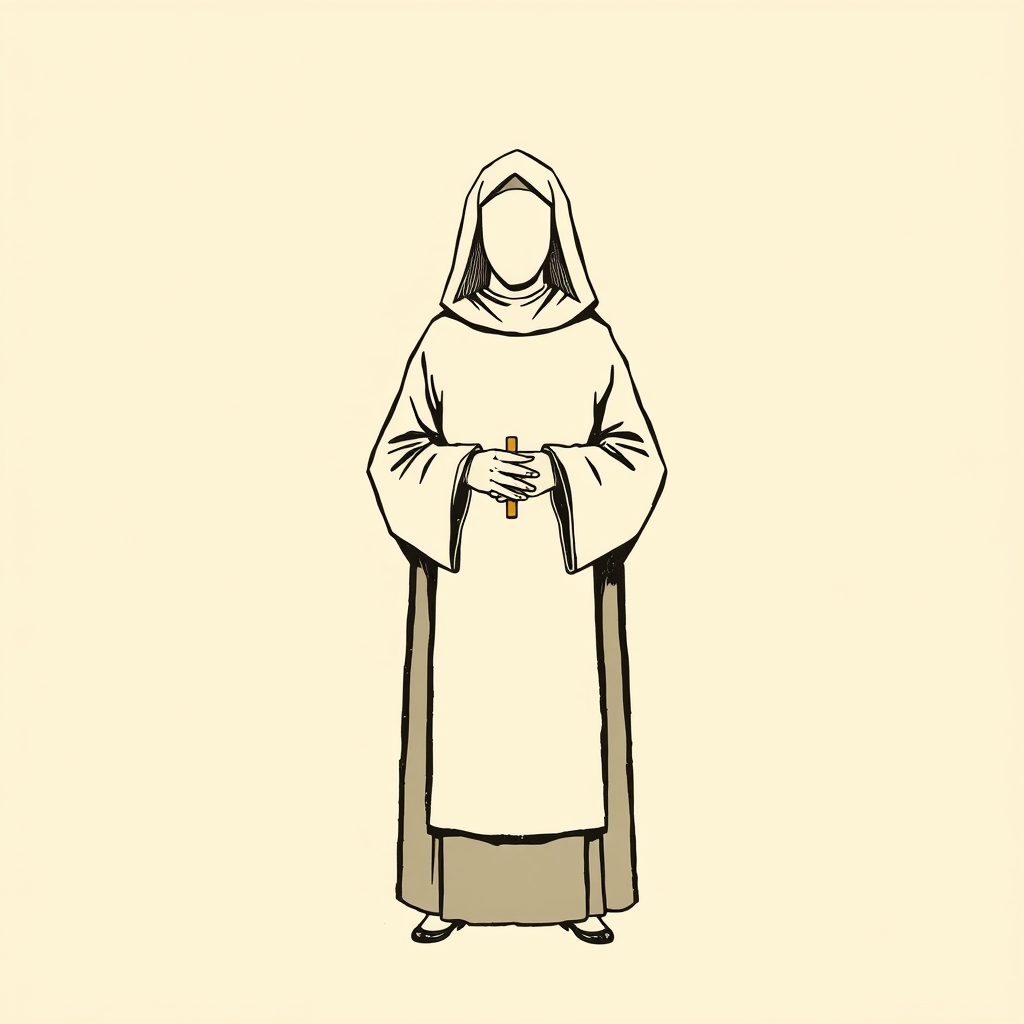
Saint Adjuteur is depicted in the attire of a warrior or a Benedictine monk; chains are at his feet. He is also seen crossing the air, supported either by angels or by Saint Mary Magdalene and Saint Bernard of Tiron. — Birds sing over his tomb, the location of which had been lost: it is said that it was due to this circumstance that it was discovered. Saint Adjuteur is invoked to avoid drowning, no doubt in allusion to his name which means *helpful*.
Acta Sanctorum, apc.
Iconography
Signs and attributes



Entities
Narrative network
The names, places, and concepts most present in the entry, weighted by centrality in the text.
The supernatural in their life
The miracles of Saint Adjutor of Vernon
Frequently asked questions about Saint Adjutor of Vernon
Who was Saint Adjutor of Vernon?
A 12th-century lord of Vernon, Adjuteur went on crusade where he was captured after seventeen years of fighting. Miraculously freed from his prison in the East and transported to Normandy by Saint Mary Magdalene and Saint Bernard of Tiron, he ended his life as a monk and hermit. He is famous for having calmed a dangerous whirlpool on the Seine by throwing his captive chains into it.
What is Saint Adjutor of Vernon the patron saint of?
Patronage of Saint Adjutor of Vernon: Vernon, boatmen and boatmen.
What is Saint Adjutor of Vernon invoked for?
Saint Adjutor of Vernon is invoked for: protection against drowning, protection against fires, protection against floods and healing of those with fever.
How is Saint Adjutor of Vernon depicted in Christian art?
In iconography, Saint Adjutor of Vernon is recognizable by: warrior costume, Benedictine monk habit, chains at his feet and transported through the air by angels or saints.
What miracles are attributed to Saint Adjutor of Vernon?
5 miracles are attributed to this saint, notably: Sign / wonder, Protection / deliverance, Levitation / bilocation and Mastery of the elements.
Which saints were contemporaries of Saint Adjutor of Vernon?
Contemporaries include: Saint Norbert of Magdeburg, Saint Bernard of Clairvaux, Saint Stephen of Hungary and Saint Arthaud of Belley.
When did Saint Adjutor of Vernon die?
Saint Adjutor of Vernon died around 1134.
What are the other names of Saint Adjutor of Vernon?
Other forms of the name: Adjutor.
Who are the relatives of Saint Adjutor of Vernon?
Relatives of Saint Adjutor of Vernon: Guillaume (grandfather), Jean (father) and Rosemonde (mother).
Annexes & related entities
Structured data for exploration: events, miracles, quotes, places, attributes, patronages, and important entities cited in the text.
Key Events
- Departure for Palestine during the Crusades
- Miraculous victory near Antioch after a hurricane
- Seventeen-year captivity and refusal to apostatize
- Miraculous transport from the Orient to Vernon by Saint Mary Magdalene and Saint Bernard of Tiron
- Entered Tiron Abbey as a monk
- Retirement to a hermitage in a cave behind the altar of his chapel
- Miraculous filling of a dangerous whirlpool in the Seine
Quotes
-
He who believes in God observes His commandments, and he who puts his trust in God will not fall into any evil.
Ecclesiasticus, XXXII, 25 (as epigraph)