Saint Anatolius of Laodicea
An illustrious scholar of Alexandria in the 3rd century, Anatolius excelled in secular sciences before becoming a bishop. He saved a portion of the population of Alexandria during a siege before being called to the episcopal see of Laodicea in Syria. Recognized for his piety and erudition, he fought the heresy of Paul of Samosata.
Contemporaries

Figures and markers around the normalized period for this entry.
Guided reading
6 reading sections
SAINT ANATOLIUS, BISHOP OF LAODICEA, IN SYRIA
Humility as a foundation
The text opens with a quote from Saint Paul emphasizing that every talent comes from God, foreshadowing Anatolius's humility despite his immense knowledge.
*Quid autem habes quod non accepisti? si autem accepisti, quid gloriaris quasi non acceperis?*
What have you that you did not receive; and if you have received all that you can, why do you still boast as if it came from you?
*I Cor., IV, 7.*
Intellectual Excellence in Alexandria
Born in Alexandria, Anatolius mastered secular sciences and philosophy, becoming the director of the city's Aristotelian school.
This holy prelate was one of the greatest men of his time; it was towards the decline of the 3rd century. He w as born in Alexandria, the capital city of all Egypt, to Christian and honorable parents. His childhood having been spent with much innocence and restraint, he subsequently made himself so commendable by his virtues and his science that he was looked upon with admiration by all those in his country. No one surpassed him, neither in rhetoric, nor in philosophy, nor in the knowledge of the most hidden secrets of nature. Even when he appeared in the assemblies of the men most skilled in these sciences, they always gave him the first rank and respected him as their master. He was also very well-versed in arithmetic, geometry, astronomy, and the other parts of mathematics. Finally, what he knew, he knew how to express with much force and grace, being gifted with a natural eloquence that he had further perfected by art and by frequent exercises. Such rare qualities engaged the Alexandrians to give him the principal chair of the school, where the doctrine of Aristotle was taught; he occupied it with honor and to the applaus e of all those who had the good fortune to hear him.
Charity during the siege of Alexandria
A magistrate during the siege of the city by imperial troops, he used diplomacy to evacuate starving civilians and save the population.
But if Anatolius's erudition was so considerable, his virtue and piety surpassed it by far. Neither the beauty of his mind, nor the great number of sciences with which he had enriched it, were capable of confining him or giving him pride. He always walked in the humility and simplicity of Christianity, often saying these words of Saint Paul: "What have you th at you did not receive; and if you received it, what reason have you to boast?" His charity and prudence appeared admirably during the siege of Alexandria, conducted by Theodotus, general of the armies of the Emperor Gallienus, against Aemili anus, w ho had also taken the purple in that city and had himself proclaimed emperor. According to the report of Eusebius of Caesarea, as t he people were afflicted at that time by a cruel famine, our Saint did many memorable things for the relief of those who were in need. He was all the better able to do so as he had been raised to one of the highest magistracies. But, seeing finally that there was no more bread in the city for the number of mouths that were there, he thought of a very judicious invention, which was the cause of the salvation of his homeland. He obtained from the leader of the besiegers, through a powerful friend he had with him, that those of Alexandria who wished to surrender to him and take refuge in his camp would be well received there. The women, children, the elderly, and the sick went there; so that there remained in the city only strong and robust men, capable of defending it well, with enough provisions to feed them until the lifting of the siege.
From Caesarea to the See of Laodicea
Initially ordained as an auxiliary bishop in Caesarea, he was chosen by popular acclamation to lead the Church of Laodicea in Syria.
This action, and many others of equal merit, having earned him an extraordinary reputation in the East, Theot ecnus, Ar chbishop of Caesarea, set his sights on him to be his successor. Indeed, he brought him to Caesarea and ordained him bishop, so that he might assist him during his lifetime in bearing the weight of his office, and that he might bear it entirely after his death; but God had ordained otherwise: for these two holy figures were called to the Council of Antioch against Paul of Samosata, who denied the divinity of Jesus Christ. As they were passin g throug h Laodicea, in Syria, near Antioch, Anatolius was detained there to fill the see, which had just become vacant by the death of Eusebius, one of his best friends, and the one who had served him so well in the emperor's camp when Alexandria was under siege. The entreaties of the clergy and the people to keep him were so great that it was impossible for him to resist; and it was also by a singular providence of God that he ascended this episcopal throne (269), since he labored there with marvelous success to confound idolatry, to preserve his people from nascent heresies, and to strengthen them in the faith and in the maxims of Christian piety.
Zeal and personal penance
Although he did not experience bloody martyrdom, he led a life of rigorous austerities, acting as a devoted pastor against heresies.
His zeal lacked only a persecution to show that he preferred his religion to his life, and that he was a good pastor, ready to give his blood for his flock. But if persecution was lacking to him, one can say that he was a harsh persecutor of himself through the spirit of penance that possessed him, and which led him to extraordinary austerities uncommon among scholars.
Works and legacy
He died before the persecutions of Diocletian, leaving behind scholarly writings, notably a treatise on the Pasch praised by Saint Jerome.
He died before Diocletian and Maximian, those two great enemies of Jesus Christ, had declared war on His altars and had begun to make martyrs. Eusebius of Caesarea notes several books that he composed, and even quotes beautiful passages from them; but only his Treatise on the Pasch remains to us: it is enough to allow us to judge the merit of the others. Saint Jerome spea ks of it wit h great praise.
His name is written with honor, both in the Menologion of the Greeks and in the Roman Martyrology, in those of Usuard and Ado, and in Baronius. It is from these materials that we have composed this short biography.
Iconography
Signs and attributes

Entities
Narrative network
The names, places, and concepts most present in the entry, weighted by centrality in the text.
The supernatural in their life
The miracles of Saint Anatolius of Laodicea
Frequently asked questions about Saint Anatolius of Laodicea
Who was Saint Anatolius of Laodicea?
An illustrious scholar of Alexandria in the 3rd century, Anatolius excelled in secular sciences before becoming a bishop. He saved a portion of the population of Alexandria during a siege before being called to the episcopal see of Laodicea in Syria. Recognized for his piety and erudition, he fought the heresy of Paul of Samosata.
What is Saint Anatolius of Laodicea the patron saint of?
Patronage of Saint Anatolius of Laodicea: Laodicea.
How is Saint Anatolius of Laodicea depicted in Christian art?
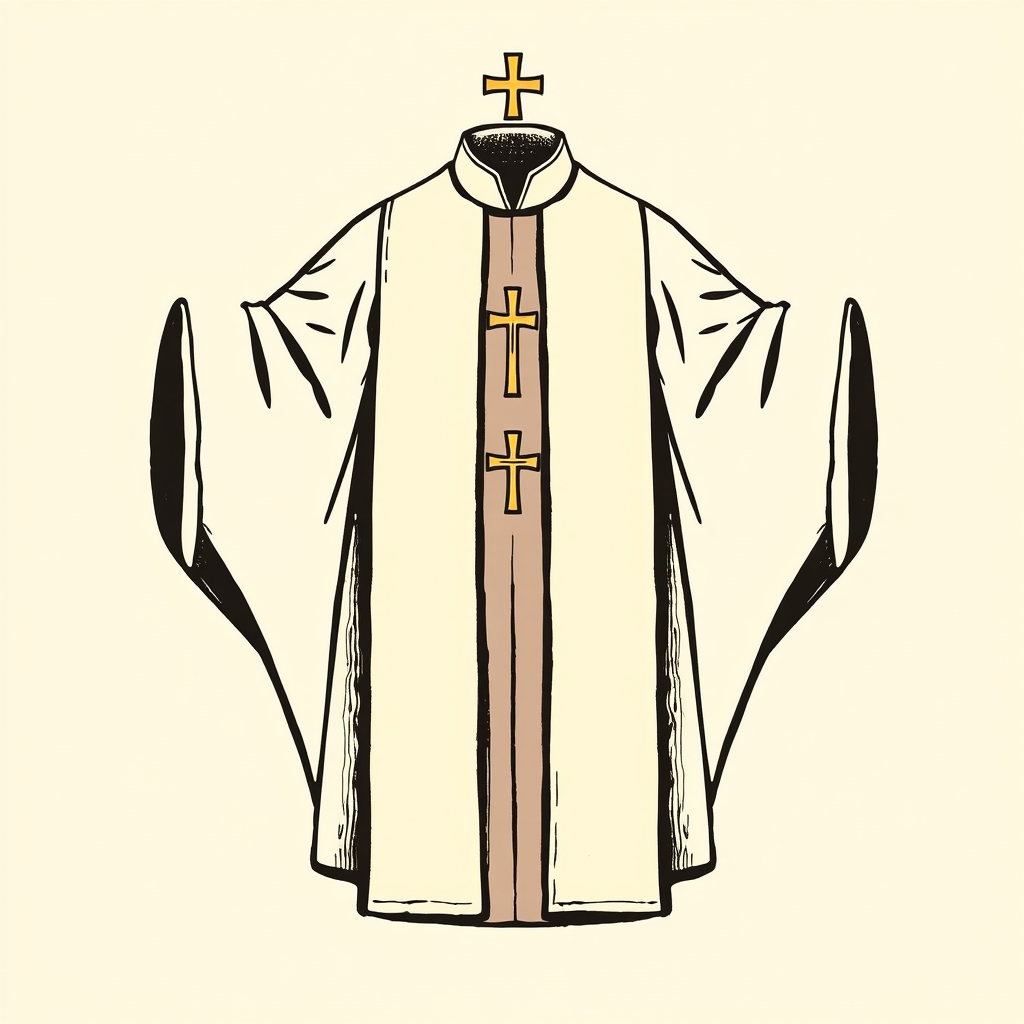
In iconography, Saint Anatolius of Laodicea is recognizable by: Episcopal vestments and Books or mathematical instruments.
What miracles are attributed to Saint Anatolius of Laodicea?
1 miracle are attributed to this saint, notably: Protection / deliverance.
Which saints were contemporaries of Saint Anatolius of Laodicea?
Contemporaries include: Saint Irenaeus of Lyon, Saint Ausonius of Angoulême, Saint Firmin of Pamplona and Saint Baudilus.
When did Saint Anatolius of Laodicea die?
Saint Anatolius of Laodicea died around 300.
What are the other names of Saint Anatolius of Laodicea?
Other forms of the name: Anatolius.
Who are the relatives of Saint Anatolius of Laodicea?
Relatives of Saint Anatolius of Laodicea: Parents chrétiens et honorables (parents).
Annexes & related entities
Structured data for exploration: events, miracles, quotes, places, attributes, patronages, and important entities cited in the text.
Key Events
- Teaching of Aristotelian doctrine in Alexandria
- Magistrate during the siege of Alexandria by Theodosius
- Negotiation for the evacuation of starving civilians
- Ordination as coadjutor bishop at Caesarea by Theotecnus
- Installation on the episcopal see of Laodicea (269)
- Participation in the Council of Antioch against Paul of Samosata
Quotes
-
What do you have that you did not receive; and if you have received everything you can, why boast as if it came from you?
I Cor., IV, 7 (frequently cited by the saint)