Saint Itherius of Nevers
Originally from the Loiret region, Saint Ithier was a 7th-century Bishop of Nevers, renowned for his holiness and medical knowledge. After a life of retreat and miraculous healings, he was called to lead the Diocese of Nevers around 690. His cult, marked by numerous translations of relics, remains active in Nogent-sur-Vernisson and the Berry region.
Contemporaries

Figures and markers around the normalized period for this entry.
Guided reading
6 reading sections
SAINT ITHIER, BISHOP OF NEVERS (695).
Origins and formation
Originally from Nogent-sur-Vernisson, Ithier dedicated himself to the study of morality and medicine to heal both souls and bodies.
Saint Ithier (Itherius) was originally from Nogent-sur-Vernisson , between La Bossière and Montargis (Loiret). To a lively faith and an exemplary holiness, he joined varied and extensive knowledge. Not content with devoting himself to the study of morality, he had wanted to work with ardor on physics, which included medicine, in order to be doubly useful to his neighbor, by providing them with the health of the soul and that of the body.
Renown and retirement
His reputation as a healer attracted crowds, prompting him to withdraw into solitude to preserve his humility in the face of the success of his remedies.
From all sides people flocked to him, and the sick returned relieved of their infirmities, because God blessed the remedies of his servant. As for him, far from attributing to himself the glory of the healings he performed, he urged the sick whom he had healed to reserve all their gratitude for God. However, fearing that vainglory might take hold of his heart, he withdrew to a deserted and uncultivated place. Soon his retreat was discovered, and people came to him from all parts as before.
Episcopate in Nevers
Called by the clergy and the people, he became bishop of Nevers around 690 and continued his miracles upon his entry into the city.
The report of his holiness and the wonders he performed reached Nevers , whos e Churc h was widowed by the death of its bishop. The clergy and the people asked for Ithier to replace him. The latter, fearing to resist the divine will, consented. He was therefore ordained priest and received the pontifical unction around 690. Upon entering his episcopal city, he met at the gates of the city a man who had been crippled for many long years; he healed him on the spot of his infirmities; he also delivered a possessed person on this occasion. After having made the virtues that had been noticed in him in his retreat shine upon the pontifical seat, he died full of merits, around the year 695 or 696.
Local cult in Nogent
A fountain and a cross mark the site of his youth in Nogent, becoming a center of pilgrimage for the sick and for processions.
The inhabitants o f Noge nt point out, at the edge of this parish, a fountain near which, they assert, was the dwelling of Saint Ithier's parents. It is there that the Saint spent the first years of his life. A cross has been planted there and, for many centuries, the inhabitants of Nogent and the surrounding areas have gone there in procession during public calamities. The sick also flock there to obtain, through the intercession of the holy bishop, the healing of their ailments.
Liturgical variations
The dates of his feast vary between the dioceses of Sens, Orléans, and Nevers, testifying to the complex history of his relics.
The feast of Saint Ithier was celebrated in Nogent on June 17, when this parish was part of the diocese of Sens; since it has depended on that of Orléans, the feast of Saint Ithier only takes place on July 9. The ancient martyrology of Nevers marks his death on the 25th of the same month; however, his feast is celebrated in the diocese of Nevers on July 8. This variation must have been the result of several translations of the relics of our Saint.
Relics and historical vicissitudes
Dying in Berry, his relics circulated between Nogent, Sully, and Les Aix-d'Angillon before being dispersed by the Huguenots.
It seems certain that he died in Berry; his body was transported to Nogent, his native land. In the 11th century, his cult was already widespread. Several churches in Berry were placed under his invocation, among others the collegiate church of Saint-Ithier in Les Aix-d'Angillon. In 1403, John, Du ke of Berry, gave to this collegiate church a portion of the head and an arm of the holy bishop, relics he had obtained from the prior of Nogent . The collegiat e church of Sully-sur-Loire also recognized him as its patron. When the Huguenots entered Nogent, they dispersed the relics of the holy bishop. Before the Revolution of 1793, there remained in Nogent only a single finger that had been brought back there in 1656 from the treasury of the collegiate church of Sully-sur-Loire.
T aken from th e Hagiologie Nécernaire, by Mgr Crennier.
Iconography
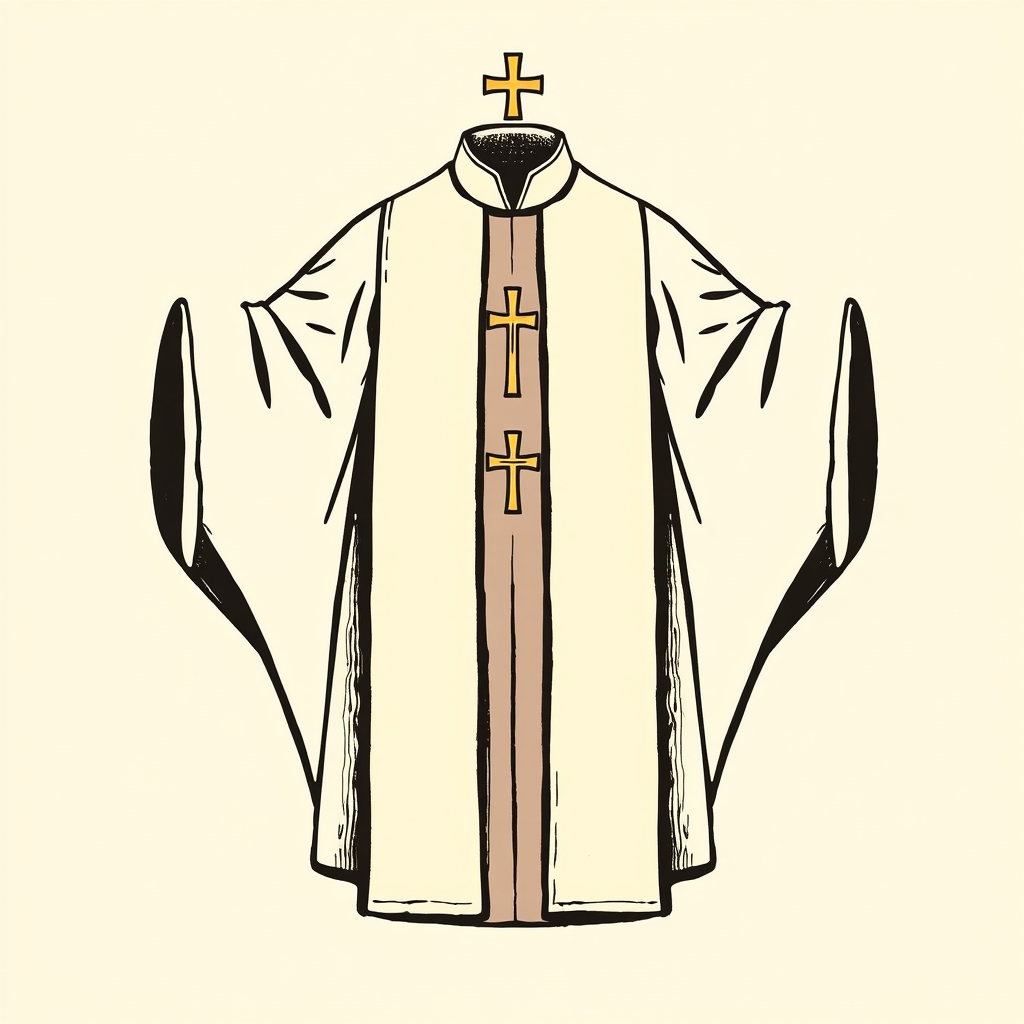
Signs and attributes
Entities
Narrative network
The names, places, and concepts most present in the entry, weighted by centrality in the text.
The supernatural in their life
The miracles of Saint Itherius of Nevers
Frequently asked questions about Saint Itherius of Nevers
Who was Saint Itherius of Nevers?
Originally from the Loiret region, Saint Ithier was a 7th-century Bishop of Nevers, renowned for his holiness and medical knowledge. After a life of retreat and miraculous healings, he was called to lead the Diocese of Nevers around 690. His cult, marked by numerous translations of relics, remains active in Nogent-sur-Vernisson and the Berry region.
What is Saint Itherius of Nevers the patron saint of?
Patronage of Saint Itherius of Nevers: Nogent-sur-Vernisson, Les Aix-d'Angillon and Sully-sur-Loire.
What is Saint Itherius of Nevers invoked for?
Saint Itherius of Nevers is invoked for: healing of diseases and public calamities.
How is Saint Itherius of Nevers depicted in Christian art?
In iconography, Saint Itherius of Nevers is recognizable by: episcopal vestments and cross (Nogent fountain).
What miracles are attributed to Saint Itherius of Nevers?
4 miracles are attributed to this saint, notably: Healing, Exorcism and Sign / wonder.
Which saints were contemporaries of Saint Itherius of Nevers?
Contemporaries include: Saint Priest (Prix), Saint Gregory the Great (Pope and Doctor of the Church), Saint Die (Didier, Deodat) and Saint Augustine of Canterbury.
When did Saint Itherius of Nevers die?
Saint Itherius of Nevers died around 700.
What are the other names of Saint Itherius of Nevers?
Other forms of the name: Itherius.
Annexes & related entities
Structured data for exploration: events, miracles, quotes, places, attributes, patronages, and important entities cited in the text.
Key Events
- Studies in ethics and physics (medicine)
- Retreat to a desert place to flee vainglory
- Election to the episcopal see of Nevers
- Priestly ordination and episcopal consecration around 690
- Healing of a paralyzed man and deliverance of a possessed person at the gates of Nevers
- Died in Berry and translation of the body to Nogent