Born in Grans and from a Neapolitan family, Rostang II de Capre was Archbishop of Arles from 1287 to 1303. A jurist by training, he was distinguished by his piety, his role as a political mediator between Sicily and Aragon, and his legislative activity during the Council of L'Isle. He is venerated as blessed in the Diocese of Arles.
Contemporaries

Figures and markers around the normalized period for this entry.
Guided reading
6 reading sections
BLESSED ROSTANG II DE CAPRE,
ARCHBISHOP OF ARLES
Origins and accession to the episcopate
Born in Grans and trained in law in Aix, Rostang de Capre was elected Archbishop of Arles in 1287, an election confirmed by Pope Honorius IV.
Coming from a family originally from the Kingdom of Naples and initially established in the small town of Au bagne, Rostang d e Capre was born in Grans, a town that today belongs to the canton of Salon (Bouches-du-Rhône). Dedicated early on to an ecclesiastical career, he had taught law in Aix and was a canon of the C hurch of Arles w hen the votes of his brethren called him to the chair of Saint Trophimus after the death of Bertrand d'Amalric, as noted in the title of his election, long preserved in the chapter archives, and today in the departmental archives. His election, for reasons unknown to us, did not at first please Pope Honorius IV, who perhaps presumed it had been co nducted against canonical rules. Better informed, however, the Sovereign Pontiff ratified it and had the pallium delivered to Rostang by Bernard de Languissel, Bishop of Porto, one of his predecessors in the see of Arles. This was in July 1287.
The Provincial Council of L'Isle
In 1288, he presided over a council enacting eighteen canons concerning ecclesiastical discipline, public morality, and the reform of abuses related to baptism.
The following year, Rostang de Capre convene d a provincial council at L'Isle, near Avignon, where eighteen canons were drawn up. The first thirteen are taken from previous councils of the province and relate to the absolution of the excommunicated, pious bequests, perpetual vicars, those who seize the goods of the Church, or those who oppress its liberties. The fourteenth excommunicates those who sell poison to kill someone or to induce abortion, as well as those who give counsel or aid to poisoners or who do not report them to the ordinaries. The fifteenth forbids the export of wheat before the tithe has been collected. The sixteenth forbids temporal lords from forcing churches to pay the ban for their clergy, their servants, or their animals. The seventeenth establishes that baptized children shall be given only a white garment. — An abuse had crept in regarding the baptism of children. According to this abuse, godparents were obliged to give considerable gifts to the children and their mothers, which resulted in the difficulty of finding godparents, causing many children to die without baptism. It is this abuse that the council condemns here, by decreeing that godparents shall give only a white garment to the children they hold at the baptismal font. The eighteenth canon orders the observance of the statutes of previous councils.
Political and diplomatic role
An influential advisor, he intervened in feudal acts and led a diplomatic mission to Catalonia for Pope Boniface VIII to pacify relations between Provence and Aragon.
On October 11 of that same year, 1288, Bertrand of Baux, Count of Avellino, paid him homage for the castle of Trinquetaille, which Rostang purchased on August 13, 1300. Pope Boniface VII I, who held the merit of the Archbishop of Arles in high regard, charged him, along with Guillaume de Mandagot, Archbishop of Embrun, to accompany Charles, King of S icily and Count of Provence, to Catalonia i n May 1295, and to assist him with his counsel. The two legates succeeded in cementing peace between this prince and King James of Aragon.
Life of piety and builder
Recognized for his austerity, he financed the construction of the castle of Salon and founded the chapel of the Holy Marys in his cathedral.
The private life of Rostang de Capre was a public lesson in modesty, continence, and piety. Everything that could smack of the luxury of the century was banished from his house. He spent the greater part of the night in prayer, and employed almost all his income to increase the assets of his Church. It is to his munificence that the archbishops of Arles owed the construction o f the castle of Salon and the acquisition of several lands in Mondragon. He founded in his metropolitan church the chapel o f the holy Mary, Jacobé, and Sa lomé. On April 20, 1303, he permitted the erection of the pious confraternity of the Furriers and Tailors, which he placed under the patronage of Our Lady of the Alyscamps.
Death and Veneration
Having died in 1303, he was buried in Arles where his remains became the object of popular devotion; he is inscribed as blessed in local martyrologies.
After approximately seventeen years of episcopacy, Rostang de Capre went to receive in heaven the reward for his labors and virtues. Death took him from his afflicted diocesans on Tuesday, July 23, 1303. Upon learning of his passing, the faithful flocked in crowds to venerate his remains. The garments and linens he had worn were sought after as precious relics. He was interred, according to his wishes, beneath the altar of the chapel he had caused to be erected in honor of the Holy Marys in the Cathedral of Arles, and where his body was discovered when one of his successors, Gaspard du Laurens, consecrated this chapel to the Magi kings.
The name of Rostang de Capre is read in most martyrologies, as well as in the ancient Breviary of Arles, with the title of blessed, on the date of July 23.
Translation of the relics of Saint Anthony
During his episcopate, the Benedictines of Montmajour brought the body of Saint Anthony the Great to Arles after their expulsion from Vienne.
It was under the episcopate of Rostang and towards the middle of the year 1290 that the Benedictines of Montmajour, violently expelled by the Antonines from the priory of La Mothe-Saint-Didier or Saint-Antoine de Viennois, returned to Arles bringing with them the precious relics of the patriarch Sa int Anthony, which they deposited with respect in the great church of the abbey of Montmajour. These relics included the entire body of the Saint, with the exception only of a part of an arm which had been detached a little over a century earlier and placed in a separate reliquary for the Church of Vienne.
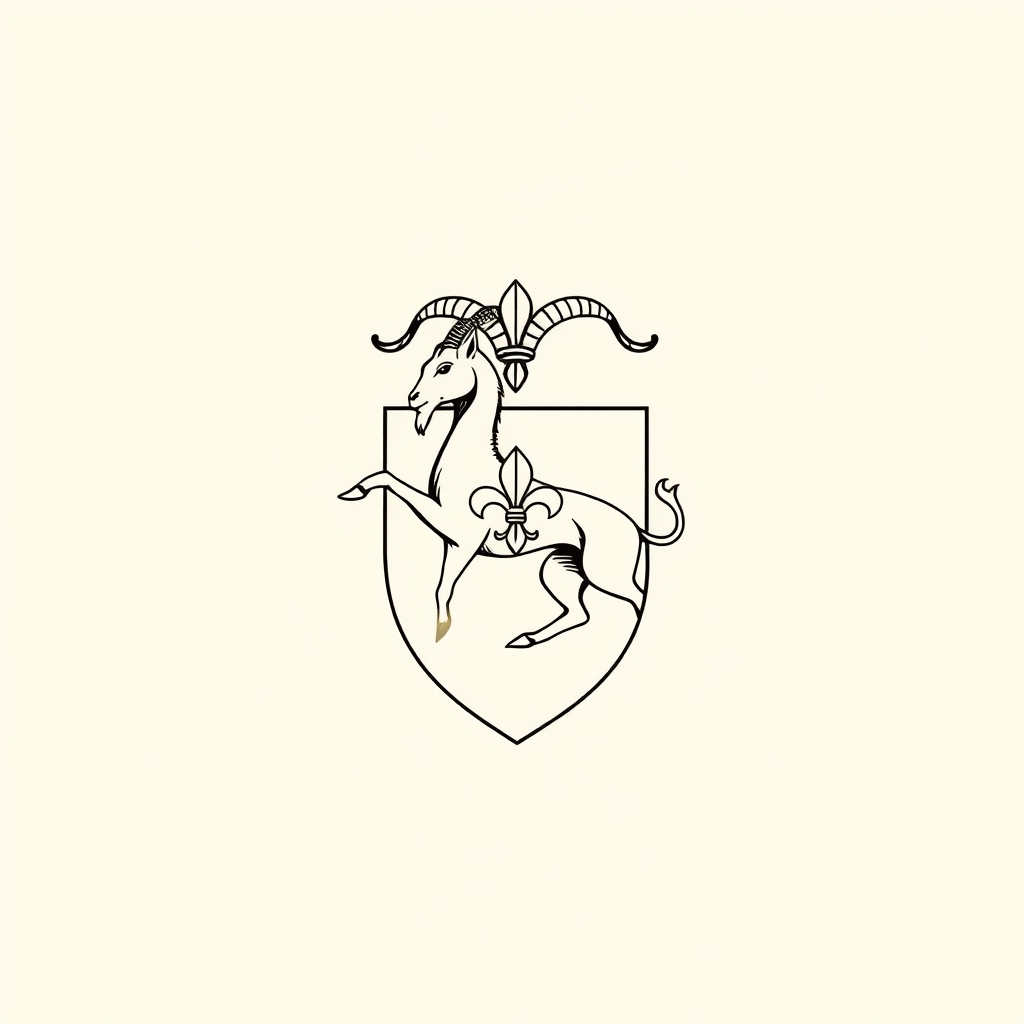
Rostang de Capre had for his coat of arms: gules, a goat salient argent, surmounted by a fleur-de-lis or. The word Cabra, in Provençal, means goat.
Gallia christiana nova, by Fisquet; and Notes courtesy of the Abbé Trichaud, superior of the Dominicans of Nizon (Vaucluse).
SUPPLEMENT
Iconography
Signs and attributes

Entities
Narrative network
The names, places, and concepts most present in the entry, weighted by centrality in the text.
Frequently asked questions about Blessed Rostang II de Capre
Who was Blessed Rostang II de Capre?
Born in Grans and from a Neapolitan family, Rostang II de Capre was Archbishop of Arles from 1287 to 1303. A jurist by training, he was distinguished by his piety, his role as a political mediator between Sicily and Aragon, and his legislative activity during the Council of L'Isle. He is venerated as blessed in the Diocese of Arles.
What is Blessed Rostang II de Capre the patron saint of?
Patronage of Blessed Rostang II de Capre: Confraternity of Furriers and Tailors.
How is Blessed Rostang II de Capre depicted in Christian art?
In iconography, Blessed Rostang II de Capre is recognizable by: coat of arms: gules, a goat salient argent, surmounted by a fleur-de-lis or and pallium.
Which saints were contemporaries of Blessed Rostang II de Capre?
Contemporaries include: Saint Peregrinus of Auxerre, Saint Thomas Aquinas, Saint Francis of Assisi (Confessor) and Saint Colette (Nicole).
When did Blessed Rostang II de Capre die?
Blessed Rostang II de Capre died around 1400.
What are the other names of Blessed Rostang II de Capre?
Other forms of the name: Rostang de Capre.
Annexes & related entities
Structured data for exploration: events, miracles, quotes, places, attributes, patronages, and important entities cited in the text.
Key Events
- Law professor in Aix
- Canon of the Church of Arles
- Election to the see of Arles (July 1287)
- Provincial Council at L'Isle (1288)
- Legation to Catalonia for peace between Charles of Sicily and James of Aragon (1295)
- Purchase of the Château de Trinquetaille (1300)
- Foundation of the chapel of Saints Mary, Salome and Mary of Clopas
Quotes
-
Domum episcopi decet sanctitudo, decet modestia, decet honestas, horum disciplina custos.
Saint Bernard (as epigraph)