Saint Ignatius of Loyola
Saint Ignatius of Loyola is the author of the Spiritual Exercises, a manual for retreat and meditation aimed at interior sanctification and the salvation of souls. His writings also include Constitutions, Letters, and Maxims, characterized by a vigorous and vivid style. His life is documented by direct witnesses such as Pedro de Ribadeneira.
Guided reading
3 reading sections
WRITINGS OF SAINT IGNATIUS OF LOYOLA.
The Spiritual Exercises
Presentation of the book of the Spiritual Exercises as a guide for conversion and interior sanctification, praised by great spiritual figures.
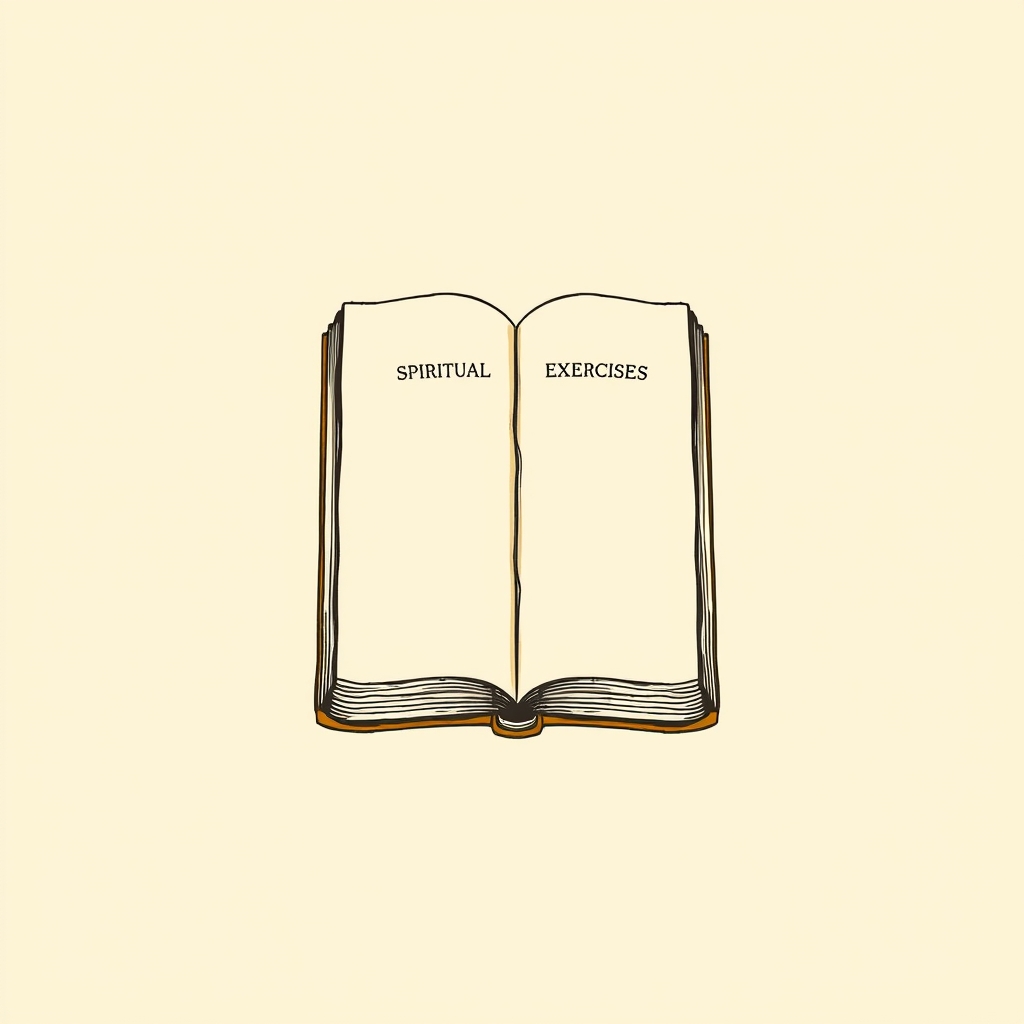
Saint Ignati us composed the book o f the Spiritual Exer cises, which Louis d e Ponte considers as it were an immediate revelation from God, and which, according to the t estimony of Saint Franc is de Sales, has converted more sinners than it contains letters; it bears the character of everything Saint Ignatius did, and is above all a religious act. It is like a guide and a light for Christian souls who seriously wish to ensure their salvation: it teaches them, in effect, to know themselves, to seek the true goal of life, to flee from sin, to attach themselves to the cross of Jesus Christ, to courageously accept pains and sacrifices, and thus, hardened and enlightened by the meditation of the great truths of the faith, to be penetrated by divine love and to abandon themselves fully to that Father who is in heaven and wishes us to be there with Him. In a word, "the book of the Spiritual Exerc ises," says Father de Ravignan, "is a retreat manual, a method of meditation, and at the same time a collection of thoughts and precepts suitable for directing the soul in the work of interior sanctification and in the choice of a state of life."
Other writings and style
Enumeration of the other works of Ignatius, notably his Letters and his Constitutions, characterized by a lively and vigorous style.
Besides the Exercises, we have some Letters, some Maxims and Sentences, and finally his Consti tutions. Ever ywhere the style is vigorous, lively, pressing, and vivid.
Biographical Sources
Identification of the historical sources used to write this life, including direct witnesses and reference works.
We have drawn his life from the Rev. Fr. Pierre Ribadeneira, who was a witness to many of the things he wrote, and who learned the rest from several very trustworthy people. We have also made use of the excellent Life of Saint I gnatius, by the Rev. Fr. Bouhours, and the Encyclopedic Dictionary of Catholic Theology, translat ed by Goschler .
Iconography
Signs and attributes
Entities
Narrative network
The names, places, and concepts most present in the entry, weighted by centrality in the text.
Frequently asked questions about Saint Ignatius of Loyola
Who was Saint Ignatius of Loyola?
Saint Ignatius of Loyola is the author of the Spiritual Exercises, a manual for retreat and meditation aimed at interior sanctification and the salvation of souls. His writings also include Constitutions, Letters, and Maxims, characterized by a vigorous and vivid style. His life is documented by direct witnesses such as Pedro de Ribadeneira.
What is Saint Ignatius of Loyola invoked for?
Saint Ignatius of Loyola is invoked for: ensuring salvation, self-knowledge, seeking the true purpose of life, fleeing sin, inner sanctification and choosing a state of life.
How is Saint Ignatius of Loyola depicted in Christian art?
In iconography, Saint Ignatius of Loyola is recognizable by: book of Spiritual Exercises and cross of Jesus Christ.
What are the other names of Saint Ignatius of Loyola?
Other forms of the name: Ignace.
Annexes & related entities
Structured data for exploration: events, miracles, quotes, places, attributes, patronages, and important entities cited in the text.
Key Events
- Composition of the book of Spiritual Exercises
- Drafting of the Constitutions
- Writing of Letters, Maxims, and Sentences
Quotes
-
The book of Spiritual Exercises is a retreat manual, a method of meditation, and at the same time a collection of thoughts and precepts suitable for directing the soul in the work of interior sanctification and in the choice of a state of life
Father de Ravignan