Saint John of Kanty
SECULAR PRIEST, PROFESSOR OF THEOLOGY AT THE UNIVERSITY OF KRAKOW
A priest and professor at the University of Krakow in the 15th century, John of Kenty was distinguished by his heroic charity toward the poor and his rigorous austerity. A great traveler, he made several pilgrimages on foot to Rome and Jerusalem. He died in 1473, leaving behind the image of a scholar of absolute humility and integrity.
Contemporaries

Figures and markers around the normalized period for this entry.
Guided reading
4 reading sections
SAINT JOHN OF KENTY,
SECULAR PRIEST, PROFESSOR OF THEOLOGY AT THE UNIVERSITY OF KRAKOW
Charity and pastoral devotion
John of Kenty distinguished himself by an extreme charity, going so far as to strip himself of his clothes and shoes for the poor, a tradition perpetuated by the professors of Warsaw.
was to rise in holiness as he was raised in dignity. He would have liked to give his life for his flock; at the very least, he dedicated every moment of it to them. People especially admired his great charity toward the poor. He sometimes went so far as to strip himself of his own clothes to dress those who lacked them; he often gave them his shoes; he would then let his cloak drag as much as possible, so that people would not see that he was returning home barefoot. One Sunday morning, while going to church, he found a poor man lying in the snow, almost naked and dying of cold and hunger: immediately the good Father took off his cassock to cover this suffering member of Jesus Christ; then he took him with him to the rectory and had him eat at his table. It is in memory of this charity that, in the past, every professor at the college o f Warsaw was oblige d, once a year, to have a poor person dine with him.
Academic life and great pilgrimages
After leaving his parish for the university, he undertook journeys to Jerusalem and four pilgrimages to Rome, demonstrating heroic honesty when faced with thieves.
But the care of souls, which has made all the Saints tremble, seemed to John a burden too heavy for his shoulders: he left his parish after a few years, and, at the request of the university, he came to resume his position as a professor. He nonetheless continued to dedicate himself in all things to the salvation of souls; he worked toward this above all through preaching and prayer, in which he received extraordinary favors. He spent part of his nights meditating on the Passion of Our Lord, and it was this devotion to that mystery that led him to undertake the journey to Jerusale m. During his journey, he did not fear to preach Jesus crucified to the Turks, hoping thereby to receive the crown of martyrdom for which he ardently sighed. He also made the journey to Rome four times to v isit the tombs of the holy Apostles, to give the Holy See publ ic marks of his respect, and to try, as he said, to preserve himself from the pains of purgatory. He always went on foot, carrying his own luggage. During one of these pilgrimages, he was met by thieves who took everything he had and asked him if he had anything else: he answered them that he did not; but, having noticed afterward that he still had a few gold coins sewn into his cloak, in order to flee even the shadow of a lie and to practice the absolute detachment so recommended by Our Lord, he ran after them, called them, and gave them his gold. The thieves, astonished by such conduct, refused to accept it and even returned everything they had taken from him, so much power does candor and the love of truth have over the hardest of souls.
Asceticism and devotion
The saint leads a life of severe privations, abstaining from meat and practicing discipline, while dedicating himself to prayer before the Blessed Sacrament.
Penetrated with respect for the precept of the Gospel, which commands us to love our neighbor as ourselves, the holy Priest observed it with the greatest exactitude. Following the exam ple of Saint A ugustine, he had inscribed on the walls of his dwelling verses that showed his horror for detraction. As severe with himself as he was indulgent toward others, he habitually wore a hair shirt, fasted often, and frequently practiced discipline. During the last thirty years of his life, he entirely forbade himself the use of meat. He gave very little time to sleep and ate only as much as was necessary to avoid dying of hunger. He remained in prayer for entire nights before a crucifix and would often fall into long ecstasies. He never failed to go each day, upon leaving his class, to the church before the Blessed Sacrament and to remain there for a considerable time. Living only for God, he had Him continually in his heart and on his lips. In order to maintain this sacred fire within him, he associated with several virtuous men: their conversation had as its only object spiritual things, and he applied himself to imitate what he noticed that was most perfect in each of these holy friends. Finally, when he saw himself near to appearing before the supreme tribunal, he prepared for it by redoubling his fervor in the service of this formidable Judge. His love for the poor led him to give them everything that was in his house. He died the death of the Saints, on December 24, 1473, at the age of seventy-six.
Cult, miracles, and patronage
Having died in 1473, his tomb became a place of miracles; he was canonized in 1767 and became a major patron of Poland and Lithuania.
Several miracles having illustrated his tomb, it was opened one hundred and thirty years after his death, and a sweet and pleasant odor exhaled from it. The purple robe he had worn as a doctor was religiously preserved, and the dean of the school of philosophy was clothed in it on the day of his installation, while being made to swear to imitate the virtues of the Saint whose garment he wore. The memo ry of Saint John of Kenty is held in great veneration throughout Poland and Lithuania, of which he is one of the principal patrons. Cle ment XIII canonized him in 1767.
Saint John of Kenty is represented stripping himself of his clothes to dress the poor during the harsh winters of Poland.
Cf. Acta S anctorum and t he continuators of Godescard.
Iconography
Signs and attributes


Entities
Narrative network
The names, places, and concepts most present in the entry, weighted by centrality in the text.
The supernatural in their life
The miracles of Saint John of Kanty
Frequently asked questions about Saint John of Kanty
Who was Saint John of Kanty?
A priest and professor at the University of Krakow in the 15th century, John of Kenty was distinguished by his heroic charity toward the poor and his rigorous austerity. A great traveler, he made several pilgrimages on foot to Rome and Jerusalem. He died in 1473, leaving behind the image of a scholar of absolute humility and integrity.
What is Saint John of Kanty the patron saint of?
Patronage of Saint John of Kanty: Poland, Lithuania, Professors and University of Krakow.
How is Saint John of Kanty depicted in Christian art?
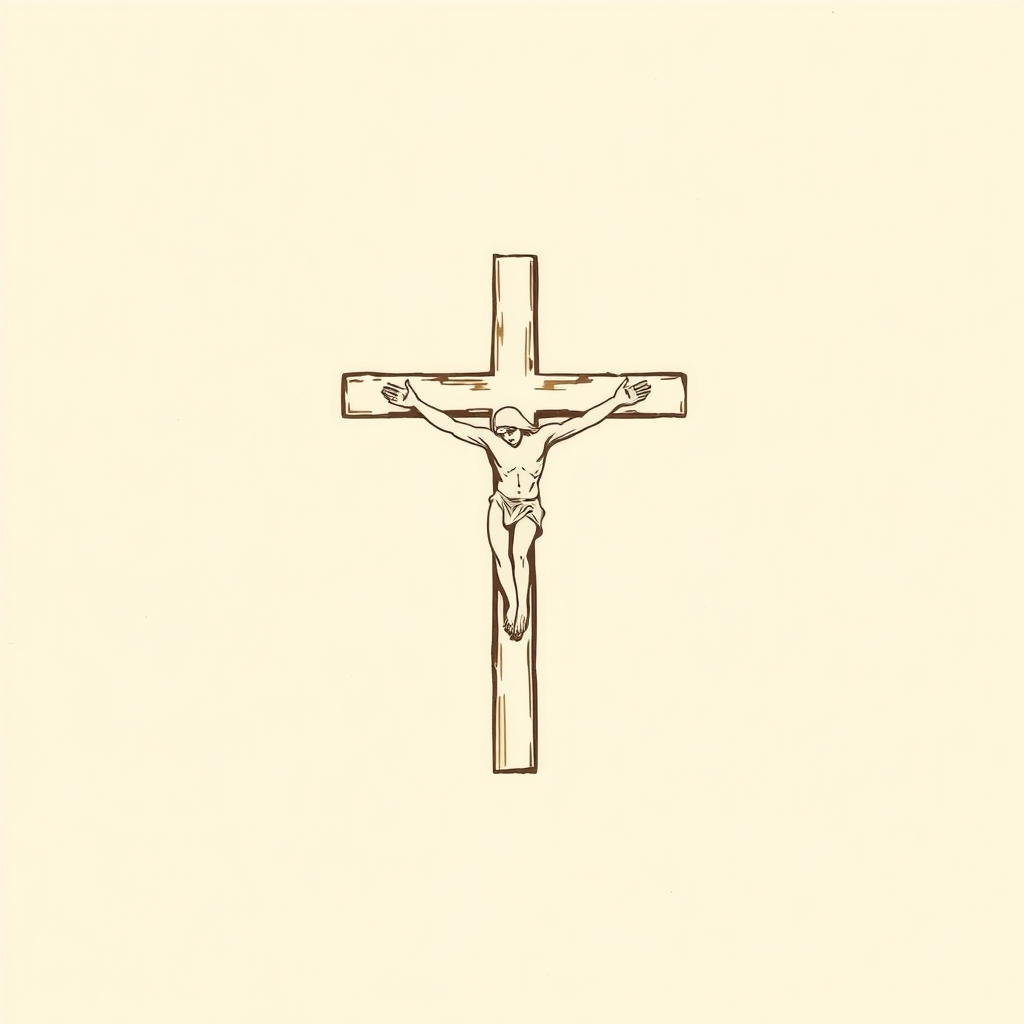
In iconography, Saint John of Kanty is recognizable by: doctor's purple robe, giving away his clothes to the poor and crucifix.
What miracles are attributed to Saint John of Kanty?
2 miracles are attributed to this saint, notably: Sign / wonder and Conversion.
Which saints were contemporaries of Saint John of Kanty?
Contemporaries include: Saint Peregrinus of Auxerre, Saint Philip Neri, Saint Ignatius of Loyola and Saint Colette (Nicole).
When did Saint John of Kanty die?
Saint John of Kanty died around 1473.
What are the other names of Saint John of Kanty?
Other forms of the name: Jean de Kenty and Joannes Cantius.
Annexes & related entities
Structured data for exploration: events, miracles, quotes, places, attributes, patronages, and important entities cited in the text.
Key Events
- Professor of Theology at the University of Krakow
- Left parish ministry to return to teaching
- Pilgrimage to Jerusalem to meditate on the Passion
- Four pilgrimages to Rome made on foot
- Encounter with thieves and voluntary donation of his last gold coins
- Canonization by Clement XIII in 1767