Saint Nicholas I the Great
Elected pope in 858, Nicholas I the Great was an indefatigable defender of papal authority and Christian morality. He distinguished himself by his firmness toward sovereigns and prelates, while working for the conversion of the Bulgarians. He died in 867 after a pontificate marked by his charity toward the poor and his doctrinal writings.
Contemporaries

Figures and markers around the normalized period for this entry.
Guided reading
8 reading sections
SAINT NICHOLAS I, THE GREAT, POPE AND CONFESSOR (867).
Origins and election
Nicholas, son of Theodore and Roman by birth, was elected pope unanimously in 858 after having served under several pontiffs.
Nicholas I was Roman by birth; his father was named Theodore. After the death of Bened ict III (8 55-858), he was elected with an admirable unanimity of votes by the clergy; he was forcibly taken from the basilica of the Prince of the Apostles, dragged to the patriarchal church of the La teran, and proclaimed Roman Pontiff in the year 858.
He had practiced piety and all virtues from his early youth. Sergius II made him a subdeacon of the Roman Church; Leo IV created him a deacon; finally, he was of great assistance to Benedict III in the government of the universal Church.
The exercise of authority
Through a vast correspondence, he asserted his moral and disciplinary authority over the bishops and sovereigns of Europe.
There exists a great number of letters written by him, in which he corrected those who strayed, humbled the proud, and lifted up the oppressed. Bishops, kings, emperors, he kept everyone to their duty.
Discipline in the West
The Pope intervened firmly against the abuses of power by the archbishops of Ravenna and Reims, restoring the bishop of Soissons to his rights.
He broke the stubborn resistance of John, Archbishop of Ravenna ; he strongly rebuked H incmar, Archbishop of Reims, for the unjust stripping of Rot had, Bishop of Soissons, a nnulled the sentence he had passed with the Council of Senlis, and reinstated the bishop in his dignity and his see.
Defense of Christian Marriage
He opposed King Lothair II, threatening him with anathema for having repudiated his legitimate wife in favor of his concubine.
He brought King Lothair back to reason, through the threat of anathema , after the king had repudiated his legitimate wife Teutberga in order to marry Waldrada, his concubine.
Conflicts with the East
He rejected the election of Photius in Constantinople and reinstated Patriarch Ignatius, affirming the primacy of the Apostolic See.
He disapproved of the elec tion of Photius, who was a layman, and reinstated Patri arch Ignatius to his see. He defended the rights of the Roman Church so well that his letters are regarded as so many advanced works protecting the Apostolic See.
Conversion of the Bulgarians
Nicholas I worked successfully for the conversion of the Bulgarian people and their attachment to the authority of Rome.
He did not limit his care to the internal affairs of the Church; he concerned himself with the conversion of the infidels; he brought to Jesus Christ and attached to the Roman Church the very n umerous nation of the Bulgarians, despite the gnashing of teeth of a schismatic emperor.
Personal piety and end of life
Recognized for his charity towards the poor and his restoration work in Rome, he died in 867 after a nine-year reign.
At the same time, he was very assiduous in his private duties of piety; he had the names of all the indigent given to him so that he could better assist them. He repaired and adorned the churches of Rome, in particular the Lateran Basilica.
Finally, he passed from earth to heaven at the beginning of the tenth year of his pontificate (November 13, 867), and was buried at the Vatican.
Historical Sources
Reference to Darras' History of the Church for the study of this pontificate.
Proper of Rome. — Cf. Darras, History of the Church (book XVIII, pages 455-481).
Iconography
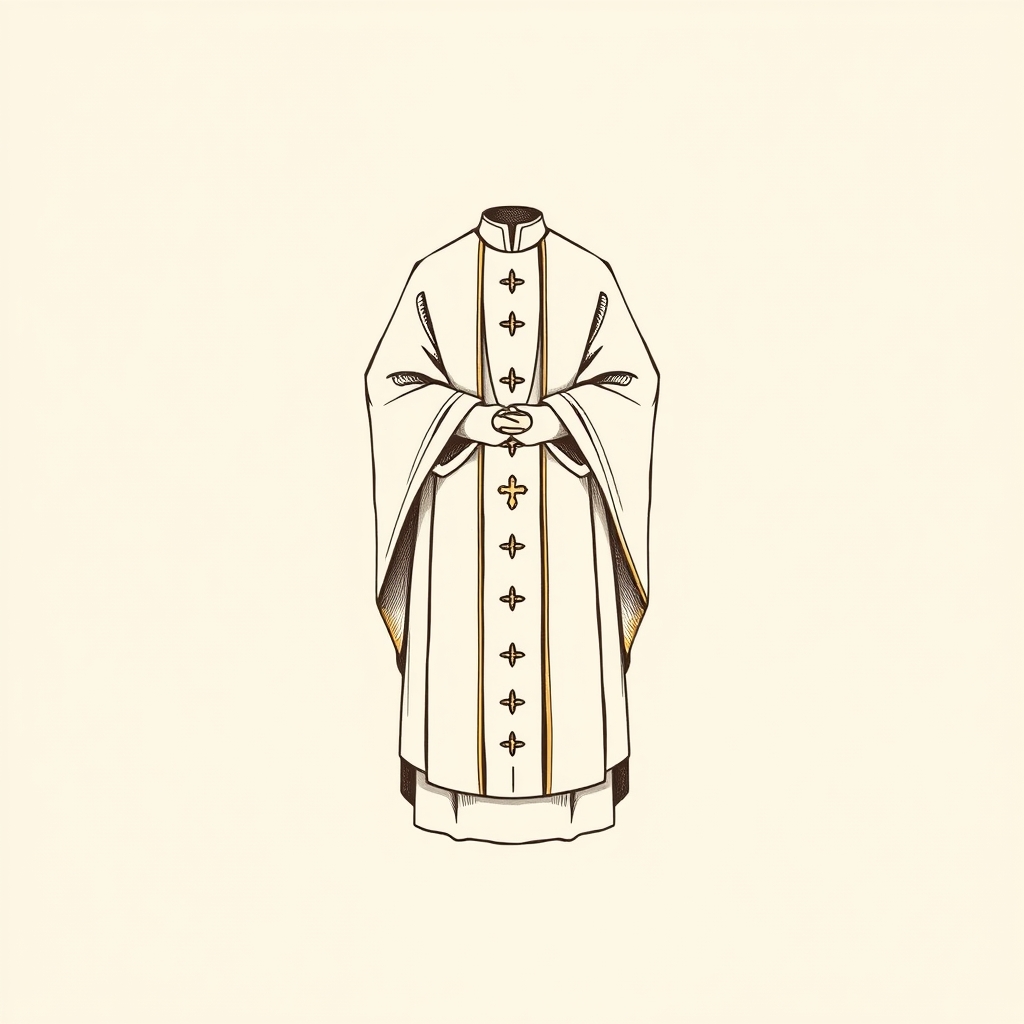
Signs and attributes
Entities
Narrative network
The names, places, and concepts most present in the entry, weighted by centrality in the text.
Frequently asked questions about Saint Nicholas I the Great
Who was Saint Nicholas I the Great?
Elected pope in 858, Nicholas I the Great was an indefatigable defender of papal authority and Christian morality. He distinguished himself by his firmness toward sovereigns and prelates, while working for the conversion of the Bulgarians. He died in 867 after a pontificate marked by his charity toward the poor and his doctrinal writings.
What is Saint Nicholas I the Great invoked for?
Saint Nicholas I the Great is invoked for: aid for the needy and defense of the oppressed.
How is Saint Nicholas I the Great depicted in Christian art?
In iconography, Saint Nicholas I the Great is recognizable by: pontifical vestments and letters/decretals.
Which saints were contemporaries of Saint Nicholas I the Great?
Contemporaries include: Saint Ansgar (Apostle of the North), Saint Bernard of Menthon (Apostle of the Alps), Saint Rumold (Rombaud) and Saint Zachary, Pope.
When did Saint Nicholas I the Great die?
Saint Nicholas I the Great died around 867.
What are the other names of Saint Nicholas I the Great?
Other forms of the name: Nicolas le Grand.
Who are the relatives of Saint Nicholas I the Great?
Relatives of Saint Nicholas I the Great: Théodore (father).
Annexes & related entities
Structured data for exploration: events, miracles, quotes, places, attributes, patronages, and important entities cited in the text.
Key Events
- Unanimous election to the papacy in 858
- Defense of the rights of the Roman Church through numerous letters
- Reinstatement of Bishop Rhutad of Soissons
- Opposition to King Lothair's divorce
- Restoration of Patriarch Ignatius against Photius
- Conversion of the Bulgarian nation