Blessed John of Barastre
FIFTEENTH ABBOT OF THE MONASTERY OF SAINT-ÉLOI (1275).
Jean de Barastre was the fifteenth abbot of Mont Saint-Éloi in the 13th century, highly esteemed by Saint Louis and Countess Jeanne of Flanders. An exemplary administrator and patron of letters, he fostered the sciences and rebuilt his abbey. He died in 1275 after governing his community with piety and charity for twenty-seven years.
Contemporaries

Figures and markers around the normalized period for this entry.
Guided reading
7 reading sections
BLESSED JEAN DE BARASTRE,
FIFTEENTH ABBOT OF THE MONASTERY OF SAINT-ÉLOI (1275).
Introduction and royal favors
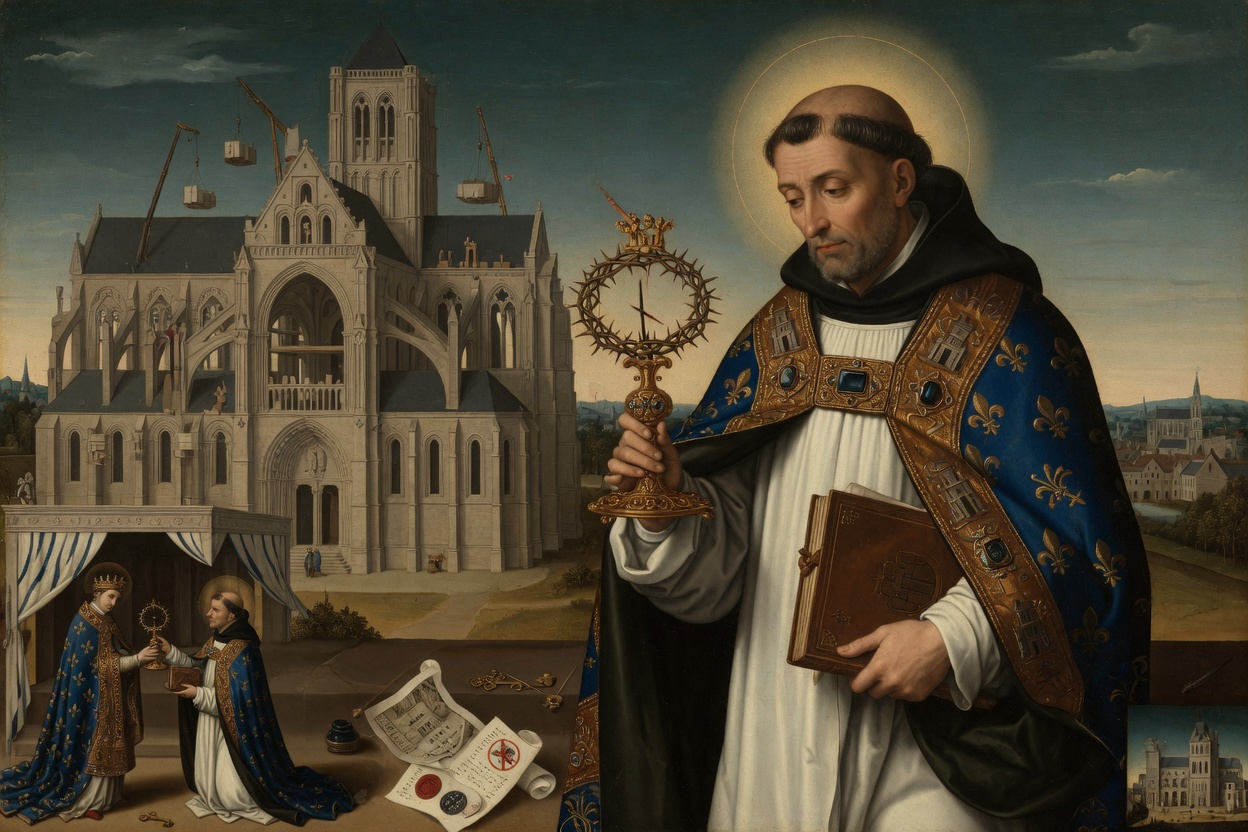
Jean de Barastre, abbot of Mont Saint-Éloi, enjoyed the high esteem of King Saint Louis and Countess Jeanne of Flanders, notably receiving a holy thorn in 1261.
Jean de Barastre was one of the holiest prelates to have administered the abbey of Mont Saint-Éloi , near Arras. Ki ng Saint Louis hel d him in the deepest veneration, and often gave him testimonies of it. In 1261, he even gave him a thorn from the crown of Our Lord, and the title of this donati on has been in the sacred treasury of Gaul-Belgica. The Countess of Flanders, Jeanne , shared these same sentiments , and both made abundant gifts to the community of Mont Saint-Éloi, which they were especially fond of. The pious abbot was, moreover, equally venerated by all that was most elevated in the country, and he was worthy above all of this high esteem.
Spiritual life and devotions
The abbot distinguished himself by a deep piety centered on the Passion of Christ, the Eucharist, and a particular devotion to the Virgin, Saint John, and Saint Catherine.
Indeed, imbued with the liveliest faith, he was constantly applied to the things of God. Each day, he meditated on the sorrowful mysteries of the Savior's Passion, and it often happened to him, while he was celebrating the holy sacrifice of the Mass, to shed abundant tears at the thought of Jesus Christ's love for men and the little return He receives from most of them. His emotion was even more intense at the moment of communion, when he nourished himself with the body of the Savior. He also had a tender devotion toward the Blessed Virgin, toward Saint John the Evangelist, and Saint Catherine of Ale xandria, whose protection he fervently invoked.
Charity and instruction
He exercised active charity towards the poor and encouraged intellectual studies by sending his religious to the University of Paris.
His charity for the poor was no less remarkable. Seeing in them the suffering members of Jesus Christ, it was with joy and respect that he distributed to them the goods he could dispose of in their favor. He gave them food, clothing, and medicine: he also gave them spiritual alms and addressed to them the instructions and consolations of the faith.
"Friend and protector of men of letters," says one of his biographers, "he put all his care into making the sciences flourish among the religious. He had several of them study at the University of Paris. One of them, Étienne du Fermont, was r eceived there as a doctor and taught theology there."
Temporal Administration
An efficient administrator, he rebuilt the abbey and obtained fiscal privileges and exemptions for his community.
John of Barastre also took care of the temporal interests of his abbey. He had it largely rebuilt; he obtained the confirmation of all its privileges; he even obtained, in 1260, the exemption from all tolls, duties, and inspections for the things the abbey might need. As we can see, from every point of view, he was a good administrator, an enlightened guide, a model, a father.
Relationship with the Papacy
Invited by Pope Gregory X to the Council of Lyon in 1274, he declined due to his advanced age and had himself represented by proxies.
The Sovereign Pontiff Gregory X , who knew the eminent virtue and wisdom of the Abbot of Mont Saint-Éloi, invited him to attend the gen eral council convened at Lyon in the year 1274. The venerable John, who was already very old, immediately expressed the deep emotion that this mark of confidence from the august head of Christendom had caused him, then he begged the Pope to excuse him because of the infirmities of old age, which did not allow him to undertake such a long journey. He sent two proxies of his choosing to replace him, who were received with distinction.
Death and influence
He died in 1275 after 27 years of government, leaving an abbey with widespread influence, linked by pacts of fraternity to other orders and monasteries.
Blessed John of Barastre died, in the sentiments and exercise of the most constant piety and the greatest charity, on March 14, 1275. He had governed the abbey for twenty-seven years.
Under this wise administration, the renown of the house of Mont Saint-Éloi and its abbot had spread even to foreign lands. Relationships of association and bonds of fraternity were established between the abbey and a large number of convents. Let us cite among others the abbey of Anchin, that of Jumièges, the Preaching Friars , and the Friars Min or. Nothing was neglec ted by the holy Abbot to ensure the spiritual good of his house, and to attain, as effectively as possible, the supreme goal to which he had dedicated every moment of his worthy life.
Hagiographic sources
The text is based on the works of Canons Van Drival and Destumbes concerning the saints of Arras.
Canon Van Drival, and Abbé Destumbes, Saints of Arras.
Iconography
Signs and attributes
Entities
Narrative network
The names, places, and concepts most present in the entry, weighted by centrality in the text.
Frequently asked questions about Blessed John of Barastre
Who was Blessed John of Barastre?
Jean de Barastre was the fifteenth abbot of Mont Saint-Éloi in the 13th century, highly esteemed by Saint Louis and Countess Jeanne of Flanders. An exemplary administrator and patron of letters, he fostered the sciences and rebuilt his abbey. He died in 1275 after governing his community with piety and charity for twenty-seven years.
What is Blessed John of Barastre the patron saint of?
Patronage of Blessed John of Barastre: men of letters.
How is Blessed John of Barastre depicted in Christian art?
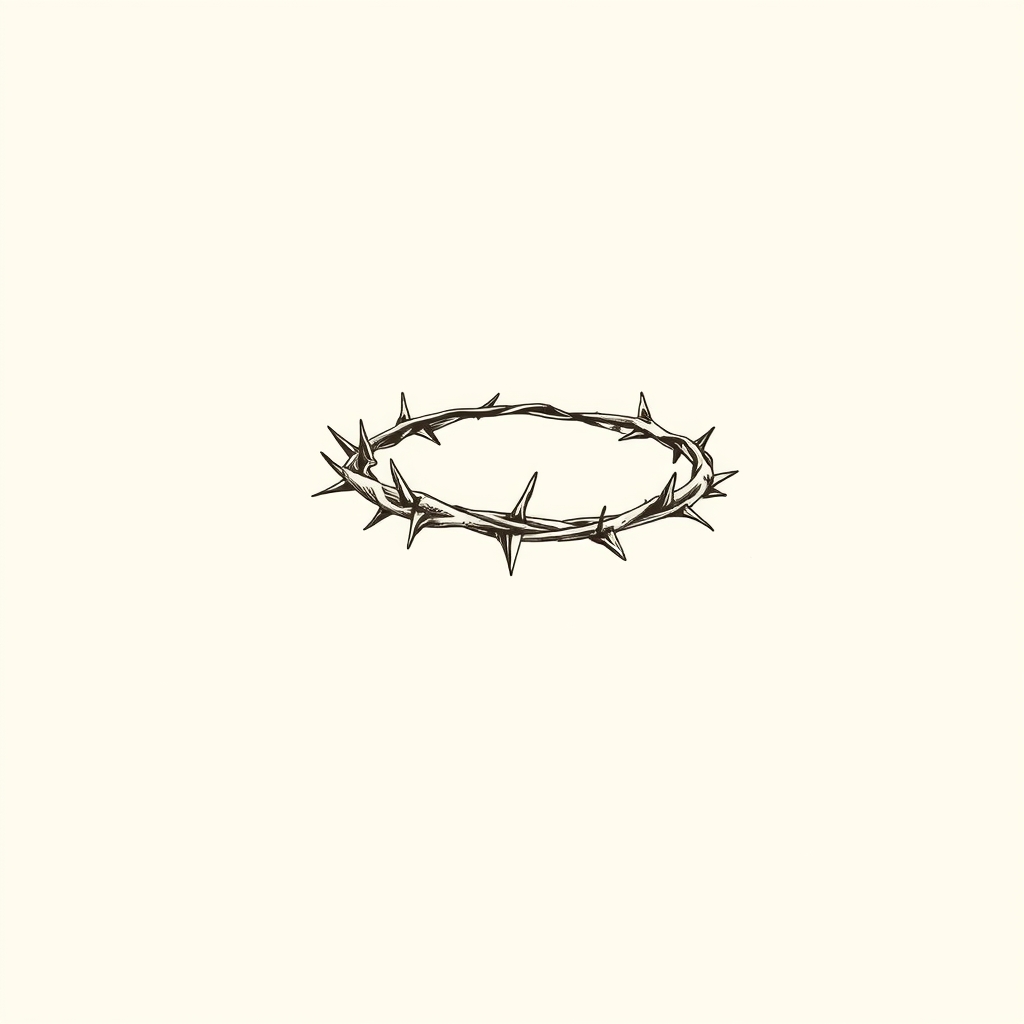
In iconography, Blessed John of Barastre is recognizable by: thorn from the crown of Christ.
Which saints were contemporaries of Blessed John of Barastre?
Contemporaries include: Saint Anthony of Padua (Ferdinand), Saint Arthaud of Belley, Saint Thomas Aquinas and Saint Bernard of Clairvaux.
When did Blessed John of Barastre die?
Blessed John of Barastre died around 1275.
Annexes & related entities
Structured data for exploration: events, miracles, quotes, places, attributes, patronages, and important entities cited in the text.
Key Events
- Donation of a thorn from the crown of Our Lord by Saint Louis in 1261
- Obtained exemption from tolls and duties in 1260
- Reconstruction of a large part of the abbey
- Invitation to the Second Council of Lyon by Gregory X in 1274
- Died after 27 years of abbatial government
Quotes
-
Friend and protector of men of letters
One of his biographers cited in the text