Saint Erembert of Le Pecq
A monk at Fontenelle and later Bishop of Toulouse in the 7th century, Saint Erembert was an exemplary prelate who combined learning and piety. Famous for extinguishing a fire at Viocourt with his pastoral staff, he spent his final days in prayer at his original monastery.
Contemporaries

Figures and markers around the normalized period for this entry.
Guided reading
7 reading sections
SAINT EREMBERT OF LE PECQ,
Origins and monastic vocation
Erembert was born in Le Pecq and entered the monastery of Fontenelle in Normandy at a young age under the direction of Saint Wandrille.
It is believe d that Saint E rembert was born in the town of Le Pecq, near Saint-Germain-en-Laye, in the current diocese of Versailles, and that he enclosed hims elf, while still young, in the monastery of Fontenelle, in Normandy, where he was formed in science and piety under th e direction of Saint Wandrille, who was then its abbot. But God did not leave this elite soul in obscurity for l ong: the aut hority of Clotaire III and Saint Bathildis, his mother, drew our Saint from the cloiste r to place him on the see of Toulouse; the inhabitants of that city, who had heard of Erembert's high virtue, called for him with all their wishes.
Elevation to the See of Toulouse
By the order of Clovis III and Saint Ruthilde, he left his monastery to become Bishop of Toulouse at the request of the inhabitants.
Having become bishop, he applied himself with the greatest care to the practice of religion, chastity, humility, and continence, studying the divine Scriptures with diligence and seeking to harmonize his preaching with his works. Thus, like a brilliant torch, he shone in the house of God through the light of his examples. His virtue was confirmed by miracles, among which we must report one more brilliant than all the others.
An exemplary episcopate
Erembert distinguished himself by his piety, his humility, and the study of the Scriptures, illustrating his teachings with his own examples.
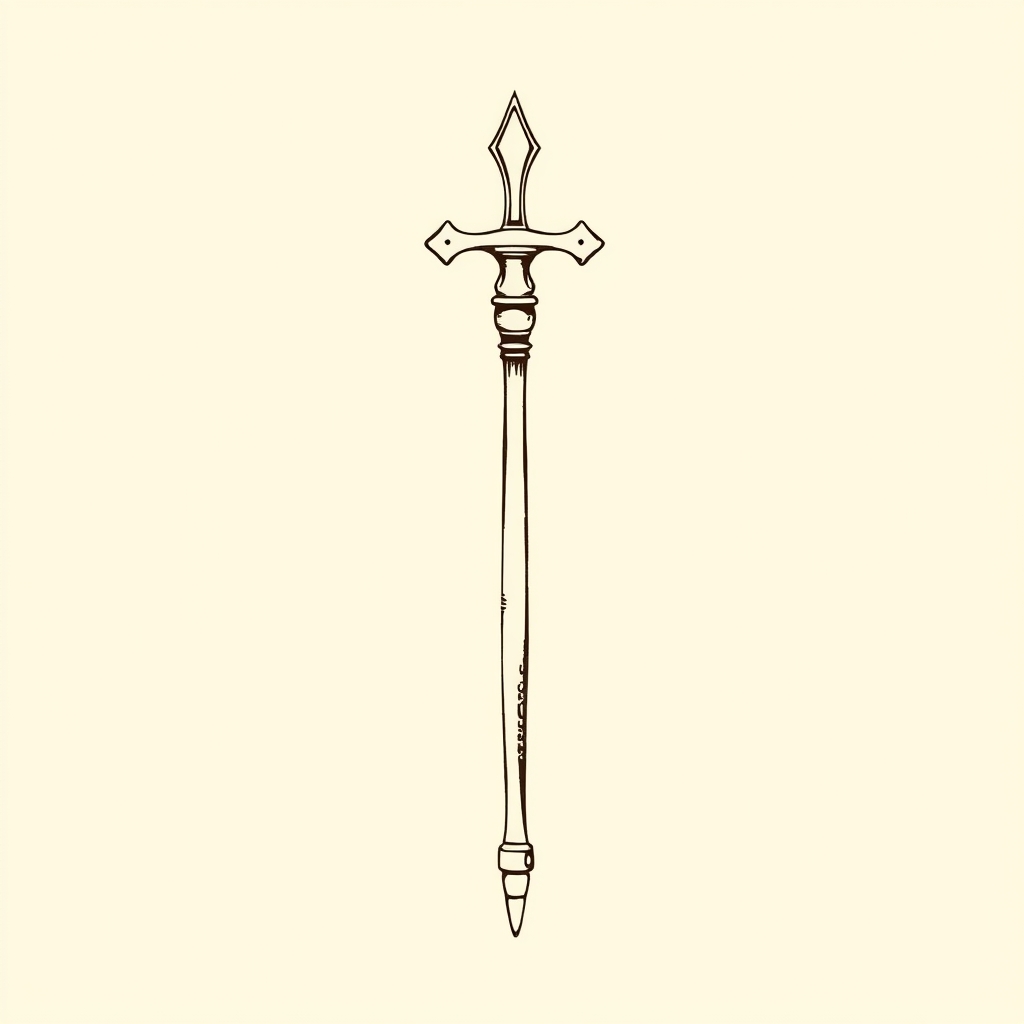
Erembert had left his episcopal city to see his homeland and the relatives he had left there again. He arrived at Viocourt (an ancient village in the territory of Poissy). During his stay in this place, a terrible fire broke out; the fire, spreading from house to house, threatened to destroy the entire village, and all efforts seemed useless to extinguish it. The neighbors, despairing of mastering it, implored Erembert to pray to God for them. Now, there was in this place a basilica dedicated to Saint Sat urnin, martyr. The prelate was in prayer in this oratory when the cries of the frightened multitude and the repeated blows with which they struck the doors of the temple reached him. The help of heaven did what human means could not do. Erembert was touched by the evils and complaints of the crowd; then taking his pastoral staff, he presented it to the flames, and continued his prayer. Immediately the wind that threatened to spread the fire to the entire village calmed down, and, losing all its violence, the fire went out. Tears were succeeded by joy, and sadness gave way to gratitude.
The miracle of the fire at Viocourt
While passing through Viocourt, the prelate miraculously stops a fire threatening the village by presenting his pastoral staff to the flames.
Around this time (circa 668), Erembert retired to the monastery of Fonten elle, of w hich Lambert was then abbot; he lived there for some time in great holiness, and reached an extreme old age. It was there that he died on May 14, 678. He had retained the title of Bishop of Toulouse until th e end of his life. His body was placed in the lower part of the church of Saint-Paul of Fontenelle. In 704, Saint Bain, the fifth abbot of this place, transferred it to the apse of the same basilica, and adorned his sepulcher with a semi-circular crown that formed a kind of dome above the tomb. The body of the holy bishop rested for several years in the church of Saint-Paul: an immense concourse of people took place at his tomb and a great number of miracles were performed there.
Retirement to Fontenelle and passing
Around 668, he retired to Fontenelle where he died in 678, while retaining his title of Bishop of Toulouse.
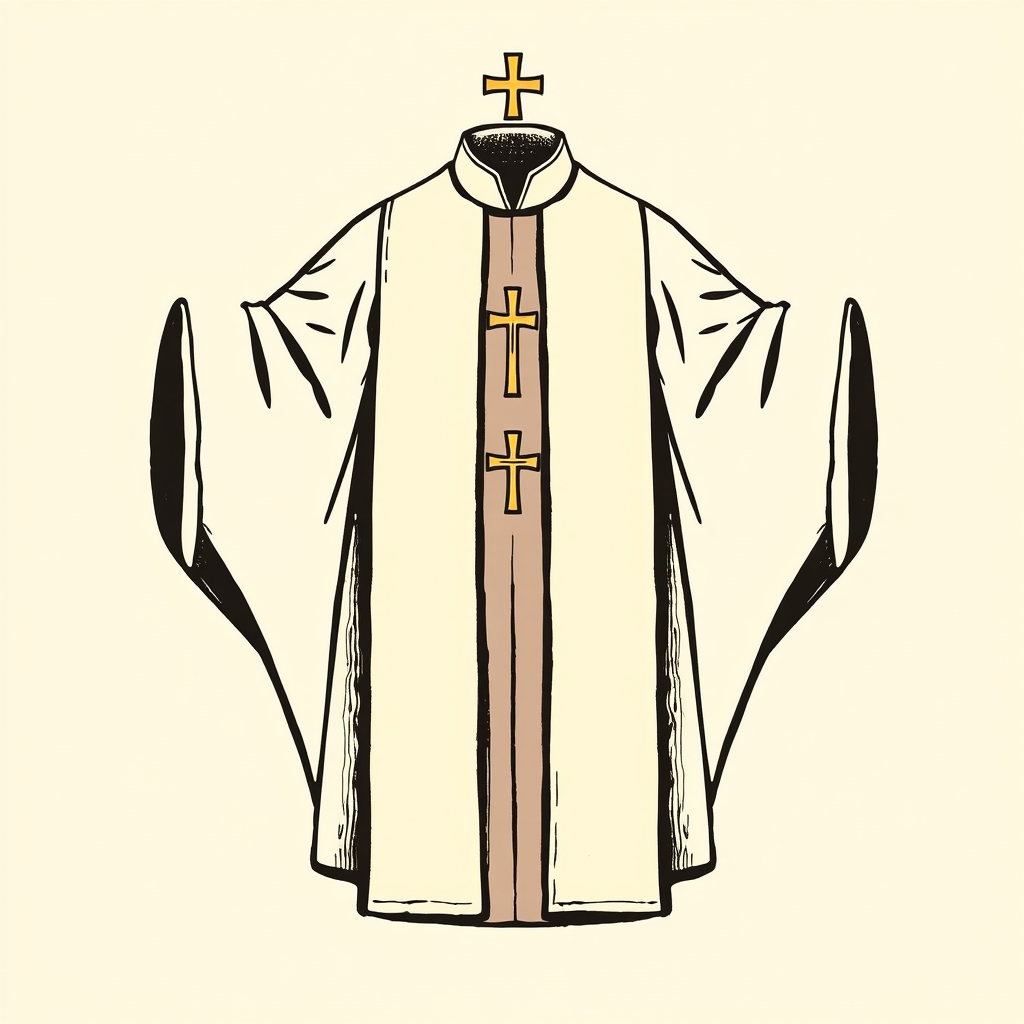
At the beginning of the 11th century, Gerard, Abbot of Fontenelle, having found the body of Saint Erembert amidst the ruins of the church of Saint-Paul, transported it to the neighboring one, that of Saint-Pierre, where it remained until its translati on to Abbeville. The church of Saint-Saturnin of Fontenelle was situated on a hill, outside the monastery, towards the north. It was there that the relics of the first bishop of Toulouse were first placed. After the death of Erembert, the pastoral staff of the holy bishop, with which he had stopped the fire, was brought there. The oratory of Saint-Saturnin having been destroyed, this staff as well as a garme nt of Sa int Erembert were carried to Druyères, a village in the diocese of Toulouse. It is reported that there existed in this place a priest whose life was not very regular, and that having wished to clothe himself in the garment of Saint Erembert, he was immediately seized with a burning fever from which he could only be delivered by prayers to the holy bishop. These precious relics were later transported again to Fontenelle.
Cult and translations of the relics
His remains were the subject of several translations between the churches of Fontenelle, Abbeville, and Druyères, accompanied by miracles.
Excerpt from the History of the Church of Toulouse, by Abbé Salvan.
Historical source
The text is taken from the History of the Church of Toulouse written by Abbé Salvan.
Excerpt from the History of the Church of Toulouse, by Abbé Salvan.
Iconography
Signs and attributes
Entities
Narrative network
The names, places, and concepts most present in the entry, weighted by centrality in the text.
The supernatural in their life
The miracles of Saint Erembert of Le Pecq
Frequently asked questions about Saint Erembert of Le Pecq
Who was Saint Erembert of Le Pecq?
A monk at Fontenelle and later Bishop of Toulouse in the 7th century, Saint Erembert was an exemplary prelate who combined learning and piety. Famous for extinguishing a fire at Viocourt with his pastoral staff, he spent his final days in prayer at his original monastery.
What is Saint Erembert of Le Pecq the patron saint of?
Patronage of Saint Erembert of Le Pecq: Toulouse.
What is Saint Erembert of Le Pecq invoked for?
Saint Erembert of Le Pecq is invoked for: extinguishing fires.
How is Saint Erembert of Le Pecq depicted in Christian art?
In iconography, Saint Erembert of Le Pecq is recognizable by: pastoral staff and episcopal habit.
What miracles are attributed to Saint Erembert of Le Pecq?
2 miracles are attributed to this saint, notably: Mastery of the elements and Protection / deliverance.
Which saints were contemporaries of Saint Erembert of Le Pecq?
Contemporaries include: Saint Priest (Prix), Saint Gregory the Great (Pope and Doctor of the Church), Saint Die (Didier, Deodat) and Saint Augustine of Canterbury.
When did Saint Erembert of Le Pecq die?
Saint Erembert of Le Pecq died around 678.
What are the other names of Saint Erembert of Le Pecq?
Other forms of the name: Erembertus.
Annexes & related entities
Structured data for exploration: events, miracles, quotes, places, attributes, patronages, and important entities cited in the text.
Key Events
- Entered the monastery of Fontenelle under Saint Wandrille
- Appointment to the bishopric of Toulouse by Clotaire III
- Miracle of extinguishing the fire at Viocourt
- Retreat to the monastery of Fontenelle around 668
- Died at Fontenelle in 678
- Translation of relics by Saint Bain in 704