Hildegard of Bingen
A Rhenish Benedictine abbess, mystic, and visionary, Hildegard of Bingen (1098-1179) left behind a theological, musical, and scientific body of work. Benedict XVI canonized her and proclaimed her a Doctor of the Church in 2012.
Contemporaries

Figures and markers around the normalized period for this entry.
Guided reading
5 reading sections
Biography
Born around 1098 in Bermersheim, in the Rhineland, Hildegard was entrusted to Benedictine monastic life from childhood; having become magistra and then abbess, she died at Rupertsberg on September 17, 1179.
Hildegard was born around 1098 in Bermersheim, in the diocese of Mainz, in the Rhineland. Coming from a noble family, she was, according to tradition, the tenth child and was consecrated to God from a very young age. Around the age of eight, she was entrusted to Jutta of Sponheim, a recluse attached to the Benedictine monastery of Disibodenberg, who instructed her and initiated her into religious life. Hildegard made her monastic profession around 1115. From childhood, she said she experienced visions, which she kept secret for a long time. Upon the death of Jutta, around 1136, the female community chose her as magistra (superior). Around 1150, she founded her own monastery at Rupertsberg, near Bingen, where she settled with about twenty nuns, then established a second community in 1165 at Eibingen, on the other bank of the Rhine. A woman of vast curiosity and often fragile health, Hildegard led a life of prayer, study, and governance until her death, which occurred at Rupertsberg on September 17, 1179, in great renown of holiness.
Life and Work
A theologian, musician, and scholar, Hildegard left behind a considerable body of work: the visionary trilogy (Scivias, Liber vitae meritorum, Liber divinorum operum), scientific treatises, musical compositions, and an abundant correspondence.
Hildegard's work, of exceptional breadth for a woman of her time, encompasses theology, music, and the natural sciences. Encouraged by Saint Bernard of Clairvaux and authorized by Pope Eugene III, who became acquainted with her writings around 1147-1148, she set her visions down in writing. Her theological trilogy brings together the Scivias ("Know the Ways", completed around 1151), the Liber vitae meritorum (c. 1158-1163), and the Liber divinorum operum (c. 1163-1174). She also composed treatises on medicine and natural history, the Physica and the Causae et curae, which bear witness to her knowledge of plants, remedies, and the physiology of her era. As a musician, she gathered more than seventy liturgical pieces in the Symphonia armonie celestium revelationum and wrote the Ordo virtutum, a sung liturgical drama. We also owe to her an invented language, the Lingua ignota, and a vast correspondence—about four hundred letters—addressed to popes, bishops, sovereigns, and communities. A rare feat for a medieval woman, she undertook several public preaching tours in the Rhineland cities of Cologne, Trier, and Mainz.
Path to Holiness
A visionary who called herself a simple instrument of God, Hildegard combined humility, obedience, and prophetic boldness, earning a reputation for holiness and the authority of a spiritual advisor during her lifetime.
Hildegard's holiness is rooted in her visionary experience, which she attributed entirely to God and not to her own merits. Presenting herself as a fragile and uneducated creature, she compared herself, in a famous image, to a light feather carried by the breath of God. This claimed humility was combined with a remarkable boldness: she did not hesitate to rebuke prelates and princes, to undertake preaching tours, and to defend her community, even going so far as to endure an interdict in the final years of her life for having maintained the burial of a reconciled excommunicate. Her reputation for holiness, the gift of counsel, and healing spread during her lifetime, and many of the faithful, as well as ecclesiastical authorities, sought her discernment. Venerated as a saint immediately after her death, she was the subject of formal canonization attempts as early as the 13th century, though the procedure did not succeed at that time; her cult, however, was maintained continuously, particularly in the Germanic dioceses, where her name appeared in the Roman Martyrology.
Beatification and canonization
Honored as a saint by an immemorial cult, Hildegard saw her veneration extended to the entire Church by Benedict XVI on May 10, 2012 (equivalent canonization), before being proclaimed a Doctor of the Church on October 7, 2012.
The case of Hildegard illustrates the notion of "equivalent canonization": due to the lack of conclusion in medieval trials, her holiness rested on an ancient and continuous cult rather than a solemn canonization. On May 10, 2012, Pope Benedict XVI officially extended her veneration to the universal Church, thus inscribing her in the catalogue of saints. A few months later, on October 7, 2012, the feast of the Holy Rosary, he proclaimed her a Doctor of the Church by an apostolic letter, jointly with Saint John of Avila. Hildegard thus became the fourth woman to receive this title, after Saint Catherine of Siena, Saint Teresa of Avila, and Saint Thérèse of Lisieux. This recognition consecrated the doctrinal scope of her theological and spiritual teaching. Her liturgical feast is set for September 17, the anniversary of her death. The very nature of her cause, founded on an immemorial cult, explains why no particular miracle was required for this modern recognition, in accordance with the customs of equivalent canonization.
Spirituality and legacy
A major figure of Rhenish spirituality, Hildegard remains venerated in Eibingen, where her relics rest, and her legacy radiates across theology, music, and traditional medicine.
Hildegard's legacy extends far beyond the religious framework. A recognized theologian, she is also considered one of the first figures of Western sacred music, and her compositions have experienced a remarkable rediscovery since the 20th century. Her scientific writings have nourished a tradition of "Saint Hildegard medicine," still invoked in certain currents of phytotherapy, even if its medical value belongs to the history of science. She is readily presented as the patron saint of musicians, writers, and those who devote themselves to the natural sciences. The center of her cult remains the Abbey of Saint Hildegard in Eibingen, near Rüdesheim, where her relics are kept and where a Benedictine community perpetuates her memory; the Rupertsberg monastery, which she had founded, was, however, destroyed in the 17th century. In his 2012 apostolic letter, Benedict XVI hailed her as a "light for her people and for her time," echoing an expression of John Paul II, and emphasized the relevance of her testimony, which unites faith, reason, art, and care for creation.
Iconography
Signs and attributes
Frequently asked questions about Hildegard of Bingen
Who was Hildegard of Bingen?
A Rhenish Benedictine abbess, mystic, and visionary, Hildegard of Bingen (1098-1179) left behind a theological, musical, and scientific body of work. Benedict XVI canonized her and proclaimed her a Doctor of the Church in 2012.
What is Hildegard of Bingen the patron saint of?
Patronage of Hildegard of Bingen: Patronne des musiciens, Patron saint of musicians, Patronne des écrivains, Patron saint of writers, Patronne de ceux qui s'adonnent aux sciences naturelles and Patron saint of those who study natural sciences.
How is Hildegard of Bingen depicted in Christian art?
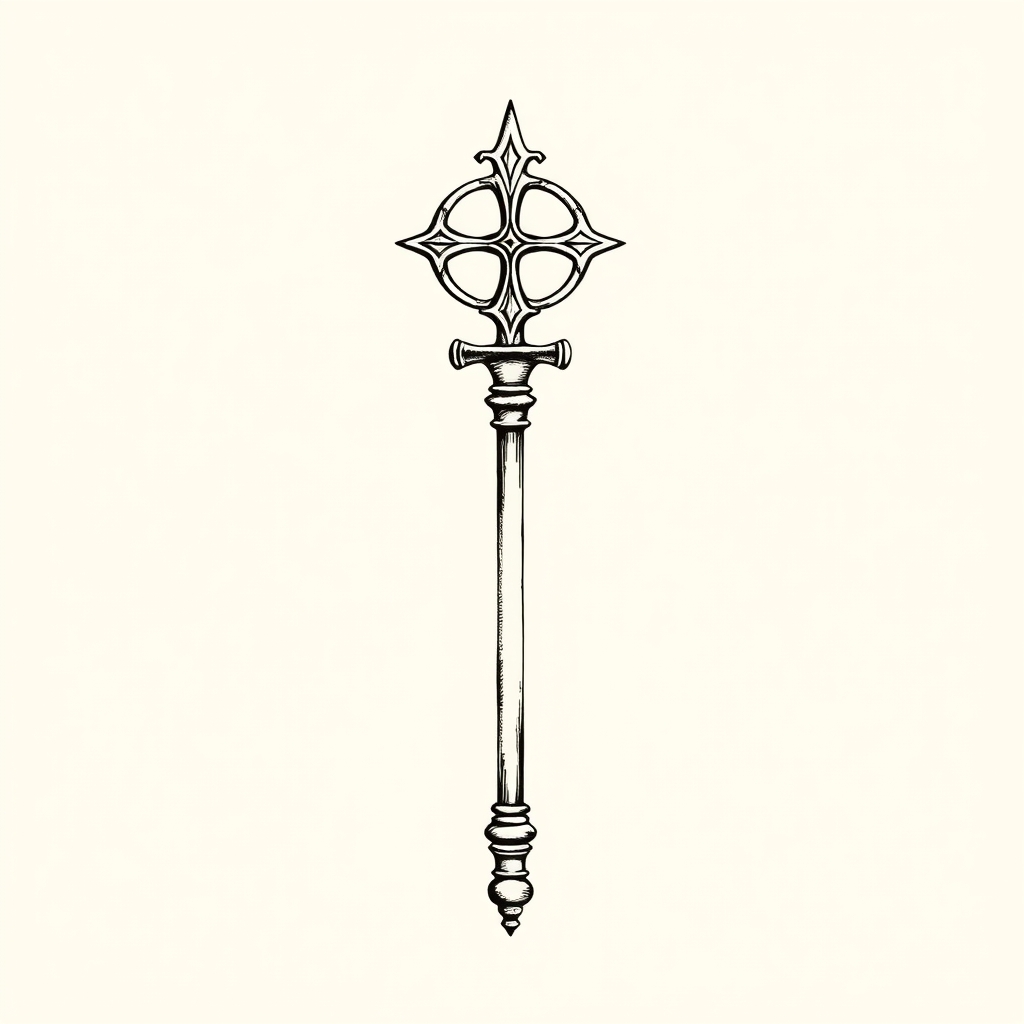
In iconography, Hildegard of Bingen is recognizable by: Benedictine habit (abbess), abbess's crosier, book or quill (author and visionary) and flames or rays of light (visions).
Which saints were contemporaries of Hildegard of Bingen?
Contemporaries include: Saint Norbert of Magdeburg, Saint Bernard of Clairvaux, Saint Stephen of Hungary and Saint Arthaud of Belley.
When did Hildegard of Bingen die?
Hildegard of Bingen died around 1179.
What are the other names of Hildegard of Bingen?
Other forms of the name: Hildegarde de Bingen, Sainte Hildegarde, Hildegard von Bingen, Hildegardis Bingensis, Ildegarda di Bingen and Hildegarda de Bingen.
Annexes & related entities
Structured data for exploration: events, miracles, quotes, places, attributes, patronages, and important entities cited in the text.
Key Events
- Era / death: 1179
- Canonized in 2012 by Benedict XVI
Quotes
-
I am a feather on the breath of God.
Hildegard of Bingen, from her writings and correspondence (an image she uses to describe herself) -
Know the ways (Scivias).
Hildegard of Bingen, title of her major work Scivias (Sci vias Domini)