Lodovico Pavoni
A 19th-century priest from Brescia, Lodovico Pavoni founded the Saint Barnabas Institute for disadvantaged youth and the congregation of the Sons of Mary Immaculate, canonized by Pope Francis in 2016.
Contemporaries

Figures and markers around the normalized period for this entry.
Guided reading
5 reading sections
Biography
Lodovico Pavoni was born in Brescia on September 11, 1784, into a wealthy noble family; ordained a priest in 1807, he dedicated his life to the most disadvantaged youth and died on April 1, 1849, in Saiano.
Lodovico Pavoni was born in Brescia (Lombardy) on September 11, 1784, the eldest son of Alessandro Pavoni and Lelia Poncarali, both from the local nobility. A lively and curious child, he showed an early interest in painting, mechanics, and horse riding, but also a sensitivity to social inequalities: he was seen giving his clothes to the poor and catechizing the children of peasants. His clerical training, conducted privately under the guidance of the Dominican father Carlo Domenico Ferrari—the future bishop of Brescia—was disrupted by the Napoleonic closures of seminaries. He nevertheless received the cassock on the eve of the Feast of the Immaculate Conception in 1803, and was ordained a priest on February 21, 1807, by the bishop of Bergamo, in the church of San Pietro in Oliveto. From the time of his ordination, he opened an oratory combining catechesis and recreation for the city's youth. Appointed secretary to Bishop Gabrio Nava in 1812, he simultaneously continued his apostolate to the youth. In 1818, he was named canon and rector of the Basilica of Saint Barnabas. In March 1849, during the Brescia insurrection against the Austrian occupation, he led his boys and his religious on foot to the novitiate of Saiano, twelve kilometers away, through rain and wind. Exhausted by this effort, he fell seriously ill on March 26 and passed away peacefully on Palm Sunday, April 1, 1849, at the age of sixty-four.
Life and Work
From the oratory opened in 1807 to the canonical foundation of the Congregation of the Sons of Mary Immaculate in 1847, Lodovico Pavoni built a network of vocational and religious education for poor youth, including the first Catholic printing house in Brescia.
The educational work of Lodovico Pavoni took shape gradually. In 1807, he created an oratory for the youth of Brescia, then in 1818 founded an orphanage and vocational school attached to the Basilica of Saint Barnabas. In 1821, this complex was restructured under the name of the Saint Barnabas Institute (Pio Istituto S. Barnaba), which welcomed orphans and poor children, offering them both religious formation and apprenticeship in ten trades: typography, carpentry, goldsmithing, ironworking, shoemaking, dyeing, and agriculture. In 1823, he inaugurated the Printing House of the Saint Barnabas Institute, a true pioneer of Catholic journalism in Brescia and the ancestor of the Ancora bookstore that still exists today in Rome. That same year, he welcomed the first deaf-mute students, anticipating specialized education. His pedagogy, based on reason, love, and prevention—a motto he formulated as "reasonableness, love, prevention"—foreshadowed the preventive system of Saint John Bosco. He also introduced innovative social practices: family wages, assistance in case of illness, and fair dismissal procedures—anticipating by several decades the encyclical Rerum Novarum of 1891. In 1825, he founded a religious community to perpetuate his works; this received pontifical approval from Pope Gregory XVI for the Diocese of Brescia on March 31, 1843, followed by Austrian imperial assent on December 9, 1846. On August 11, 1847, the congregation was canonically erected under the name of the Congregation of the Sons of Mary Immaculate (Figli di Maria Immacolata, also known as Pavonians). Pavoni then resigned from the Cathedral Chapter and made his perpetual religious profession on December 8, 1847.
Journey toward holiness
The holiness of Lodovico Pavoni is manifested in an active charity toward the most destitute, a deep Marian spirituality, and a pedagogy of gentleness inherited from the Gospel.
Lodovico Pavoni drew his strength from a maturely meditated faith. He himself noted: "In a maturely meditated faith, the will and the heart find an extremely secure support." This inner conviction translated into a concrete charity that preceded any theorization: before founding anything, he gave his own clothes to the poor, sat with the children of the fields, and instructed them. His spirituality was resolutely Marian—the congregation he founded was placed under the patronage of Mary Immaculate—and was articulated around the mystery of Christ the Servant. His educational method bore the mark of this spirituality: "Rigorism empties Heaven," he declared, preferring persuasion, trust, and personal accompaniment to severity. This pedagogy of benevolence, which would be found in Don Bosco a few decades later, was for him not a technique but the direct expression of evangelical love. Pope Pius XII, in declaring him venerable in 1947, described him as "another Philip Neri, a precursor of Saint John Bosco." His approach also integrated a prophetic social vision: improving the material conditions of young people was for him inseparable from their spiritual elevation, which earned him the reputation of a pioneer of Catholic social doctrine. His death during the evacuation of his young charges under gunfire and rain was perceived by his contemporaries as the ultimate testimony of his pastoral love.
Beatification and canonization
Beatified on April 14, 2002, by John Paul II and canonized on October 16, 2016, by Pope Francis, Lodovico Pavoni is celebrated on April 1st in the universal calendar.
The beatification process for Lodovico Pavoni opened officially at the diocesan level and led to the recognition of his heroic virtues by Pope Pius XII on June 5, 1947. The first miracle accepted for his beatification was the healing of Maria Stevani, who was suffering from extreme typhoid fever in 1909 in the Diocese of Cremona. After placing a relic of Pavoni under her pillow, she recovered perfect health in one night; this event was recognized as miraculous by the medical board of the dicastery on June 7, 2001, and approved by the Congregation for the Causes of Saints on December 4, 2001. Pope John Paul II approved the decree on December 20, 2001, and proceeded with the beatification on April 14, 2002, in St. Peter's Square, along with other blesseds. For the canonization, a second miracle was investigated: the healing in July 2009 of Honorio Lopes Martins in São Paulo (Brazil), who was suffering from severe postoperative complications; his son, a member of the Pavonian congregation, had organized a prayer chain for Pavoni's intercession. The decree of the miracle was promulgated on May 9, 2016. Pope Francis canonized Lodovico Pavoni on October 16, 2016, in St. Peter's Square, along with six other blesseds, including José Gabriel del Rosario Brochero and Elizabeth of the Trinity. His feast is celebrated on April 1st in the universal calendar, on May 27 in the Archdiocese of Milan, and on May 28 in the Diocese of Brescia and within the Pavonian congregation.
Spirituality and legacy
The Congregation of the Sons of Mary Immaculate continues the work of Lodovico Pavoni in six countries, extending his educational and editorial apostolate in service to disadvantaged youth.
The legacy of Lodovico Pavoni is alive in the congregation he founded. The Sons of Mary Immaculate, also known as Pavonians, today number approximately two hundred and ten members spread across six countries: Italy, Brazil, Colombia, Spain, Germany, and Eritrea. They continue the educational apostolate for youth and the editorial apostolate, notably through the Ancora bookstore located in the immediate vicinity of Saint Peter's Square in Rome—a direct heir to the printing house founded by Pavoni in 1823. His figure is also present in Brescia, a city of which he is one of the great Catholic glories, and in Saiano, the place of his death. Pope Pius XII had designated him as a "precursor of Saint John Bosco," emphasizing that his preventive pedagogy based on reason, love, and religion had anticipated the Salesian method. His social vision, articulated around the dignity of work and the protection of workers, gives him a unique place in the prehistory of the Church's social doctrine. Lodovico Pavoni is invoked as the patron of artisans, printers, and youth in difficulty.
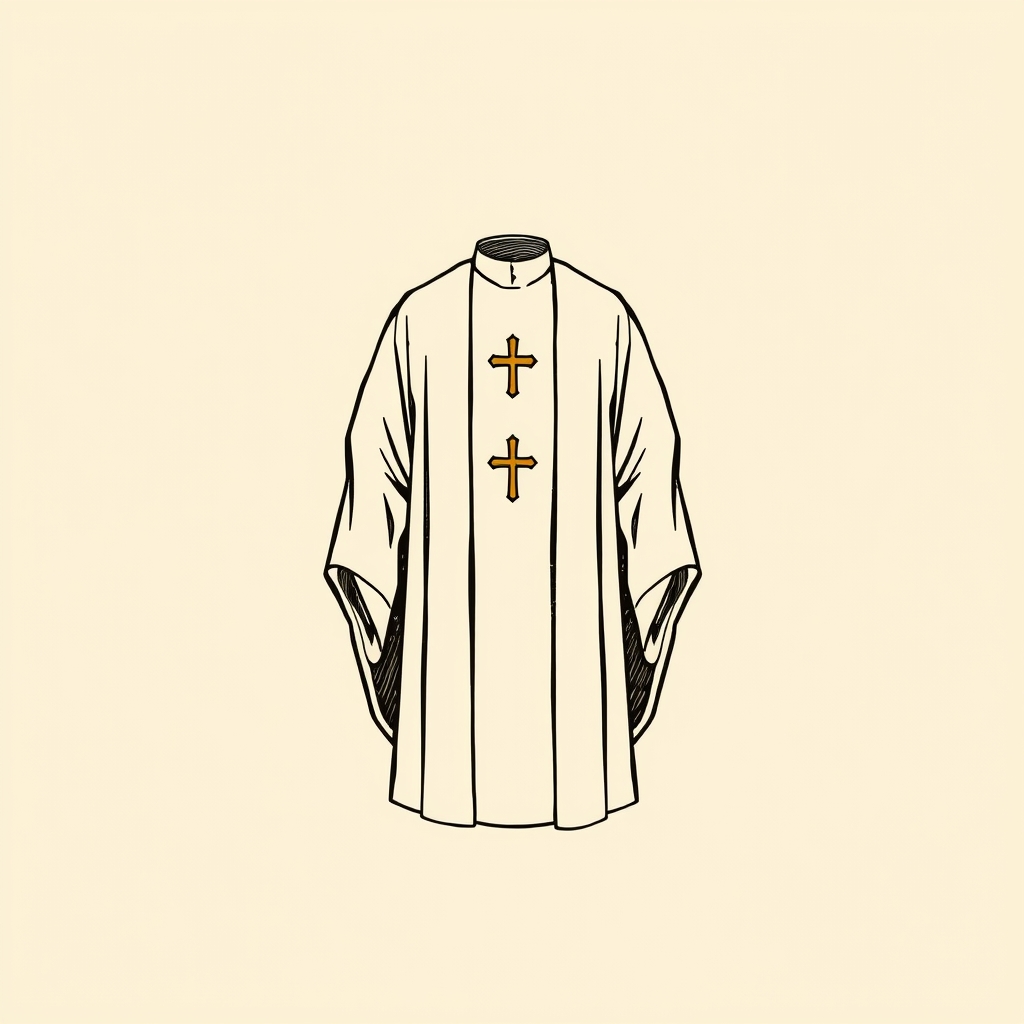
Iconography
Signs and attributes
The supernatural in their life
The miracles of Lodovico Pavoni
Frequently asked questions about Lodovico Pavoni
Who was Lodovico Pavoni?
A 19th-century priest from Brescia, Lodovico Pavoni founded the Saint Barnabas Institute for disadvantaged youth and the congregation of the Sons of Mary Immaculate, canonized by Pope Francis in 2016.
What is Lodovico Pavoni the patron saint of?
Patronage of Lodovico Pavoni: Artisans, Artisans, Imprimeurs, Printers, Jeunes défavorisés, Disadvantaged youth, Fils de Marie Immaculée (congrégation pavonienne) and Sons of Mary Immaculate (Pavonian Congregation).
What is Lodovico Pavoni invoked for?
Lodovico Pavoni is invoked for: Protection des jeunes en difficulté, Protection of youth in difficulty, Succès dans les apprentissages professionnels, Success in vocational training, Apostolat éditorial et médiatique catholique and Catholic editorial and media apostolate.
How is Lodovico Pavoni depicted in Christian art?
In iconography, Lodovico Pavoni is recognizable by: Priest's habit, Group of young craftsmen and Book and printing press.
What miracles are attributed to Lodovico Pavoni?
2 miracles are attributed to this saint, notably: Healing.
Which saints were contemporaries of Lodovico Pavoni?
Contemporaries include: Jesús María Echavarría Aguirre, Pauline of the Agonizing Heart of Jesus, Narcisa de Jesús and Juan de Jesús López y González.
When did Lodovico Pavoni die?
Lodovico Pavoni died around 1849.
What are the other names of Lodovico Pavoni?
Other forms of the name: Ludovico Pavoni, Ludovic Pavoni and Ludwig Pavoni.
Who are the relatives of Lodovico Pavoni?
Relatives of Lodovico Pavoni: Alessandro Pavoni (father) and Lelia Poncarali (mother).
Annexes & related entities
Structured data for exploration: events, miracles, quotes, places, attributes, patronages, and important entities cited in the text.
Key Events
- Era / death: 1849
- Canonized in 2016 by Francis
Quotes
-
In a faith that is maturely meditated upon, the will and the heart find an extremely secure support.
Spiritual writings of Lodovico Pavoni, cited in the hagiographic notice of the CEF (nominis.cef.fr) -
Rigorism empties Heaven.
Pedagogical principle attributed to Lodovico Pavoni, cited in the official biography of the Pavonian congregation (lodovicopavoni.it) and in anastpaul.com