Marianne Cope
A Franciscan religious born in Germany and raised in the United States, Marianne Cope spent thirty-five years caring for leprosy patients in Molokai, Hawaii, without ever contracting the disease.
Contemporaries

Figures and markers around the normalized period for this entry.
Guided reading
5 reading sections
Biography
Barbara Koob was born on January 23, 1838, in Heppenheim, in the Grand Duchy of Hesse, and emigrated to the United States in childhood, before dedicating her life to the Franciscan religious vocation.
Barbara Koob was born on January 23, 1838, in Heppenheim, in the Grand Duchy of Hesse (Germany), to modest peasant parents. In 1839, the family emigrated to the United States and settled in Utica, in the State of New York, where the surname was anglicized to "Cope." As a teenager, Barbara nurtured an early religious vocation, but she had to temporarily renounce her aspirations: when her father became an invalid, she entered a textile mill to support the family's needs. It was only after the death of Peter Koob in 1862 that she was able to answer the call. In August 1862, at the age of twenty-four, she entered the novitiate of the Sisters of the Third Order Regular of Saint Francis in Syracuse, New York. She made her religious profession in November 1863 and received the name Sister Marianne. In the following years, she taught in parochial schools, served as mistress of novices, and was then elected provincial in 1877 and re-elected in 1881. It was in Syracuse that she helped found Saint Joseph's Hospital, one of the first general hospitals in the region, renowned for welcoming patients without distinction of race or religion. Marianne Cope died on August 9, 1918, in Kalaupapa, on the island of Molokai, after thirty-five years of uninterrupted service for the benefit of leprosy patients.
Life and Work
In 1883, Marianne Cope was the only one among some fifty congregations contacted to agree to go and care for the lepers of the Kingdom of Hawaii, inaugurating thirty-five years of missionary service.
In 1883, the government of the Kingdom of Hawaii was desperately seeking religious sisters to take charge of patients suffering from leprosy. After nearly fifty congregations refused, Marianne Cope responded positively. On November 8, 1883, she embarked aboard the SS Mariposa with six companions bound for Honolulu. She first took charge of the Kakaako Branch Hospital on the island of Oahu, which housed some two hundred patients in quarantine. On the island of Maui, she founded the Malulani Hospital, an establishment that would be a pioneer in the care of the indigent. In November 1888, she went to Kalaupapa, on the island of Molokai, to direct the Bishop Home, a residence reserved for women and young girls suffering from leprosy. There, she worked alongside Father Damien de Veuster, a priest of the Congregation of the Sacred Hearts, who died of leprosy on April 15, 1889, after having dedicated his life to the same community. Upon the death of Father Damien, the authorities entrusted Marianne Cope with the additional responsibility for the boys. She profoundly transformed the living conditions of the colony by introducing cleanliness, a dignified living environment, and recreational activities. Despite daily and prolonged contact with contagious patients for thirty-five years, she never contracted leprosy. She would never leave Molokai again.
Journey toward holiness
Animated by a Franciscan spirituality centered on the service of the most humble, Marianne Cope manifested a serenity and generosity that her contemporaries perceived as a sign of holiness.
The spiritual life of Marianne Cope is deeply rooted in the Franciscan tradition, marked by a preferential love for the poor and the sick. Her contemporaries noted her unwavering serenity, her gentleness, and her refusal to complain, even when confronted with the harshest conditions on the island of Molokai. She affirmed that everything she accomplished was motivated only by her personal love for the Lord—an appreciation that Pope Benedict XVI would reiterate during the canonization ceremony in 2012. She took care to treat every patient with dignity, convincing her collaborators that even those afflicted with leprosy deserved beauty, cleanliness, and joy in their daily lives. Her reputation for holiness spread upon her death in 1918 among the Catholic population of Hawaii and Syracuse. The process in the Congregation for the Causes of Saints led to the proclamation of her heroic virtues by a decree on October 24, 2003, and then to the declaration of Venerable by Pope John Paul II on April 19, 2004. Her chastity, obedience, and poverty lived radically, as well as her courage in the face of illness and isolation, constitute the foundation of her reputation for holiness.
Beatification and canonization
Beatified on May 14, 2005, by Benedict XVI thanks to a miracle in 1993, Marianne Cope was canonized on October 21, 2012, with the Pope recognizing a second miracle that occurred in 2005.
The cause for the beatification of Marianne Cope progressed under the pontificate of John Paul II. On October 24, 2003, the Congregation for the Causes of Saints recognized her heroic virtues. On April 19, 2004, John Paul II promulgated the decree of Venerable. A first miracle was recognized: the unexplained healing in 1993 of Katherine Dehlia Mahoney, who was suffering from multi-organ failure, obtained through the intercession of Marianne Cope. This miracle was approved on December 20, 2004, by John Paul II. The beatification took place on May 14, 2005, in Rome, celebrated by Pope Benedict XVI, in the presence of more than one hundred pilgrims from Hawaii and three hundred members of the Syracuse congregation. For the canonization, a second miracle was examined: the healing in 2005 of Sharon Smith, a resident of Chittenango (New York), from acute pancreatitis with progressive destruction of the pancreas. The Congregation for the Causes of Saints approved this miracle on December 6, 2011. On December 19, 2011, Benedict XVI signed the decree of canonization. The ceremony was held on October 21, 2012, in Saint Peter's Square, during a Mass presided over by Benedict XVI, alongside six other saints including Kateri Tekakwitha. The liturgical feast of Saint Marianne Cope is set for January 23, the date of her birth.
Spirituality and Legacy
Saint Marianne Cope is venerated as the patron saint of lepers, outcasts, and people living with HIV/AIDS, and her memory is preserved in Hawaii, Syracuse, and throughout the Franciscan world.
The legacy of Marianne Cope is inseparable from the history of the fight against leprosy in Hawaii and the memory of Molokai. She is honored as the patron saint of leprosy patients, social outcasts, and, by extension, people living with HIV/AIDS—a disease which, in its social and stigmatizing dimensions, recalls the plight of the 19th-century lepers she served. Her remains were transferred from Kalaupapa to the Cathedral Basilica of Our Lady of Peace in Honolulu in 2014, making it a place of pilgrimage. The Diocese of Syracuse, of which the Sisters of St. Francis are a historical pillar, maintains a special devotion to her memory. She has been inducted into the American National Women's Hall of Fame since 2005. The Kalaupapa site, now a national park, preserves the joint memory of Saint Marianne Cope and Saint Damien of Veuster, the two great Christian witnesses of this leper colony. In the Episcopal Church of the United States, their joint feast day is celebrated on April 15. The example of Marianne Cope, an immigrant woman who exercised remarkable hospital and missionary leadership in the 19th century, continues to inspire Franciscan communities and healthcare workers around the world.
Iconography
Signs and attributes
The supernatural in their life
The miracles of Marianne Cope
Frequently asked questions about Marianne Cope
Who was Marianne Cope?
A Franciscan religious born in Germany and raised in the United States, Marianne Cope spent thirty-five years caring for leprosy patients in Molokai, Hawaii, without ever contracting the disease.
What is Marianne Cope the patron saint of?
Patronage of Marianne Cope: lépreux et malades de la lèpre, lepers and those with leprosy, personnes atteintes du VIH/sida, people with HIV/AIDS, exclus et marginaux and the excluded and marginalized.
What is Marianne Cope invoked for?
Marianne Cope is invoked for: guérison des maladies incurables, healing of incurable diseases, courage face à la maladie, courage in the face of illness, soin des personnes marginalisées and care of marginalized people.
How is Marianne Cope depicted in Christian art?
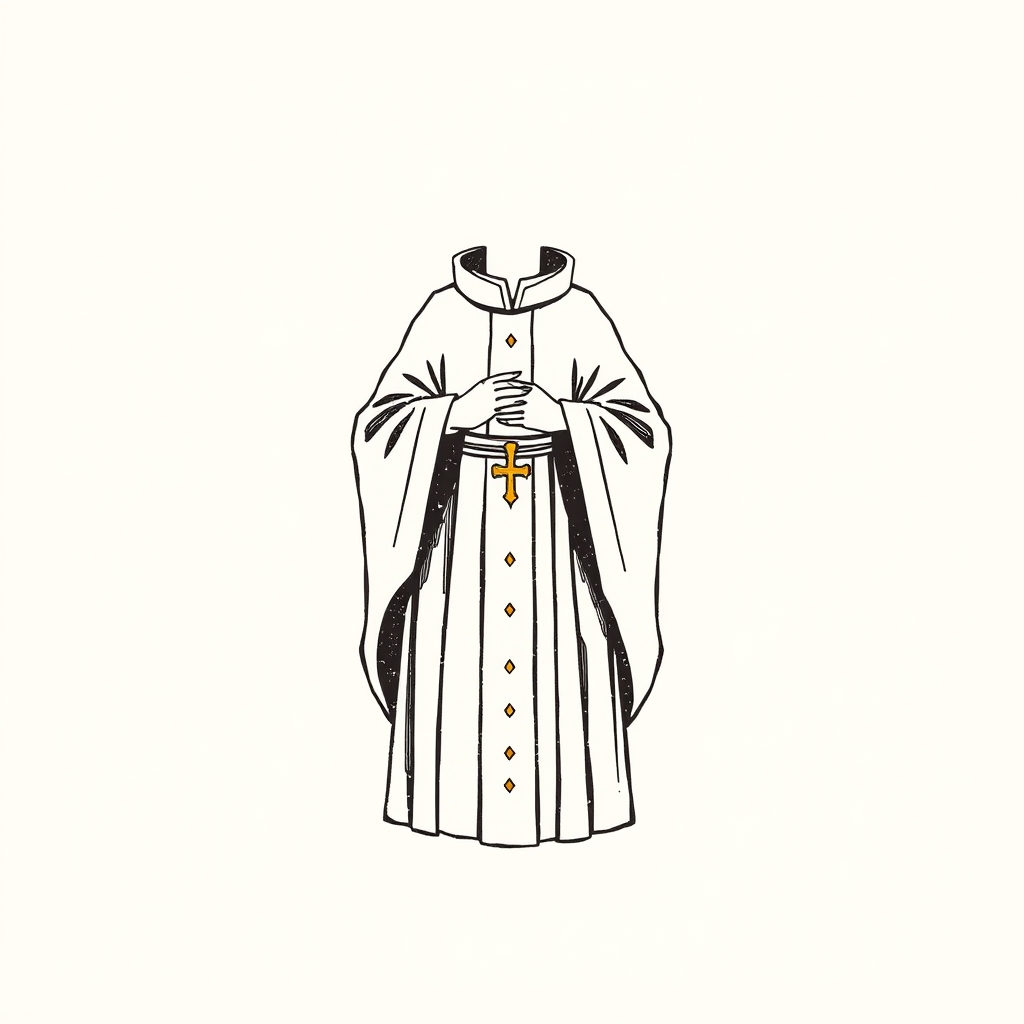
In iconography, Marianne Cope is recognizable by: Franciscan habit, cross and flowers (she beautified the Molokai leper colony).
What miracles are attributed to Marianne Cope?
2 miracles are attributed to this saint, notably: Healing.
Which saints were contemporaries of Marianne Cope?
Contemporaries include: Pauline of the Agonizing Heart of Jesus, Felipe de Jesús Munárriz and 50 companions, Mariano de Jesús Euse Hoyos and Teresa of Jesus of the Andes.
When did Marianne Cope die?
Marianne Cope died around 1918.
What are the other names of Marianne Cope?
Other forms of the name: Barbara Koob, Mère Marianne, Saint Marianne Cope and Marianne von Molokai.
Annexes & related entities
Structured data for exploration: events, miracles, quotes, places, attributes, patronages, and important entities cited in the text.
Key Events
- Era / death: 1918
- Canonized in 2012 by Benedict XVI