Mariana de Jesús de Paredes
Ecuadorian mystic (1618-1645), recluse and Franciscan tertiary nicknamed the "Lily of Quito", who offered herself as a victim for her city during the earthquake and epidemic of 1645. First canonized saint from Ecuador.
Contemporaries

Figures and markers around the normalized period for this entry.
Guided reading
5 reading sections
Biography
Born in Quito in 1618 into a noble family of Spanish origin, Mariana de Paredes y Flores was orphaned at a very young age and grew up with her older sister.
Mariana de Jesús de Paredes y Flores was born on October 31, 1618, in Quito, then in the Viceroyalty of Peru and today the capital of Ecuador. Coming from a noble family of Spanish origin—her father Jerónimo de Paredes was related to the nobility of Toledo—she was the youngest of a large family. Having become an orphan in early childhood, she was raised by her older sister Jerónima and her brother-in-law Cosme de Caso. From childhood, she manifested an intense piety: according to hagiographic sources, she received her first communion around the age of seven and for a time nurtured the desire to go on a mission. Having apparently been unable to enter a monastery, she chose to lead a life of a recluse in her brother-in-law's house, where she devoted herself to prayer and penance under the spiritual direction of the Jesuits of Quito. She remained there until her death on May 26, 1645, at the age of twenty-six. Her short existence, almost entirely hidden, was marked by extreme austerity and a reputation for holiness that radiated far beyond the modest dwelling where she had retired.
Life and Work
A recluse and Franciscan tertiary, Mariana lived a life of rigorous asceticism, contemplative prayer, and charity, under the spiritual guidance of the Jesuits.
The life of Mariana de Jesús was that of a reclusive mystic rather than that of a foundress or a member of a religious community. Affiliated with the Third Order of Saint Francis, she took the name "Mariana de Jesús" and organized her existence around the Eucharist, prayer, and mortification. The testimonies collected during her trial describe fasts of exceptional rigor and long hours of contemplative prayer, as well as mystical graces such as ecstasies. While remaining cloistered in the family home, she exerted a spiritual influence on those around her and paid particular attention to the poor, the indigenous populations, and the vulnerable people of Quito, who came to consult her and to whom she distributed alms and advice. Her spiritual direction was provided by the Jesuit fathers, and she participated notably in the Marian Congregation. This retired life, marked by penance and discreet charity, earned her great esteem during her lifetime, which tradition would later summarize under the title of "Lily of Quito."
Journey toward holiness
Her holiness culminated during the earthquake and epidemic of 1645, when she publicly offered herself as a victim of expiation for the salvation of Quito.
The summit of Mariana's spiritual journey occurred in 1645, when Quito was struck by a violent earthquake followed by a deadly epidemic. According to the account transmitted by hagiographic sources and reiterated by the Holy See, her confessor, the Jesuit father Alonso de Rojas, publicly offered his own life for the salvation of the city; Mariana then stood up and declared that she wished to take his place, judging the priestly ministry to be more necessary. She thus offered herself as a victim of expiation for the sins of the people. Tradition reports that the earthquake ceased and the epidemic died out, while she herself fell gravely ill and died shortly thereafter. Pope Pius XII, during her canonization, described her as a "victim of love" and a "holocaust of charity." This gesture of total offering, joined to her life of asceticism and the mystical gifts attributed to her—discernment, prophecy, healings—lastingly established her reputation for holiness.
Beatification and canonization
Beatified by Pius IX in 1853 and canonized by Pius XII in 1950, she is the first saint from Ecuador; her feast day is celebrated on May 26.
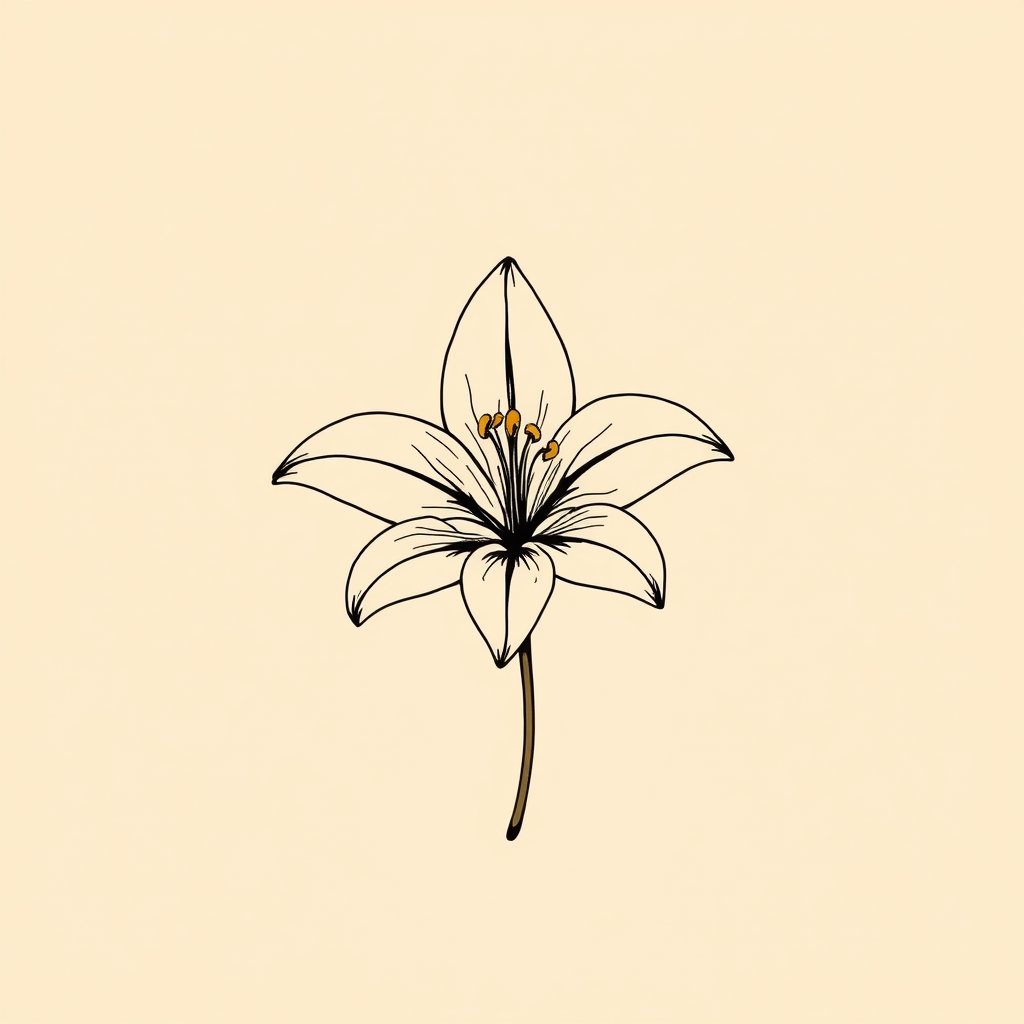
The cause for the sainthood of Mariana de Jesús first led to her beatification, celebrated on November 20, 1853, by Pope Pius IX. Nearly a century later, she was canonized on July 9, 1950, by Pope Pius XII in St. Peter's Basilica in Rome, thus becoming the first saint from present-day Ecuador. In the address given on July 10, 1950, to the pilgrims who had come for the canonization, Pius XII hailed her as a great figure of Hispanic America and spoke of her life of austerity and her offering for her people. Her liturgical feast is set for May 26, the anniversary of her death; the Franciscan Order celebrates it on May 28. A famous tradition, which is the origin of her nickname, reports that the day after her death a white lily sprang from her blood, hence the title of "Lily of Quito" (Azucena de Quito); this account belongs to popular piety and not to a historically established fact.
Spirituality and heritage
Patroness of Ecuador and national heroine, Mariana de Jesús remains a major figure of South American devotion; her relics are venerated in Quito.
Saint Mariana de Jesús de Paredes is honored as the patroness of Ecuador, and the Ecuadorian Republic has conferred upon her the title of national heroine, a sign of the influence of her figure beyond the religious domain alone. A model of a hidden life, penance, and self-offering, she embodies a spirituality of Eucharistic oblation and charity toward the poorest that has marked the popular devotion of South America. Her relics are preserved and venerated in Quito, in the Church of the Society of Jesus (La Compañía), one of the city's main Baroque sanctuaries. Numerous parishes, schools, and institutions in Latin America bear her name, and a teaching religious congregation was placed under her patronage in the 19th century. The nickname "Lily of Quito" continues to evoke the purity and total gift of this young mystic, whose memory remains alive in the Ecuadorian Church and in the Franciscan family.
Iconography
Signs and attributes
Frequently asked questions about Mariana de Jesús de Paredes
Who was Mariana de Jesús de Paredes?
Ecuadorian mystic (1618-1645), recluse and Franciscan tertiary nicknamed the "Lily of Quito", who offered herself as a victim for her city during the earthquake and epidemic of 1645. First canonized saint from Ecuador.
What is Mariana de Jesús de Paredes the patron saint of?
Patronage of Mariana de Jesús de Paredes: Équateur and Ecuador.
How is Mariana de Jesús de Paredes depicted in Christian art?
In iconography, Mariana de Jesús de Paredes is recognizable by: lily.
Which saints were contemporaries of Mariana de Jesús de Paredes?
Contemporaries include: María de Jesús López Rivas, Blessed Mariana de Jesús (de Paredes y Flores), Saint Francis de Sales (Bishop and Prince of Geneva) and Ana de Jesús.
When did Mariana de Jesús de Paredes die?
Mariana de Jesús de Paredes died around 1645.
What are the other names of Mariana de Jesús de Paredes?
Other forms of the name: Mariana de Jesús de Paredes y Flores, Maria Anna di Gesù de Paredes, Mariana of Jesus de Paredes, Azucena de Quito and Lys de Quito.
Who are the relatives of Mariana de Jesús de Paredes?
Relatives of Mariana de Jesús de Paredes: Jerónimo de Paredes (father) and Jerónima de Paredes (older sister (who raised her)).
Annexes & related entities
Structured data for exploration: events, miracles, quotes, places, attributes, patronages, and important entities cited in the text.
Key Events
- Era / death: 1618-1645
- Canonized in 1950 by Pius XII