Charles of Mount Argus
A Dutch Passionist priest, Charles of Saint Andrew Houben (John Andrew Houben, 1821-1893) exercised his ministry primarily at Mount Argus, near Dublin, where his reputation as a healer and confessor drew crowds. Beatified in 1988 and canonized by Benedict XVI on June 3, 2007, his feast day is January 5.
Contemporaries

Figures and markers around the normalized period for this entry.
Guided reading
5 reading sections
Biography
Born in the Netherlands in 1821, John Andrew Houben discovered the Congregation of the Passion during his military service, entered the Passionists in Belgium, and was ordained a priest in 1850.
John Andrew Houben (Joannes Andreas Houben) was born on December 11, 1821, in Munstergeleen, a village in the Dutch Limburg, into a Catholic family. Called to military service, he discovered during this period the Congregation of the Passion (Passionists), founded in the 18th century by Saint Paul of the Cross and recently established in the region. Upon his demobilization, he was admitted to the Passionist novitiate in Ere, near Tournai, in Belgium, where he received the religious name Charles of Saint Andrew. He pronounced his vows on December 10, 1846, and was ordained a priest on December 21, 1850. His formation and early religious years thus took place between the Netherlands of his birth and the Belgium of his consecrated life. Sent shortly thereafter to England, and then to Ireland, he would spend the majority of his priestly life in the service of English-speaking Catholic communities. He died at Mount Argus, near Dublin, on January 5, 1893, after a dozen years marked by illness, in the odor of sanctity.
Life and Work
After a ministry in England, Charles was sent in 1857 to the monastery of Mount Argus, near Dublin, where he became a sought-after confessor and miracle-worker.
Ordained in 1850, Charles of Saint Andrew was first sent to England, where the Passionists served the many Irish Catholic immigrants and worked for Christian unity. In 1857, he joined the monastery of Mount Argus, recently founded in Harold's Cross, near Dublin; he would exercise the essential part of his ministry there, despite a return of several years to England (notably in Sutton, near Saint Helens) before his definitive installation in Dublin. It was at Mount Argus that what would make him famous was revealed: a gift of comfort and healing. Many sick and afflicted people came to seek his blessing, often given with holy water by means of a relic of Saint Paul of the Cross; according to Passionist sources, up to three hundred people a day crowded around him. A tireless confessor, he distinguished himself by obedience, poverty, humility, and an intense devotion to the Passion of Christ, of which he always carried a small crucifix on his person. In the sick and the suffering, Benedict XVI would recall, "he recognized the face of the crucified Christ, to whom he had dedicated a lifelong devotion."
Journey toward holiness
His holiness stems from a life of humility and simplicity, centered on the Passion of Christ and service to those who suffer most.
The reputation for holiness of Charles of St. Andrew is rooted less in spectacular works than in the constancy of a hidden and surrendered life. Testimonies describe him as a religious of great simplicity, who spoke English with difficulty, but whose prayer and compassion touched those who approached him. His spirituality is entirely Passionist: the contemplation of the Passion of Christ nourished his attention to the poor, the sick, and the sinners who came to confess. The final years of his life were themselves marked by a long illness which he accepted, according to his biographers, as a participation in the sufferings of Christ. At his death, on January 5, 1893, the popular turnout was such that, during his funeral, his superior was able to observe, according to the words reported by Benedict XVI, that "the people have already declared him a saint." This spontaneous devotion of the people of Dublin, around his tomb at Mount Argus, constitutes the first lasting sign of the reputation for holiness that would pave the way for his cause.
Beatification and canonization
Beatified by John Paul II on October 16, 1988, Charles of Saint Andrew was canonized by Benedict XVI on June 3, 2007; his feast day is January 5.
The cause of Charles of Saint Andrew opened in Dublin in the first half of the 20th century. He was declared venerable, then beatified by Pope John Paul II on October 16, 1988, following the recognition of a miracle attributed to his intercession, the healing of a Dutch woman, Octavia Spaetgens-Verheggen. His canonization was pronounced by Pope Benedict XVI on June 3, 2007, in Saint Peter's Square in Rome, during a ceremony that also canonized Giorgio Preca, Szymon of Lipnica, and Marie-Eugénie de Jésus Milleret; the miracle accepted for the canonization was the healing of another Dutchman from Munstergeleen, Dolf (Adolf) Dormans. In his homily, Benedict XVI emphasized that, "during his many years of priestly ministry in England and Ireland, people flocked to him to seek his wise counsel, his compassionate attention, and his healing touch." His liturgical memorial is set for January 5, the anniversary of his death.
Spirituality and Heritage
Venerated as the saint of Mount Argus, he remains a major figure of Irish and Dutch popular piety; his relics rest in Dublin.
Charles of St. Andrew remains popularly known as "the saint of Mount Argus." His remains are venerated in the church of the Passionist retreat of St. Paul of the Cross in Mount Argus, at Harold's Cross, in south Dublin, which remains a place of pilgrimage and prayer. His canonization in 2007 was a landmark event for Ireland, which saw the honoring of a foreign religious who became one of its most beloved spiritual figures, and for the Netherlands, and particularly Munstergeleen, his native village, which preserves his memory. As a member of the Congregation of the Passion, he follows in the spiritual lineage of Saint Paul of the Cross, centered on the remembrance of the Passion of Christ. His figure continues to be invoked by those seeking comfort in sickness and suffering, extending the ministry of healing and consolation that marked his life.
Iconography
Signs and attributes
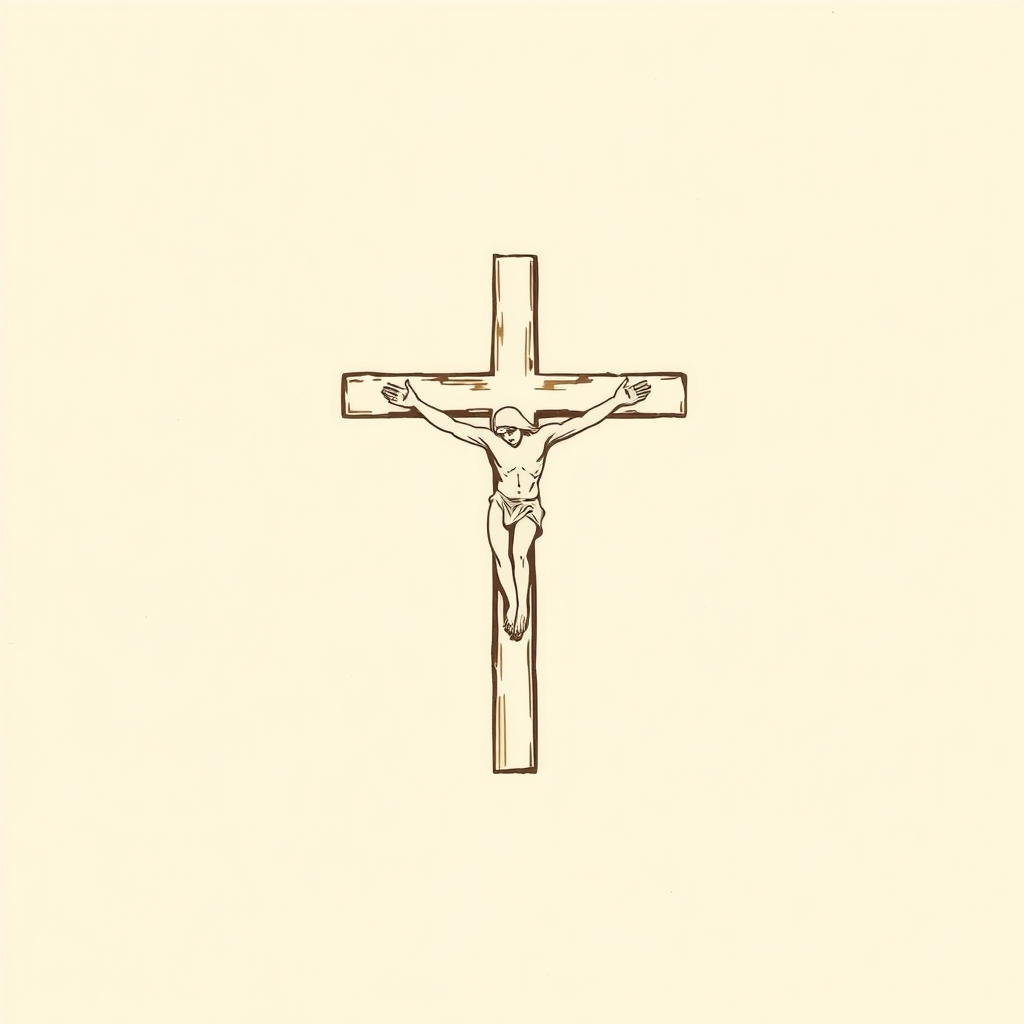
The supernatural in their life
The miracles of Charles of Mount Argus
Frequently asked questions about Charles of Mount Argus
Who was Charles of Mount Argus?
A Dutch Passionist priest, Charles of Saint Andrew Houben (John Andrew Houben, 1821-1893) exercised his ministry primarily at Mount Argus, near Dublin, where his reputation as a healer and confessor drew crowds. Beatified in 1988 and canonized by Benedict XVI on June 3, 2007, his feast day is January 5.
What is Charles of Mount Argus invoked for?
Charles of Mount Argus is invoked for: les malades, the sick, le réconfort dans la souffrance and comfort in suffering.
How is Charles of Mount Argus depicted in Christian art?
In iconography, Charles of Mount Argus is recognizable by: Passionist habit and crucifix.
What miracles are attributed to Charles of Mount Argus?
2 miracles are attributed to this saint, notably: Healing.
Which saints were contemporaries of Charles of Mount Argus?
Contemporaries include: Jesús María Echavarría Aguirre, Pauline of the Agonizing Heart of Jesus, Narcisa de Jesús and Juan de Jesús López y González.
When did Charles of Mount Argus die?
Charles of Mount Argus died around 1893.
What are the other names of Charles of Mount Argus?
Other forms of the name: Charles of Saint Andrew, Carlo di Sant'Andrea, Karel van Sint Andries, Joannes Andreas Houben and Jean-André Houben.
Annexes & related entities
Structured data for exploration: events, miracles, quotes, places, attributes, patronages, and important entities cited in the text.
Key Events
- Era / death: 1893
- Canonized in 2007 by Benedict XVI
Quotes
-
During his many years of priestly ministry in England and Ireland, people flocked to him to seek his wise counsel, his compassionate attention and his healing touch.
https://www.vatican.va/content/benedict-xvi/en/homilies/2007/documents/hf_ben-xvi_hom_20070603_canonizations.html -
In the sick and the suffering, he recognized the face of the crucified Christ, to whom he had devoted his entire life.
https://www.vatican.va/content/benedict-xvi/en/homilies/2007/documents/hf_ben-xvi_hom_20070603_canonizations.html -
The people have already declared him a saint.
https://www.vatican.va/content/benedict-xvi/en/homilies/2007/documents/hf_ben-xvi_hom_20070603_canonizations.html