Salvador of Horta
Catalan Franciscan friar (1520-1567), a lay brother famous during his lifetime as a healer, who died in Cagliari and was canonized in 1938 by Pius XI.
Contemporaries

Figures and markers around the normalized period for this entry.
Guided reading
5 reading sections
Biography
Catalan Franciscan lay brother born in 1520, a former shoemaker who became a religious and a famous healer, died in 1567 in Cagliari.
Salvador of Horta was born in December 1520 in Santa Coloma de Farners, in the province of Girona in Catalonia, where his parents served at the local hospital. Hagiographic sources link him to the Pladevall family (sometimes spelled Grionesos according to other traditions). Orphaned at a very young age, he went to Barcelona with his sister Blasa (or Blasia) and worked as a shoemaker to support them. Attracted to the religious life, he first spent time at the Benedictine abbey of Montserrat before choosing Franciscan poverty. He entered as a lay brother at the novitiate of the Friars Minor of the Observance in Barcelona on May 3, 1541, and took his vows in 1542. Subsequently assigned to the convent of Tortosa, he performed humble duties there—cooking, porter, questing brother—and began to become known for healings attributed to his intercession. His reputation as a wonder-worker followed him to several convents (Tortosa, Bellpuig, Horta de Sant Joan, Reus, Barcelona). Transferred in November 1565 to the convent of Santa Maria di Gesù in Cagliari, Sardinia, he died there on March 18, 1567, at the age of forty-six.
Life and Work
A lay brother, Salvador became a renowned healer during his lifetime, attracting crowds of the sick, which prompted his repeated transfers and an investigation by the Inquisition.
The work of Salvador of Horta lies entirely in his healing ministry, exercised from his humble position as a lay brother. In Tortosa and then in the successive convents to which obedience led him, he welcomed the sick, traced the sign of the cross over them while invoking the Virgin Mary, and numerous healings were attributed to him. Hagiographic sources report a considerable influx of pilgrims who came to seek his blessing, to the point that his superiors, overwhelmed by the crowds and anxious to protect the brother's humility, frequently moved him from one convent to another, sometimes under an assumed name (Brother Alfonso) during his long stay in Horta de Sant Joan, from which he would derive his nickname. This fame also aroused the jealousy of certain confreres and a denunciation to the Spanish Inquisition tribunal, which examined the origin of his gifts: the investigation concluded without a conviction. Salvador always attributed the glory of these wonders to God alone and to the Virgin, refusing any personal merit. His figure embodies the type of the thaumaturge lay brother of the Catholic Reformation, sanctified not by doctrine or governance but by charitable service and prayer.
Path to Holiness
His holiness is manifested through radical humility, voluntary poverty, and total trust in God, to whom he attributes all wonders.
The path of holiness of Salvador of Horta is marked by humility, poverty, and obedience, virtues characteristic of the Franciscan spirituality of the Observance. Having renounced a more secure life to embrace the most modest condition within the Order, he accepted the harshest duties and submitted without complaint to the incessant transfers imposed by his superiors. Hagiographic accounts insist on his refusal to attribute the slightest merit to himself in healings: he presented himself as a "poor sinner" and affirmed that the miracles were the work of the Lord and not his own. A saying reported by tradition shows him comparing himself to a sack of straw, whose value remains the same whether it is placed in the attic, the foundations, or the stable—a striking image of his detachment and indifference to honors. His reputation for holiness, already solid during his lifetime, only grew after his death in Cagliari, where his tomb became a place of devotion. It is this constancy in self-effacement, joined to the signs attributed to his intercession, that founded the beatification process opened at the beginning of the 17th century.
Beatification and canonization
Beatified in 1606 by Paul V at the request of the King of Spain, confirmed by Clement XI in 1711, Salvador was canonized on April 17, 1938, by Pius XI.
The cult of Salvador of Horta was officialized quite soon after his death. At the request of King Philip II of Spain, Pope Paul V authorized his veneration as blessed in February 1606; sources place the act on February 5 (Franciscan and English-language hagiography) or February 15 (Italian Wikipedia and the Dicastery for the Causes of Saints notice), an uncertainty that should be noted. This beatification was confirmed on January 29, 1711, by Pope Clement XI. The cause concluded more than two centuries later: Salvador of Horta was canonized on April 17, 1938, by Pope Pius XI, in the Vatican Basilica. His liturgical memorial is set for March 18, the anniversary of his death, while the Friars Minor celebrate it on April 17, the date of his canonization. The sources consulted emphasize that his fame rested above all on the numerous healings attributed to his intercession, but do not publicly detail the specific miracles legally accepted for the 1938 canonization.
Spirituality and heritage
Venerated as a universal wonder-worker, Salvador of Horta remains a figure of Franciscan devotion in Catalonia and Sardinia, where he died.
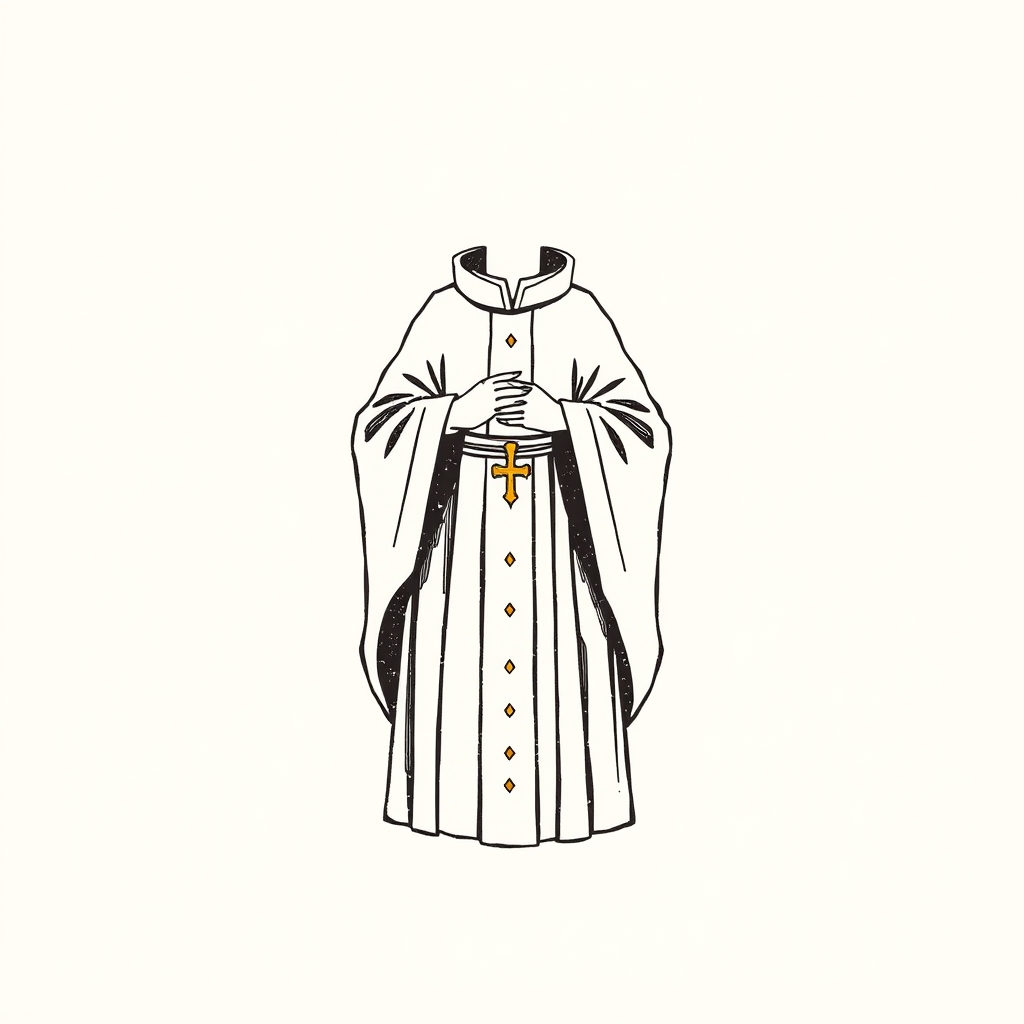
Salvador of Horta has remained in popular devotion the "wonder-worker" par excellence, invoked for the healing of the sick. His heritage is shared between his native Catalonia, where the town of Horta de Sant Joan preserves his memory, and Sardinia, where he died: in Cagliari, the convent of Santa Maria di Gesù preserves the memory of his end, and his tomb was a center of pilgrimage. His figure experienced notable iconographic diffusion in the Hispanic and Italian worlds, where he is represented as a humble lay brother, barefoot, tracing the sign of the cross over the sick. The Order of Friars Minor counts him among its saints and honors him in its own liturgical calendar on April 17. More broadly, Salvador of Horta illustrates the holiness of lay brothers—those religious without clerical office whose hidden life of prayer, manual labor, and charity was held by the Church to be an authentic path to perfection. His late canonization, in 1938, testifies to the persistence of his cult over nearly four centuries.
Iconography
Signs and attributes
Frequently asked questions about Salvador of Horta
Who was Salvador of Horta?
Catalan Franciscan friar (1520-1567), a lay brother famous during his lifetime as a healer, who died in Cagliari and was canonized in 1938 by Pius XI.
What is Salvador of Horta invoked for?
Salvador of Horta is invoked for: la guérison des malades and healing of the sick.
How is Salvador of Horta depicted in Christian art?
In iconography, Salvador of Horta is recognizable by: Franciscan habit and sign of the cross traced over the sick.
Which saints were contemporaries of Salvador of Horta?
Contemporaries include: Blessed John of Jesus-Mary, Ana de Jesús, Venerable Anne of Jesus and Saint Francis de Sales (Bishop and Prince of Geneva).
When did Salvador of Horta die?
Salvador of Horta died around 1567.
What are the other names of Salvador of Horta?
Other forms of the name: Salvatore da Horta, Salvador d'Horta and Salvador Pladevall i Bien.
Who are the relatives of Salvador of Horta?
Relatives of Salvador of Horta: Blasa (Blasia) (sister).
Annexes & related entities
Structured data for exploration: events, miracles, quotes, places, attributes, patronages, and important entities cited in the text.
Key Events
- Era / death: 1567
- Canonized in 1938 by Pius XI
Quotes
-
It is not I who perform the miracles. It is the Lord who works them. I am but a poor sinner.
https://www.santiebeati.it/dettaglio/90312