Eustochia Smeralda Calafato
Saint Eustochia Smeralda Calafato (1434-1485) was an Italian Poor Clare nun, founder of the Montevergine monastery in Messina, and co-patroness of her native city.
Contemporaries

Figures and markers around the normalized period for this entry.
Guided reading
5 reading sections
Biography
Born in Messina in 1434 under the name Smeralda Calafato, she overcame the violent opposition of her family to dedicate her life to God among the Poor Clares of Basicò, where she took the name Eustochia.
Smeralda Calafato was born on March 25, 1434, in Santissima Annunziata, near Messina in Sicily. The daughter of a wealthy merchant, Bernardo Calafato, and Mascalda Romano, she grew up in an affluent environment marked by piety. From a very young age, she manifested a deep desire for religious life. At the age of fifteen, endowed with great beauty, she refused her family's marriage plans to enter the Poor Clares of the monastery of Basicò. Faced with this decision, her brothers violently opposed her vocation, going so far as to threaten to burn the convent if she persisted. Despite these intimidations, she took the habit under the name Eustochia. She spent more than ten years in this monastery, distinguishing herself by her piety, her rigorous fasts, and her long vigils of prayer. She died on January 20, 1485, in Messina, after a life entirely consumed by divine love.
Life and Work
Desirous of living the primitive rule of Saint Clare in all its rigor, Eustochia first founded the convent of Santa Maria Accomandata around 1460 before establishing herself at Montevergine in 1464.
Within the monastery of Basicò, Eustochia felt the need for a stricter fidelity to the original rule of poverty and penance of Saint Clare of Assisi. Believing that discipline had slackened, she conceived the project of founding a new community. With the approval of Pope Callixtus III, she left Basicò around 1460 to first found the convent of Santa Maria Accomandata, thanks to the financial support of her mother and sister. In 1464, after the collapse of the roof of their first building, the community moved to Montevergine, settling in a house donated by Bartolomeo Ansalone. There, she established a rigorous observance, centered on absolute poverty, corporal penance, and constant Eucharistic adoration. Elected abbess, she guided her community with wisdom and humility. Under her spiritual direction, the monastery attracted numerous vocations, numbering up to fifty nuns at the time of her death. Her work of Franciscan reform restored to the contemplative life of Messina all its original fervor and rigor.
Journey toward holiness
Eustochia is distinguished by a deeply mystical spirituality, centered on the Passion of Christ and the Eucharist, offering herself as a victim of love for the salvation of souls.
The spiritual life of Eustochia is deeply rooted in the contemplation of the Passion of Christ and Eucharistic devotion. She spends long hours in adoration before the tabernacle and at the foot of the cross, drawing from them the strength to endure her own physical and moral sufferings. Her quest for conformity to the suffering Christ drives her to practice severe mortifications and prolonged fasts. She is also graced with mystical favors and a reputation for holiness that quickly extends beyond the walls of her monastery. Her unwavering patience in the face of trials, notably the persistent hostility of certain members of her family and the material difficulties of the foundation, testifies to her heroic virtue. Her life, written shortly after her death by her cell companion, Sister Jacopa Pollicino, attests to the profound impact of her holiness on her contemporaries.
Beatification and canonization
Beatified in 1782 by Pope Pius VI, Eustochia Smeralda Calafato was solemnly canonized by John Paul II on June 11, 1988, in Messina, with her feast day set for January 20.
The cult of Eustochia Smeralda Calafato was officially recognized on August 22, 1782, by Pope Pius VI, who proceeded with her beatification. More than two centuries later, following the recognition of a miracle that occurred in 1965 in Messina and was attributed to her intercession, Pope John Paul II proclaimed her a saint on June 11, 1988, during a solemn celebration in her native city of Messina. Her main liturgical feast is set for January 20, the day of her birth into heaven. Her body, miraculously preserved from corruption and remaining intact, is kept in an upright position in the church of the Montevergine monastery. Each year, on August 22, in memory of her beatification, her remains are exposed for public veneration, and the civil authorities of Messina traditionally offer her a gift of wax as a sign of devotion.
Spirituality and heritage
Co-patroness of Messina, Saint Eustochia leaves a living spiritual legacy through the monastery of Montevergine and inspires local art, notably the painter Antonello da Messina.
Saint Eustochia Smeralda Calafato remains a major spiritual figure of Sicily and is honored as co-patroness of the city of Messina. Her legacy is perpetuated through the monastery of Montevergine, which continues to be a place of intense prayer and pilgrimage where the faithful come to venerate her incorrupt body. Beyond her religious posterity, Eustochia left her mark on the cultural history of her region. According to a well-established local artistic tradition, the famous Renaissance painter Antonello da Messina, her contemporary, was inspired by the features of Eustochia to paint the face of the Virgin in his masterpiece, "L'Annunziata". Her spirituality of poverty, humility, and crucified love continues to inspire members of the Franciscan family and the faithful who seek to follow Christ on the path of detachment and contemplation.
Iconography
Signs and attributes
The supernatural in their life
The miracles of Eustochia Smeralda Calafato
Frequently asked questions about Eustochia Smeralda Calafato
Who was Eustochia Smeralda Calafato?
Saint Eustochia Smeralda Calafato (1434-1485) was an Italian Poor Clare nun, founder of the Montevergine monastery in Messina, and co-patroness of her native city.
What is Eustochia Smeralda Calafato the patron saint of?
Patronage of Eustochia Smeralda Calafato: Messine and Messina.
How is Eustochia Smeralda Calafato depicted in Christian art?
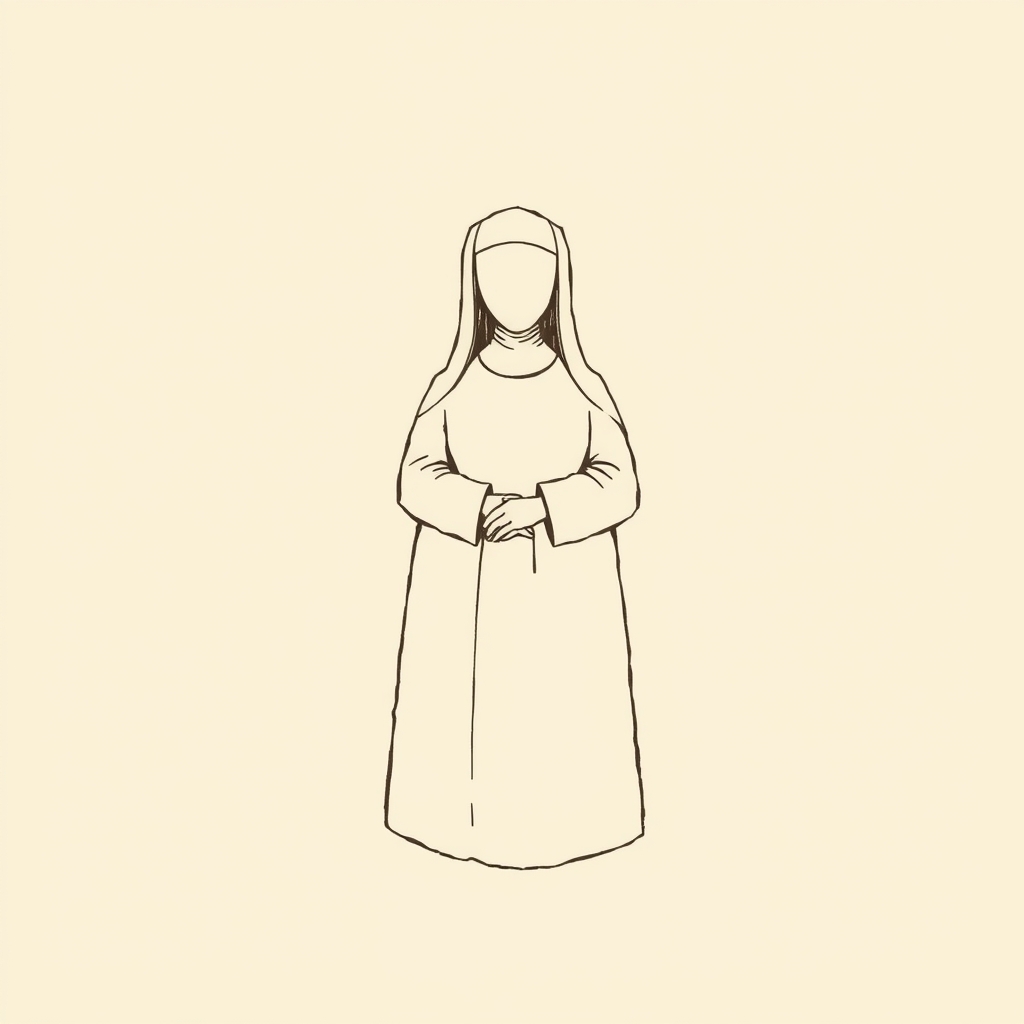
In iconography, Eustochia Smeralda Calafato is recognizable by: Poor Clare habit and cross.
What miracles are attributed to Eustochia Smeralda Calafato?
2 miracles are attributed to this saint, notably: Incorruptibility and Healing.
Which saints were contemporaries of Eustochia Smeralda Calafato?
Contemporaries include: Saint Peregrinus of Auxerre, Saint Philip Neri, Saint Ignatius of Loyola and Saint Colette (Nicole).
When did Eustochia Smeralda Calafato die?
Eustochia Smeralda Calafato died around 1485.
What are the other names of Eustochia Smeralda Calafato?
Other forms of the name: Smeralda Calafato, Eustochia de Messine and Eustochia Smeralda Calafato di Messina.
Who are the relatives of Eustochia Smeralda Calafato?
Relatives of Eustochia Smeralda Calafato: Bernardo Calafato (father) and Mascalda Romano (mother).
Annexes & related entities
Structured data for exploration: events, miracles, quotes, places, attributes, patronages, and important entities cited in the text.
Key Events
- Era / death: 1485
- Canonized in 1988 by John Paul II