Nicola Saggio
An oblate religious of the Order of Minims, Nicola Saggio (1650-1709) distinguished himself by his humility, his charity toward the poor in Rome, and his profound mystical life.
Contemporaries

Figures and markers around the normalized period for this entry.
Guided reading
5 reading sections
Biography
Birth and youth of Giovanni Battista Clemente Saggio in Calabria, and his entry into the Order of Minims under the name Nicola.
Giovanni Battista Clemente Saggio was born on January 6, 1650, in Longobardi, a small village on the Tyrrhenian coast in Calabria. The eldest son of Fulvio Saggio, a humble peasant, and Aurelia Pizzini, a spinner, he grew up in a poor but pious family. Unable to attend school, he began working in the fields at an early age. Demonstrating great piety, he joined the Minims as a tertiary on May 3, 1668, and then entered the novitiate in Paola at the age of twenty, taking the religious name of Nicola.
Life and Work
Brother Nicola's humble service in various convents in Calabria and Rome, and his pilgrimage to Loreto.
On September 29, 1671, Nicola pronounced his solemn vows as an oblate within the Order of Minims. A simple lay brother, he served humbly in several convents in Calabria (Longobardi, San Marco Argentano, Montalto Uffugo, Cosenza, Spezzano, and Paterno) as sacristan, gardener, cook, infirmarian, questor, and porter. In 1681, he was sent to Rome to the convent of San Francesco di Paola ai Monti. In 1683, he made a pilgrimage on foot to Loreto to implore the deliverance of Vienna from the Ottoman siege. Between 1694 and 1697, he supervised the expansion of the church of Longobardi before returning to Rome, becoming a sought-after spiritual advisor.
Path to Holiness
The mystical wisdom, spiritual gifts, and active charity of Brother Nicola until his death in 1709.
Although originally illiterate, Brother Nicola was endowed with profound infused knowledge and mystical gifts (visions of the Holy Trinity, ecstasies, prophecies). His holiness was expressed through his concrete charity, distributing soup to the destitute of Rome and visiting the sick. He offered himself as a victim of expiation for the Church during the pontificate of Clement XI. Stricken with pleurisy, he predicted his death and passed away peacefully in Rome on February 3, 1709, exclaiming: "Paradiso! Paradiso!".
Beatification and canonization
The process of recognizing the holiness of Nicola Saggio, from his beatification in 1786 to his canonization in 2014.
His cause for beatification was introduced as early as 1716. He was beatified on September 17, 1786, by Pope Pius VI. On October 12, 1973, Paul VI proclaimed him patron of Longobardi. His canonization progressed thanks to the recognition of a miracle that occurred in 1938 (the unexplained survival of a mason who fell from a very high scaffolding). The decree was signed by Pope Francis on April 3, 2014, and he was solemnly canonized on November 23, 2014.
Spirituality and legacy
The anchoring of his spirituality in the charism of the Minims and the enduring nature of his cult in Calabria and Rome.
The spirituality of Saint Nicola Saggio is based on absolute humility, joyful penance (vow of Lenten life), and active charity, faithful to the charism of Saint Francis of Paola. His legacy remains alive in Longobardi, of which he is the patron saint, and in Rome. His relics are preserved in Rome and at the sanctuary of Paola. He remains a model of the alliance between mystical contemplation and the humblest daily tasks.
Iconography
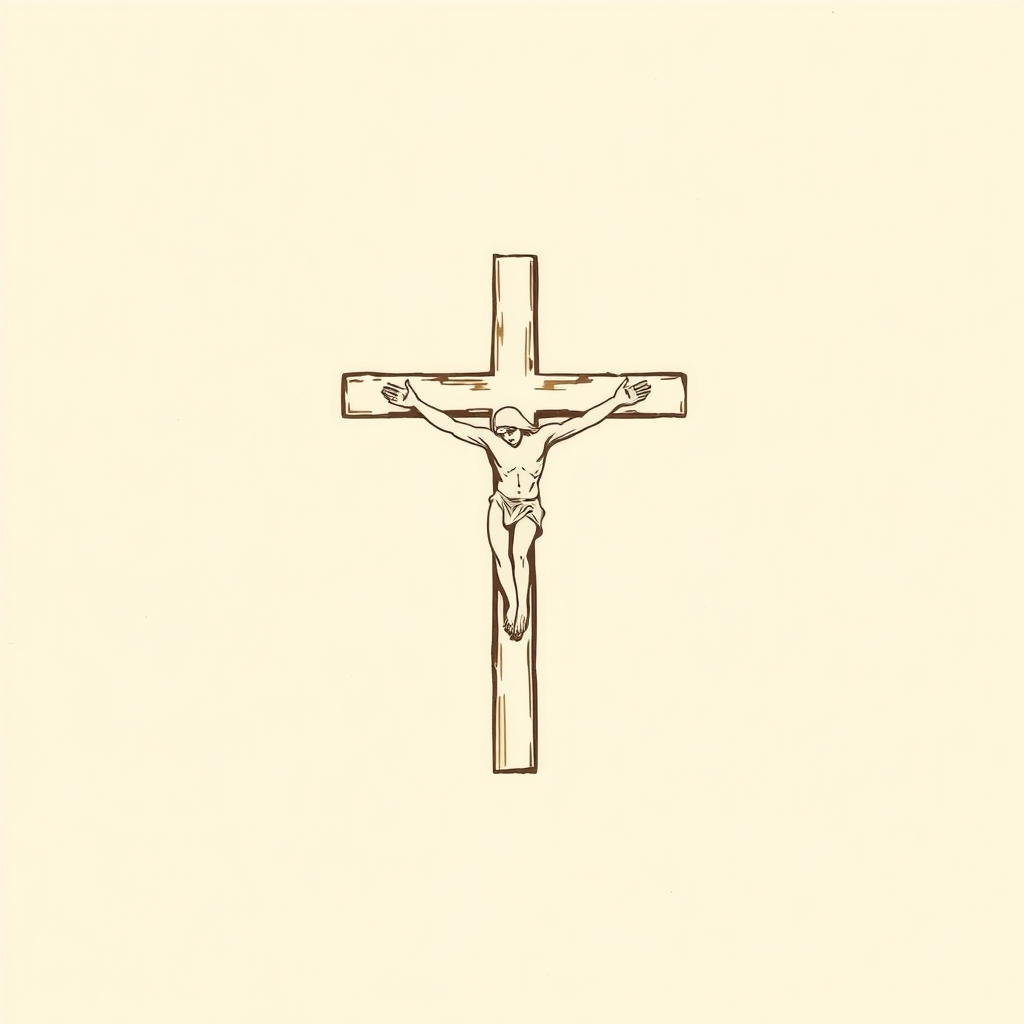
Signs and attributes
The supernatural in their life
The miracles of Nicola Saggio
Frequently asked questions about Nicola Saggio
Who was Nicola Saggio?
An oblate religious of the Order of Minims, Nicola Saggio (1650-1709) distinguished himself by his humility, his charity toward the poor in Rome, and his profound mystical life.
What is Nicola Saggio the patron saint of?
Patronage of Nicola Saggio: Longobardi and Longobardi.
How is Nicola Saggio depicted in Christian art?
In iconography, Nicola Saggio is recognizable by: Crucifix.
What miracles are attributed to Nicola Saggio?
2 miracles are attributed to this saint, notably: Protection / deliverance and Healing.
Which saints were contemporaries of Nicola Saggio?
Contemporaries include: Venerable Agnes of Jesus, Blessed Mary Anne of Jesus, Saint Alphonsus Liguori and Saint Mary Frances of the Five Wounds of Jesus.
When did Nicola Saggio die?
Nicola Saggio died around 1709.
What are the other names of Nicola Saggio?
Other forms of the name: Giovanni Battista Clemente Saggio, Nicola da Longobardi and Nicolas de Longobardi.
Who are the relatives of Nicola Saggio?
Relatives of Nicola Saggio: Fulvio Saggio (father) and Aurelia Pizzini (mother).
Annexes & related entities
Structured data for exploration: events, miracles, quotes, places, attributes, patronages, and important entities cited in the text.
Key Events
- Era / death: 1709
- Canonized in 2014 by Francis
Quotes
-
Paradise! Paradise!
https://vertexaisearch.cloud.google.com/grounding-api-redirect/AUZIYQE4LAfbFoHxG68XLmgc0jQAMzQKbJ7utjktNF4Y7zw_rAwXHRTjrwB6hxEmTUlsUkwmRgikxbtIAx1vyhfuyu-XZuqSPR1iBYcp5L0vnhze6aKExqsR61ikGnXvd3eZYDECfY4e7ASR