Saint Aphrodisius of Béziers
Originally from Egypt, where he is said to have welcomed the Holy Family, Aphrodise became a disciple of Christ and later a companion of the apostles Peter and Paul. As the first bishop of Béziers in the 1st century, he was martyred by beheading in the year 65. Tradition reports that he carried his head to his burial place.
Contemporaries

Figures and markers around the normalized period for this entry.
Guided reading
6 reading sections
S. APHRODISE, FIRST BISHOP OF BÉZIERS, MARTYR (1st century).
Origins and reception of the Holy Family
Originally from Hermopolis in Egypt, Aphrodisius is said to have welcomed the Holy Family during the flight into Egypt before joining Judea.
The church of Béziers, in Languedoc, solemnizes today the martyrdom of Saint Aphrodisi us, its apostle and first bishop. According to the author of the Martyrology of the Saints of France, he was fro m the city of Hermopolis, in Egypt; he had the good fortune to lodge in his home the divine fugitives Jesus, Mary, and Joseph, when they left Bethlehem by an order from heaven, to avoid the fury of Herod.
Disciple and companion of the Apostles
Having become a disciple of Christ, he accompanied Saint Peter on his travels, notably as far as Rome.
Enlightened in that land of darkness by a ray of divine light, he came to Judea at the report of the wonders performed there by Jesus Christ, his former guest; there, joining the Apostles, he was admitted into the number of the disciples of that adorable master; after the resurrection, he attached him self more pa rticularly to Saint Peter, and subsequently accompanied him on a ll his travels, and especially to Rome, when he came there to establish his see, as in the capital and mistress of the universe.
Mission and Episcopate in Béziers
Designated as an auxiliary to Saint Paul, he departed for France with Sergius Paulus and became the first bishop of Béziers to combat idolatry.
Saint Paul also came there: in a conference they held regarding what was most expedient for the glory of God and for the preaching of the Gospel, it was resolved that Saint Paul would go to Spain, and that Saint Peter would remain in Italy; Saint Aphrodisius was given as an auxiliary to Saint Paul. He therefore followed him to France, with Sergius Pa ulus, the proconsul, whom that Apostle to the Gentiles had instructed and baptized on the island of Cyprus, as is reported in the Acts of the Apostles. He was consecrated Bishop of Béziers by one or the other of the two Pauls. Aphrodisius found there consciences corrupted by vice, and the country infected by idolatry. He saw in the cities only the disorders of iniquity, the monuments of superstition. Minds were buried in the thickest darkness, and hearts were plunged into all the irregularities of which our corrupted nature is capable. These obstacles, however, did not make him lose courage; on the contrary, they inflamed his zeal all the more, as they were more difficult to overcome: Aphrodisius began to preach with incredible fervor the name of Jesus Christ, and to rebuke the disordered morals of this people.
The Martyrdom
In the year 65, he was beheaded by idolaters along with his companions Caralippe, Agape, and Eusebius while in the midst of preaching.
The pagans, charmed by these holy discourses, showed both astonishment and satisfaction at the same time, and yielded to the principles of virtue he presented to them. But one day, as this good shepherd, all ablaze with a celestial fire, was distributing the bread of the word of God to his flock, a troop of idolaters, armed with fury and rage, threw themselves into the assembly, seized his person, and finally struck off his head and those of three of his companions, Caralippe, A gape, and E usebi us. This t ook place on the Rue Ciriaque, since called Saint-Jacques, in the year of our Lord 65, on April 28, the first year of his episcopate.
Cephalophory and posterity
According to tradition, the saint carried his head to a chapel; his relics were later honored in a church dedicated to his name.
The same author of the martyrology of the saints of France adds that the body of Saint Aphrodise, rising up by itself, took its severed head in its hands, and that, passing through the middle of the city, he carried it to a small chapel that he had previously consecrated under the title of Saint-Pierre, where he was buried. God has since rendered him illustrious through several miracles; the faithful built a larger church for him, served by canons: his holy relics were solemnly transferred there. This church still exists, says the Proper of Carcassonne of 1855, and the relics of Saint Aphrodise are still venerated there: it was the cathedral of the ancient bishopric of Béziers, before the construction of the church of Saints Nazaire and Celse .
Iconography and Biterrois traditions
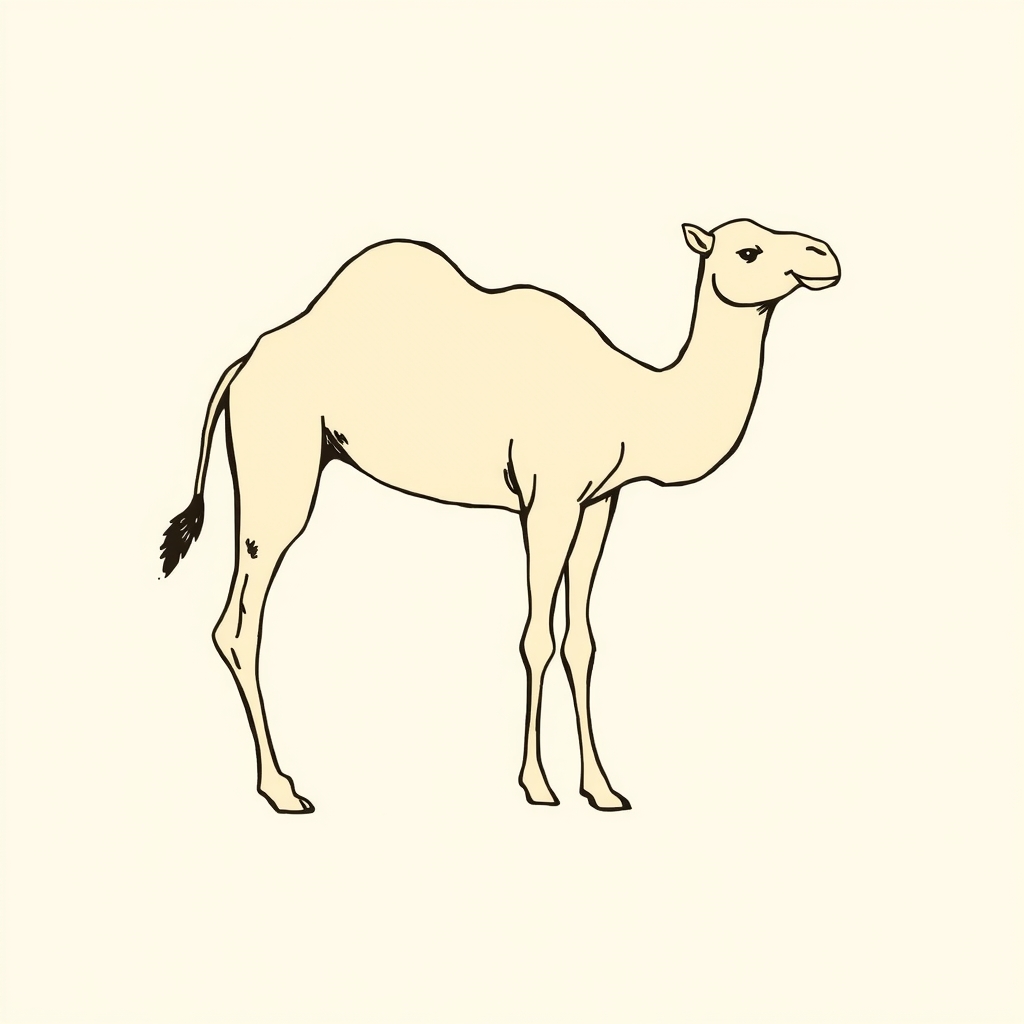
Represented with a camel recalling his African origins, he was the subject of a traditional procession in Béziers until the 18th century.
Saint Aphrodise is represented mounted on a camel, no doubt to recall that he came from Africa. The people of Béziers maintained, until the 18th century, the custom of processing an artificial camel on Ascension Day, in memory of their Apostle who had come from so far away and who was supposed to have been a witness to the Ascension of the Savior.
Iconography
Signs and attributes

Entities
Narrative network
The names, places, and concepts most present in the entry, weighted by centrality in the text.
The supernatural in their life
The miracles of Saint Aphrodisius of Béziers
Frequently asked questions about Saint Aphrodisius of Béziers
Who was Saint Aphrodisius of Béziers?
Originally from Egypt, where he is said to have welcomed the Holy Family, Aphrodise became a disciple of Christ and later a companion of the apostles Peter and Paul. As the first bishop of Béziers in the 1st century, he was martyred by beheading in the year 65. Tradition reports that he carried his head to his burial place.
What is Saint Aphrodisius of Béziers the patron saint of?
Patronage of Saint Aphrodisius of Béziers: Béziers.
How is Saint Aphrodisius of Béziers depicted in Christian art?
In iconography, Saint Aphrodisius of Béziers is recognizable by: camel and head carried in hands (cephalophore).
How did Saint Aphrodisius of Béziers die?
Saint Aphrodisius of Béziers suffered martyrdom for the Christian faith (1st century).
What miracles are attributed to Saint Aphrodisius of Béziers?
2 miracles are attributed to this saint, notably: Sign / wonder.
Which saints were contemporaries of Saint Aphrodisius of Béziers?
Contemporaries include: Saint Martial, Apostle of Aquitaine, Saint James the Greater (Apostle), Saint George of Velay and Jesus Christ (Relics of the Passion).
What are the other names of Saint Aphrodisius of Béziers?
Other forms of the name: Aphrodisius.
Annexes & related entities
Structured data for exploration: events, miracles, quotes, places, attributes, patronages, and important entities cited in the text.
Key Events
- Sheltering of the Holy Family in Hermopolis during the flight into Egypt
- Arrival in Judea and admission among the disciples of Jesus
- Traveling companion of Saint Peter, notably in Rome
- Auxiliary to Saint Paul for the mission in Spain and France
- Consecrated as the first bishop of Béziers
- Beheading by a group of idolaters
- Cephalophory: carries his head to the Saint-Pierre chapel