Felice Tantardini
Felice Tantardini, nicknamed the "Blacksmith of God," was a PIME coadjutor brother who spent nearly 70 years in Burma, combining manual labor and intense prayer in the service of the poorest.
Contemporaries

Figures and markers around the normalized period for this entry.
Guided reading
5 reading sections
Biography
The youth of Felice Tantardini in Italy, his experience of the First World War, and his entry into the PIME.
Felice Tantardini was born on June 28, 1898, in Introbio, in Lombardy (Italy). The sixth of eight children, he grew up in a deeply Christian home. From the age of ten, he worked as an apprentice blacksmith. Mobilized in 1917 during the First World War, he was captured by Austro-Hungarian troops after the defeat of Caporetto. After several transfers to labor camps and a daring escape through Greece, he returned to Italy in 1919. Inspired by reading missionary magazines, he overcame the opposition of those around him and entered the Pontifical Institute for Foreign Missions (PIME) in Milan in 1921 as a cooperator brother. He embarked for Burma in September 1922.
Life and Work
Brother Felice's intense missionary activity in Burma as a builder and blacksmith.
Arriving in Burma in 1922, Brother Felice Tantardini dedicated nearly seventy years of his life to the service of the local populations. Nicknamed the "Blacksmith of God," he placed his exceptional manual skills at the service of the Church. Although he had limited schooling, he proved to be an outstanding builder. He worked successively in several missions: in Toungoo, in Kalaw (where he built a school), in Mandalay, in Loilem (where he made 300 iron beds for a leper colony), in Bhamo under the Japanese occupation, and finally in Taunggyi where he participated in the construction of the cathedral. Versatile, he worked as a blacksmith, carpenter, mason, electrician, and catechist, traveling long distances through the jungle to reach isolated communities.
Journey toward holiness
Brother Felice's reputation for holiness, his spiritual retreat, and his peaceful death in 1991.
Brother Felice Tantardini enjoyed a constant reputation for holiness among Christians, Buddhists, and Muslims, who were drawn by his humility and communicative joy. At the age of 85, he agreed to obey his superiors by ceasing heavy manual labor to devote himself fully to contemplative prayer and welcoming visitors. He passed away peacefully on March 23, 1991, in Taunggyi, at the age of 92. His funeral attracted a vast, multi-faith crowd. He was buried in the garden of the "Infant Jesus of Prague" center for the disabled in Payaphyu, a place that quickly became a center of pilgrimage.
Beatification and canonization
The official process leading to the recognition of the heroic virtues of Felice Tantardini by Pope Francis.
The cause for the beatification of Felice Tantardini was initiated by the PIME in 2000. The Holy See granted the nihil obstat on May 23, 2000, conferring upon him the title of Servant of God. The diocesan inquiry took place in Taunggyi and Milan between 2001 and 2002, and its validity was confirmed by the Congregation for the Causes of Saints in 2005. On June 11, 2019, Pope Francis authorized the promulgation of the decree recognizing the heroic nature of his virtues, officially declaring him Venerable.
Spirituality and legacy
The spirituality of work and prayer, Marian devotion, and the autobiography of the 'Blacksmith of God'.
The spirituality of Felice Tantardini rests on the intimate union of manual labor and prayer, guided by his motto: 'Strive to be happy, always and at all costs, and work to make others happy.' He considered his daily toil at the anvil as a continuous prayer. Deeply Marian, he recited three rosaries a day. He led a life of extreme poverty, sleeping on a straw mat and treating his ailments through fasting. Known for his picturesque attachment to his pipe, he would respond with humor to those who worried about it regarding his canonization. His autobiography, written out of obedience and titled 'Il fabbro di Dio', bears witness to his joyful missionary zeal.
Iconography
Signs and attributes
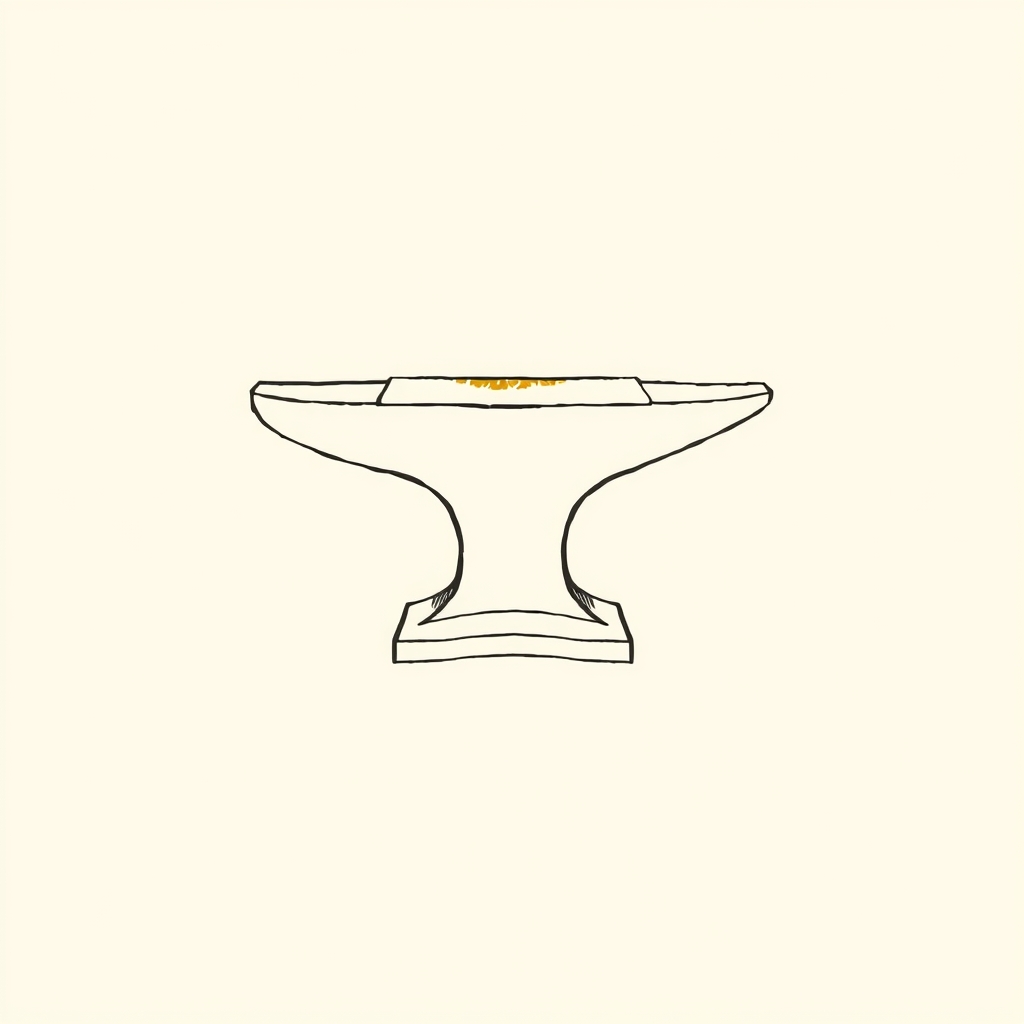
Frequently asked questions about Felice Tantardini
Who was Felice Tantardini?
Felice Tantardini, nicknamed the "Blacksmith of God," was a PIME coadjutor brother who spent nearly 70 years in Burma, combining manual labor and intense prayer in the service of the poorest.
How is Felice Tantardini depicted in Christian art?
In iconography, Felice Tantardini is recognizable by: anvil and pipe.
Which saints were contemporaries of Felice Tantardini?
Contemporaries include: Jesús María Echavarría Aguirre, Pauline of the Agonizing Heart of Jesus, Narcisa de Jesús and Juan de Jesús López y González.
When did Felice Tantardini die?
Felice Tantardini died around 1898.
What are the other names of Felice Tantardini?
Other forms of the name: Fratel Felice.
Who are the relatives of Felice Tantardini?
Relatives of Felice Tantardini: Giovanni Battista Tantardini (father) and Maria Magni (mother).
Annexes & related entities
Structured data for exploration: events, miracles, quotes, places, attributes, patronages, and important entities cited in the text.
Key Events
- Era / death: 1898-1991
- Decree of venerability by Francis
Quotes
-
To strive to be happy, always and at all costs, and to work to make others happy
https://vertexaisearch.cloud.google.com/grounding-api-redirect/AUZIYQGX8rRSrk081ltMsQuWrZooX8-7EIMW-jTAGlt-_pIKtmi64J4iJ5_MgnyTPui6fFEOBVAoVO4FU0YgIDMOLzYpyFjn-yhrMA5RiW-EzjnMfVBHywxVpD-9HM5Ez6SJ5wsI-aYkxe7iVlNK7G5kyC2qVJdEFQ==