Jakov Varingez
A Franciscan lay brother of Croatian origin, Jakov Varingez (c. 1400 - 1496) lived humbly in Bitetto, Italy, dedicating himself to the plague-stricken. His remains have remained incorrupt.
Contemporaries

Figures and markers around the normalized period for this entry.
Guided reading
5 reading sections
Biography
The youth of Jakov Varingez in Zara and his entry into the Order of Friars Minor of the Observance in Bitetto.
The venerable Jakov Varingez (known in Italy as Giacomo da Bitetto or Giacomo Illirico) was born in Zara (today Zadar, Croatia) around the year 1400. His parents, Leonardo Varingez and Beatrice, raised him in a solid Christian faith. According to local tradition, he was baptized in the church of Santa Maria di Porto Salvo under the name of Giacomo (James).
Around the age of 18 to 20, he left his native land for the Apulia region in Italy, traveling in the company of merchants from his city. Upon arriving in Bitetto, he encountered the community of the Friars Minor of the Observance, established at the convent of San Francesco. Attracted by the ideal of Saint Francis of Assisi, he took the Franciscan habit as a lay brother around 1437.
He spent the greater part of his religious life in the Franciscan province of Bari. He resided mainly at the convent of Bitetto until 1463, before staying temporarily in other convents in the region, notably in Bari, in Cassano delle Murge (at the convent of Santa Maria degli Angeli), and in Conversano (at the convent of Santa Maria dell'Isola). Between 1480 and 1483, he returned to Bitetto to dedicate himself to the sick during a plague epidemic. In 1485, he settled permanently in Bitetto, where he passed away on April 27, 1496.
Life and Work
The humble and devoted service of Jakov Varingez as a lay brother and his heroic action during the plague epidemic.
Within the Order of Friars Minor, Jakov Varingez lived a hidden and humble life, assuming the simplest daily tasks. He served successively or simultaneously as cook, gardener, sacristan, porter, and questing friar. His work in the kitchen became for him a place of deep contemplation. Sources report that the sight of the hearth flames awakened in him intense meditations on divine love, frequently plunging him into mystical ecstasies amidst his daily chores. As a questing friar, he walked the streets and knocked on doors to ask for alms. This service became a true apostolate of proximity. In every home, he brought words of comfort, peace, and simple spiritual direction, becoming a brother and confidant to the poorest. His dedication was particularly heroic during the plague epidemic that struck Bitetto between 1480 and 1483. Despite his advanced age, he refused to abandon the population, providing material care and constant spiritual support to those infected.
Path to Holiness
The miracles during his lifetime, the incorruptibility of his remains, and the miraculous protection of Bitetto.
The reputation of Jakov Varingez's holiness spread rapidly during his lifetime, supported by numerous accounts of miracles and extraordinary charisms, such as the gift of prophecy and phenomena of levitation during prayer. Popular piety has also preserved anecdotes testifying to his closeness to nature and animals, such as that of a hare pursued by hunters that found refuge under his habit.
After his death on April 27, 1496, he was buried in the cemetery of the convent of Bitetto. In 1505, nine years later, his body was exhumed and discovered to be totally incorrupt, supple, and intact. Faced with this sign, his remains were placed in an urn exposed to the veneration of the faithful.
In 1619, an event marked the history of his relics: a noble lady of the region (Donna Felice di Sanseverino, Duchess of Gravina) attempted to appropriate a personal relic by detaching a finger from the deceased with her teeth. A violent storm having prevented her from leaving the premises, she saw it as a divine warning, confessed her act, and returned the relic. This finger, kept in a silver reliquary, is still carried in solemn procession every year.
In 1656, while a terrible plague epidemic was ravaging the Kingdom of Naples, the city of Bitetto was miraculously spared. The population attributed this protection to the intercession of Jakov Varingez and chose him as co-patron of the city.
Beatification and canonization
The confirmation of his cult by Clement XI and the recognition of his heroic virtues by Benedict XVI.
The formal canonical process was opened in 1629, then suspended before being relaunched in 1694 under the impetus of the Bishop of Bitetto, Mgr Francesco Onofrio Odierna. At the conclusion of this procedure, Pope Clement XI confirmed his historical cult (ab immemorabili) and solemnly proclaimed him blessed on December 29, 1700. The cause for canonization was officially reopened in 1986, marked by a new medical and canonical recognition of his incorrupt remains. On December 19, 2009, Pope Benedict XVI authorized the Congregation for the Causes of Saints to promulgate the decree recognizing the heroic nature of his virtues, thus conferring upon him the title of venerable within the universal Church.
Spirituality and legacy
The union of contemplation and service, and the 3D facial reconstruction of his remains in 2023.
The spirituality of Jakov Varingez rests on an intimate union between mystical contemplation and active service to the most destitute, perfectly embodying the ideal of life of the Friars Minor. Throughout his life, he nurtured a fervent devotion to the Virgin Mary, whom he chose as his protectress upon entering the convent, as well as to the Passion of Christ.
His legacy remains extremely vibrant in the Bari region and in Croatia. His sanctuary in Bitetto still houses his incorrupt remains, attracting numerous pilgrims. In October 2023, a scientific study conducted by researchers from the Politecnico di Bari enabled the creation of a precise three-dimensional facial reconstruction from his mortal remains, offering the faithful the true historical face of the venerable.
Iconography
Signs and attributes
The supernatural in their life
The miracles of Jakov Varingez
Frequently asked questions about Jakov Varingez
Who was Jakov Varingez?
A Franciscan lay brother of Croatian origin, Jakov Varingez (c. 1400 - 1496) lived humbly in Bitetto, Italy, dedicating himself to the plague-stricken. His remains have remained incorrupt.
What is Jakov Varingez the patron saint of?
Patronage of Jakov Varingez: Bitetto (co-patron) and Bitetto (co-patron).
What is Jakov Varingez invoked for?
Jakov Varingez is invoked for: Protection contre la peste and Protection against the plague.
How is Jakov Varingez depicted in Christian art?
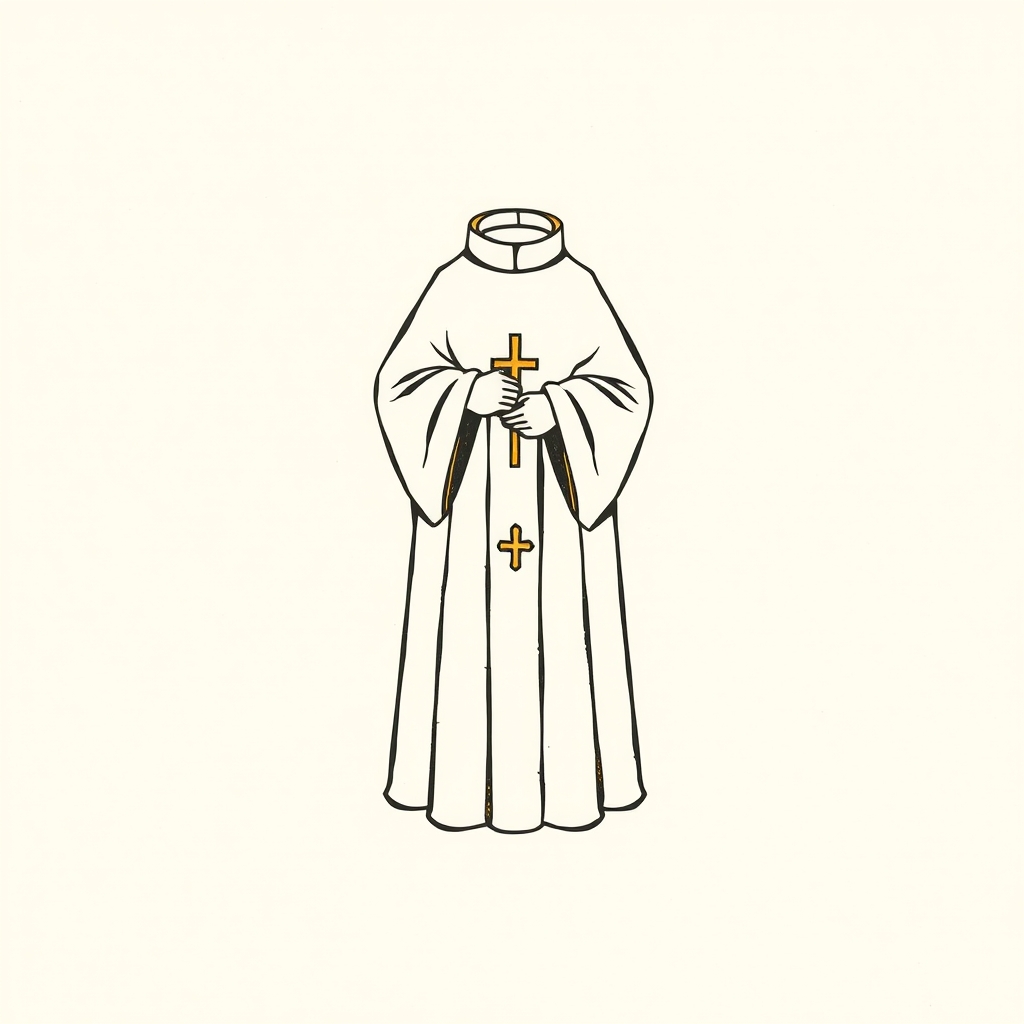
In iconography, Jakov Varingez is recognizable by: Franciscan habit.
What miracles are attributed to Jakov Varingez?
4 miracles are attributed to this saint, notably: Incorruptibility, Protection / deliverance, Levitation / bilocation and Prophecy / infused knowledge.
Which saints were contemporaries of Jakov Varingez?
Contemporaries include: Saint Peregrinus of Auxerre, Saint Philip Neri, Saint Ignatius of Loyola and Saint Colette (Nicole).
When did Jakov Varingez die?
Jakov Varingez died around 1496.
What are the other names of Jakov Varingez?
Other forms of the name: Giacomo da Bitetto, Giacomo Illirico and Jacques.
Who are the relatives of Jakov Varingez?
Relatives of Jakov Varingez: Leonardo Varingez (father) and Beatrice (mother).
Annexes & related entities
Structured data for exploration: events, miracles, quotes, places, attributes, patronages, and important entities cited in the text.
Key Events
- Period / death: 1400-1496
- Decree of venerability by Benedict XVI