Saint Simeon and Saint Anna the Prophetess
Simeon, a righteous man of Jerusalem, and Anna the prophetess welcome the Child Jesus during his presentation at the Temple. Simeon pronounces the Nunc Dimittis and prophesies the sufferings of Mary, while Anna, a widow devoted to the service of God, proclaims the redemption of Israel.
Contemporaries

Figures and markers around the normalized period for this entry.
Guided reading
5 reading sections
THE HOLY ELDER SIMEON AND THE PROPHETESS ANNA
The Presentation at the Temple and the prophecy of Simeon
In accordance with the law of Moses, Mary and Joseph present Jesus at the Temple of Jerusalem where the elder Simeon, inspired by the Holy Spirit, recognizes the expected Savior in the child.
(circa 1 AD).
"When the time of the Purification, prescribed by the law of Moses, had arrived," writes the Evangelist Saint Luke, "Mary and Joseph brought the child to Jerusalem to present him to the Lord, according to what is written in the book of the Law: 'Every firstborn son shall be the holy property of Jehovah,' and to offer the legal sacrifice of two turtledoves or two young pigeons. Now, there was in Jerusalem a just and God-fearing man named Simeon; he lived in expectation of the consolation promised to Israel. The Holy Spirit rested upon him and had revealed to him that he would not die before having seen the Christ of the Lord. Led by divine inspiration, he came to the Temple, at the hour when the parents of Jesus were entering to perform the legal ceremonies. Simeon took the child in his arms and blessed God in these terms: 'Now, Lord, you will let your servant depart in peace, according to your word; for my eyes have beheld the Savior, whom you have prepared for all the peoples of the world; the light that must enlighten the nations, the glory of Israel our people.' Joseph and Mary admired in silence the words of the elder. Simeon blessed them and said to Mary, the mother of Jesus: 'Behold, this child, established for the ruin and resurrection of many in Israel, shall appear as a sign of contradiction. A sword shall pierce your own soul. It shall be so, that the thoughts hidden in the depths of hearts may be brought to light.'
The testimony of Anna the prophetess
Anna, an eighty-four-year-old widow devoted to the service of the Temple, arrives during the presentation and testifies to the redemption of Israel brought by the child.
At that same time lived Anna, the prophetess , daughter of Phanuel, of the tribe of Asher. She had lived many days. In her youth, having lost her husband after seven years of marriage, she had remained in widowhood: she was then eighty-four years old. She never left the Temple, serving God, night and day, in fasting and prayer. Anna, having therefore arrived at this moment, praised the Lord herself and spoke of the child to all those who were awaiting the redemption of Israel.
Translation of relics and funerary traditions
The relics of Simeon are said to have traveled from Judea to Constantinople and then to Venice, while various traditions locate his tomb in Jerusalem or on the Mount of Olives.
It is claimed that the relics o f Saint Sime on were transported from Judea t o Constantinop le during the time of Theodosius the Younger (408-450) or under subsequent reigns, and that they were seen there in the 8th century in a church of Saint James the Less, from where they were a lleged ly transferred to Venice in 1200. For a long time, a monument was shown to pilgrims in the Valley of Josaphat, near Jerusalem, which was claimed to be the tomb of this holy old man; nevertheless, in the time of Saint Gregory of Tours (559-593), the general opinion held that he had been buried on the Mount of Olives, with the priest Zechariah, father of Saint John the Baptist, by the apo stle Saint James the Less, in a tomb that he had had made for himself. One of the arms of the holy old man has been for several yea rs in P érigord, at Ligueux (Dordogne, arrondissement of Périgueux, canton of Savignac), which was before the Revolution a large Benedictine monastery (B. M. de Ligurio).
Evolution of the liturgical feast
The celebration of Saint Simeon varied according to eras and regions before being fixed on October 8 in the Roman Martyrology.
The feast of Saint Simeon was celebrated on different days. In the East, it was usually held on February 2 or 3. The oldest martyrologies of the Western Church mark it on January 5; others place it on February 2 or 4; some on the 9th of the same month. Ado and Usuard placed it on October 8 without us knowing the reason: they were followed by Baronius in his Roman Martyrology.
Representation and patronage
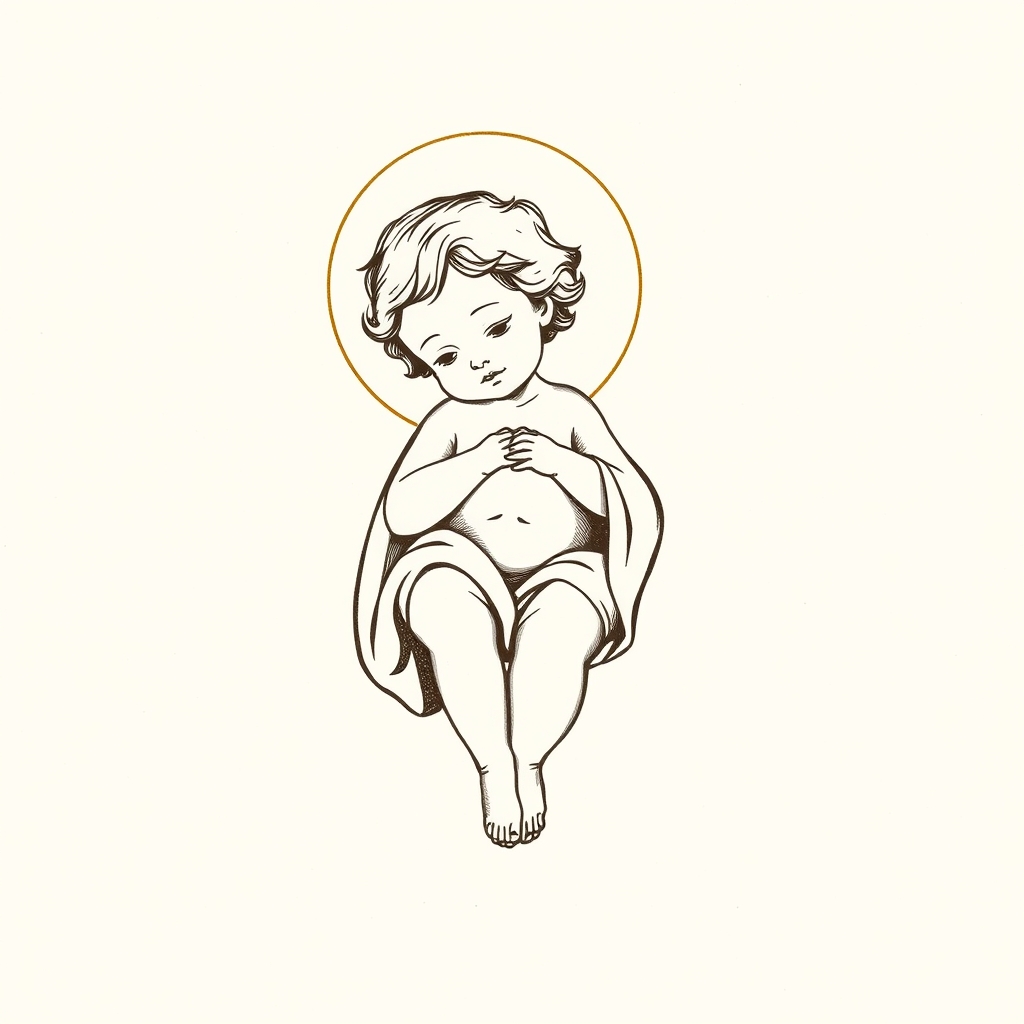
Saint Simeon is traditionally depicted carrying the Child Jesus and is honored as the patron saint of the city of Zara in Dalmatia.
Saint Simeon is depicted holding the Child Jesus in his arms. He is the patron sa int of Zara, in Dalmatia.
Abbé Darras, General History of the Catholic Church; Ballist; Local notes.
Iconography
Signs and attributes
Entities
Narrative network
The names, places, and concepts most present in the entry, weighted by centrality in the text.
The supernatural in their life
The miracles of Saint Simeon and Saint Anna the Prophetess
Frequently asked questions about Saint Simeon and Saint Anna the Prophetess
Who was Saint Simeon and Saint Anna the Prophetess?
Simeon, a righteous man of Jerusalem, and Anna the prophetess welcome the Child Jesus during his presentation at the Temple. Simeon pronounces the Nunc Dimittis and prophesies the sufferings of Mary, while Anna, a widow devoted to the service of God, proclaims the redemption of Israel.
What is Saint Simeon and Saint Anna the Prophetess the patron saint of?
Patronage of Saint Simeon and Saint Anna the Prophetess: Zadar (Dalmatia).
How is Saint Simeon and Saint Anna the Prophetess depicted in Christian art?
In iconography, Saint Simeon and Saint Anna the Prophetess is recognizable by: Child Jesus in his arms.
What miracles are attributed to Saint Simeon and Saint Anna the Prophetess?
1 miracle are attributed to this saint, notably: Prophecy / infused knowledge and Vision / apparition.
Which saints were contemporaries of Saint Simeon and Saint Anna the Prophetess?
Contemporaries include: Saint Martial, Apostle of Aquitaine, Saint James the Greater (Apostle), Saint George of Velay and Jesus Christ (Relics of the Passion).
When did Saint Simeon and Saint Anna the Prophetess die?
Saint Simeon and Saint Anna the Prophetess died around 1.
What are the other names of Saint Simeon and Saint Anna the Prophetess?
Other forms of the name: Siméon and Anne.
Who are the relatives of Saint Simeon and Saint Anna the Prophetess?
Relatives of Saint Simeon and Saint Anna the Prophetess: Phanuel (father of Anne).
Annexes & related entities
Structured data for exploration: events, miracles, quotes, places, attributes, patronages, and important entities cited in the text.
Key Events
- Presentation of Jesus at the Temple
- Simeon receives the Child Jesus in his arms
- Simeon's prophecy to Mary regarding the sword of sorrow
- Testimony of Anna the Prophetess at the Temple
- Translation of relics to Constantinople under Theodosius the Younger
- Transfer of relics to Venice in 1200
Quotes
-
Now, Lord, you will let your servant depart in peace, according to your word; for my eyes have seen the Savior.
Saint Luke -
Behold, this child is set for the fall and rising again of many in Israel; and for a sign which shall be spoken against.
Saint Luke