Thérèse of Lisieux
A French Carmelite who died at 24, Thérèse of Lisieux taught the "little way" of spiritual childhood. Canonized in 1925, she is a patron saint of missions and a Doctor of the Church.
Contemporaries

Figures and markers around the normalized period for this entry.
Guided reading
5 reading sections
Biography
Born in Alençon in 1873 into the pious Martin family, Thérèse entered the Carmel of Lisieux at fifteen and died there of tuberculosis in 1897, at the age of twenty-four.
Marie-Françoise-Thérèse Martin was born on January 2, 1873, in Alençon (Orne), the last of nine children—four of whom died in infancy—of Louis Martin, a watchmaker, and Zélie Guérin, a lace-maker. The death of her mother, taken by breast cancer on August 28, 1877, deeply marked the child, who was only four and a half years old; the family then moved to Lisieux. Four of her sisters would embrace religious life, three of them preceding her to the Carmel of Lisieux. Sensitive and fragile, Thérèse experienced a "Christmas grace" in 1886 which, according to her writings, freed her from her scruples. Determined to enter the Carmel at a very young age, she participated in a pilgrimage to Rome in 1887 and, during an audience, dared to ask Pope Leo XIII for permission to enter despite her age. She was finally admitted and entered the Carmel of Lisieux on April 9, 1888, at the age of fifteen, taking the name Sister Thérèse of the Child Jesus and of the Holy Face. After nine years of hidden religious life, she died of tuberculosis on September 30, 1897, at the age of twenty-four.
Life and Work
Her main work, Story of a Soul, sets forth the "little way" of spiritual childhood, a path of trust and abandonment to the mercy of God.
Thérèse's influence rests almost entirely on her writings, composed in obedience to her superiors and published after her death. The autobiographical manuscripts (designated A, B, and C), collected and published in 1898 under the title Story of a Soul, achieved extraordinary worldwide distribution. In them, Thérèse formulates her "little way," also called the way of spiritual childhood: conscious of her smallness and her inability to climb "the steep staircase of perfection," she chooses to let herself be carried, like a child, in the arms of God, through trust and love rather than through great works. At the heart of this spirituality is her discovery of "love" as her specific vocation within the Church: "my vocation is Love!" Her doctrine, accessible to all, makes abandonment, humility, and trust the ordinary means of holiness. In addition to her autobiographical writings are letters, poems, "pious recreations," and the words collected during her final months, which extend and clarify this message.
Journey toward holiness
Lived in the obscurity of the cloister, her holiness rests on the virtues of trust, humility, and love, exercised in the ordinary acts of daily life.
Thérèse's holiness was not manifested by any brilliant deeds during her lifetime: it was accomplished in the obscurity of the cloister, through fidelity to small things done out of love. Her spiritual doctrine favors trust and abandonment to divine mercy rather than fear: "It is trust and nothing but trust that must lead us to Love." She insists on the idea that Jesus "does not look so much at the greatness of actions, or even their difficulty, as at the love with which one does them." In her final months, tested by illness and a night of faith, she offered her life to the merciful Love of God. The proclamation of Thérèse as a Doctor of the Church in 1997 confirmed the doctrinal scope of this teaching: John Paul II highlighted the "convergence between doctrine and experience" that characterizes her "science of love." Her reputation for holiness spread as soon as the Story of a Soul was published, accompanied by countless graces attributed to her intercession, which hastened the opening of her cause.
Beatification and canonization
Beatified in 1923 and canonized in 1925 by Pius XI on the basis of four recognized healings, Thérèse was proclaimed a Doctor of the Church by John Paul II in 1997.
The cause of Thérèse progressed with remarkable speed, carried by her popular renown. She was beatified on April 29, 1923, by Pope Pius XI, who saw in her the "star of his pontificate." The beatification was based on two healings recognized as miraculous: that of Sister Louise of Saint-Germain, suffering from a stomach ulcer, and that of Father Charles Anne, struck by pulmonary tuberculosis. Two new miraculous healings—those of Sister Gabrielle Trimusi, suffering from tuberculosis, and Maria Pellemans, cured of pulmonary tuberculosis at the tomb of Thérèse—approved by decree on March 19, 1925, opened the way to canonization, celebrated on May 17, 1925, at Saint Peter's in Rome before an immense crowd. On October 19, 1997, Pope John Paul II proclaimed her a Doctor of the Church through the apostolic letter Divini Amoris Scientia, making her the third woman to receive this title. Her liturgical feast is set for October 1.
Spirituality and legacy
Patroness of the missions and secondary patroness of France, Thérèse remains one of the most popular saints, venerated in Lisieux, where her basilica attracts numerous pilgrims.
The legacy of Thérèse has experienced an uncommon global reach. On December 14, 1927, Pius XI proclaimed her patroness of the missions, equal to Saint Francis Xavier, in recognition of her missionary desire expressed in the promise to "spend her heaven doing good upon earth." In 1944, Pius XII declared her secondary patroness of France, alongside Saint Joan of Arc whom she admired. Her "little way" has profoundly influenced the spirituality of the 20th century and continues to inspire the faithful and pastors alike. Thérèse's own family has been recognized by the Church: her parents, Louis and Zélie Martin, were canonized together by Pope Francis on October 18, 2015, the first spouses to be canonized as a couple. The center of the Thérèsian cult remains Lisieux, where the Basilica of Saint Thérèse, one of the largest churches built in the 20th century, and the Carmel attract numerous pilgrims each year. Her relics have been carried on pilgrimage throughout the world, testifying to the vitality of her devotion.
Iconography
Signs and attributes
The supernatural in their life
The miracles of Thérèse of Lisieux
Frequently asked questions about Thérèse of Lisieux
Who was Thérèse of Lisieux?
A French Carmelite who died at 24, Thérèse of Lisieux taught the "little way" of spiritual childhood. Canonized in 1925, she is a patron saint of missions and a Doctor of the Church.
What is Thérèse of Lisieux the patron saint of?
Patronage of Thérèse of Lisieux: Patronne des missions (depuis 1927), Patroness of the missions (since 1927), Patronne secondaire de la France (depuis 1944), Secondary patroness of France (since 1944), Patronne de la Russie, Patroness of Russia, Patronne des aviateurs et des fleuristes and Patron saint of aviators and florists.
What is Thérèse of Lisieux invoked for?
Thérèse of Lisieux is invoked for: les missions et l'évangelisation, missions and evangelization, les malades, en particulier les tuberculeux, the sick, particularly those with tuberculosis, la confiance et l'abandon à Dieu and trust and abandonment to God.
How is Thérèse of Lisieux depicted in Christian art?
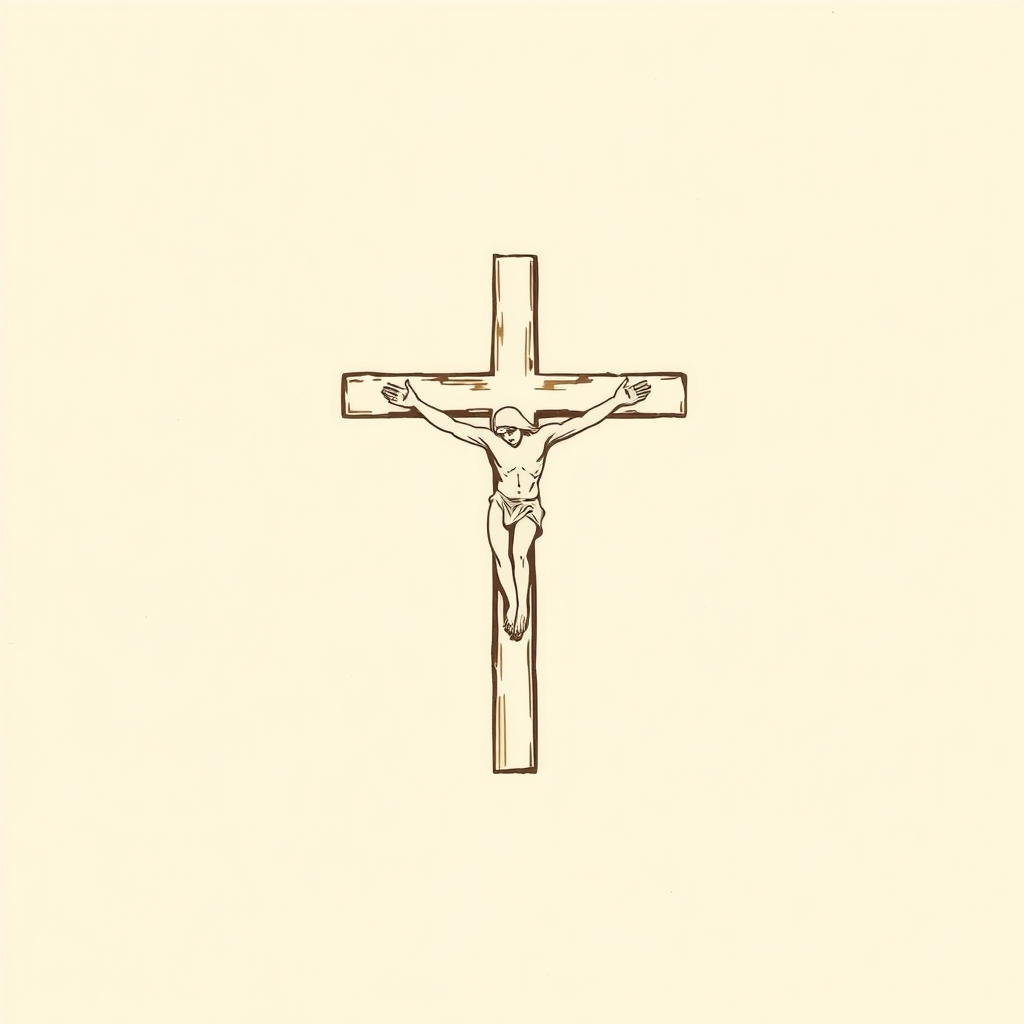
In iconography, Thérèse of Lisieux is recognizable by: Carmelite habit (brown habit and white mantle), crucifix, roses (and shower of roses / petals) and arms laden with roses surrounding the cross.
What miracles are attributed to Thérèse of Lisieux?
4 miracles are attributed to this saint, notably: Healing.
Which saints were contemporaries of Thérèse of Lisieux?
Contemporaries include: Jesús María Echavarría Aguirre, Pauline of the Agonizing Heart of Jesus, Narcisa de Jesús and Juan de Jesús López y González.
When did Thérèse of Lisieux die?
Thérèse of Lisieux died around 1897.
What are the other names of Thérèse of Lisieux?
Other forms of the name: Thérèse de l'Enfant-Jésus et de la Sainte-Face, Thérèse Martin, Sainte Thérèse de l'Enfant-Jésus, Thérèse of the Child Jesus, Teresa di Lisieux, Teresa de Lisieux and Teresa del Niño Jesús.
Who are the relatives of Thérèse of Lisieux?
Relatives of Thérèse of Lisieux: Louis Martin (father, watchmaker, canonized in 2015), Zélie Martin (née Guérin) (mother, lacemaker, canonized in 2015), Marie Martin (sœur Marie du Sacré-Cœur) (older sister, Carmelite in Lisieux), Pauline Martin (mère Agnès de Jésus) (sister, Carmelite and prioress of Lisieux, her "little mother"), Léonie Martin (sœur Françoise-Thérèse) (sister, Visitandine in Caen) and Céline Martin (sœur Geneviève de la Sainte-Face) (sister, Carmelite in Lisieux).
Annexes & related entities
Structured data for exploration: events, miracles, quotes, places, attributes, patronages, and important entities cited in the text.
Key Events
- Era / death: 1897
- Canonized in 1925 by Pius XI
Quotes
-
My vocation is Love!
Thérèse of Lisieux, Manuscript B (Story of a Soul) -
It is trust and trust alone that must lead us to Love.
Thérèse of Lisieux, Letter 197 (to Sister Marie of the Sacred Heart) -
I want to spend my heaven doing good upon the earth.
Thérèse of Lisieux, Last Conversations (Derniers Entretiens, July 1897) -
After my death, I will let fall a shower of roses.
Thérèse of Lisieux, words recorded by her sisters (Last Conversations) -
The good God does not look so much at the greatness of actions, or even their difficulty, as at the love with which they are done.
Thérèse of Lisieux, Letter 65