François de Laval
First bishop of Quebec and founder of the Quebec Seminary, François de Laval (1623-1708) organized the Catholic Church in New France. He was canonized by equipollent canonization in 2014.
Contemporaries

Figures and markers around the normalized period for this entry.
Guided reading
5 reading sections
Biography
Descending from the great house of Montmorency, François de Laval was born in France in 1623, received a Jesuit education, and became a priest before being sent to New France.
François de Laval was born on April 30, 1623, in Montigny-sur-Avre, in Normandy (in the current department of Eure-et-Loir), and was baptized François-Xavier de Montmorency-Laval. He belonged to one of the most illustrious families in France: his father, Hugues de Laval, was related to the house of Montmorency, and his mother, Michelle de Péricard, came from a lineage of Crown officers in Normandy. Destined for the Church at an early age, he entered the Jesuit college of La Flèche around 1631, where he pursued ten years of literary and philosophical studies, then studied theology at the Collège de Clermont in Paris. Provided with a canonry at the Évreux Cathedral from childhood thanks to his uncle François de Péricard, he was ordained a priest on May 1, 1647, and subsequently served as the archdeacon of Évreux, administering a vast territory of parishes. After a period of retreat and communal life at the Hermitage of Caen, he was chosen to evangelize the distant colony of New France. Consecrated bishop on December 8, 1658, at the Abbey of Saint-Germain-des-Prés, he traveled to Canada and died in Quebec on May 6, 1708, after a long life devoted to the organization of the Church in the New World.
Life and Work
The first bishop of Quebec, Laval founded the Seminary of Quebec and built the organization of the Catholic Church across the vast territory of New France.
Appointed Vicar Apostolic of New France with the title of bishop in partibus of Petraea, François de Laval arrived in Quebec on June 16, 1659. He found a Church in its infancy, scattered over a territory extending from Acadia to the Great Lakes and the Mississippi basin. His masterpiece was the foundation, by ordinance on March 26, 1663, of the Seminary of Quebec, intended to train and support the secular clergy of the colony; it would be attached to the Seminary of Foreign Missions in Paris. Laval also established the tithe system there and erected the first canonical parish of Quebec. After long negotiations between Rome, Paris, and the colonial authorities, the diocese of Quebec was canonically erected by the bulls of October 1674, and Laval became its first titular bishop. Concerned for the moral dignity of the indigenous populations, he waged a tenacious battle against the trade of brandy exchanged for furs, going so far as to excommunicate the traffickers, which brought him into conflict with civil authorities, notably Governor Frontenac. Exhausted by nearly thirty years of apostolate, he resigned his office in 1688 and retired to the seminary he had founded.
Journey Toward Holiness
Renowned for his austerity, his charity toward the poor, and his pastoral zeal, Laval leaves the image of a bishop detached from the goods of this world.
Contemporary testimonies agree in describing François de Laval as a bishop of great austerity of life and a profound spirit of poverty. Although born into the opulence of a noble family, he lived in destitution, shared the lot of the most humble, and devoted his income to the support of the clergy, to education, and to the relief of the needy. His firmness of character, sometimes judged intransigent by his adversaries, was coupled with an intense devotion, nourished by a deep life of prayer and mortification. His solicitude for the indigenous peoples and his resolute opposition to the brandy trade reflected a demanding pastoral conscience, attentive to the salvation of the souls entrusted to his care. Retired to the Seminary of Quebec after his resignation, he continued to exercise a discreet ministry, multiplying acts of penance and service. Upon his death in 1708, a spontaneous popular veneration immediately surrounded his remains, a sign of the reputation for holiness that had already accompanied him during his lifetime. This renown, sustained by the memory of the Canadian Church, would be at the origin of the long process that would lead to his beatification and then to his canonization.
Beatification and canonization
Beatified in 1980 by John Paul II, François de Laval was inscribed in the catalogue of saints in 2014 by Pope Francis, by means of an equipollent canonization.
The canonization process for François de Laval, opened long ago in Canada, first led to his beatification: he was proclaimed blessed by Pope John Paul II on June 22, 1980, in Rome, at the same time as other figures of the evangelization of the New World. His canonization was subsequently decided by Pope Francis according to the procedure known as equipollent (or equivalent) canonization, which dispenses with the recognition of an additional miracle when an ancient cult, a reputation for holiness, and constant virtues are established. Pope Francis thus inscribed him among the saints on April 3, 2014, jointly with Marie de l'Incarnation. A thanksgiving mass was celebrated at St. Peter's Basilica in Rome on October 12, 2014, during the festivities marking the 350th anniversary of the erection of the Notre-Dame de Québec parish. The liturgical feast of Saint François de Laval is set for May 6, the anniversary of his death. The Roman Martyrology recalls his memory in Quebec, emphasizing that he established his episcopal see there and worked for nearly fifty years to strengthen and develop the Church in this region of North America.
Spirituality and Heritage
Considered the father of the Church in Canada, François de Laval left his name to the Séminaire de Québec, Université Laval, and the city of Laval.
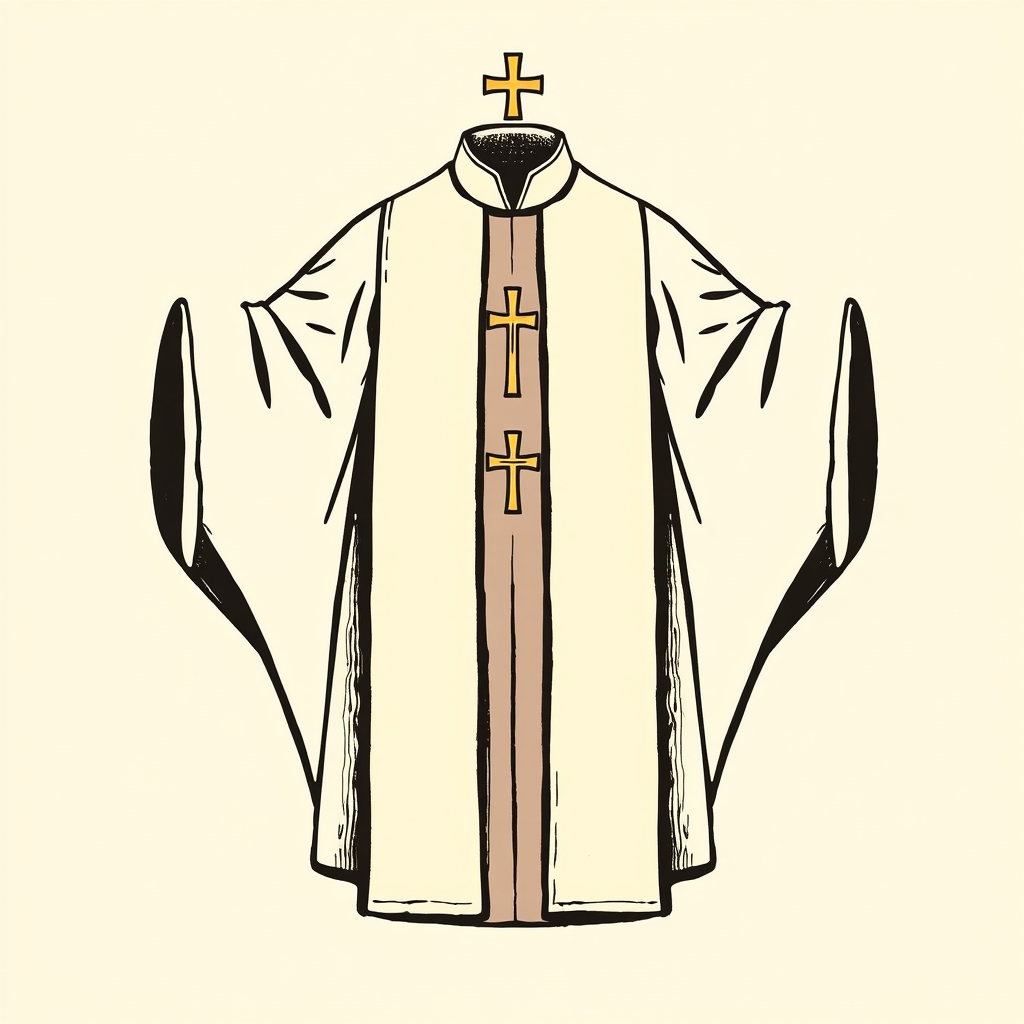
François de Laval is honored as the founder and father of the Catholic Church in Canada. The institution he created, the Séminaire de Québec, remains at the heart of the ecclesial and intellectual life of the province: it is from this establishment that Université Laval emerged in 1852, the first French-language university in North America, which bears his name. The city of Laval, north of Montreal, also owes its name to him. His relics are venerated at the Cathedral-Basilica of Notre-Dame de Québec, where a chapel is dedicated to him, and the François-De Laval animation center maintains his memory and the pilgrimage of the faithful there. Recognized as the patron of the bishops of Canada, he is represented in iconography in episcopal vestments. His work with Indigenous populations and his fight against the abuses of the brandy trade have left a lasting mark on the religious history of New France. The figure of Laval continues to be celebrated by the Archdiocese of Quebec as that of a visionary pastor, both an organizer of the nascent Church and a witness of concrete charity toward the most destitute.
Iconography
Signs and attributes
Frequently asked questions about François de Laval
Who was François de Laval?
First bishop of Quebec and founder of the Quebec Seminary, François de Laval (1623-1708) organized the Catholic Church in New France. He was canonized by equipollent canonization in 2014.
What is François de Laval the patron saint of?
Patronage of François de Laval: Évêques du Canada and Bishops of Canada.
How is François de Laval depicted in Christian art?
In iconography, François de Laval is recognizable by: Episcopal vestments.
Which saints were contemporaries of François de Laval?
Contemporaries include: Venerable Agnes of Jesus, Blessed Mary Anne of Jesus, Saint Alphonsus Liguori and Saint Mary Frances of the Five Wounds of Jesus.
When did François de Laval die?
François de Laval died around 1708.
What are the other names of François de Laval?
Other forms of the name: François-Xavier de Montmorency-Laval, François de Montmorency-Laval and François de Montmorency Laval.
Who are the relatives of François de Laval?
Relatives of François de Laval: Hugues de Laval (father) and Michelle de Péricard (mother).
Annexes & related entities
Structured data for exploration: events, miracles, quotes, places, attributes, patronages, and important entities cited in the text.
Key Events
- Era / death: 1708
- Canonized in 2014 by Francis