Crispin of Viterbo
Italian Capuchin friar and questor, famous for his joy, humility, and Marian devotion, canonized in 1982.
Contemporaries

Figures and markers around the normalized period for this entry.
Guided reading
5 reading sections
Biography
Birth of Pietro Fioretti in Viterbo, his childhood, his apprenticeship as a shoemaker, and his entry into the Capuchins under the name of Brother Crispin.
Pietro Fioretti, known by his religious name Crispin of Viterbo (or Crispino da Viterbo), was born on November 13, 1668, in Viterbo, in the Lazio region of Italy. Coming from a family of humble artisans, he was the son of Ubaldo Fioretti and Marzia Antoni. His father died while he was still a young child. It was his paternal uncle, Francesco, a shoemaker by trade, who took care of him. He sent him to study at the primary school run by the Jesuits, then welcomed him as an apprentice in his shoemaking workshop. Pietro worked there until the age of 25. From his childhood, his mother instilled in him a fervent devotion to the Virgin Mary, whom she presented to him as his "true Mother." His religious vocation awakened when he saw Capuchin novices passing by during a procession. After carefully studying the Rule of Saint Francis, he decided to enter the Order of Friars Minor Capuchin. On July 22, 1693, he received the habit of a lay brother at the convent of La Palanzana, near Viterbo, and took the name of Brother Crispin, in honor of the patron saint of shoemakers. He pronounced his solemn vows the following year, on July 22, 1694.
Life and Work
The journey of Brother Crispin in various convents and his ministry as a questing brother in Orvieto.
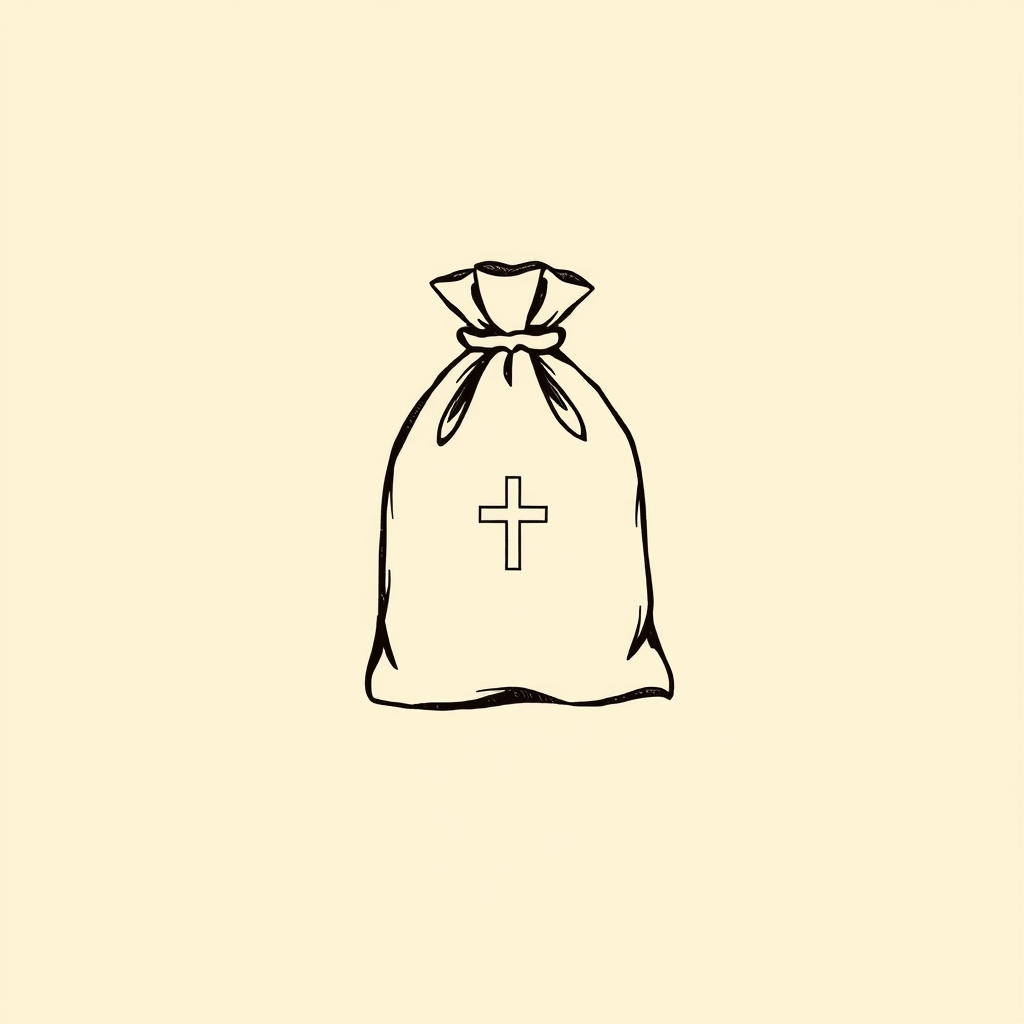
After his religious profession, Brother Crispin was sent to various convents in the Roman province: Tolfa (1694-1697), Rome (a few months in 1697), Albano (1697-1703), Monterotondo (1703-1709), and Orvieto (1709-1750), where he spent nearly forty years, with the exception of brief stays in Bassano Romano (late 1715) and Rome (1744). Within these communities, he performed the simplest tasks with joy and humility: cook, infirmarian, and above all, gardener (ortolano). Starting in January 1710, in Orvieto, his superiors entrusted him with the role of questing brother (questore). For four decades, he traveled daily through the city and the surrounding countryside to beg for the sustenance of his convent. This ministry of begging became for him a true pulpit for popular evangelization. Always bareheaded, with a satchel over his shoulder, he distributed words of comfort, spiritual advice, and maxims of Christian wisdom to the peasants, the poor, and the sick. His communicative joy, his humor, and his inexhaustible charity made him extremely popular. People of all conditions, including bishops, nobles, and Pope Clement XI himself, sought his company and his wise counsel.
Journey to Holiness
The heroic virtues, obedience, humility, and miracles of Brother Crispin until his death in Rome.
The life of Brother Crispin is marked by heroic virtues and extraordinary deeds that deeply impressed his contemporaries. He distinguished himself by absolute obedience to his superiors. During an epidemic that struck one of his friaries, his superior asked him if he would agree to care for his brothers at the risk of his own life. Crispin replied with this famous phrase: "I left my will in Viterbo when I entered the Capuchins." He cared for and healed all the sick without ever contracting the illness himself. Possessing deep humility, he loved to call himself "the donkey of the Capuchins." When passing through a crowd, he would exclaim with humor: "Come now, my children, make way for the donkey of the Capuchins!" If he was insulted to test his patience, he would respond joyfully: "God be praised! I am being treated here as I deserve." His charity was also expressed through his attention to the most vulnerable: he would take in abandoned newborns to bring them to hospitals and provided material assistance to families in need. His absolute trust in Divine Providence and his filial devotion to the Virgin Mary (whom he affectionately called "My Lady Mother") supported his numerous miracles and healings, which he always attributed to the intercession of the Mother of God. Exhausted by fatigue and age, he was transferred to Rome where he died holily on May 19, 1750, at the age of 81.
Beatification and canonization
The process of recognizing his holiness, from his beatification in 1806 to his historic canonization in 1982 by John Paul II.
The reputation for holiness of Brother Crispin is such that the process for his canonization opens quickly after his death, on September 16, 1761, under the pontificate of Clement XIII. He was declared venerable on July 7, 1796, by Pope Pius VI (Pius VII was only elected pope in 1800). He was beatified on September 7, 1806, by Pope Pius VII in St. Peter's Basilica in Rome. He was canonized on June 20, 1982, by Pope John Paul II in St. Peter's Basilica. This canonization holds a historic character, as it is the very first one celebrated by John Paul II during his long pontificate. His body, preserved from corruption, rests today under an altar dedicated to him in the church of Santa Maria della Concezione dei Cappuccini (Our Lady of the Conception of the Capuchins), located on the Via Veneto in Rome.
Spirituality and legacy
The Franciscan spirituality of joy, poverty, and trust in Providence of Saint Crispin.
The spirituality of Saint Crispin of Viterbo is fully rooted in the Franciscan tradition of perfect joy, evangelical poverty, and contemplation in the heart of the world. Nicknamed the "joyful saint" or the "saint of the street," he knew how to make theology accessible to the humblest through simple and striking maxims. He frequently repeated to those he met: "The power of God creates us, wisdom governs us, mercy saves us." To encourage those burdened by material difficulties, he would remind them: "Divine Providence thinks of us much more than we do ourselves." He summarized the path to Salvation as follows: "If you want to save your soul, love everyone, speak well of everyone, and do good to everyone." His legacy remains alive, particularly in Italy and within the Capuchin family, as a model of ordinary holiness lived out in daily service, good humor, and confident abandonment into the hands of God.
Iconography
Signs and attributes
The supernatural in their life
The miracles of Crispin of Viterbo
Frequently asked questions about Crispin of Viterbo
Who was Crispin of Viterbo?
Italian Capuchin friar and questor, famous for his joy, humility, and Marian devotion, canonized in 1982.
What is Crispin of Viterbo invoked for?
Crispin of Viterbo is invoked for: Guérison des malades and Healing of the sick.
How is Crispin of Viterbo depicted in Christian art?
In iconography, Crispin of Viterbo is recognizable by: Satchel and Bareheaded.
What miracles are attributed to Crispin of Viterbo?
2 miracles are attributed to this saint, notably: Healing and Protection / deliverance.
Which saints were contemporaries of Crispin of Viterbo?
Contemporaries include: Venerable Agnes of Jesus, Blessed Mary Anne of Jesus, Saint Alphonsus Liguori and Saint Mary Frances of the Five Wounds of Jesus.
When did Crispin of Viterbo die?
Crispin of Viterbo died around 1750.
What are the other names of Crispin of Viterbo?
Other forms of the name: Pietro Fioretti and Crispino da Viterbo.
Who are the relatives of Crispin of Viterbo?
Relatives of Crispin of Viterbo: Ubaldo Fioretti (father), Marzia Antoni (mother) and Francesco (paternal uncle).
Annexes & related entities
Structured data for exploration: events, miracles, quotes, places, attributes, patronages, and important entities cited in the text.
Key Events
- Era / death: 1668
- Canonized in 1982 by John Paul II
Quotes
-
I left my will in Viterbo, upon entering the Capuchins
https://vertexaisearch.cloud.google.com/grounding-api-redirect/AUZIYQHpCadEPwrBIGUz5SYY-CboDK6apSxu_EBRgcpgshn9xHe6POJLBmIPobMWsl4BgkyMLTu7J8AFqbCOZKHA_APXiF3xLqi4Tdt_IQ7IFQ3KIOemNM3sSduZBSc1CEoNgnZl3Ibh87Y= -
Come on, my children, make way for the Capuchin's donkey!
https://vertexaisearch.cloud.google.com/grounding-api-redirect/AUZIYQEokzur2v5SApN7jSg1bkoiTVxEXESBgXzDhr03Oqfp2xUtRqeyDMZLlE57QGJtQ9vBjN-4GoRG-GGprSs799InrcTpfOrROJrkidZ2QFUiwKLW8sbL2bcpNzkX-uyNLLSA98wbA6XeqIIboPqFTbhT_EnHF1rQTfpK1RmBxoPCtl9l8AFkiBP3hKFB0-_CWLgW7QQNE6uNJXxUosj2K7RwoBmDLGQZgmDDxjNaNRjn5xPgxHlLqamTo7nUs-tMKe4= -
God be praised! They treat me here as I deserve.
https://vertexaisearch.cloud.google.com/grounding-api-redirect/AUZIYQFTadOEIlfnwB_P_8pktmnFL3YIRRX_XVa6E7L_0tb0pAIUuewcwzb_XiJdN68tzPz_-01s8FhNT-UyJvDOcmjbpa1HVkstKtxmygsft-P_BJaaD7dHbK0ZXHQvlmTDM0CDC1m42n_AasTFThOk8Oexw4iBsWDnhp4J0Ye0yvFVaniwADbx9ygSxJkHq30c -
The power of God creates us, wisdom governs us, mercy saves us.
https://vertexaisearch.cloud.google.com/grounding-api-redirect/AUZIYQG8TS5Xj_uBIJlZYs2ud7Rr195rQNFmSf6AHqIKgOpCP5OCfIoNvx3lungpIME9Csp89xrRcqbcYMWLa9I7mH6BZ3Cj-aoJlMtVMELDt3lfhJGPckXCqVViX0XwRYHt-58= -
Divine Providence thinks of us much more than we do ourselves.
https://vertexaisearch.cloud.google.com/grounding-api-redirect/AUZIYQFVF25AY5RGtL9dJPD0kXqt2rK04g-Re4N0qso1uUqECKf6atz_IDPu6ckvLfyrVi4ZlstJKdsNgfRLYXf9R2bD96Zlfk84YyBtNWng-Q8q-ZHErW08h7bkMk7AhT6bGHS2UNNPUnW0rLHWhReb05GHBHRSM7w8z_TOKhk3HCR3EpXb09YgmtqRHbhIwBzj8XuG0-QRX4MltRa_PhEpGMxE1iWqIoIQrS_bDxFyA3KCskgQ_DAA3HD1Hijg8fkwkGl0PA== -
If you want to save your soul, love everyone, speak well of everyone, and do good to everyone.
https://vertexaisearch.cloud.google.com/grounding-api-redirect/AUZIYQF4ixQJCS7QvGS_bQcdSxZo6pzv8f4GaOntwTJaaVHiSD8YUCf3iJR1xh4-5Q23_XZrJGpsQyUMmGiOTVYWI3GM1bd5_sY1oljPYGOj9gG5fZ_iMUcM6ZBvGSvN-pr5bahfshDdr8EFNGl8X7e1ExPabaE6NOoVlbmf4q_CmCQIm7PgtIMmAN1c