Osanna of Kotor
Born Orthodox in Montenegro, Osanna of Kotor converted to Catholicism and lived for over forty years as a Dominican recluse. Known for her mystical visions, spiritual counsel, and role as a peacemaker, she is the first saint of the South Slavic countries.
Contemporaries

Figures and markers around the normalized period for this entry.
Guided reading
5 reading sections
Biography
Birth of Ozana of Kotor in Montenegro, her childhood as an Orthodox shepherdess, and her conversion to Catholicism in Kotor.
Blessed Ozana of Kotor (also known as Osanna of Cattaro, Hosanna of Kotor, or by her Orthodox baptismal name Jovana-Joše Đujović, later Katarina Kosić) was born on November 25, 1493, in the village of Relezi, located in the Lješanska nahija region, within the Principality of Zeta (in present-day Montenegro). Coming from a humble family of Orthodox Christians, she spent her childhood as a shepherdess in the mountains. During these long hours of solitude, she developed a deep life of contemplative prayer and experienced mystical visions, notably of the Child Jesus and the crucified Christ.
After the death of her father Pero, when she was 14 years old (around 1507), she convinced her mother to let her leave for the coastal city of Kotor (Cattaro), then under the rule of the Republic of Venice. She entered there as a servant in the household of a wealthy Catholic family, that of Aleksandar Buća (a city councilor and judge) and his wife Marina Bizanti. It was in this home that she was introduced to the Catholic faith. Touched by grace, she officially converted to Catholicism and received baptism under the name Katarina (Catherine).
Life and Work
Having entered the Dominican Third Order, her life as a walled-in recluse and her role as a spiritual advisor and mediator of peace in Kotor.
On Good Friday in the year 1513, while in the Cathedral of Saint Tryphon in Kotor, Katarina was deeply moved by the contemplation of the Passion of Christ. She then made the decision to dedicate her life entirely to prayer, penance, and works of charity.
On January 25, 1515, the feast day of the Conversion of Saint Paul, she formally joined the Third Order of Saint Dominic (Order of Penance of Saint Dominic). She took her vows of poverty, chastity, and obedience, and chose the religious name of Ozana (or Osanna), in honor of Blessed Osanna of Mantua (a famous Dominican tertiary who died in 1505).
Ozana chose to live as a recluse (anchorite), walled into a small cell. She first spent seven years in a cell attached to the chapel of Saint Bartholomew. After an earthquake destroyed her cell, she moved in 1521 to a new hermitage attached to the church of Saint Paul in Kotor. She would spend the rest of her life there, more than forty years, in a tiny cell with two small openings: one facing the sanctuary to allow her to attend services and receive communion, the other facing outward to receive food and communicate with the faithful.
Despite her absolute withdrawal from the world, Ozana quickly became an essential spiritual figure for the inhabitants of Kotor. Nicknamed the "mistress of mysticism" or the "trumpet of the Holy Spirit," she received numerous visitors, both clergy and laity, who came to seek her spiritual advice and request her prayers. She also distinguished herself by her skill in embroidering corporals (some of which are still preserved in the Cathedral of Kotor) and distributed all of her income to the poor. She played an active role as a mediator, working for the reconciliation of rival families in the city, which earned her the titles of "Angel of Peace" and "Reconciling Virgin."
Path to Holiness
Charisms, prophecies, and a decisive role during the siege of Kotor by Admiral Barbarossa in 1539.
The life of Ozana is marked by extraordinary charisms, prophecies, and miraculous intercessions. She is said to have predicted the earthquake that struck Kotor in 1563. Her prayers are also credited with having preserved the city from a plague epidemic.
The most famous event of her intercession occurred in August 1539, when the Ottoman admiral Hayreddin Barbarossa besieged Kotor with a fleet of 70 galleys and 30,000 soldiers. Faced with the terror of the inhabitants, the Bishop of Kotor, Luca Bisanti, personally asked Ozana to encourage the population. Her inspiring words and the assurance she gave of a divine victory restored courage to the defenders. Men, women, and children took up arms to defend the ramparts. On August 16, 1539, Barbarossa was forced to lift the siege and retreat. In memory of this deliverance, a new fortified gate (the North Gate) was erected on the Škurda River in 1540.
Ozana passed away holily on April 27, 1565, in Kotor, at the age of 71, after fifty years of reclusion and rigorous penance. On her deathbed, she received the last sacraments from her confessor, Father Thomas Basco, while the account of the Passion of Christ according to the Gospel of John was read to her.
Beatification and canonization
Posthumous devotion, transfer of her incorrupt relics, and confirmation of her cult by Pope Pius XI.
From the moment of her death, Ozana's reputation for holiness spread widely, not only in Montenegro but also in Italy, France, Spain, and Germany, propagated notably by the Dominican Order. Her body, which remained perfectly incorrupt, was initially kept in the Church of Saint Paul. In 1807, when Napoleonic troops transformed the Church of Saint Paul into a barracks and warehouse, her relics were transferred to the Collegiate Church of Saint Mary (today also called the Church of Blessed Ozana) in Kotor.
The formal process of beatification opened in Kotor in 1905 and concluded successfully in Rome. On December 21, 1927, Pope Pius XI officially confirmed her immemorial cult (equivalent to a beatification by confirmation of cult). She was formally beatified in 1934 by the same sovereign pontiff. She is the first woman from Montenegro and the South Slavic countries to be raised to the honors of the altar by the Catholic Church.
In 1930, during the transfer of her relics into a new bronze and glass sarcophagus created by the famous Croatian sculptor Antun Augustinčić, doctors noted that her body was still incorrupt and flexible, with her hands and nails being perfectly preserved.
Spirituality and legacy
Spirituality centered on the Passion of Christ, ecumenical veneration, and co-patronage of the city of Kotor.
The spirituality of Blessed Ozana is deeply rooted in the contemplation of the Passion of Christ and the imitation of his poverty. Her life as a Dominican recluse combined extreme solitude with an intense spiritual apostolate for souls.
Born into Orthodoxy and converted to Catholicism, Ozana is today venerated by both Catholics and Orthodox in the region. She is considered a pioneer and a patron of ecumenism and Christian unity. During the confirmation of her cult in 1927, Pope Pius XI explicitly emphasized the importance of her intercession for the rapprochement between the Churches of the East and the West.
She is the co-patron of the city and diocese of Kotor, alongside Saint Tryphon. The collegiate church of Saint Mary, which houses her glass reliquary, possesses remarkable bronze doors created in 1989 by the artist Vasko Lipovac, adorned with 24 bas-reliefs retracing the significant episodes of her life.
Iconography
Signs and attributes
Frequently asked questions about Osanna of Kotor
Who was Osanna of Kotor?
Born Orthodox in Montenegro, Osanna of Kotor converted to Catholicism and lived for over forty years as a Dominican recluse. Known for her mystical visions, spiritual counsel, and role as a peacemaker, she is the first saint of the South Slavic countries.
What is Osanna of Kotor the patron saint of?
Patronage of Osanna of Kotor: Kotor, Kotor, Diocèse de Kotor, Diocese of Kotor, Œcuménisme, Ecumenism, Unité des chrétiens and Christian unity.
What is Osanna of Kotor invoked for?
Osanna of Kotor is invoked for: La paix, Peace, La réconciliation des familles, Reconciliation of families, La protection contre les épidémies, Protection against epidemics, La protection contre les séismes and Protection against earthquakes.
How is Osanna of Kotor depicted in Christian art?
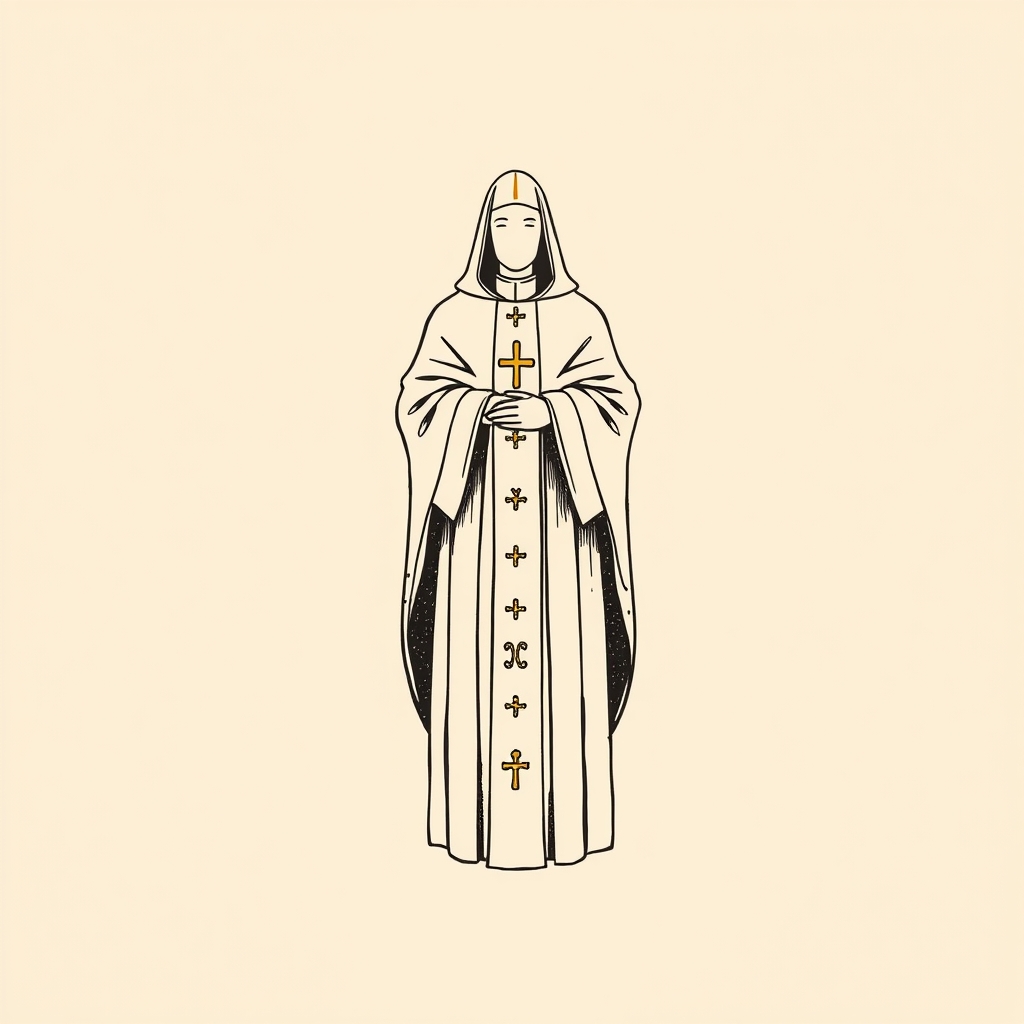
In iconography, Osanna of Kotor is recognizable by: Dominican tertiary habit, Rosary and Embroidery.
Which saints were contemporaries of Osanna of Kotor?
Contemporaries include: Blessed John of Jesus-Mary, Ana de Jesús, Venerable Anne of Jesus and Saint Francis de Sales (Bishop and Prince of Geneva).
When did Osanna of Kotor die?
Osanna of Kotor died around 1565.
What are the other names of Osanna of Kotor?
Other forms of the name: Osanna de Cattaro, Hosanna de Kotor, Jovana-Joše Đujović, Katarina Kosić and Ozana Kotorska.
Who are the relatives of Osanna of Kotor?
Relatives of Osanna of Kotor: Pero (father).
Annexes & related entities
Structured data for exploration: events, miracles, quotes, places, attributes, patronages, and important entities cited in the text.
Key Events
- Era / death: 1565
- Beatification in 1927 by Pius XI