Anthony of St. Ann Galvão
An 18th-century Brazilian Franciscan friar, Anthony of St. Ann Galvão founded the Recolhimento de Nossa Senhora da Luz in São Paulo and became the first saint born in Brazil in 2007.
Contemporaries

Figures and markers around the normalized period for this entry.
Guided reading
5 reading sections
Biography
Anthony of St. Ann Galvão was born in 1739 in Guaratinguetá, Brazil, into a devout family, and died in São Paulo on December 23, 1822, after a life entirely dedicated to God and the poor.
Antônio Galvão de França was born on May 13, 1739, in Guaratinguetá, in the captaincy of São Paulo, within the Viceroyalty of Brazil. He was the fourth of ten children from a family of high social standing: his father, Antônio Galvão de França, was captain of the town and a Franciscan tertiary; his mother, Isabel Leite de Barros, was a descendant of the famous bandeirante explorer Fernão Dias Pais. Renowned for her charity, she died prematurely in 1755 at the age of thirty-eight. At thirteen, Anthony was sent to the Colégio de Belém, a Jesuit institution in Cachoeira, Bahia, to pursue his humanities. The suppression of the Society of Jesus in Portugal and its colonies, under the policies of the Marquis of Pombal, directed him toward the Franciscan Order. In 1756, he entered as a novice at the Convent of Saint Bonaventure in Vila de Macacu, in Rio de Janeiro, where he took the religious name of Anthony of St. Ann, in honor of the family's devotion to Saint Anne. He made his solemn profession on April 16, 1761, and was ordained a priest on July 11, 1762. Assigned to the Convent of Saint Francis in São Paulo, he exercised his ministry there from then on until the end of his long life. He passed away on December 23, 1822, at the age of eighty-three, at the Recolhimento de Nossa Senhora da Luz which he had founded, and was buried there according to the wishes of the nuns.
Life and Work
At the heart of the work of Anthony of St. Ann Galvão lies the foundation of the Recolhimento de Nossa Senhora da Luz in São Paulo, a community of consecrated women whom he spiritually accompanied for half a century.
Upon his arrival in São Paulo, Anthony Galvão distinguished himself by his exceptional pastoral zeal. Appointed preacher, confessor, and porter of the Convent of St. Francis in 1768, he also dedicated himself to the spiritual direction of the nuns of the Recolhimento of St. Teresa between 1769 and 1770. It was during this ministry that he met Sister Helena Maria da Espírito Santo, with whom he collaborated to found, on February 2, 1774, the community of Recolhimento de Nossa Senhora da Conceição da Divina Providência, the future Recolhimento de Nossa Senhora da Luz. Upon the death of Sister Helena Maria, he assumed sole spiritual direction for more than a quarter of a century, overseeing the construction of the conventual church inaugurated on August 15, 1802. In 1811, he also founded a convent of Poor Clares in Sorocaba. He drafted constitutions and statutes to guide the spiritual life of these communities. Alongside these foundations, Anthony Galvão exercised a ministry of confessor and spiritual director of considerable reach: the faithful came from all regions of Brazil to submit their sorrows to him and seek counsel. He is also famous for his "pílulas" (paper pills): small rolls of rice paper on which was inscribed in Latin the Marian verse "Post partum Virgo permansisti : O Mater Dei, pro nobis intercede," which he prescribed to the sick or to women in difficult labor. This practice of popular piety continues at the sanctuary of São Paulo, where some three hundred faithful request them every day.
Journey toward holiness
Anthony Galvão's reputation for holiness rested on an intense interior life, tireless charity, and a deep devotion to the Eucharist and the Immaculate Conception.
His contemporaries recognized very early in Anthony Galvão a man of intense prayer and heroic charity. Benedict XVI, in his canonization homily on May 11, 2007, described him as a wise and prudent guide of souls, sought out to hear confessions with zeal, wisdom, and prudence, reconciling hearts with God and bringing peace to souls and families. His spiritual life was centered around two fundamental devotions: perpetual Eucharistic adoration, which he sought to establish in his community in the manner of a laus perennis, and the veneration of the Immaculate Conception, to the point of proclaiming himself a "perpetual son and slave of the Immaculate Conception." His mother had bequeathed to him this ideal of radical charity, she who had distributed her clothes to the poor before dying. Anthony perpetuated this legacy by welcoming the sick, the poor, and sinners with the same paternal kindness. Extraordinary phenomena were attributed to him during his lifetime—levitation, bilocation, the gift of prescience—but it was above all his constancy in humble daily service that formed the foundation of his reputation for holiness. The conversion of sinners was, according to the testimonies of his contemporaries, the great passion of his life.
Beatification and canonization
Anthony of St. Ann Galvão was beatified on October 25, 1998, by John Paul II and later canonized on May 11, 2007, by Benedict XVI in São Paulo, becoming the first saint born in Brazil.
The instruction for the cause of beatification and canonization was opened in 1938. On March 8, 1997, John Paul II declared him venerable. On October 25, 1998, at the conclusion of a ceremony in Rome, the same pope proclaimed him blessed: he thus became the first Brazilian born in Brazil to be beatified. The miracle accepted for the beatification concerned little Daniella Cristina da Silva, then four years old, who was healed in 1990 of fulminant type A hepatitis when doctors had deemed her case hopeless, following the use of the venerable's pílulas and a fervent novena. The second miracle, accepted for the canonization, occurred in favor of Sandra Grossi de Almeida, who suffered from a uterine malformation that prevented her from carrying a pregnancy beyond the fourth month; after using the pílulas, she gave birth on December 11, 1999, to a son, Enzo, whose initially critical health recovered unexpectedly. This miracle was recognized by pontifical decree on December 16, 2006. The canonization took place on May 11, 2007, during the apostolic visit of Benedict XVI to Brazil: the mass celebrated at the Campo de Marte in São Paulo gathered some eight hundred thousand faithful and constituted the first canonization performed by this pontiff outside the Vatican. His liturgical memorial is set for October 25, the anniversary of his beatification, a date inscribed in the proper calendar of Brazil.
Spirituality and Legacy
Venerated as the protector of women in labor and the sick, Anthony Galvão leaves a living legacy through the Santuário Frei Galvão in São Paulo and the tradition of the pílulas da fé.
The figure of Anthony of St. Ann Galvão occupies a unique place in Brazilian Catholicism: as the first saint born on Brazilian soil, he embodies the rooting of a Church that knew how to embrace popular devotions without separating them from a solid sacramental life. The Recolhimento de Nossa Senhora da Luz, which he founded in São Paulo, became the Mosteiro da Luz: the left wing of the building has housed the Museum of Sacred Art of São Paulo since 1970, while the Conceptionist nuns remain there in enclosure. The complex was classified as a national historical monument by the SPHAN (now IPHAN) in 1943, as one of the rare 18th-century colonial buildings preserved in São Paulo. The Frei Galvão sanctuary, also in São Paulo, remains a highly frequented place of pilgrimage: every day, the pílulas da fé—those small paper pills inherited from his pastoral practice—are given to hundreds of faithful who ingest them as a sign of trust in the Virgin Mary. He is notably invoked by pregnant women and people suffering from serious illnesses. His Franciscan example—evangelical poverty, boundless charity, humble spiritual direction—continues to inspire the Franciscans of Brazil and, more broadly, a lively popular devotion throughout the country. During the 2013 World Youth Day, celebrated in Rio de Janeiro, his figure was highlighted as a model of Brazilian faith for young Catholics from all over the world.
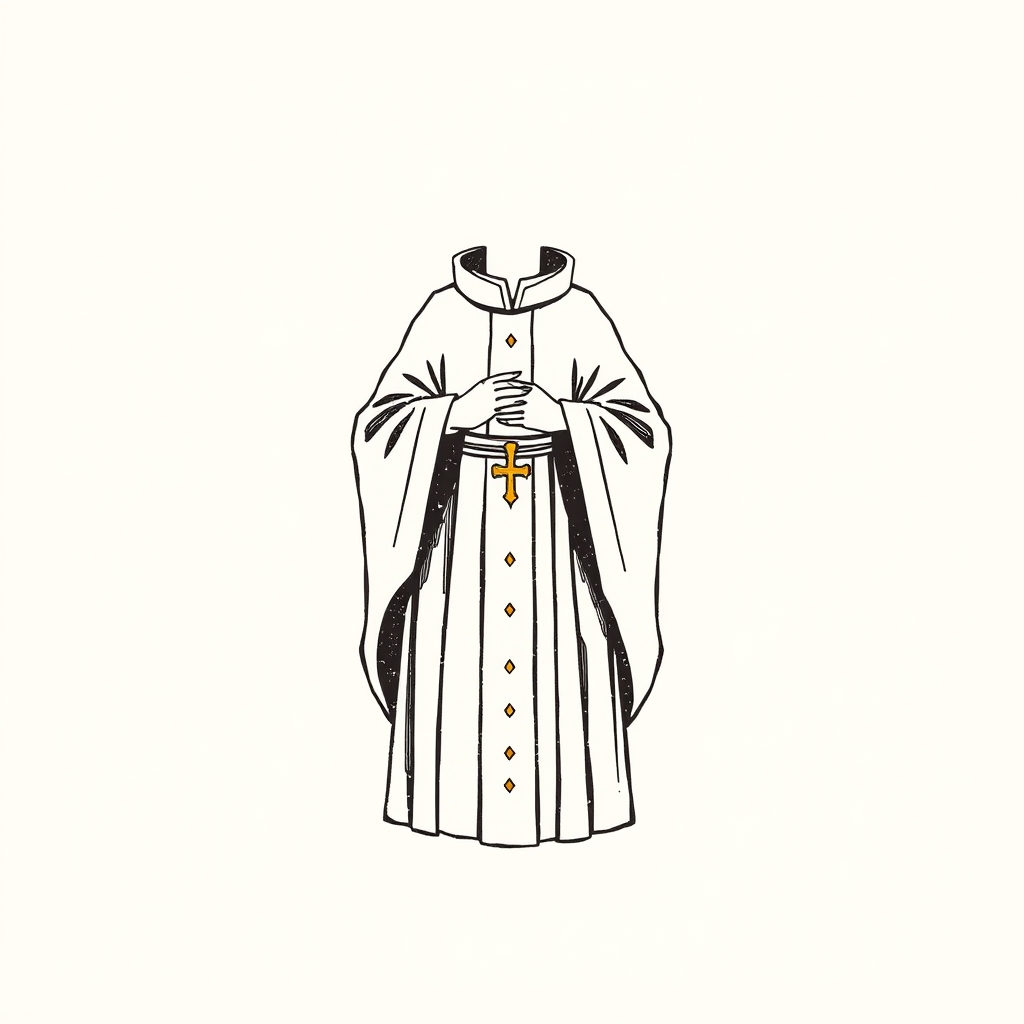
Iconography
Signs and attributes
The supernatural in their life
The miracles of Anthony of St. Ann Galvão
Frequently asked questions about Anthony of St. Ann Galvão
Who was Anthony of St. Ann Galvão?
An 18th-century Brazilian Franciscan friar, Anthony of St. Ann Galvão founded the Recolhimento de Nossa Senhora da Luz in São Paulo and became the first saint born in Brazil in 2007.
What is Anthony of St. Ann Galvão the patron saint of?
Patronage of Anthony of St. Ann Galvão: femmes enceintes, pregnant women, malades, the sick, Journée mondiale de la jeunesse 2013 and World Youth Day 2013.
What is Anthony of St. Ann Galvão invoked for?
Anthony of St. Ann Galvão is invoked for: grossesses difficiles, difficult pregnancies, guérison des maladies graves, healing of serious illnesses, conversion des pécheurs and conversion of sinners.
How is Anthony of St. Ann Galvão depicted in Christian art?
In iconography, Anthony of St. Ann Galvão is recognizable by: Franciscan habit, paper pills (pílulas da fé) and eucharistic chalice.
What miracles are attributed to Anthony of St. Ann Galvão?
2 miracles are attributed to this saint, notably: Healing.
Which saints were contemporaries of Anthony of St. Ann Galvão?
Contemporaries include: Jesús María Echavarría Aguirre, Pauline of the Agonizing Heart of Jesus, Narcisa de Jesús and Juan de Jesús López y González.
When did Anthony of St. Ann Galvão die?
Anthony of St. Ann Galvão died around 1822.
What are the other names of Anthony of St. Ann Galvão?
Other forms of the name: Antônio de Sant'Ana Galvão, Antoine de Sainte-Anne Galvão, Anthony of Saint Anne Galvão and Frei Galvão.
Who are the relatives of Anthony of St. Ann Galvão?
Relatives of Anthony of St. Ann Galvão: Antônio Galvão de França (father) and Isabel Leite de Barros (mother).
Annexes & related entities
Structured data for exploration: events, miracles, quotes, places, attributes, patronages, and important entities cited in the text.
Key Events
- Era / death: 1822
- Canonized in 2007 by Benedict XVI
Quotes
-
Pray that the Lord our God may raise sinners with His powerful arm from the miserable depths of the sins in which they find themselves.
Advice of Anthony Galvão to Sister Helena Maria, reported in the canonization homily of Benedict XVI, May 11, 2007, vatican.va -
Take my life before I offend your blessed Son, my Lord!
Consecration formula of Anthony Galvão, cited in the canonization homily of Benedict XVI, May 11, 2007, vatican.va