José Gabriel del Rosario Brochero
Argentine priest (1840-1914) nicknamed the "gaucho priest," evangelizer of the Traslasierra region, beatified in 2013 and canonized in 2016 by Pope Francis.
Contemporaries

Figures and markers around the normalized period for this entry.
Guided reading
5 reading sections
Biography
An Argentine priest born in 1840 near Córdoba, José Gabriel del Rosario Brochero dedicated his life to the evangelization of the poor mountainous region of Traslasierra.
José Gabriel del Rosario Brochero was born on March 16, 1840, in Santa Rosa de Río Primero, in the province of Córdoba (Argentina), the fourth of ten children of Ignacio Brochero and Petrona Dávila; two of his sisters entered religious life. He began his studies in 1856 at the Our Lady of Loreto Seminary in Córdoba and received priestly ordination on November 4, 1866, at the hands of Bishop José Vicente Ramírez de Arellano. From the beginning of his ministry, he provided aid to the sick during the cholera epidemic that struck Córdoba in 1867. In 1869, he was appointed parish priest of the vast parish of San Alberto, in the remote and destitute region of Traslasierra, which he reached after several days of travel by mule. He would remain there for most of his life, traversing an immense territory to reach a dispersed and spiritually abandoned population. Afflicted with leprosy contracted, according to tradition, through contact with the sick with whom he shared mate, he became deaf and blind in his final years. He died on January 26, 1914, in Villa del Tránsito (today Villa Cura Brochero), in the province of Córdoba.
Life and work
Parish priest of Traslasierra, Brochero combined evangelization with material development, building roads, schools, and a house of spiritual exercises for his isolated region.
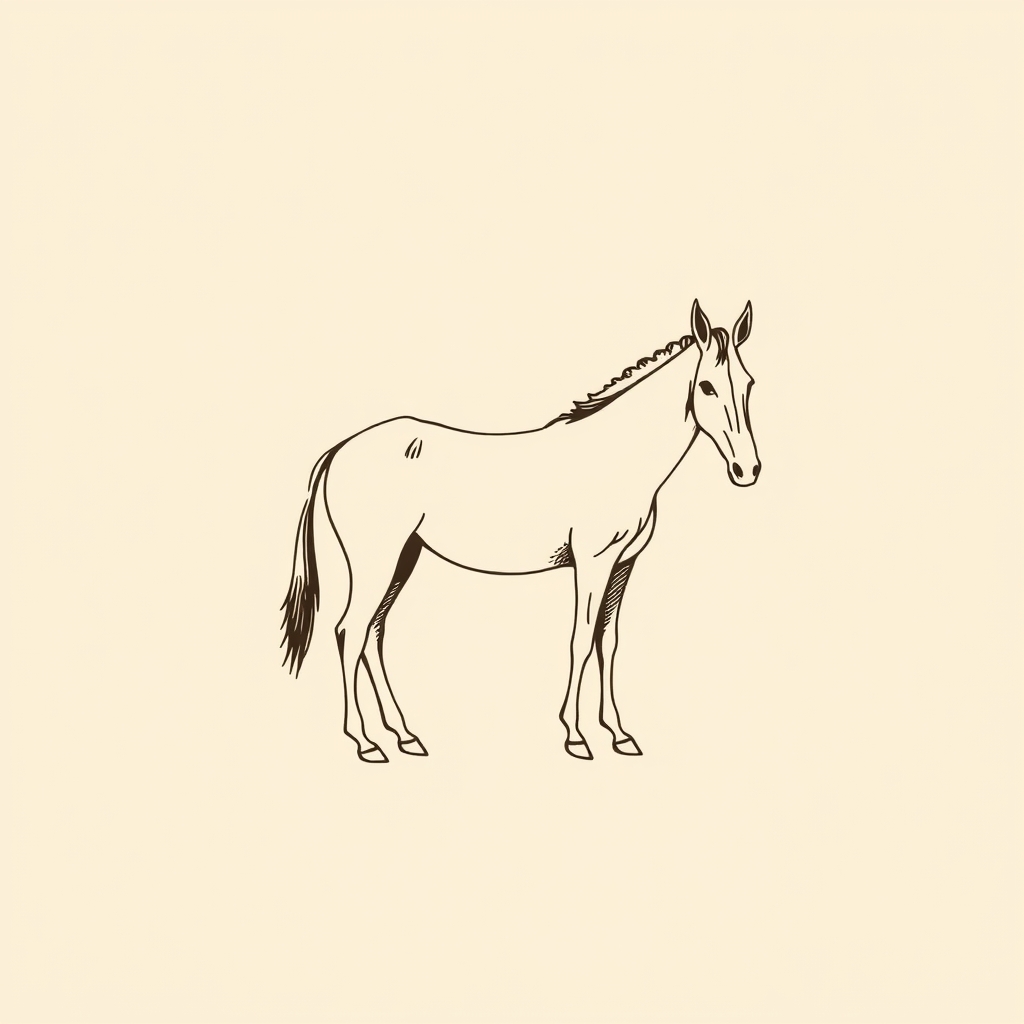
At the head of the parish of San Alberto, which covered several thousand square kilometers for some ten thousand souls, Brochero made the Spiritual Exercises of Saint Ignatius of Loyola his primary instrument of evangelization. As early as 1875, with the help of his parishioners, he undertook the construction of a House of Spiritual Exercises in Villa del Tránsito, inaugurated in 1877, where he gathered hundreds of faithful who came from the entire region; he later added a school for young girls. Convinced that spiritual renewal also required material development, he had more than two hundred kilometers of roads opened, promoted the construction of schools, irrigation canals, and aqueducts, and worked for the arrival of the telegraph, the post office, and the railway in the Traslasierra valley. Dressed in a poncho and sombrero, traveling tirelessly on muleback through the sierras to reach the most isolated communities, he earned the popular nickname of "gaucho priest" (cura gaucho). Appointed canon of the Cathedral of Córdoba in 1898, he returned to his parish in 1902 and resigned in 1908, when illness had rendered him infirm.
Journey toward holiness
Brochero embodied a priesthood of proximity and poverty, serving the most neglected, even to the point of sharing their condition in sickness.
Brochero's holiness was manifested in a total pastoral dedication to a poor and marginalized population. A missionary pastor above all, he made himself close to everyone, going to seek out the faithful in the most remote sierras, without fearing fatigue or danger. His charity was exercised as much on the spiritual level, through the preaching of the Ignatian Exercises and the administration of the sacraments, as on the human level, through his fight against the poverty and isolation of his region. The leprosy he contracted from the sick, and the blindness in which he ended his life, were received by him as a participation in the condition of those who suffer most. Pope Francis summarized this figure by describing him as a "pastor with the smell of his sheep" (pastor con olor a oveja), an expression that has become emblematic of the priestly ideal he proposed to the clergy: a priest who does not remain on the sidelines, but makes himself poor among the poor. His reputation for holiness, vibrant in Argentina long before his beatification, made him a popular figure of regional devotion.
Beatification and canonization
Beatified in 2013 and then canonized in 2016 by Pope Francis, Brochero was recognized as a saint following two miracles approved by the Holy See.
The cause for Brochero's beatification concluded after the recognition of a first miracle: the healing of Nicolás Flores, a young boy who had fallen into a vegetative state following an accident, the miracle of which was approved in December 2012 under the pontificate of Benedict XVI. Brochero was beatified on September 14, 2013, in Argentina, during a ceremony presided over by Cardinal Angelo Amato on behalf of Pope Francis. A second miracle was subsequently recognized: the healing of Camila Brusotti, a young girl who was seriously injured and fell into a coma following violence suffered in 2013, whose family had implored the intercession of the blessed. Pope Francis approved this miracle in January 2016 and proceeded with the canonization of Brochero on October 16, 2016, in Saint Peter's Square at the Vatican, alongside six other blessed, including José Sánchez del Río, Manuel González García, and Elizabeth of the Trinity. His liturgical feast is set for March 16, the anniversary of his birth.
Spirituality and heritage
The first saint born in Argentina, Brochero is today a major figure of popular devotion and a model of a priest of proximity.
José Gabriel Brochero is considered the first saint born on Argentine soil, and he occupies a prominent place in the country's popular devotion, particularly in the province of Córdoba. The town of Villa del Tránsito, where he lived and died, now bears his name (Villa Cura Brochero) and has become an important place of pilgrimage; the chapel, the college, and the House of Spiritual Exercises that he built are preserved there and constitute a recognized heritage site. His figure as a missionary pastor, traveling the sierras on muleback to reach the poorest, was presented by Pope Francis as a model for the contemporary clergy, illustrating the image of a Church "with the smell of the sheep." His spiritual legacy remains linked to the practice of the Ignatian Exercises and to a priesthood inseparable from the concrete concern for the human development of his region. He is honored as the patron of the Traslasierra region and is among the most beloved saints of Argentina.
Iconography
Signs and attributes
The supernatural in their life
The miracles of José Gabriel del Rosario Brochero
Frequently asked questions about José Gabriel del Rosario Brochero
Who was José Gabriel del Rosario Brochero?
Argentine priest (1840-1914) nicknamed the "gaucho priest," evangelizer of the Traslasierra region, beatified in 2013 and canonized in 2016 by Pope Francis.
What is José Gabriel del Rosario Brochero the patron saint of?
Patronage of José Gabriel del Rosario Brochero: Région de Traslasierra (Córdoba, Argentine), Traslasierra region (Córdoba, Argentina), Clergé and Clergy.
How is José Gabriel del Rosario Brochero depicted in Christian art?
In iconography, José Gabriel del Rosario Brochero is recognizable by: Poncho, Sombrero and Mule.
What miracles are attributed to José Gabriel del Rosario Brochero?
2 miracles are attributed to this saint, notably: Healing.
Which saints were contemporaries of José Gabriel del Rosario Brochero?
Contemporaries include: Pauline of the Agonizing Heart of Jesus, Felipe de Jesús Munárriz and 50 companions, Mariano de Jesús Euse Hoyos and Teresa of Jesus of the Andes.
When did José Gabriel del Rosario Brochero die?
José Gabriel del Rosario Brochero died around 1914.
What are the other names of José Gabriel del Rosario Brochero?
Other forms of the name: Cura Brochero, El cura gaucho and Giuseppe Gabriele del Rosario Brochero.
Who are the relatives of José Gabriel del Rosario Brochero?
Relatives of José Gabriel del Rosario Brochero: Ignacio Brochero (father) and Petrona Dávila (mother).
Annexes & related entities
Structured data for exploration: events, miracles, quotes, places, attributes, patronages, and important entities cited in the text.
Key Events
- Era / death: 1914
- Canonized in 2016 by Francis
Quotes
-
A shepherd with the smell of his sheep (pastor con olor a oveja).
https://www.religiondigital.org/america/Francisco-Brochero-Pastor-oveja-pobres_0_1501349869.html