Giuseppe Maria Tomasi
Saint Giuseppe Maria Tomasi (1649-1713) was an Italian Theatine cardinal, known as the "Prince of Liturgists" for his scholarly works that paved the way for the reforms of Vatican II.
Contemporaries

Figures and markers around the normalized period for this entry.
Guided reading
5 reading sections
Biography
Born in Sicily into an illustrious noble family, Giuseppe Maria Tomasi renounced his titles of nobility to join the Theatines and dedicate his life to God.
Giuseppe Maria Tomasi was born on September 12, 1649, in Licata, Sicily. The eldest son of Giulio Tomasi, Prince of Lampedusa and Duke of Palma di Montechiaro, and of Rosalia Traina, he was destined by his family for a brilliant career at the Spanish court. However, from his youth, he felt a deep calling to the religious life. With his father's consent, he renounced his birthright and titles of nobility in favor of his younger brother. In 1664, at the age of fifteen, he entered the novitiate of the Regular Clerics of the Theatines in Palermo, under the direction of Father Francesco Maria Maggio. He pronounced his solemn vows on March 25, 1666. After brilliant studies in philosophy and theology in Messina, Ferrara, Modena, and Rome, he was ordained a priest on December 23, 1673, in the Lateran Basilica, and celebrated his first Mass two days later, on Christmas Day. He then spent the majority of his life in Rome, dedicating himself to prayer, the study of biblical languages, and liturgical research, while leading a life of great poverty and profound humility. He died holily in Rome on January 1, 1713, taken by a violent pneumonia contracted after the Christmas vigil at the Vatican.
Life and Work
Nicknamed the "Prince of Liturgists," Giuseppe Maria Tomasi dedicated his immense erudition to the study and publication of ancient texts of the Roman liturgy.
Giuseppe Maria Tomasi is considered one of the greatest scholars of his time, combining exceptional scientific rigor with a deep faith. A remarkable polyglot, he mastered not only Latin and Greek, but also studied Hebrew, Syriac, Arabic, and Chaldean. His love for ecclesiastical traditions drove him to explore Roman libraries to unearth forgotten manuscripts. He published numerous fundamental works, including the Gelasian Sacramentary in 1680 and critical editions of the Psalter and medieval antiphonaries. His rigorous work on the sources of the liturgy prophetically anticipated the liturgical reforms of the 20th century, notably those of the Second Vatican Council concerning the Liturgy of the Hours and the use of the vernacular language. Appointed a consultor to the Congregation of Rites, he initially refused this office out of humility before obeying the Pope. Despite his erudition, he remained close to the humblest, personally teaching catechism and Gregorian chant to poor children in his titular church of San Martino ai Monti.
Path to Holiness
Despite his elevation to the cardinalate by Pope Clement XI, Giuseppe Maria Tomasi maintained a life of rigorous poverty, mortification, and charity toward the poor.
Throughout his life, Giuseppe Maria Tomasi sought discretion and self-effacement, fleeing the honors of the world. When Pope Clement XI, whose confessor he was, decided to create him a cardinal during the consistory of May 18, 1712, Tomasi stubbornly refused this dignity. He finally accepted it only out of pure obedience, under the constraint of a formal order from the Sovereign Pontiff. Having become cardinal-priest of the title of Santi Silvestro e Martino ai Monti, he did not change his austere way of life in any way. He continued to live within his Theatine community, sharing their frugal table and faithfully participating in the Divine Office. He devoted his cardinal's income to the relief of the poor and the sick, notably at the Hospital of Saint John Lateran. His spiritual correspondence with his sister, the Venerable Maria Crocifissa della Concezione, bears witness to a scrupulous soul, entirely abandoned to the divine will and animated by a filial devotion to the Virgin Mary. His reputation for holiness was such that the Romans crowded in throngs to attend his Masses, drawn by his radiant piety.
Beatification and canonization
Beatified in 1803 by Pope Pius VII after the recognition of two miracles, Giuseppe Maria Tomasi was canonized in 1986 by Pope John Paul II.
The cause for the beatification of Giuseppe Maria Tomasi opened shortly after his death, as early as 1713, under the impetus of Pope Clement XI, who delivered his funeral oration. His heroic virtues were officially proclaimed on June 1, 1761, by Pope Clement XIII. After the canonical recognition of two miracles attributed to his intercession, Pope Pius VII solemnly proclaimed him blessed on September 29, 1803. Nearly two centuries later, a new miracle was approved by a decree of Pope John Paul II on July 6, 1985. The latter proceeded with his solemn canonization on October 12, 1986, in St. Peter's Basilica in Rome. During his homily, the Sovereign Pontiff highlighted the importance of his figure for the contemporary liturgical renewal. Saint Giuseppe Maria Tomasi is inscribed in the Roman Martyrology on the date of his birth into heaven, January 1, but his principal liturgical feast is celebrated on January 3, particularly within the Theatine Order.
Spirituality and heritage
Proclaimed patron saint of the Catholic liturgy and of his native city of Licata, Saint Giuseppe Maria Tomasi leaves behind a lasting spiritual and scientific legacy.
The legacy of Saint Giuseppe Maria Tomasi lies in the perfect harmony he was able to establish between theological science and holiness of life. Nicknamed the "Liturgical Doctor," he demonstrated that intellectual research and the critical study of sacred texts, when lived in obedience to dogmatic truth, constitute a path of intimate union with God. In 1971, his relics were transferred from his titular church to the Basilica of Sant'Andrea della Valle in Rome, the mother house of the Theatines, where his body now rests and is exposed to the veneration of the faithful. He is officially recognized as the patron saint of the Catholic liturgy, inspiring theologians and pastors in the care given to the beauty of divine worship. He is also the patron saint of the city of Licata, in Sicily, which honors him every year. His example reminds the Church that the liturgy is not a mere external form, but the living expression of the mystery of salvation.
Iconography
Signs and attributes
The supernatural in their life
The miracles of Giuseppe Maria Tomasi
Frequently asked questions about Giuseppe Maria Tomasi
Who was Giuseppe Maria Tomasi?
Saint Giuseppe Maria Tomasi (1649-1713) was an Italian Theatine cardinal, known as the "Prince of Liturgists" for his scholarly works that paved the way for the reforms of Vatican II.
What is Giuseppe Maria Tomasi the patron saint of?
Patronage of Giuseppe Maria Tomasi: Liturgie catholique, Catholic liturgy, Ville de Licata and City of Licata.
How is Giuseppe Maria Tomasi depicted in Christian art?
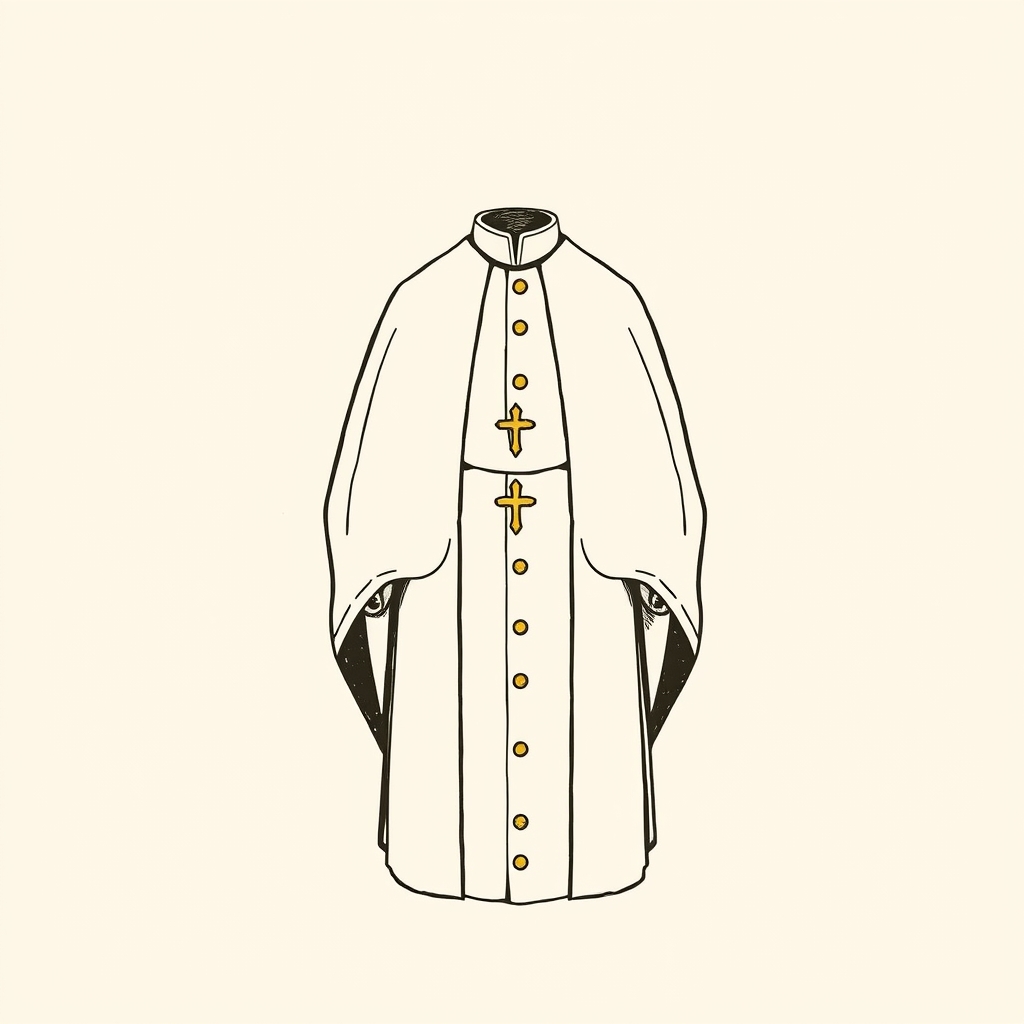
In iconography, Giuseppe Maria Tomasi is recognizable by: Cardinal's habit and Liturgical books.
What miracles are attributed to Giuseppe Maria Tomasi?
2 miracles are attributed to this saint, notably: Healing.
Which saints were contemporaries of Giuseppe Maria Tomasi?
Contemporaries include: Venerable Agnes of Jesus, Blessed Mary Anne of Jesus, Saint Alphonsus Liguori and Saint Mary Frances of the Five Wounds of Jesus.
When did Giuseppe Maria Tomasi die?
Giuseppe Maria Tomasi died around 1713.
What are the other names of Giuseppe Maria Tomasi?
Other forms of the name: Joseph-Marie Tomasi, Giuseppe Maria Tomasi di Lampedusa and Joseph Mary Tomasi.
Who are the relatives of Giuseppe Maria Tomasi?
Relatives of Giuseppe Maria Tomasi: Giulio Tomasi (father), Rosalia Traina (mother), Isabella Tomasi (Venerable Maria Crocifissa della Concezione) (sister) and Carlo Tomasi (uncle).
Annexes & related entities
Structured data for exploration: events, miracles, quotes, places, attributes, patronages, and important entities cited in the text.
Key Events
- Era / death: 1713
- Canonized in 1986 by John Paul II