Diego Luis de San Vitores
Diego Luis de San Vitores (1627-1672) was a Spanish Jesuit priest, missionary, and martyr in Guam, recognized as the Apostle of the Mariana Islands.
Contemporaries

Figures and markers around the normalized period for this entry.
Guided reading
5 reading sections
Biography
Birth in Burgos, early Jesuit vocation despite family opposition, and priestly ordination.
Blessed Diego Luis de San Vitores was born on November 12 or 13, 1627, in Burgos, Spain, into a family of the high Spanish nobility. His father, Jerónimo de San Vitores, was a high-ranking official of the Crown, treasurer of the city of Burgos, and later Minister of the Royal Treasury. His mother was María Alonso de Maluendo.
From a very young age, Diego manifested a pious temperament. While studying at the Imperial College of Madrid (run by the Jesuits), he felt at the age of eleven a deep desire to enter the Society of Jesus. His parents firmly opposed it, hoping for a brilliant military or political career for him. However, after two years of prayers and insistence, they finally gave in. Diego entered the Jesuit novitiate of Villarejo de Fuentes in July 1640, at the age of twelve.
He pursued brilliant studies in philosophy and theology at Alcalá de Henares. He was ordained a priest on December 23, 1651. Although he ardently aspired to be sent as a missionary to China or Japan, his superiors first assigned him to teach grammar in Oropesa, then theology in Madrid. It was not until 1659 that the Superior General of the Jesuits, Father Goswin Nickel, authorized him to leave for the missions, assigning him to the Philippines.
Life and Work
Voyage to the Philippines, discovery of Guam, founding of the Mariana Islands mission, and initial tensions.
Father Diego Luis de San Vitores left Spain (Cádiz) on May 15, 1660. His journey to Asia went through Mexico (New Spain), where he had to wait for a ship for eighteen months. During this period, he did not remain inactive and preached with fervor in the streets of Mexico City.
In 1662, he finally embarked for the Philippines. During a technical stopover on the island of Guam (which was then part of the "Ladrones" archipelago, or Islands of Thieves), he was deeply moved by the spiritual poverty of the indigenous Chamorros and vowed to return one day to evangelize them.
Upon arriving in the Philippines, he studied Tagalog and held various positions: master of novices, dean at the University of Manila, and itinerant missionary in the interior of the island of Luzon and on the island of Mindoro.
For five years, he made numerous efforts and wrote to the King of Spain, Philip IV, to obtain authorization to found a permanent mission in the Islands of Thieves. After the king's death in 1665, it was the Queen Regent Mariana of Austria who financially and officially supported the project. In her honor, as well as in honor of the Virgin Mary, the archipelago was renamed the "Mariana Islands" (Islas Marianas).
On June 15 or 16, 1668, Father Diego landed on Guam with five other Jesuits (including Father Luis de Medina) and about thirty lay auxiliaries, mainly Filipinos. They were welcomed by the local chief Kepuha (or Quipuha), who converted and donated land to them in Hagåtña (Agana). Father Diego built the first church in the archipelago there, dedicated to the Sweet Name of Mary (Dulce Nombre de Maria), as well as a school for boys, the Colegio de San Juan de Letran.
Evangelization progressed rapidly, but tensions appeared. A shipwrecked Chinese merchant named Choco, jealous of the missionaries' influence, began to spread the rumor that the baptismal water was poisoned, relying on the fact that several sick infants had died shortly after receiving the sacrament. This slander found a favorable echo among traditional healers (macanjas) and young warriors (urritaos). Attacks against the mission multiplied, and in 1670, Father Luis de Medina was martyred on the island of Saipan.
Path to Holiness
The martyrdom of Father Diego and his catechist Pedro Calungsod in Tumon in 1672.
Father Diego Luis de San Vitores, deeply affected by the death of his companions, prays to also obtain the grace of martyrdom. On the morning of April 2, 1672, accompanied by his young Filipino catechist Pedro Calungsod (about seventeen years old), he goes to the village of Tumon (Tomhom) on the island of Guam.
They learn that a little girl has just been born in the home of Chief Matapang, a former convert who has apostatized. Father Diego offers to baptize the child, but Matapang refuses angrily. To give him time to calm down, the two missionaries gather the village children on the beach and begin to sing hymns and teach the catechism.
Meanwhile, Matapang seeks to recruit another villager, Hirao, to assassinate the missionaries. Taking advantage of Matapang's absence, and with the consent of the child's mother, Father Diego baptizes the little girl.
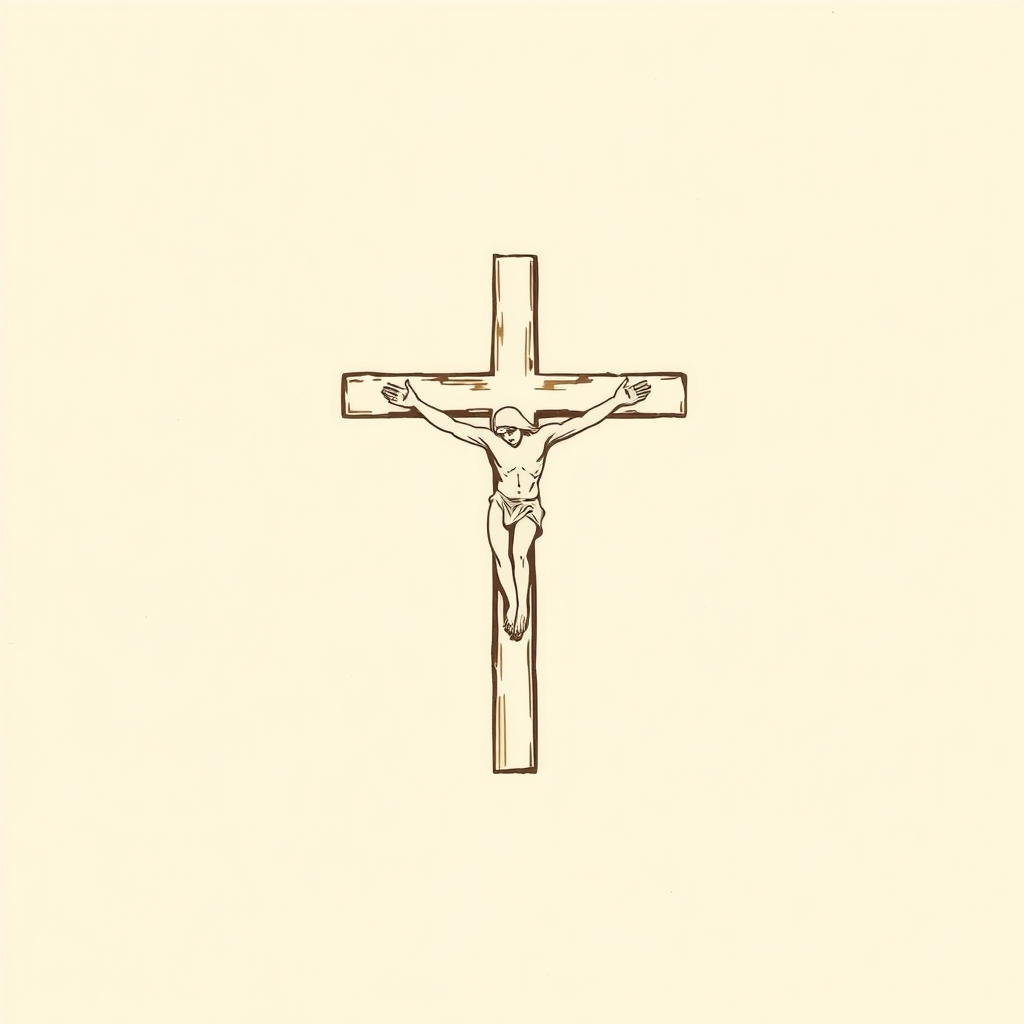
Upon his return, Matapang, mad with rage upon learning of the baptism, attacks the missionaries with spears. The young Pedro Calungsod intervenes to protect the priest. Pedro is mortally wounded by a spear and finished off with a blow of a saber to the head. Before dying, he receives absolution from Father Diego. Matapang and Hirao then turn to the Jesuit, who is in turn murdered while holding his crucifix and forgiving his executioners. The bodies of the two martyrs are weighted with stones and thrown into Tumon Bay, and will never be found.
Beatification and canonization
Recognition of martyrdom and beatification by Pope John Paul II in 1985.
The reputation of Father Diego Luis de San Vitores' martyrdom was established immediately after his death. As early as 1688, an informative process regarding his martyrdom was opened in Manila and Guam, but the ecclesiastical process was interrupted for several centuries due to the historical vicissitudes of the region. The cause was revived in the 20th century. The Positio on his martyrdom was published in 1981. On November 9, 1984, Pope John Paul II signed the decree officially recognizing his martyrdom in odium fidei (in hatred of the faith). On October 6, 1985, Pope John Paul II proclaimed Diego Luis de San Vitores blessed during a solemn ceremony at St. Peter's Basilica in Rome, alongside two other Jesuits, José María Rubio and Francisco Gárate. His companion in martyrdom, the young catechist Pedro Calungsod, was beatified on March 5, 2000, by John Paul II, and then canonized on October 21, 2012, by Pope Benedict XVI. Blessed Diego Luis de San Vitores remains at the stage of blessed, with his cause for canonization still ongoing.
Spirituality and Legacy
The Apostle of the Mariana Islands, a pioneer of Chamorro linguistics and a major spiritual figure in Oceania.
Blessed Diego Luis de San Vitores is universally recognized as the "Apostle of the Mariana Islands." His spirituality was deeply marked by the missionary zeal of Saint Francis Xavier, whose poverty and simplicity of life he sought to imitate. To draw closer to the local populations, he adopted their frugal way of life, walking barefoot and wearing clothing woven from local plant fibers.
He was also a pioneer of linguistics in the Pacific, writing the very first grammar and dictionary of the Chamorro language in order to facilitate evangelization.
Although his actions took place within the complex context of Spanish colonization and sparked major cultural tensions (notably the Hispano-Chamorro wars that followed his death), his figure remains a spiritual pillar for the Catholic Church in Oceania. The site of his martyrdom in Tumon is today a place of national pilgrimage and a highly frequented sanctuary in Guam.
Iconography
Signs and attributes
Frequently asked questions about Diego Luis de San Vitores
Who was Diego Luis de San Vitores?
Diego Luis de San Vitores (1627-1672) was a Spanish Jesuit priest, missionary, and martyr in Guam, recognized as the Apostle of the Mariana Islands.
What is Diego Luis de San Vitores the patron saint of?
Patronage of Diego Luis de San Vitores: îles Mariannes and Mariana Islands.
How is Diego Luis de San Vitores depicted in Christian art?
In iconography, Diego Luis de San Vitores is recognizable by: crucifix.
How did Diego Luis de San Vitores die?
Diego Luis de San Vitores suffered martyrdom for the Christian faith (17th century).
Which saints were contemporaries of Diego Luis de San Vitores?
Contemporaries include: Mariana de Jesús de Paredes, Blessed Mariana de Jesús (de Paredes y Flores), María de Jesús López Rivas and Saint Francis de Sales (Bishop and Prince of Geneva).
Who are the relatives of Diego Luis de San Vitores?
Relatives of Diego Luis de San Vitores: Jerónimo de San Vitores (father) and María Alonso de Maluendo (mother).
Annexes & related entities
Structured data for exploration: events, miracles, quotes, places, attributes, patronages, and important entities cited in the text.
Key Events
- Era / death: 1672
- Beatification in 1985 by John Paul II